
Best 30 Cup Coffee Makers – 2026 Reviews

A 30-cup coffee maker sits in a useful middle ground: big enough for a church fellowship hall, an office breakfast, or a family reunion, but not so large that you’re heating a tank of coffee nobody drinks. That middle position is exactly why the category gets tricky. The wrong urn either runs out before the second round or takes so long to heat that the first guests have moved on to juice.
The two axes that separate a good 30-cup urn from a mediocre one are brew speed and heat retention. After that, look at the pour control and how easy the tank is to clean, because self-serve events are where small annoyances become big messes. This guide surveys the market across brands and focuses on models that make sense for a 30-cup crowd, whether you need an exact 30-cup tank or a flexible urn that can scale around that number.
Best 30 Cup Coffee Makers – 2026 Reviews
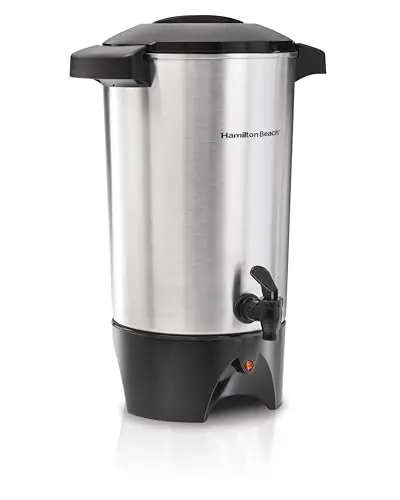
40515G – Flexible 15-45 Cup Urn
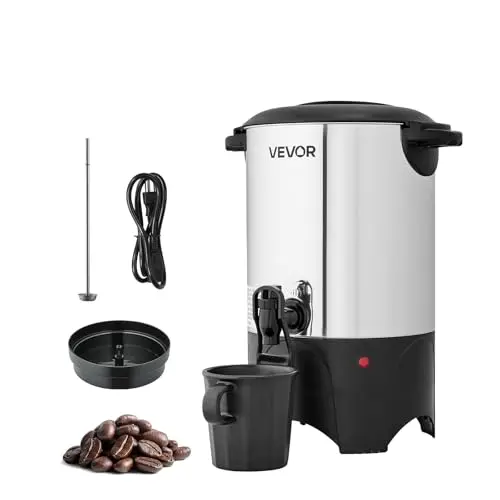
KLY-4.5K – 30-Cup Stainless Commercial Urn
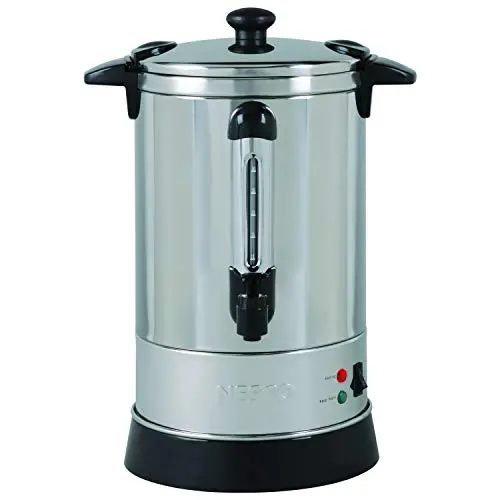
CU-30 – 30-Cup Stainless Urn
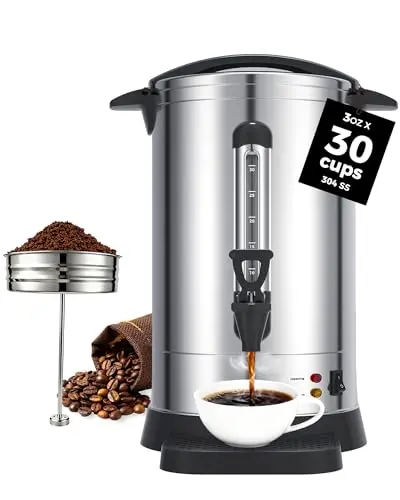
ZJ-68-A – 30-Cup Double-Wall Urn
How We Evaluated These 30 Cup Coffee Makers
We didn’t run controlled kitchen lab tests or long-term reliability trials. What we did: cross-referenced 4 coffee urn models from 4 distinct brands across six decision axes – capacity fit, brew speed, heat retention, dispensing control, cleaning and maintenance, and build materials. We triangulated published specifications, feature sets, owner feedback where available, and use-case fit, then mapped each urn against realistic buyer profiles for 30-cup service. We also weighed how each model behaves when the guest count is uncertain, because that is where capacity flexibility matters most. We treated that uncertainty as a real buying constraint, because a 30-cup urn is often bought for events where the headcount moves between setup and the first pour, so a strict tank size can be less useful than a flexible batch range.
The scoring framework put real-world fit (70%) ahead of feature differentiation (30%). Real-world fit meant matching batch size, brew time, and hold temperature to the way people actually serve coffee at gatherings. Feature differentiation covered the extras that change the serving experience: no-drip spouts, reusable filters, double-wall insulation, and keep-warm controls. We have no commercial relationship with any of the brands featured; recommendations track fit and differentiation, not brand preference. If you want the most flexible capacity, the Hamilton Beach 40515G is your match; if you want an exact 30-cup stainless urn with a lower entry point, the VEVOR KLY-4.5K is the better route.
How to Choose the Right 30 Cup Coffee Maker
1. Why 30 Cup Coffee Makers Hit the Gathering Sweet Spot
A 30-cup urn is usually the Goldilocks answer for medium-to-large gatherings. Do the capacity math against your guest list: a 5-ounce cup is standard for urns, and some guests will come back for a second pour. That means a true 30-cup batch is comfortable for a crowd in the low-to-mid twenties, and tight for a full thirty if coffee is the only drink. The right batch size depends less on the headcount alone and more on how long people linger.
2. Brew Speed and Heat Retention: The Two Specs That Matter Most
Brew speed tells you how long the urn takes to reach serving temperature, and it varies widely in this category. Some models claim a minute per cup, while others take 30 to 40 minutes for a full batch. Heat retention is the other half of the equation: a fast brew is little help if the coffee goes lukewarm before the last guest arrives. Look for a keep-warm mode and a stated hold range, then match that to the length of your event.
3. Faucets, Spigots, and Serving Flow
The pour mechanism matters more than most buyers expect. A two-way faucet lets someone fill a single cup or lock the flow for continuous filling, which keeps a serving line moving. A drip-free spigot reduces the chance of coffee pooling on the tablecloth between pours. If your event is self-serve, prioritize continuous flow and a spout that stops cleanly rather than the largest tank in the category.
4. Stainless Steel vs Aluminum: What to Know About Build and Cleaning
A stainless steel liner is generally the easier material to live with for repeated events, especially if you brew dark roasts or leave coffee sitting for hours. Aluminum bodies can be lighter and less expensive, but they may discolor or stain over time. Double-wall insulation helps with heat retention and can keep the exterior cooler to the touch. Whatever the material, plan a cleaning routine that includes the spigot and the bottom of the tank, where residue tends to collect.
5. How to Match a 30 Cup Coffee Maker to Your Event
Start with event duration, not just guest count. A brunch that runs two hours puts very different demands on an urn than an all-day church function. Next, check counter footprint and whether the urn will sit on a buffet table or a dedicated beverage station. A reusable filter is a practical feature if you host often and don’t want to restock paper filters. If your guest count swings from 15 to 45, the Hamilton Beach 40515G is the pick because it covers a true 30-cup batch without maxing out.
6. NESCO CU-30 vs VEVOR KLY-4.5K: Which 30 Cup Urn Fits Your Crowd?
These two exact 30-cup urns take different routes. The NESCO CU-30 is the more traditional stainless basket-filter design, with manual operation and a familiar percolator-style routine. The VEVOR KLY-4.5K leans budget-minded and adds a faster 1000W brew plus a dual no-drip spout. If simple and conventional matters most, choose the NESCO CU-30. If you want a lower entry point and a quicker full batch, the VEVOR KLY-4.5K is the stronger fit.
Frequently Asked Questions
1. Are 30 cup coffee makers practical for home use?
They can be, but only if you regularly host large-batch entertaining. A 30-cup urn takes up more counter space than a standard drip machine, and the cleanup is more involved because you’re washing a full tank and spigot. For occasional big gatherings, it’s a sensible rental alternative; for daily coffee, a smaller brewer is easier to live with.
2. NESCO CU-30 vs VEVOR KLY-4.5K: which 30 cup coffee maker is better for catering?
The VEVOR KLY-4.5K has the edge for catering because it brews faster and uses a stainless steel liner with a dual no-drip spout. It’s also the more budget-minded exact 30-cup option. The NESCO CU-30 is the better fit if you prefer manual operation and a traditional basket-filter setup. For a busy serving line, the VEVOR KLY-4.5K is the pick.
3. Hamilton Beach 40515G vs OSTBA ZJ-68-A: which should you choose for a long event?
If the event runs long and you need the urn to hold temperature for hours, the OSTBA ZJ-68-A’s long hold time and double-wall build are appealing. But the Hamilton Beach 40515G offers more flexible batch size and faster brewing, which matters if coffee is served in waves. For most mixed-use events, the Hamilton Beach 40515G is the safer all-around choice.
4. How many cups do I actually need for a 30-guest event?
Plan around cup size, second pours, and a small buffer. A 30-cup urn assumes 5-ounce cups, so a true 30-cup batch is roughly right for thirty moderate coffee drinkers. If your crowd is full of heavy coffee drinkers or the event runs more than two hours, brew a second batch rather than stretching the first one.
Final Verdict
For most buyers, the Hamilton Beach 40515G is the answer. Its flexible 15-45 cup range covers a 30-cup event without forcing you into a dedicated tank size, and the two-way lever keeps serving simple. If you want a budget-minded 30-cup urn with a stainless liner and fast brew, the VEVOR KLY-4.5K is the pick. And if a traditional stainless basket-filter setup matters more than extra controls, choose the NESCO CU-30. The OSTBA ZJ-68-A is the long-hold alternative when your event runs all day, though its slower brew and mixed durability feedback make it a niche choice. Match the urn to your real guest count and serving window, and you’ll avoid the two most common regrets: too small a tank and coffee that goes lukewarm before the last pour.
