
Best Accent Chairs – 2026 Reviews

Every home has that one seat people quietly fight over – the corner chair by the window, the nook where you read with coffee, the spot that fills the awkward gap between sofa and wall. An accent chair is the piece that turns a bare room into one that feels lived in. The catch: the category is enormous, and the differences between models are sneaky. Two chairs that look identical online can feel completely different the moment you sit down.
The two axes that separate a chair you’ll love from one you’ll resent are seat ergonomics and footprint. A deep, low seat feels wonderful for lounging but is miserable to stand up from if your knees complain. A slim barrel chair fits a tight reading corner but won’t swallow a tall adult. Layer on swivel versus fixed frames, fabric versus faux leather, and whether the thing reclines, folds, or shows up fully assembled, and you’ve got real decisions to make.
We cross-shopped the marketplace to cut through the noise, comparing seat dimensions, upholstery, mechanism, and how each chair fits the way people actually use a spare seat. This guide is built to help you pick the right accent chair for your room and your body – not to sell you on any one brand. Below you’ll find the picks that stood out, plus the buying-guide detail that makes the final decision easy.
Best Accent Chairs – 2026 Reviews
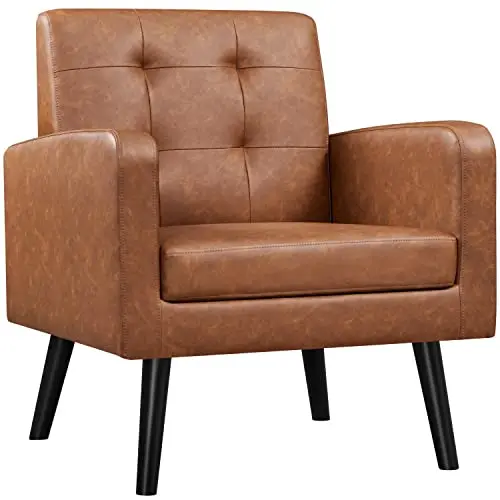
Mid-Century Accent Chair – Tufted Faux Leather Retro
A tufted mid-century armchair that dresses up a corner without demanding much floor space. The cushioned seat rides on three sinuous springs for a supportive, slightly giving sit, while wide track arms and a gently slanted backrest keep longer reading sessions comfortable. Upholstered in wipe-clean faux leather with button tufting and set on rubberwood legs with protective floor pads.
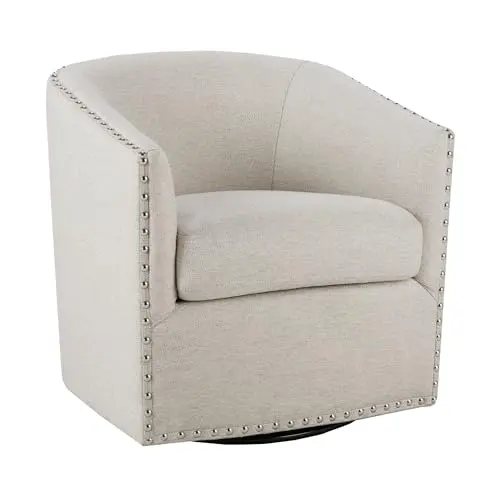
Tyler Swivel Barrel Chair – 360-Degree Comfort
A barrel-back swivel chair built for conversation and easy repositioning. The curved back and thick woven seat cushion cradle you, the 360-degree mechanism spins smoothly, and nailhead trim along the base adds a tailored touch. It arrives fully assembled, so it’s ready the moment it lands.
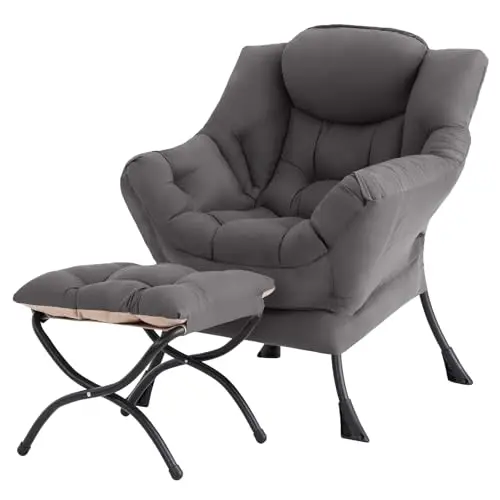
Lazy Chair with Ottoman – Foldable Footrest Lounger
A plush, sink-in lounger with a matching footrest that folds flat when you’re done. The padded seat and backrest cradle you like a beanbag with a frame, a side pocket keeps a phone or book handy, and the steel-and-cotton build is light enough to move around the room.
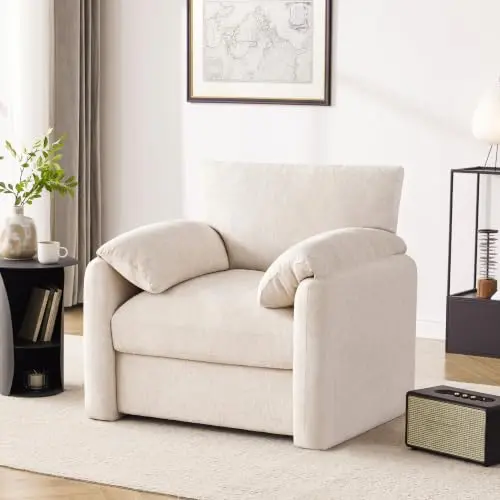
Oversized Accent Armchair – Wide Chenille Lounger
A wide, roomy armchair built for curling up rather than perching. The arched backrest and curved arms wrap around you, soft chenille upholstery feels cozy against skin, and the wooden-plus-iron frame carries a high weight rating. At nearly 39 inches wide, it’s a statement seat for larger rooms.
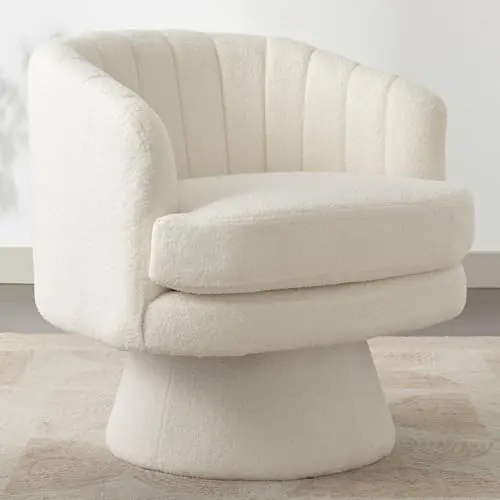
Swivel Barrel Chair – Teddy Fleece Round Seat
A compact round swivel chair wrapped in soft teddy fleece. The curved back and tilting armrests hug your frame, pocket springs keep the seat from flattening, and the light build makes it easy to reposition. A cozy, affordable swivel option for bedrooms and small lounges.
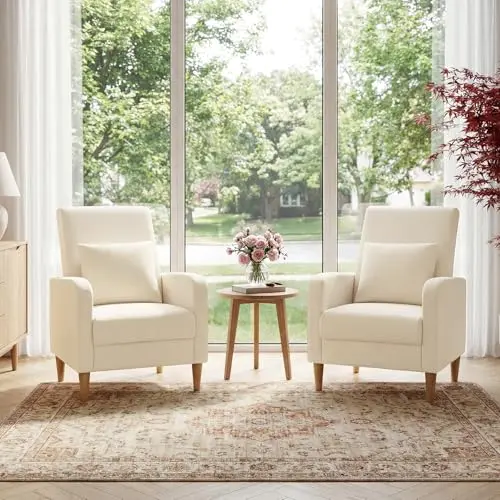
High-Back Accent Chairs, Set of 2 – Lumbar Pillow Included
A pair of high-back accent chairs with matching lumbar pillows, padded seats, and solid rubberwood legs. The taller back and wide armrests support long reading sessions, and buying two gives you a coordinated seating arrangement for a living room or guest space.
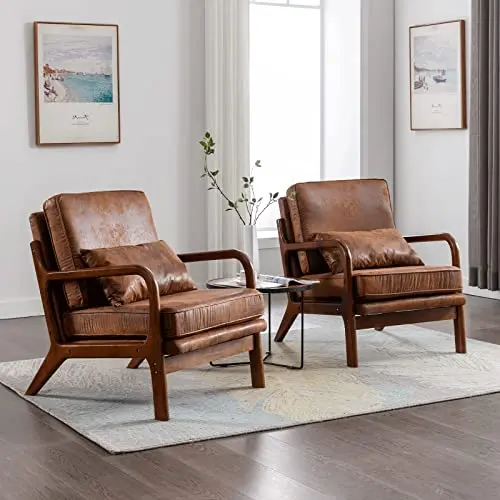
Mid-Century Chairs, Set of 2 – Microfiber Leather
A pair of low-profile mid-century leather-look chairs with solid rubberwood frames, coil-spring seats, and a matching waist pillow. The reclined backrest and curved arms invite cross-legged reading, and the microfiber leather wipes clean. A stylish set for a lounge or reception area.

Modern Accent Chair – Minimalist Corded Fabric
A minimalist accent chair with a tufted corded-fabric back, shredded-foam cushioning, and a metal frame with wooden armrests. The muted dark green finish keeps it low-key, and the soft fill adapts to your shape. A budget-friendly seat for reading corners and reception areas.
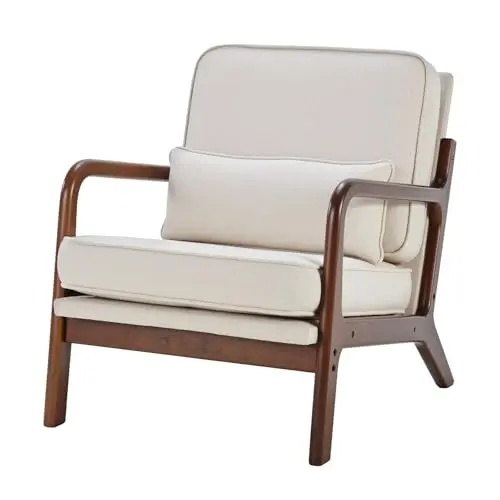
Mid-Century Low Accent Chair – Waist Cushion Support
A compact mid-century chair with a low 16-inch seat height, high-resilience foam padding, and a rubberwood base. The included waist cushion adds lower-back support, and the small footprint suits reading nooks, balconies, and bedrooms. A cozy pick for shorter sitters.
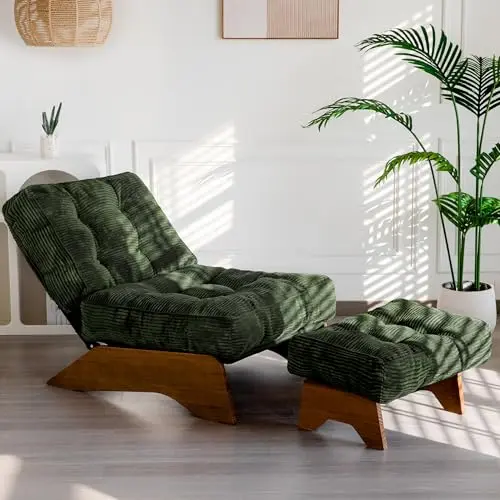
Accent Chair with Ottoman – Adjustable Backrest
A tufted accent chair with a matching ottoman and an adjustable backrest that shifts between upright reading and reclined lounging. Corded fabric covers thick padding over a metal and solid-wood frame, and the ottoman doubles as a footrest or extra seat.
How We Evaluated These Accent Chairs
We didn’t sit in each of these chairs for months or stress-test the frames until they groaned. What we did: cross-referenced 10 accent chair models from 10 distinct brands across five decision axes – seat ergonomics, footprint, mechanism, upholstery, and owner-reported durability. We triangulated published specifications, feature sets, and owner feedback where available, then mapped each chair against the way people actually use an accent chair: reading, lounging, filling a corner, and pulling up spare seating.
Accent chairs live or die on dimensions, so we started with seat height, seat depth, overall width, weight capacity, and assembly requirements. From there we weighed upholstery tradeoffs – chenille and teddy fleece for coziness, faux leather for wipe-clean practicality, corded fabric for texture – and sorted swivel, fixed, and reclining frames by room type. The scoring framework weighted real-world fit and comfort (70%) against feature differentiation (30%), the mechanical advantages and use-case specifics that set one chair apart from the next. We benchmarked pair seating, ottoman combos, and compact footprints against the rooms they’re meant for.
We have no commercial relationship with any brand featured here; recommendations track fit and differentiation, not brand preference. The takeaway is simple: if you want the most versatile all-rounder, the Yaheetech Mid-Century Accent Chair is your match; if a swivel seat suits your layout, the Madison Park Tyler Swivel Chair is the better route.
How to Choose the Right Accent Chair
1. Seat Height and Depth: The Numbers That Decide Comfort
Two measurements drive most of your comfort, and both get buried in product listings. Seat height – the distance from floor to the top of the cushion – should let your feet rest flat with your knees near hip level. A 17- to 19-inch seat suits most adults; one around 16 inches sits low and is cozy for lounging but harder to rise from. Seat depth decides whether you perch or recline: deep seats invite curled-up reading, while shallower seats keep shorter sitters supported. If you’re tall, favor a deeper seat and a taller back; if you have knee or hip issues, prioritize a higher, firmer seat you can push up from.
2. Swivel vs. Fixed vs. Reclining Frames
Swivel chairs spin to face the conversation or the screen without moving furniture – great for open-plan corners. Fixed frames are simpler, often sturdier, and easier to build well. Reclining accent chairs, and models with an adjustable backrest, blur the line between accent chair and lounge chair. Match the mechanism to how you’ll use the seat: swivel for social spaces, fixed for reading corners, reclining for wind-down time. If a rotating seat fits your layout, the CANMOV Swivel Barrel Chair shows how smoothly a good base turns.
3. Upholstery Materials Compared
Chenille and teddy fleece feel the coziest and hide wear well but can trap pet hair. Corded fabric adds texture and durability. Faux leather and microfiber leather wipe clean in seconds – ideal for households with kids – but run firmer and can crack over time. For a reading chair you’ll live in, prioritize a fabric that feels good against skin; for a high-traffic accent, prioritize something wipe-clean.
4. How Accent Chairs Fit Small Spaces and Reading Nooks
Measure the footprint before anything else. A wide, oversized chair can swallow a small room, while a compact barrel or round chair tucks into corners and reading nooks. Consider the swivel clearance if you pick a rotating seat, and leave room for the arms plus a side table. If floor space is genuinely tight, a small-footprint model like the DUMOS Mid-Century Low Accent Chair keeps the footprint down without sacrificing a cozy seat.
5. Single Accent Chair vs. Matching Set of Two
One well-chosen chair is a focal point; a matching set of two reads as an intentional furniture arrangement. Sets work best in living rooms, reception areas, and paired seating around a coffee table, and they solve the ‘what goes on the other side’ problem. Single chairs suit tight corners and reading nooks where one seat is all you need. If you go with a set, one option like the COLAMY High-Back Accent Chairs helps you seat two without hunting for a matching partner – just confirm both pieces ship together and share the same fabric run.
6. Weight Capacity, Assembly, and Care for an Accent Chair
Check the weight capacity – most accent chairs here handle 300 to 400 pounds, but budget frames can vary. Note the assembly requirement: some chairs arrive fully built, others need an hour with an Allen key. Machine-washable covers on removable cushions are a quiet luxury, while faux leather and microfiber leather simply wipe clean. Read the maximum weight and care notes before you buy, not after.
Frequently Asked Questions
1. Accent Chair vs. Lounge Chair: What's the Difference?
The line is blurrier than the names suggest. An accent chair is typically a smaller, styled seat meant to complete a room – think a barrel chair by the window or a mid-century piece in a corner. A lounge chair prioritizes recline and comfort, often with a deeper seat or an ottoman, and takes up more floor space. Many models here straddle both: a lazy chair with an ottoman or an adjustable-backrest chair functions as a lounge, while a compact tufted chair stays firmly in accent territory. Choose based on footprint and how long you plan to sit, not the label.
2. Is the Yaheetech or the Madison Park chair better for a small living room?
Both are compact, but they solve different problems. The Yaheetech mid-century chair is fixed, evenly proportioned, and easy to place against a wall, making it the safer fit for a tight, structured layout. The Madison Park Tyler adds a 360-degree swivel, which is great for open corners but needs a little clearance to rotate. If you need a seat that faces multiple directions, the swivel wins; if you want a predictable footprint and a classic silhouette, the Yaheetech is the calmer choice.
3. Which accent chair is better for tall adults – the Tiita or the Howjoe?
For tall adults, the Howjoe Oversized Accent Armchair is the stronger fit. Its wider seat and high weight capacity give long legs room, even though the backrest runs fairly low. The Tiita lazy chair is a soft, low-slung lounger that feels enveloping but offers less upright support and a lower seat. If you want head and back support, lean Howjoe; if you want to sink in and curl up, lean Tiita.
4. Should I buy a single accent chair or a matching set of two?
A single accent chair works as a focal point in a reading nook or a tight corner, and it’s easier to move when your layout changes. A matching set of two creates a deliberate seating arrangement for a living room or reception area and often costs less per chair. The tradeoff: sets lock you into a look, while a single chair lets you mix styles. If you go with a set, confirm both pieces arrive together and match the same fabric run.
5. Will an accent chair fit in a small apartment?
Usually, yes – it comes down to footprint and seat height. Measure the spot, subtract a few inches for the arms and any swivel clearance, and check the seat height against how easily you want to stand up. Compact barrel and round chairs, plus models with foldable ottomans, are the friendliest for tight spaces. A chair that fits the footprint but blocks a walkway isn’t really a win.
Final Verdict
For most buyers, the Yaheetech Mid-Century Accent Chair is the answer – it looks intentional, sits comfortably for hours, and slots into small and large rooms alike without asking you to rearrange. It’s the chair we’d point to first.
If you’re furnishing on a budget and want to sink into something soft, the Tiita Lazy Chair with Ottoman delivers the most comfort for the least outlay, footrest included. And if you have floor space to spare and want room to sprawl, the Howjoe Oversized Accent Armchair is purpose-built for curling up.
Everyone else falls in between: choose a swivel if the room demands flexibility, a matching set if you’re seating two, or a compact chair if the corner is tight. Match the seat height and upholstery to how you actually live, and the right accent chair becomes an easy call.
