
Best Acoustic Guitar Humidifiers – 2026 Reviews

Winter turns the air in most homes bone-dry, and your acoustic guitar feels it before you do. Fret ends start to poke out, the top sinks or bellies, and in the worst case a crack opens that no setup can undo. A humidifier is cheap insurance against all of it – but the category is more varied than the little sponge-on-a-string most players picture.
Two things separate a humidifier that works from one that just sits in your case. The first is control type: manual soundhole units deliver moisture straight into the body, while two-way packs sit in the case and quietly hold a target range. The second is output relative to your climate – a mild coastal home and a desert winter ask very different things of the same device.
We compared the major approaches across the market so you can match the design to your routine instead of guessing. Below you’ll find which options suit hands-off owners, which are built for harsh dry air, and which simply cover the basics for very little.
Best Acoustic Guitar Humidifiers – 2026 Reviews
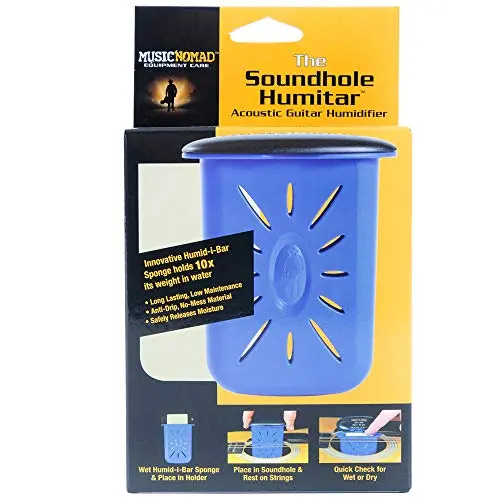
Humitar MN300 – No-Drip Soundhole Humidifier
A soundhole humidifier that hangs from your strings and releases moisture directly into the body. The Humid-i-Bar sponge holds a serious amount of water, and the anti-drip material plus a quick-flip top keep daily checks simple.
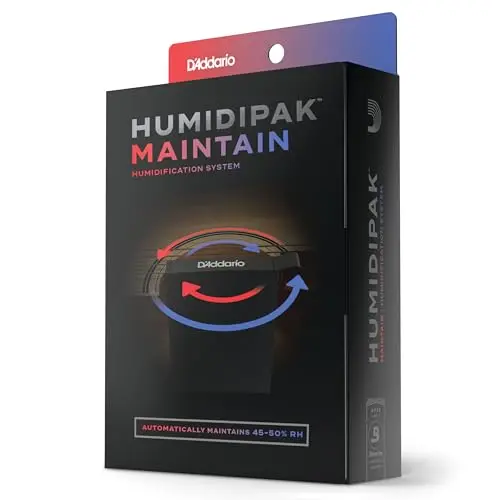
Humidipak Kit – Set-and-Forget Two-Way Control
A maintenance-free, two-way system that holds a steady humidity band inside the case. The included packs absorb or release moisture automatically, so there’s no refilling and no seasonal adjustment.
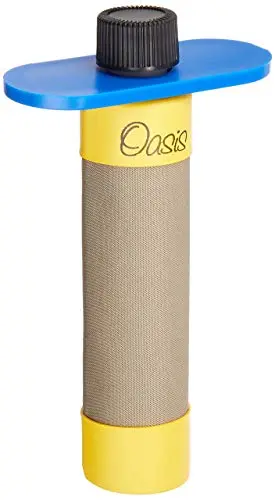
OH-5 Plus+ – Extra Output for Dry Climates
A soundhole humidifier tuned for dry climates, pushing out noticeably more moisture than standard units while keeping the same compact footprint. Includes a stabilizer bar and syringe for controlled filling.
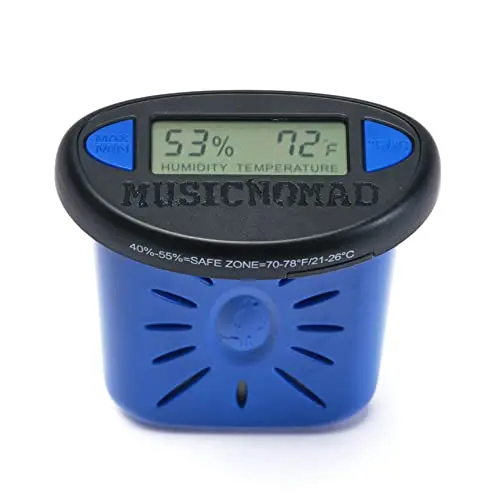
Humitar ONE MN311 – Humidifier With Built-In Gauge
An all-in-one humidifier with a built-in hygrometer that samples the case every few seconds. It shows live humidity and temperature, tracks highs and lows, and reuses the familiar Humid-i-Bar sponge.

OH-1 – Fabric Soundhole Humidifier
A fabric-bodied soundhole humidifier that visibly shrinks as it releases moisture, telling you when to refill. The screw-cap design fills quickly, and the included bar and syringe make setup easy.

Humidifier Pro – Long-Interval Soundhole Humidifier
A soundhole humidifier built around a large hydrophilic sponge that holds many times its weight in water, stretching refill intervals. Designed to release moisture slowly without drips.

49% RH Kit – Two-Way Packs for Large Instruments
A two-way humidity kit for large wooden instruments. The saltwater packs hold a stable range, absorbing excess moisture or releasing it as needed, with fabric holders for clean placement.
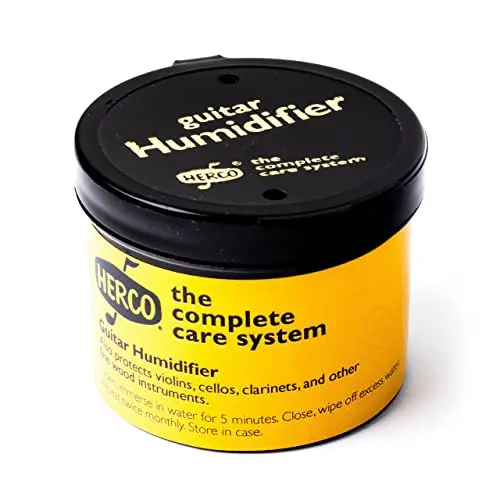
HE360 – Clay-Filled Case Humidifier
A classic clay-filled case humidifier that releases moisture gradually. No electronics, no calibration – just wet it, tuck it in the case, and let it work.
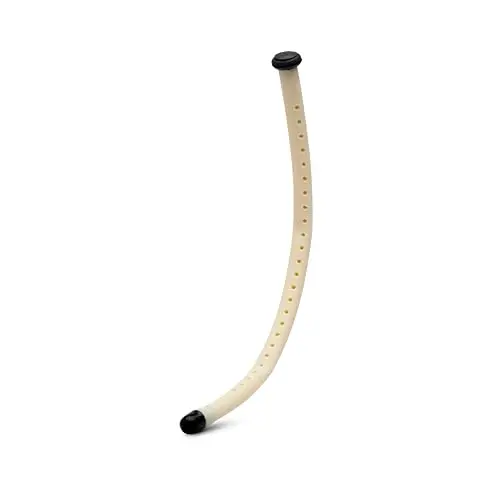
Guitar Humidifier – Basic Soundhole Moisture
A compact, resin-bodied humidifier with a water-suction stem that releases moisture slowly through small holes. A simple in-case option for basic humidification.
How We Evaluated These Acoustic Guitar Humidifiers
We didn’t run these humidifiers through a controlled humidity chamber or measure moisture output gram by gram over multiple seasons. What we did: cross-referenced 9 acoustic guitar humidifiers from 6 distinct brands across 5 decision axes – control type, moisture capacity and output, physical fit inside the case, refill or replacement effort, and long-term upkeep. We triangulated published specifications, absorbed owner feedback where available, and mapped each design to the routines real acoustic owners actually keep.
The scoring framework weighted real-world fit (70%) – how reliably each option holds a healthy humidity range the way it’s meant to be used – against feature differentiation (30%) – advantages like no-drip sponges, built-in gauges, or set-and-forget two-way control. We have no commercial relationship with any of these brands, and recommendations track fit and differentiation rather than brand preference. If you want a low-mess daily soundhole pick, the Humitar is your match; if you’d rather never refill anything, the Humidipak serves you better. Either way, the goal is the same: hold a stable range so the wood doesn’t swing with the seasons.
How to Choose the Right Acoustic Guitar Humidifier
1. Soundhole vs. Two-Way Acoustic Guitar Humidifiers
Nearly every option falls into one of two families. Soundhole humidifiers hang from your strings or tuck into the body, releasing moisture into the guitar itself – they’re manual, need refilling, and put moisture right where the wood needs it. Two-way packs sit in the case and neither purely add nor purely remove moisture; they hold a target range by absorbing excess or releasing vapor as conditions shift. The trade-off is simple: soundhole units give you control and direct delivery, while two-way packs give you less effort and steadier numbers.
Pick based on how much fiddling you’ll realistically tolerate, not on which design sounds fancier.
2. Capacity and Output: What Dry-Climate Players Need
Humidity is regional, and a humidifier that’s fine in a mild coastal home can be badly outmatched in a desert or mountain state come winter. Output matters more than size – two units can share a footprint, but a higher-capacity build releases meaningfully more moisture. If your standard humidifier always seems to be losing ground, don’t just refill more often; step up to a higher-output model. The Oasis OH-5 is built for exactly this, pushing out more vapor than the standard unit in the same space. Know your climate before you buy.
3. How Two-Way Humidity Control Works
Two-way packs are deceptively simple. Inside is a saltwater solution that naturally wants to hold a specific humidity level. If the case air is drier than that target, the pack releases water vapor; if it’s damper, the pack pulls moisture in. The result is a self-correcting system that buffers the wide swings which stress wood. The catch is that packs are consumable – they eventually dry out or fill up and need replacing. If you like the sound of set-and-forget, the D’Addario Humidipak is the most straightforward example in this lineup.
4. Reading a Hygrometer and Avoiding Over-Humidification
More moisture isn’t automatically better. Over-humidifying can swell the top, raise the action, and even invite mold, so humidifying blind has real risk. A cheap hygrometer – or a humidifier with one built in – turns guesswork into a number. The target range for most acoustics sits around 45-55% relative humidity; you want to stay inside it, not blow past it. If you’d rather see live readings than trust a feel test, an all-in-one like the Humitar ONE pairs the humidifier and gauge in one device.
5. Size and Fit Inside Your Case
Fit is where humidifiers quietly fail. Soundhole units need to actually seat in the opening, and case packs need room to sit without pressing against the finish. A unit that’s too large for a parlor or mandolin case won’t protect anything – it’ll just get in the way, or worse, rest against the wood. Measure your soundhole and eyeball your case before committing, and favor designs with a stabilizer bar or holder that keeps the device where it belongs.
6. What Price Tiers Actually Buy You in an Acoustic Guitar Humidifier
Entry-level humidifiers are simple by design – a clay or fabric container that holds water and releases it. They work, and they’re a fine first safety net. Mid-range options add better sponges, no-drip materials, and soundhole mounting for more controlled delivery. Premium picks layer in gauges, two-way packs, or higher output for harsh climates. The jump in price usually buys convenience and control, not a different basic mechanism – so decide what routine you’ll keep up with before spending up.
7. Refilling, Replacement, and Long-Term Care
Most manual humidifiers want distilled water to avoid mineral buildup, and they reward a consistent refill routine over occasional drenching. Don’t overfill – a soaked unit is more likely to drip against the wood. Sponges and fabric bodies wear out, and two-way packs deplete on their own schedule, so factor replacement into the plan. Check your unit when the seasons change, and keep a hygrometer handy so care stays measured rather than reactive.
Frequently Asked Questions
1. What's the difference between the MusicNomad Humitar and the Oasis OH-5?
Both are soundhole humidifiers, but they aim at different jobs. The MusicNomad Humitar is built around convenience – a no-drip Humid-i-Bar sponge, a quick-flip top to check wet or dry, and a body that hangs from your strings. It’s the easier everyday pick for average indoor conditions. The Oasis OH-5 is tuned for higher output, releasing noticeably more moisture than a standard unit, which suits desert, mountain, or frigid-winter homes. If your air is merely dry, go Humitar; if it’s brutal, go OH-5.
2. How does the D'Addario Humidipak compare to the Boveda 49% kit?
They’re the same idea – two-way control that absorbs or releases moisture – with slightly different targets. The Humidipak holds roughly 45-50%, while the Boveda kit targets about 45-55% and ships with fabric holders plus a larger pack set for big instruments. Both are consumable and need periodic replacement. Choose by instrument size and the exact range you want to hold, not by brand loyalty.
3. Do I really need a hygrometer?
It’s the cheapest insurance in the whole routine. Without a gauge you’re humidifying blind, and the usual mistake isn’t under-humidifying – it’s over-humidifying, which can swell the top and cause its own problems. A basic hygrometer keeps you inside the 45-55% range where most acoustics are stable. You can buy one separately or get a humidifier with one built in.
4. How often should I refill or replace an acoustic guitar humidifier?
It depends on climate and design. Manual soundhole humidifiers typically need refilling weekly in normal conditions and far more often in peak dry season, while two-way packs get replaced on a set schedule – often every couple of months for one system, longer for others. Watch the unit itself for cues: fabric bodies shrink, sponges dry, packs stiffen. A hygrometer tells you when the routine is actually keeping up.
5. Are these humidifiers safe to leave in the guitar case?
Yes, when used as intended. The main risks are overfilling and letting a soaked unit rest directly against the finish. Stick to distilled water, don’t drench sponges, and favor no-drip designs or fabric holders that keep moisture off the wood. Check on the unit when seasons shift so a problem doesn’t sit unnoticed. Used sensibly, these are low-risk and worth the habit.
Final Verdict
For most acoustic owners, the MusicNomad Humitar is the humidifier to buy first – it delivers moisture straight into the soundhole, won’t drip, and asks almost nothing of you. If refilling anything sounds like a chore, the D’Addario Humidipak gives you two-way control you set and forget for a season. On a tight budget, the Herco HE360 covers the basics for very little. And if you live somewhere genuinely arid, step up to the higher-output Oasis OH-5 rather than fighting a standard unit. Match the design to your routine and your climate, and your guitar stays stable all year.
