
Best Adjustable Shower Curtain Rods – 2026 Reviews

A shower rod looks like a five-minute purchase until you get it home and realize the opening is an inch too wide, the wall is too glossy, or the curtain keeps dragging the rod down. Adjustability is the feature that saves you here – but only if the range, tension system, and mounting method line up with your actual bathroom.
The useful split in this category is not brand versus brand; it is how each rod stays put. Tension rods prioritize tool-free installation and rental-friendly removal. Wall-mounted and curved rods trade drilling for more holding power and, in some cases, extra elbow room. We looked at both approaches and weighed range, wall compatibility, load rating, finish, and installation effort so you can match the rod to your space instead of guessing from a product photo.
Best Adjustable Shower Curtain Rods – 2026 Reviews
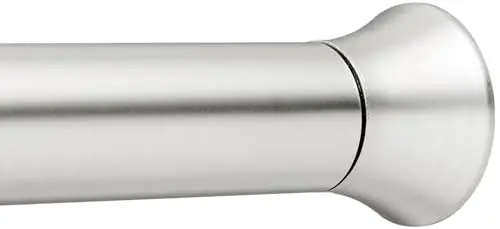
Easy Install Tension Rod – No-Drill Nickel Fit
A no-drill tension rod with a clean nickel finish, a 42-73 inch adjustable range, and a 1-inch tube that handles most standard shower curtains. The rubber end caps are designed to grip without hardware.
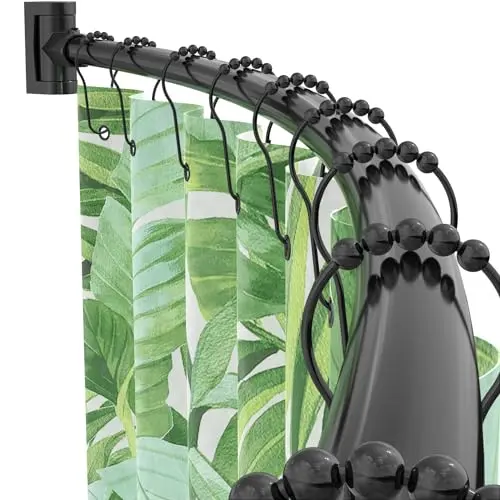
Curved Shower Rod – Extra Elbow Room
A wall-mounted curved rod that adds elbow room by bowing the curtain outward. It requires drilling, but the rotating brackets and aluminum build suit bathrooms where a tension rod keeps slipping.
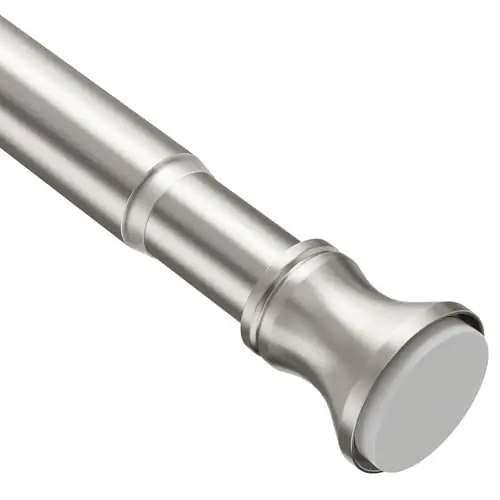
Spring Tension Rod – Long-Reach Nickel
A long-reach spring tension rod for oversized shower stalls. The nickel finish and detachable ends make it easy to pair with standard hooks and curtains.
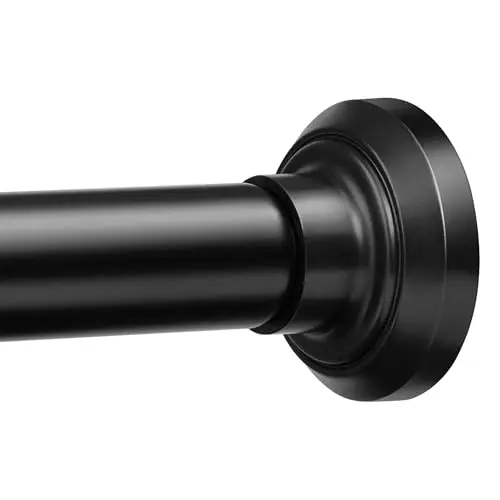
Tension Rod – No-Drill Steel Value
A budget-friendly tension rod with stainless steel construction, a 30-76 inch range, and a 30 lb load rating. It installs without tools and suits rentals, RVs, and standard tubs.
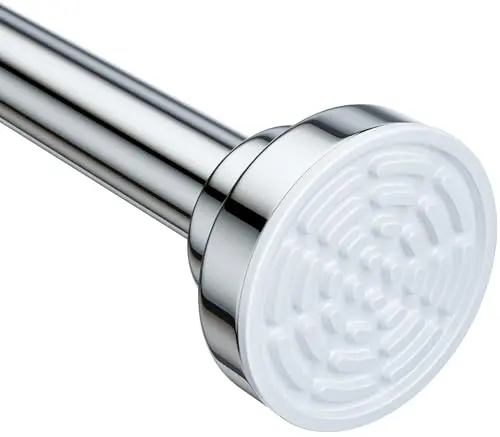
Never Rust Tension Rod – Wide Non-Slip Fit
A silver tension rod with a wide 32-80 inch range, rustproof stainless steel, and large rubber pads for grip on smooth or rough walls.
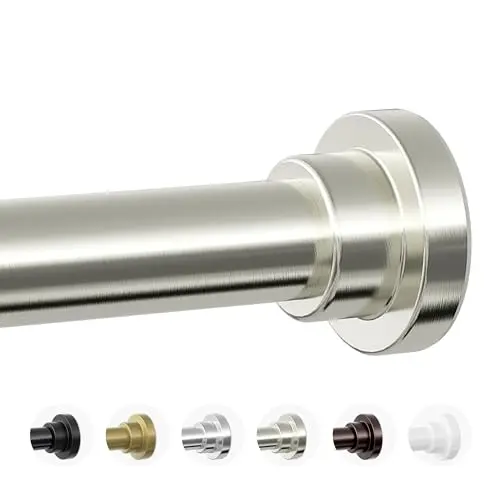
Heavy Duty Tension Rod – High-Load Brushed Nickel
A brushed nickel tension rod with a 28-74 inch range and a 35 lb load rating. The 1-inch stainless steel tube and non-slip base are built for heavier curtains.
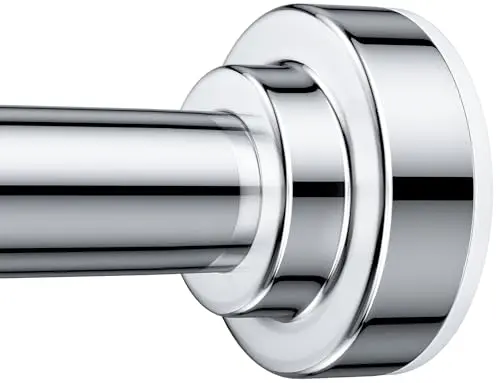
Spring Tension Rod – Never-Collapse Silver
A silver spring tension rod with a 32-80 inch range and a stainless steel build. The spring-loaded design is meant to keep tension steady without tools.
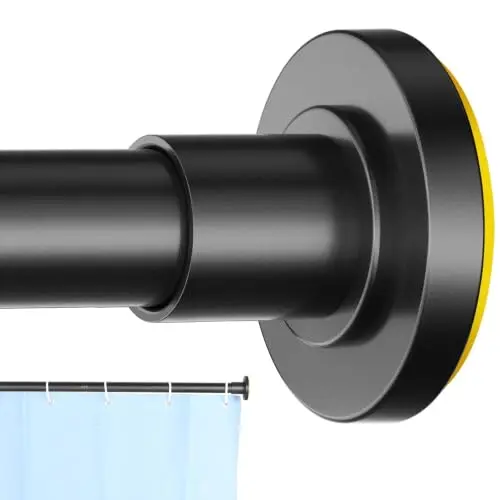
Heavy Duty Tension Rod – Budget Wide Fit
A budget-friendly black tension rod with a 31-80 inch range, stainless steel construction, and a 30 lb load rating.
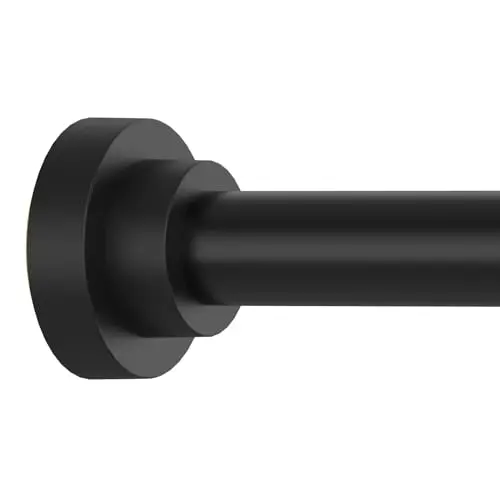
Tension Rod – Tool-Free Black Finish
A black tension rod with a 43-78 inch range and non-slip rubber ends. It installs without tools and is aimed at rental bathrooms and simple window uses.
How We Evaluated These Adjustable Shower Curtain Rods
We didn’t install these rods in real bathrooms or run long-term load trials. What we did: cross-referenced 9 adjustable shower curtain rod models from 9 distinct brands across six decision axes – adjustable length range, mounting method, wall-surface compatibility, load rating, material and rust resistance, and installation effort. We triangulated published specifications, feature sets, and owner feedback where available, then mapped each option against common renter, homeowner, and small-bathroom setups. That means we paid close attention to whether a rod’s stated range actually matches typical tub openings, whether the tension system is paired with useful end pads, and whether finishes and materials hold up to humid bathrooms.
The scoring framework weighted real-world fit and stability (70%) – how well each rod matches its stated range and stays put under normal curtain loads – against feature differentiation (30%) – curved versus straight profiles, bracket design, and finish choices. We have no commercial relationship with the brands featured; recommendations track fit and differentiation, not brand preference. If you want the simplest no-drill default, the Amazon Basics Easy Install Tension Rod is the starting point. If you can drill and want extra elbow room, the PrettyHome Curved Shower Rod makes more sense.
How to Choose the Right Adjustable Shower Curtain Rods
1. Measure First: Why Adjustable Shower Curtain Rods Live or Die by Range
The first job is not choosing a finish; it is measuring the opening. Measure wall-to-wall at the height where the rod will sit, then compare that number with the rod’s stated range. A tension rod needs roughly 2-3 inches of compression to hold properly, so a model that only just reaches your opening is a poor bet. The same rule applies to wall-mounted rods: you want adjustment room, not a rod stretched to its limit.
If your opening is unusually wide, the Amazer Spring Tension Rod is the pick here because its 54-90 inch span covers large stalls that leave shorter rods short. For standard tubs, a mid-range span is easier to tension correctly and leaves less chance of near the top of its range instability. Always check the manufacturer’s stated range against your actual measurement rather than the tub’s advertised size. Also, measure the opening at rod height; walls can be out of square.
2. Tension vs. Wall-Mounted: Which Adjustable Shower Curtain Rod Fits Your Bathroom?
Tension rods are the rental-friendly choice: no holes, no tools, and easy removal. They depend on opposing walls and a clean, grippy surface. Wall-mounted rods use brackets and screws, so they need drilling but generally feel more planted and can carry more weight. A curved profile adds elbow room by bowing the curtain outward, which is especially useful in small tubs.
If you can drill and want that extra space, the PrettyHome Curved Shower Rod is the obvious route; its rotating brackets help with uneven walls, and the curved shape is the reason to choose it. If drilling is off the table, stay with a tension model and focus on range, end-pad size, and wall compatibility.
3. Load Rating and Rod Diameter: What Keeps a Shower Curtain Rod Steady
For tension rods, the 1-inch diameter is a useful benchmark: thinner tubes can flex, while thicker stainless tubes handle heavier liners with less drama. Check the load rating against what you plan to hang. A basic fabric curtain and liner are one thing; a heavy hotel-style curtain is another. The rating is not a guarantee, but it is a better guide than the rod’s appearance.
Watch for sagging in multi-piece rods, especially when sections are joined loosely. A rod that spans a wide opening with several splices needs firm tension and a solid middle connection. Curved and wall-mounted designs distribute load differently, so compare like with like.
4. Wall Surface Compatibility for No-Drill Shower Curtain Rods
Tension rods need a surface that can take compression without crumbling or sliding. Smooth tile is usually fine if it is clean and dry, but glossy tile can be slippery. Textured or painted walls may need a rod with larger rubber end pads that spread contact. Avoid mounting over loose wallpaper or failing drywall.
Check that you have true opposing walls; a tension rod cannot span an open doorway with nothing to push against. For wall-mounted rods, confirm the bracket screws will hit studs or suitable anchors. If you rent, tension is the lower-risk path.
5. Rust Resistance and Finish Care in Humid Bathrooms
Bathrooms are humid, so stainless steel and a protective coating matter more than they do in a closet. A rod that rusts at the joints or end caps is a short-lived bargain. Wipe the rod dry after especially steamy showers if the finish is basic, and check the humid bathrooms claim against the material rather than the label.
6. Budget, Mid-Range, and Premium Shower Curtain Rods: What Changes
Entry-level shower curtain rods usually get the job done for light curtains and standard openings, but may use thinner tubes, fewer splices, or basic coatings. Mid-range models tend to add stainless steel, better end pads, and wider adjustment ranges. Premium rods are less about raw function and more about finish quality, heavier hardware, or curved and wall-mounted designs that solve a specific space problem.
Spend where the problem is: range if your opening is unusual, load rating if your curtain is heavy, and mounting style if your walls are difficult. A higher tier does not automatically mean better tension; it means more refinement in materials and hardware.
Frequently Asked Questions
1. Are all adjustable shower curtain rods tension-mounted?
No. The category includes both tension-mounted rods, which push against opposing walls, and wall-mounted rods, which screw into brackets. Tension models are easier to remove and better for rentals; wall-mounted models generally hold more securely and can support curved designs. If you see a curved rod with brackets, assume it needs drilling unless the listing says otherwise.
2. What's the difference between the Amazon Basics Easy Install Tension Rod and the Amazer Spring Tension Rod?
The Amazon Basics Easy Install Tension Rod is the simpler all-purpose choice with a 42-73 inch range and a 1-inch tube. The Amazer Spring Tension Rod reaches much wider, from 54 to 90 inches, so it makes more sense for oversized stalls. Choose Amazon Basics for standard tubs and easy no-drill setup; choose Amazer when wide coverage is the priority and you can accept a slightly more specialized fit.
3. How does the PrettyHome Curved Shower Rod compare with the Amazon Basics tension rod?
The PrettyHome Curved Shower Rod is a drilled, wall-mounted rod that bows outward for extra elbow room. The Amazon Basics rod is a no-drill tension rod with a straight profile. Choose PrettyHome if you can drill and want the curved space gain; choose Amazon Basics if renter-friendly installation and a straightforward straight rod matter more. Both are adjustable, but they solve different bathroom problems.
4. Will an adjustable shower curtain rod hold a heavy fabric curtain?
It depends on the rod’s load rating and the curtain’s weight. A standard fabric curtain and liner are usually fine on rods rated around 20 pounds, while heavier hotel-style curtains benefit from a 30 lb rating or more. The Mcrbeay Heavy Duty Tension Rod has the highest rating here at 35 pounds, and the ENJOYBASICS Tension Rod is rated for 30 pounds. Also check wall grip: even a high-rated rod can slip on a poor surface.
5. What's the difference between the Mcrbeay Heavy Duty Tension Rod and the ENJOYBASICS Tension Rod?
The Mcrbeay Heavy Duty Tension Rod prioritizes load capacity with a 35 lb rating and a heavier 1-inch stainless tube. The ENJOYBASICS Tension Rod is the value-oriented pick with a 30 lb rating and a wider 30-76 inch range for less outlay. Choose Mcrbeay if your main concern is heavy curtains; choose ENJOYBASICS if you want broad coverage and a lower price tier without dropping too much capacity.
Final Verdict
For most bathrooms, the Amazon Basics Easy Install Tension Rod is the sensible default: a broad 42-73 inch range, a 1-inch tube, and no-drill installation make it easy to live with. If you can drill and want more elbow room, the PrettyHome Curved Shower Rod is the upgrade – the curved profile creates real space, and the wall-mounted brackets avoid the creep of tension rods. Budget-conscious shoppers who still want a 30 lb rating should look at the ENJOYBASICS Tension Rod; it covers wide openings without premium pricing. If heavy curtains are the priority, step up to the Mcrbeay Heavy Duty Tension Rod for its higher load rating. Match the rod to your wall surface and range first, and the rest gets simple.
