
Best Affordable Automatic Espresso Machines – 2026 Reviews

Automatic espresso at home sounds like a premium habit, but the affordable end of the category has gotten surprisingly capable. You can find one-touch brewing, built-in milk handling, and even integrated grinding without jumping to the boutique super-automatic tier.
The catch is that affordable and automatic mean different things depending on the brand. Some machines automate the grind and brew but leave milk to a manual wand; others go capsule-simple and skip frothing entirely. The useful dividing lines are how much of the drink is truly hands-off, how much counter space the machine claims, and how costly the long-term routine is.
We compared the strongest affordable automatic espresso machines across major brands, mapping each one to the buyer it suits. If you want the shortest path to a latte, that points one way; if you mostly drink straight espresso and value a tiny footprint, it points another.
Best Affordable Automatic Espresso Machines – 2026 Reviews
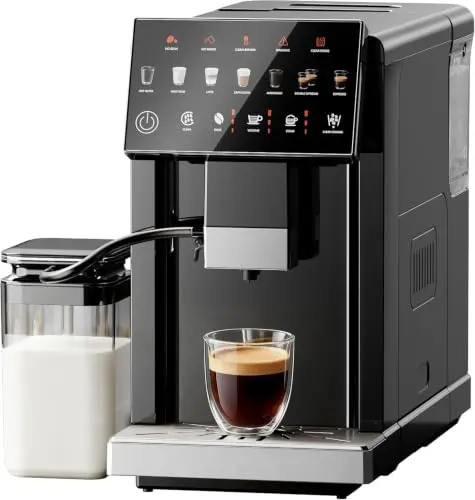
CM004-02 – One-Touch Bean-to-Cup Value
A fully automatic bean-to-cup machine aimed at buyers who want latte-style drinks without a manual portafilter routine. It combines a 20-bar pump, 15 grind settings, a touchscreen, and an integrated milk frothing system in a black body.
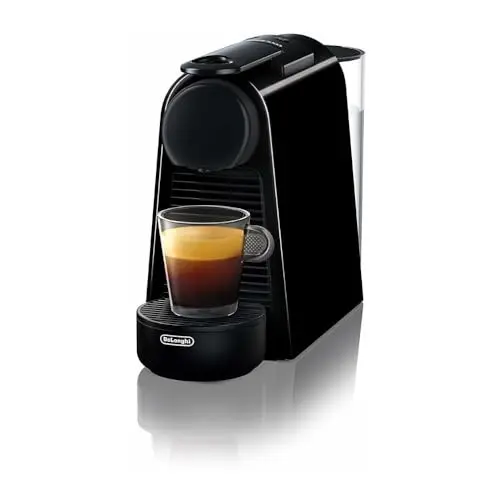
Essenza Mini – Compact Capsule Espresso
A capsule espresso machine that strips the routine down to powering on, inserting a pod, and pressing a button. The 19-bar pump, 0.6-liter tank, and small footprint make it a strong fit for tiny kitchens and straight-espresso drinkers.
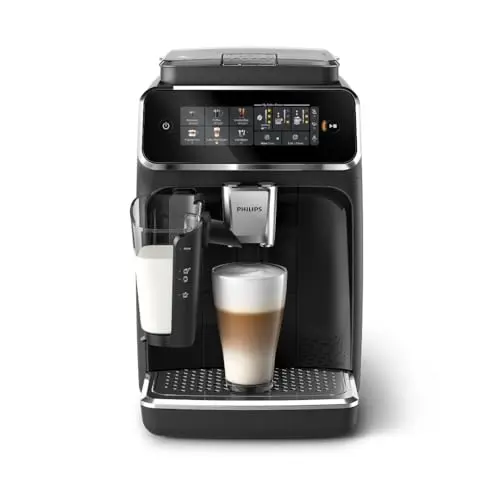
3300 Series EP3341/50 – LatteGo One-Touch Coffee
A fully automatic bean-to-cup machine with a ceramic grinder, color touchscreen, and the LatteGo milk system. It covers espresso, coffee, iced coffee, cappuccino, latte macchiato, and hot water from one chassis.
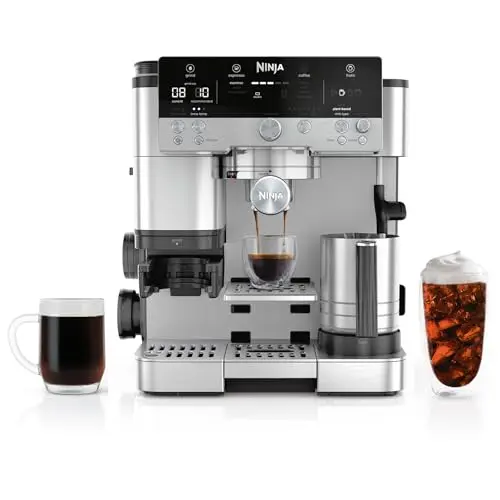
Luxe Cafe Premier ES601 – 3-in-1 Barista Assist
A three-in-one automatic that brews espresso, drip coffee, and cold brew, with a built-in conical burr grinder, guided tamping, and a hands-free dual froth system. It is the most versatile machine in this lineup, and also the largest.
How We Evaluated These Affordable Automatic Espresso Machines
We didn’t run lab extraction tests or long-term temperature-stability trials. What we did: cross-referenced 4 automatic espresso machines from 4 distinct brands across five decision axes – degree of brewing automation, milk handling, coffee input and grinding, footprint and water capacity, and daily maintenance. We triangulated published specifications, feature sets, owner feedback where available, and use-case fit for buyers shopping the affordable end of the category.
The scoring framework weighted real-world fit for affordable automatic brewing (70%) – how much of the drink-making routine the machine genuinely handles and how well it suits a budget-conscious kitchen – against feature differentiation (30%) – milk systems, grinders, presets, and cleaning design that separate one model from another. We have no commercial relationship with the brands featured; recommendations track fit and differentiation, not brand preference. If you want the most complete bean-to-cup package without going premium, the EUHOMY CM004-02 is the closest match. If pods and a tiny footprint matter more, the Essenza Mini is the cleaner fit.
We weighed automation claims against what each machine actually asks you to do: grind, dose, tamp, froth, clean, and refill. That matters more in this category than a long spec sheet, because the affordable automatic machines that frustrate people are usually the ones that automate one step but leave another surprisingly manual. We also mapped maintenance routines and counter-space demands so the picks reflect daily ownership, not just the first-week novelty.
How to Choose the Right Affordable Automatic Espresso Machines
1. What 'Affordable' Means for Automatic Espresso Machines
The affordable end of this category splits into two broad paths: capsule systems and bean-to-cup machines. Capsule machines automate the brew but push cost into pods, while bean-to-cup machines upfront the cost into the hardware and grinder. Neither is automatically cheaper over years; the deciding factors are how many drinks you make daily and how much you value fresh grinding.
Look past the sticker tier and compare milk handling, water capacity, and cleaning routine. A machine that saves money on day one but needs a separate frother and constant refills can feel less affordable in daily use. If your priority is the lowest entry point and you drink mostly straight espresso, the Essenza Mini is the sensible starting point.
2. Automatic vs. Semi-Automatic Espresso Machines: What You're Really Buying
Automatic is not a binary. A fully automatic machine grinds, doses, tamps, and brews at the push of a button, while a semi-automatic model may still require you to load a portafilter and judge the shot. In this lineup, the distinction matters most when you are comparing a capsule or bean-to-cup machine against a pump machine with a steam wand.
If your mornings are rushed, prioritize one-touch brewing and guided setup. If you enjoy the ritual of weighing, tamping, and dialing in, a semi-automatic can offer more control for less money, but it belongs in a different buying conversation.
3. Milk Systems: Built-In Carafe, Steam Wand, or Skip It
Milk is where affordable automatics differ most. A built-in carafe system like LatteGo is the most hands-off route to cappuccinos and lattes; a manual steam wand gives more control but requires technique; a capsule-only machine skips milk entirely. The tradeoff is usually between convenience, cleaning complexity, and how much counter space the milk hardware occupies.
If automatic milk is non-negotiable, the Philips 3300 Series is the most complete milk-focused pick here. If you drink milk drinks occasionally, a separate frother can be a more flexible and less maintenance-heavy solution.
4. Grinder, Pods, or Pre-Ground Coffee: Match the Input to Your Routine
Coffee input shapes both flavor and long-term cost. Whole-bean machines with built-in grinders give you the freshest cup and the widest range, but they add noise, cleaning, and a larger footprint. Pod machines are simpler and more predictable, though the per-drink cost is higher and you are limited to the pod ecosystem. Pre-ground machines sit in the middle: less fresh than grinding, but cheaper than pods and easier than dialing in a grinder.
For fresh beans without a separate grinder, the EUHOMY CM004-02 is the best fit in this group. If you value speed and do not want to think about grind size, pods are the simpler routine.
5. Footprint, Water Capacity, and Cleaning Load
Counter space is a practical filter. Capsule machines can fit on a narrow shelf, while bean-to-cup and 3-in-1 machines need height clearance for the hopper and depth clearance for the drip tray and spout. Check the water tank removal path before buying; a tank that is cramped under a cabinet can turn a simple refill into a daily annoyance.
Cleaning load is the other quiet cost. Removable brew groups, dishwasher-safe milk parts, and descaling prompts make ownership easier. Machines without those conveniences are not necessarily worse, but they ask more from you every week.
6. Where Affordable Automatic Espresso Machines Cut Corners
The usual corners cut at this price tier are grinder quality, milk-system durability, and temperature stability. You may see fewer grind settings, plastic where metal would be nicer, or a steam wand that needs a cooldown between frothing and brewing. None of those are deal-breakers, but they shape which machine feels automatic in practice and which one feels like a manual machine wearing a digital display.
Frequently Asked Questions
1. Are affordable automatic espresso machines actually automatic?
Mostly, but the word is used loosely. A fully automatic bean-to-cup machine handles grinding, dosing, tamping, and brewing; a capsule machine automates brewing but not milk; and some machines sold as automatic still use a manual steam wand for frothing. The practical test is to list the steps you do not want to do – grind, tamp, froth, clean – then check which ones the machine truly removes.
Affordable models also vary in temperature stability and milk-system cleanup, so automatic does not mean maintenance-free. It means the drink-making routine is shorter.
2. What's the difference between the EUHOMY CM004-02 and the Philips 3300 Series?
The EUHOMY CM004-02 is the more budget-conscious bean-to-cup route: built-in grinder, automatic milk frothing, and a touchscreen, with a smaller brand track record. The Philips 3300 Series steps up to a more polished LatteGo milk system, a ceramic grinder, and six presets, but it costs more and has more mixed reliability feedback.
Choose the EUHOMY if you want the most automatic features for the least money. Choose the Philips if milk-drink convenience and a more established super-automatic design matter more than value.
3. How does the Nespresso Essenza Mini compare with the Ninja Luxe Cafe Premier?
They sit at opposite ends of the affordable automatic conversation. The Essenza Mini is a compact capsule machine for straight espresso: tiny, simple, and inexpensive to start, but limited to pods and without milk frothing. The Ninja Luxe Cafe Premier is a 3-in-1 machine with a grinder, guided tamping, and hands-free frothing, covering espresso, drip coffee, and cold brew.
Pick the Essenza Mini for minimal counter space and the shortest routine. Pick the Ninja if you want drink variety and are willing to pay for a larger, more complex machine. If cold foam or drip coffee matters, the Ninja ES601 is the only one of the two that covers it.
4. Do affordable automatic espresso machines make good milk foam?
Yes, but the quality and cleanup vary. A built-in carafe system is the most consistent for beginners, while a manual steam wand can produce excellent microfoam with practice. Capsule-only machines often skip milk entirely, so budget for a separate frother if lattes are part of your routine.
The bigger difference is maintenance: milk parts that disassemble quickly and are dishwasher-safe are more likely to get cleaned properly, which matters for both flavor and longevity.
5. How much maintenance does an automatic espresso machine need?
Daily maintenance is mostly about milk and water. Rinse the milk system after every use, empty the drip tray before it overflows, and refill the water tank with fresh water. Weekly tasks usually include cleaning the brew area and checking the bean hopper for stale beans.
Descaling is the long-interval job; machines with water filters or descaling prompts make it easier to stay on schedule. Ignoring those reminders is the fastest way to shorten the life of any automatic espresso machine.
Final Verdict
For most buyers, the EUHOMY CM004-02 is the answer: it grinds, brews, and froths automatically without crossing into premium super-automatic territory. If you mainly drink straight espresso and want the smallest, simplest machine, the Essenza Mini is the budget-friendly pick. If milk drinks are the main event, the Philips 3300 Series has the most polished automatic milk system here. And if your household wants espresso, drip coffee, and cold brew from one appliance, the Ninja ES601 is the versatile splurge. Start with the drink you make most often, then choose the machine that automates that routine rather than the one with the longest feature list.
