
Best Air Humidifier Water Treatments – 2026 Reviews

The first sign is usually small: a faint swampy smell when you lift the tank, a ring of white dust on the furniture, or a wick that stiffens before the season is half over. Humidifier water treatments are the category that deals with those problems, but they are not interchangeable.
Some products are bacteriostatic liquids made for evaporative wicks. Others are demineralization cartridges built for ultrasonic mist. You will also find drop-in cleaning fish, cleaning balls, and food-grade concentrates. The format matters as much as the label.
The right pick depends on your humidifier type first, then on how much maintenance you will actually keep up with. We compared options across brands to help you match the treatment to the tank rather than chase a universal cure.
Best Air Humidifier Water Treatments – 2026 Reviews
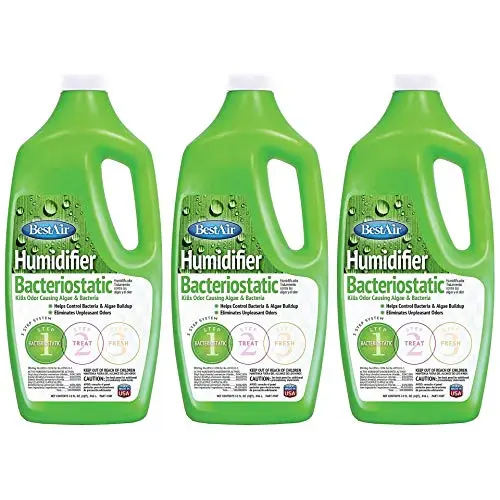
3BT Original – Bacteriostatic Treatment for Evaporative Humidifiers
A concentrated bacteriostatic water treatment made for evaporative humidifiers. The 3-pack is designed to control bacteria and algae, reduce odors, and help wicks last longer when dosed at the label rate.
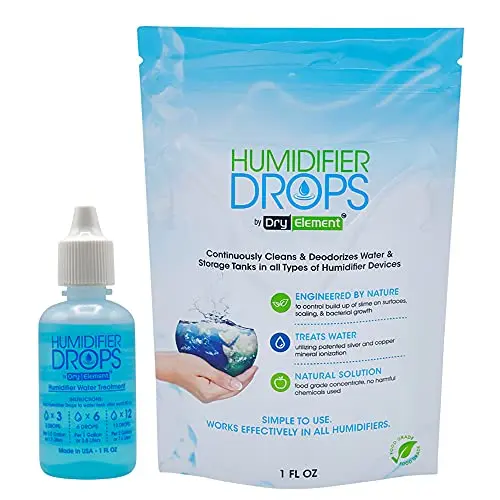
The Original Humidifier Drops – Food-Grade Scale Reducer
A concentrated drop formula designed for all humidifier types. It aims to slow mineral scaling, freshen water, and stretch time between deep cleanings, with a small bottle that covers many refills.
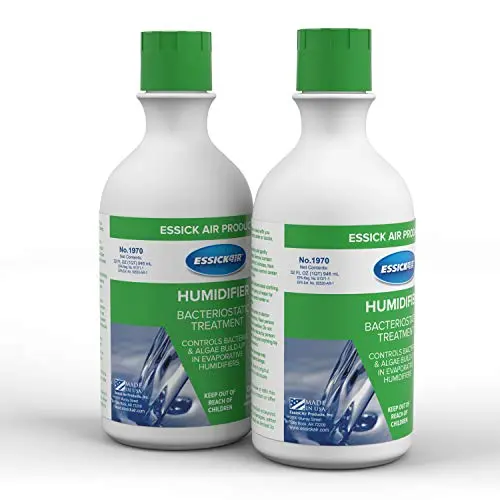
1970-2 – Bacteriostatic Treatment for Essick Air Humidifiers
A two-bottle bacteriostatic treatment formulated for Essick Air humidifiers. It is meant to limit bacteria and algae growth, reduce musty odors, and help filters last longer through the season.
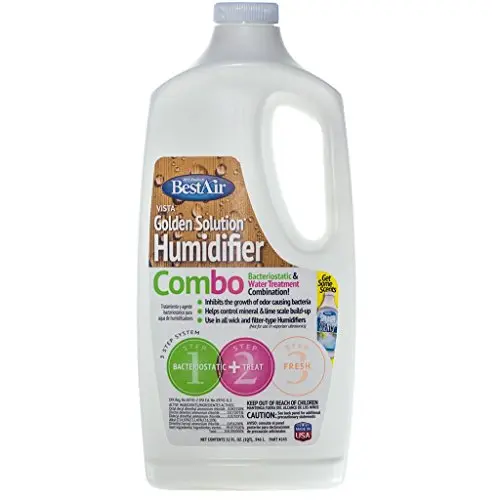
Humidifier Bacteria Water Treatment – Extra-Strength Scale and Odor Control
An extra-strength powdered treatment for portable evaporative humidifiers. It is designed to prolong wick life, limit lime and scale, and keep tank odors under control.
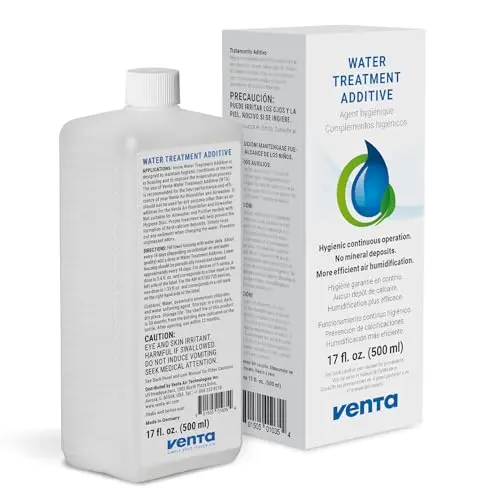
Water Treatment Additive – Mineral Build-Up Prevention for Venta Humidifiers
A water-softening additive made specifically for Venta humidifiers. It is designed to reduce mineral buildup and odors from tap water, with a bottle that includes measuring marks for easy dosing.
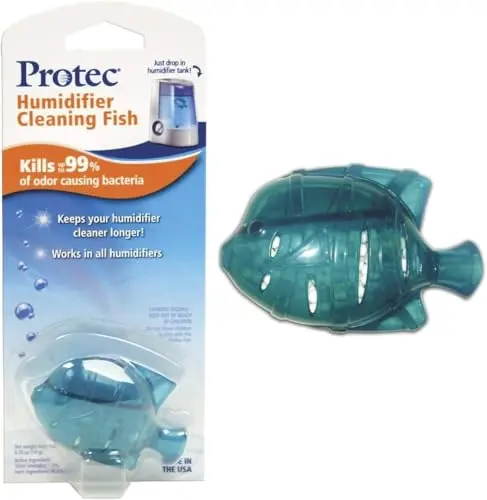
Humidifier Cleaning Fish – 30-Day Tank Cleaner
A small drop-in cleaning cartridge for humidifier tanks. It is designed to fight slimy surface buildup and odors for about a month, and it works in most humidifiers, vaporizers, and steamers.
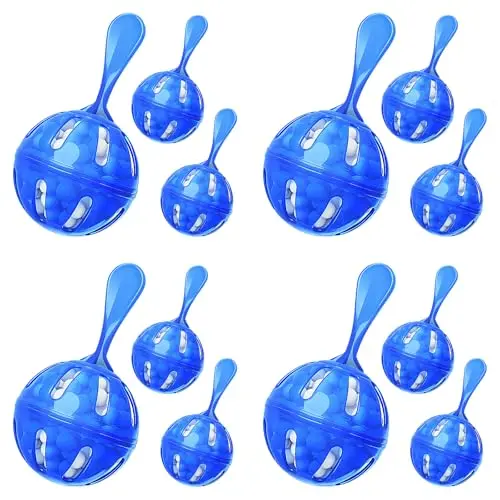
Humidifier Cleaner Balls – 12-Pack Demineralization Cleaning Balls
A multi-pack of drop-in cleaning balls for humidifiers and fish tanks. They are designed to reduce mineral buildup and white dust while cutting down on tank cleaning between refills.
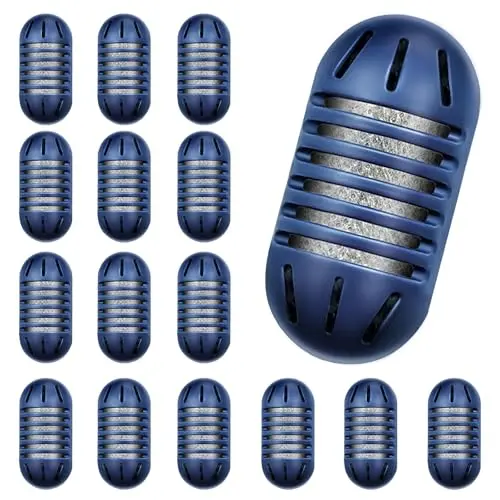
Demineralization Cartridges – 16-Pack for Ultrasonic Humidifiers
A bulk pack of demineralization cartridges for many ultrasonic humidifiers. They use activated carbon and ion-exchange resin to reduce minerals, odors, and white dust from hard water.
How We Evaluated These Air Humidifier Water Treatments
We did not run controlled humidifier tank trials or lab water-hardness tests. What we did: cross-referenced 8 humidifier water treatment models from 8 distinct brands across six decision axes – formulation type, humidifier compatibility, scale and demineralization performance, odor and bacteria control, dosing routine, and maintenance interval. We triangulated published specifications, feature sets, owner feedback where available, and use-case fit against common humidifier setups, including ultrasonic, evaporative, warm-mist, and brand-specific tanks. We mapped each treatment to the humidifiers its label actually supports and flagged products that only fit one brand.
The scoring framework weighted real-world fit (70%) – how well each treatment matches the job its label promises – against feature differentiation (30%) – the format, dosing, and compatibility advantages that separate one option from another. We have no commercial relationship with any brand here; recommendations track fit and differentiation, not brand preference. We also weighed how easy each product is to dose, store, and remember to use, because the best treatment is the one you’ll actually keep up with. A product that requires precise measuring every fill earns that scrutiny; a drop-in cartridge gets judged on whether it lasts as long as promised. If you run an evaporative humidifier, the BestAir 3BT Original is the straightforward match; if you want one bottle for mixed humidifier types, the Dry Element Humidifier Drops covers more ground.
How to Choose the Right Air Humidifier Water Treatment
1. Match the Humidifier Water Treatment to Your Humidifier Type
The first fork in the road is your humidifier’s mist-making method. Evaporative humidifiers pull air through a wick, so they benefit from bacteriostatic treatments that keep the wick and tank fresher. Ultrasonic humidifiers vibrate water into mist and are the ones most likely to throw white dust, so they need demineralization cartridges or drops that target calcium and magnesium. Warm-mist and steam vaporizers heat water, which changes the cleaning job but does not make scale disappear.
Brand-specific machines add another layer. Venta humidifiers have their own additive, and Essick Air has a matching treatment. If your machine is one of those, the brand-specific option is usually the safest starting point; if it is not, choose a universal formula and follow the dose. For evaporative tanks, the BestAir 3BT Original is the direct route.
2. Scale, White Dust, and Odor: What a Humidifier Water Treatment Can Actually Fix
Treatments do not all do the same job. Scale prevention is about minerals: calcium and magnesium in hard water can crust up a wick, coat an ultrasonic plate, or create white dust on nearby surfaces. Demineralization products use resin or similar media to pull those minerals out of the water before they become airborne. Bacteriostatic treatments are more about keeping bacteria and algae from getting a foothold in standing water.
Odor is the overlap zone. A musty smell can come from biological growth, mineral residue, or both, which is why some products target tank freshness while others focus on scale reduction. No additive rescues a tank that has not been rinsed in weeks. If the smell is strong or the tank feels slick, clean it first, then start a maintenance routine.
3. Drops, Cartridges, Fish, and Powders: Humidifier Water Treatment Formats Explained
The format determines how much attention the product demands. Liquid concentrates and powders need measuring at refill time, but they are flexible and often stretch across a season. Drop-in cartridges and cleaning fish are set-and-forget for about a month, which makes them easy to sustain but less precise. Demineralization cartridges are purpose-built for mineral removal, especially in ultrasonic tanks.
Frequency matters more than format hype. A treatment you remember to add every fill will outperform a stronger product that sits in a cabinet. If you want the least measuring, a drop-in cleaner is the easier habit. If you want broad compatibility with minimal gear, Dry Element Humidifier Drops is a compact option.
4. How to Read Dosing Instructions for Humidifier Water Treatments
Dose by water volume, not by tank size guesswork. Labels that call for teaspoons per gallon assume you know how much your tank actually holds; fill it with a measuring pitcher once and mark the level. More is not better with bacteriostatic additives, and overdoing a concentrate can leave residue or odor. Start at the label rate and adjust only if the manufacturer allows it.
Set a maintenance rhythm that matches the product: every fill for liquids, every 14 days for some brand-specific additives, every 30 days for drop-in cleaners, and every few dozen fillings for demineralization cartridges. Write it on the tank if you have to. A simple schedule beats a complicated one you abandon by week three.
5. When Price Tier Matters and When It Doesn't
Entry-level options tend to be single cartridges or small bottles; mid-range picks come in multi-packs; premium treatments are often brand-specific or concentrated for long coverage. None of those tiers is automatically better. A budget-friendly cleaning fish can be the right call if your main problem is slime, while a premium concentrate earns its keep if it replaces several bottles and fits your routine.
Look at cost per refill rather than sticker price alone. Multi-packs reduce reordering, concentrates stretch farther, and brand-specific formulas may be the only safe option for a particular machine. If you are choosing between a universal drop and a machine-specific additive, start with compatibility. For a low-cost entry point, Protec Humidifier Cleaning Fish is the simplest trial.
Frequently Asked Questions
1. Do I need a humidifier water treatment if I use distilled water?
Distilled water takes most of the calcium and magnesium out of the equation, so white dust and scale are less likely. It does not make the tank sterile. If you see slime or smell funk, a bacteriostatic treatment or a drop-in tank cleaner still has a job. Distilled water is a good baseline; treatment is for the biology and the residue that remains.
2. What's the difference between BestAir 3BT and Essick Air 1970-2?
Both are bacteriostatic liquids aimed at bacteria, algae, and odor in humidifier water. BestAir 3BT is built for evaporative humidifiers broadly, and its multi-bottle format suits routine refills. Essick Air 1970-2 is formulated around Essick Air models, so it is the more targeted choice if you own one. If your machine is not an Essick, the Essick Air 1970-2 is not the right default; start with a treatment that matches your humidifier type.
3. Are Dry Element Humidifier Drops or BestAir 3BT better for hard water?
They solve different problems. Dry Element Humidifier Drops are a food-grade concentrate aimed at slowing scale and residue across humidifier types. BestAir 3BT is a bacteriostatic treatment for evaporative wicks, not a demineralizer. If hard-water crust and white dust are the main complaint, the Dry Element Humidifier Drops is the closer fit. If your evaporative wick smells and degrades early, BestAir is the better match.
4. Can a humidifier cleaning fish replace demineralization cartridges?
No. A cleaning fish is a maintenance helper for slimy surface buildup and tank freshness. A demineralization cartridge uses resin or similar media to target calcium and magnesium, the minerals behind white dust. If your furniture is dusty with white specks, choose demineralization; if the tank feels slick, choose a cleaner. Some households use both.
5. How often should I add humidifier water treatment?
Follow the label for your specific product. Liquid concentrates are often dosed at every fill, brand-specific additives may call for a 14-day rhythm, drop-in cleaners commonly last about 30 days, and demineralization cartridges may need replacing every few dozen fillings. The right interval depends on water hardness and how often the humidifier runs. Put the schedule where you will see it.
Final Verdict
For most evaporative humidifier owners, the BestAir 3BT Original is the answer. It handles the unglamorous stuff – bacteria, algae, odor, and wick life – without asking you to learn a new routine. If you run an ultrasonic humidifier and white dust is the enemy, the isinlive Demineralization Cartridges are the more appropriate tool; if you want one bottle for mixed humidifier types, the Dry Element Humidifier Drops are the flexible pick. And if you just want the lowest-effort monthly reset, the Protec Humidifier Cleaning Fish is the budget-friendly entry point.
Start with the treatment that matches your humidifier type. Then pick the format you will actually keep up with. That combination beats any single miracle bottle.
