
Best Air Purifiers For Asthma – 2026 Reviews

It usually starts at 3 a.m. – a cough that won’t settle, a window cracked open because the room feels stale, and a slow realization that the air in the bedroom is part of the problem. Asthma doesn’t respond to willpower, and it doesn’t respond to a purifier with a big coverage number on the box either.
Two things separate a purifier that genuinely helps from one that just hums in the corner. The first is whether it’s actually sized for the room where you sleep – not the theoretical square footage on the label, but four or five air exchanges an hour in a small, closed bedroom. The second is whether you can leave it running all night without wanting to switch it off, which comes down to noise at the lowest setting and whether the display can go dark.
We looked across the major brands, from the budget towers that have sat on shelves for years to sensor-driven smart units and compact desk-sized options. What follows is a practical map of the category: which purifiers suit a bedroom, which handle a larger open space, and where the money actually goes. Pick the one that matches your room, not the one with the biggest number printed on the front.
Best Air Purifiers for Asthma – 2026 Reviews
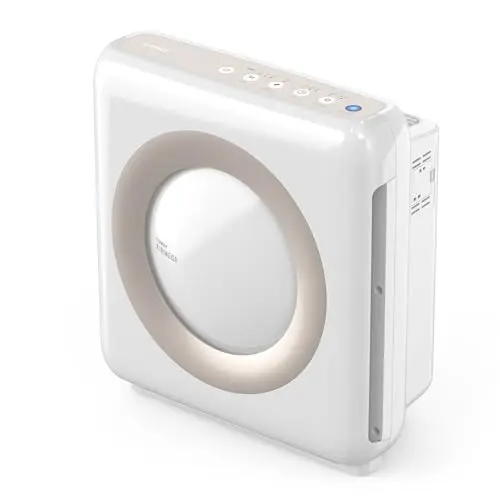
Mighty AP-1512HH – Quiet Four-Stage All-Rounder
A four-stage stack – washable pre-filter, deodorization filter, bipolar device, and HEPA – rated to capture 99.97% of particles down to 0.3 microns. Auto mode reads the room and adjusts fan speed on its own, and the coverage rating reaches 1,748 square feet on a single hourly pass.
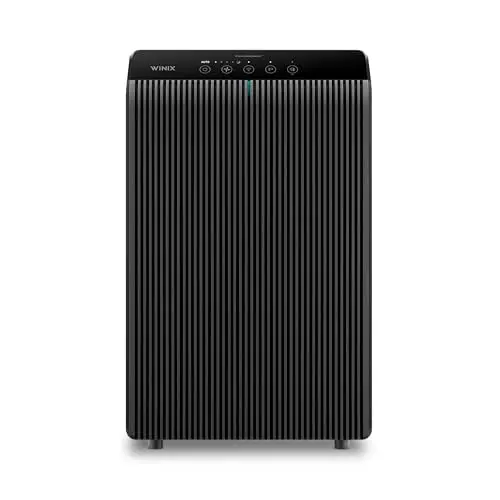
5510 – True HEPA and App Control for Large Rooms
The 5510 pairs a True HEPA filter rated to 0.01 microns with a high-capacity carbon layer for odors and VOCs, then adds a washable fine mesh pre-filter, a real-time air quality light, and app control. Coverage stretches to 1,882 square feet on a single hourly pass, with AHAM verification at 392 square feet.
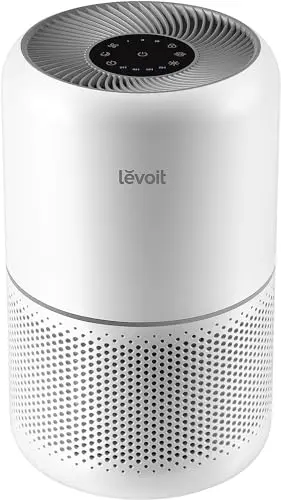
Core 300-P – AHAM-Verified Value for a Bedroom
A compact tower with a 56W motor and AHAM Verifide CADR ratings of 143 CFM for smoke, 153 for dust, and 167 for pollen. It cycles a 222 square foot room almost five times an hour and drops to 24 dB in sleep mode.
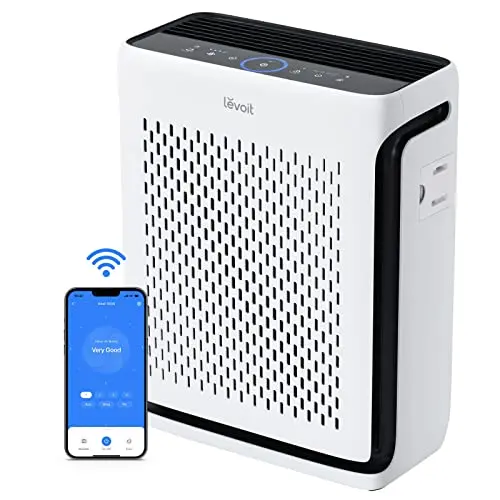
Vital 100S-P – Pet Mode and a Washable Pre-Filter
Built around a wide U-shaped inlet that catches fur before it reaches the filter stack, with Pet Mode, a washable pre-filter, light-sensing display dimming, and VeSync app control with Alexa and Google Assistant support. Sleep mode lands around 25 dB.
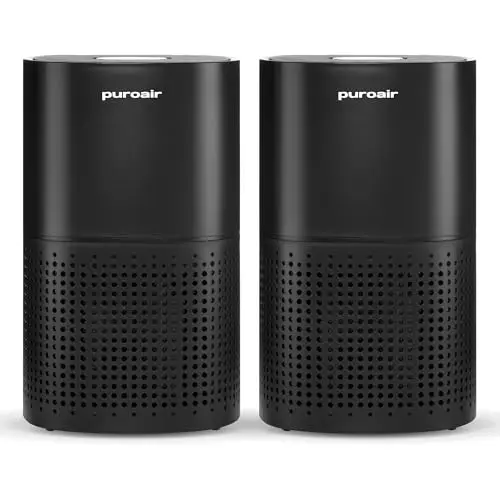
PuroAir 240 – Two Units With a Particle Sensor
A two-pack of 1,000-square-foot purifiers with a three-layer pre-filter, HEPA, and activated carbon stack, a smart particle sensor driving auto mode, and a sleep mode for overnight use. Both units carry CARB, ETL, ISO, and UL certifications.
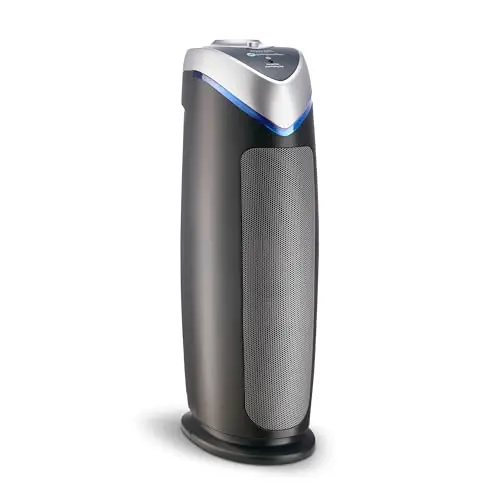
AC4825E Tower – UV-C Plus HEPA on a Budget
A 22-inch tower with a HEPA PURE filter rated to 99.97% of allergens as small as 0.1 microns, an optional UV-C light, three fan speeds including a sleep setting, and CARB, ETL, and Zero Ozone certifications. Filters a small bedroom every 12.5 minutes.
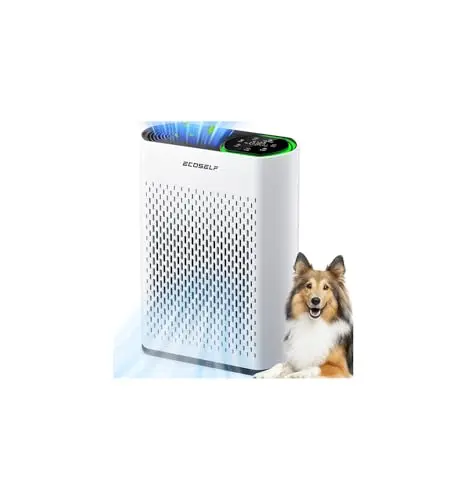
HAP602 – Real-Time PM2.5 Readout
A wide, low-profile purifier with a built-in PM2.5 sensor and color-coded air quality display, a three-stage filtration stack, three fan speeds plus auto mode, a child lock, and a sleep mode rated around 20 dB.
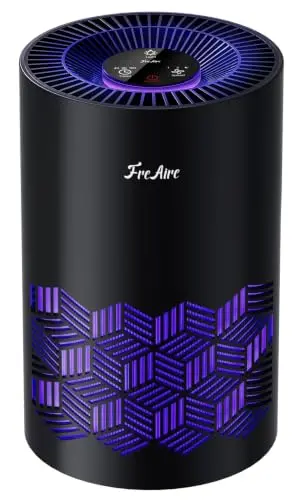
KN-6391 – Night Light and Aroma Pad Extras
A compact purifier with a three-level filtration system for particles down to 0.3 microns, a dual-channel inlet with 360-degree output, three ambient light settings, an aroma pad, and a sleep mode around 20 dB.
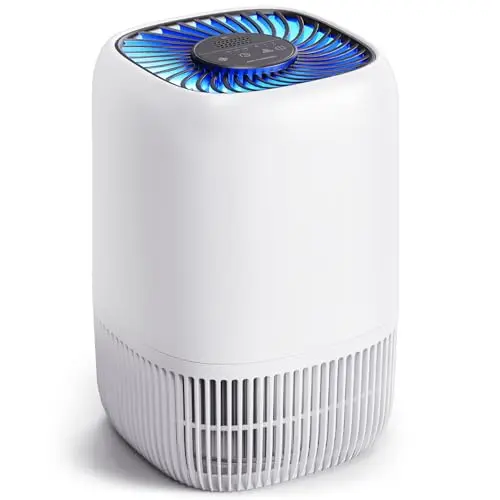
DH-JH12 – Tiny Footprint, Desk-Friendly
A small-format purifier with a triple-layer filtration system rated to 99.97% of airborne particles, 360-degree intake, three speeds, a timer, an essential oil tray, and quiet operation down to about 22 dB.
How We Evaluated These Air Purifiers for Asthma
We didn’t run these air purifiers through a particle-counter lab bench or a multi-week sealed-room trial. What we did: cross-referenced 9 air purifier models from 8 distinct brands across 6 decision axes – filtration grade and CADR, room coverage per air exchange, noise at the lowest speed, auto-mode sensing, filter availability and cost, and certifications like AHAM Verifide and CARB. We triangulated published specifications, feature sets, aggregated owner feedback where available, and use-case fit against the realities of a household managing asthma.
The scoring framework weighted real-world fit for asthma management (70%) – how well each unit actually moves and cleans air in a bedroom – against feature differentiation (30%) – unique sensing, app control, and filtration layers that separate one box from another. We mapped owner sentiment onto spec sheets rather than trusting either alone, because a quiet purifier that’s undersized for its room is just a decorative fan. Durability and warranty terms were weighed where the input made them verifiable, and units without published CADR or recognized certification were scored lower rather than given the benefit of the doubt. We have no commercial relationship with any brand here; recommendations track fit and differentiation, not brand preference. If a bedroom is the priority, the Coway AP-1512HH Mighty is the safest place to start; if smoke or cooking odor in a bigger open space is the problem, the Winix 5510 covers more ground.
How to Choose the Right Air Purifier for Asthma
1. Filtration Grade Is the Starting Line, Not the Finish
Every purifier here claims HEPA-level filtration, and the numbers start to blur. The standard that matters is true HEPA: 99.97% capture at 0.3 microns. Some brands push the claim finer – Winix rates its True HEPA filter to 0.01 microns, GermGuardian to 0.1 microns – and those are legitimate lab figures, not marketing fiction, but they aren’t the whole story. A filter is only as good as the housing around it, and a loose filter-chamber seal lets air bypass the media entirely.
For asthma, the second layer matters almost as much. Activated carbon handles gases, cooking fumes, and VOCs that a particle filter waves straight through, and those are common triggers. Look for a carbon stage described by weight or depth rather than a token mention in the bullet list.
2. Sizing an Air Purifier for Asthma Flare Season
CADR – clean air delivery rate – is the spec that predicts whether a purifier will actually change a bedroom. The working target for asthma is four to five air exchanges per hour in the room where you sleep. That’s exactly why marketing coverage numbers mislead: a unit rated for 1,073 square feet is usually delivering one air exchange per hour at that size, a fraction of what a bedroom needs.
Do the math in reverse. A 150-square-foot bedroom needs a purifier that turns that room over four-plus times an hour, not one that theoretically handles an open-plan floor. If your bedroom opens into a larger living space, the Winix 5510 has the headroom to serve both without running flat out.
3. Asthma-Friendly Features That Earn Their Place
Auto mode with a real particle sensor is the most useful addition in years. It means the purifier ramps up when someone walks in with pollen on their clothes and quiets down once the room stabilizes, without you touching anything. Sleep mode is the other one – under roughly 25 dB is the threshold where most people stop noticing the fan. A display that dims or switches off entirely matters more than it sounds in a bedroom.
Skip features that don’t move the needle: decorative lighting, voice-assistant tricks, and fragrance pads. Ionizers deserve some caution too, since a subset of asthma sufferers react to ozone, so check whether a unit pairs any ionization stage with zero-ozone verification before you commit.
4. What Replacement Filters Really Cost Over a Year
Every purifier in this category is a subscription in disguise. HEPA cartridges typically need swapping every six to twelve months, and a replacement filter that’s hard to source or expensive quietly doubles your cost of ownership. Stick to manufacturer filters: off-brand media is a known source of reduced airflow and, in some cases, damage to the unit itself.
A washable pre-filter softens the math considerably, catching hair and coarse dust before it reaches the HEPA layer. The Levoit Vital 100S-P and Winix 5510 both include one. If keeping running costs low is the priority, the GermGuardian AC4825E uses a widely stocked filter that’s easy to find.
5. Coway vs Winix vs Levoit: How the Big Names Differ
The three most common names here approach the same problem differently. Coway builds the AP-1512HH around four-stage filtration and sensor-driven auto mode, with an emphasis on quiet operation and a long warranty. Winix leans on filtration reach – a True HEPA filter rated to 0.01 microns plus a substantial carbon layer – and adds app control. Levoit splits its lineup: the compact Core 300-P competes on AHAM-verified CADR at a low entry price, while the Vital 100S-P adds a pet-specific inlet, a washable pre-filter, and app scheduling.
If you want the least thinking involved, the Core 300-P is the simplest of the three. If you’re covering a bigger, more open space or dealing with smoke, Winix’s headroom is the differentiator. And if asthma and a shedding dog share a room, the pet-specific design justifies the step up.
Frequently Asked Questions
1. Do air purifiers actually help with asthma?
They help with the triggers, not the condition itself. A HEPA purifier removes airborne pollen, dust, pet dander, and smoke particles that set symptoms off, and the consistent theme across owner feedback in this lineup is less sneezing, less nighttime coughing, and easier breathing in the room where the unit runs. What a purifier can’t do is replace medication or fix a damp, moldy room.
Placement matters as much as the machine. Run it in the bedroom, keep doors and windows closed, and give it clearance from the wall so it can pull air properly. A well-sized unit on a low setting beats an undersized one screaming at maximum.
2. What's the difference between the Coway AP-1512HH and the Winix 5510?
Mostly scale and control. The Coway AP-1512HH is the more compact of the two and leans on a four-stage filtration stack with sensor-driven auto mode; owners describe it as very quiet, and it carries a three-year warranty. The Winix 5510 is bigger, heavier, and rated for far more square footage, with a True HEPA filter rated to 0.01 microns, a substantial carbon layer for odors and VOCs, and app control.
Pick Coway for a bedroom where you want quiet simplicity. Pick Winix if the room is large, opens into other spaces, or smoke and cooking fumes are part of the picture.
3. Levoit Core 300-P vs GermGuardian AC4825E – which suits a smaller bedroom?
Both are bedroom-scale, but they solve it differently. The Core 300-P publishes AHAM Verifide CADR numbers you can actually compare, drops to 24 dB in sleep mode, and includes a timer and filter indicator – it’s the more modern, more measurable choice. The GermGuardian AC4825E undercuts it on price, adds an optional UV-C light, and cycles a small room every 12.5 minutes, but the fan is noticeably louder and there’s no sensor.
If the purifier runs overnight next to your bed, the quieter sleep mode is the deciding factor. If budget is tight and you’d rather spend the difference on filters, the GermGuardian still does the core job.
4. Are the inexpensive compact purifiers worth it for asthma?
Only if you size your expectations to the room. Units like the VOOPNU DH-JH12 and FreAire KN-6391 are built for desks, nightstands, and small nurseries – they move far less air than a full-size tower, and their coverage claims are lab projections rather than bedroom reality. What they do offer is quiet operation, a tiny footprint, and enough filtration to make a difference in a small, closed space.
For the bedroom where someone with asthma sleeps every night, spend more. For a kid’s room, a home office, or a travel bag, a compact unit is a reasonable second purifier. Skip the essential oil trays either way – fragrance is a common trigger.
5. Where should an air purifier go in an asthma-friendly bedroom?
Close to where the person sleeps, but not wedged into a corner. Leave several inches of clearance on every intake side so the unit isn’t recycling its own exhaust, and keep it away from heavy curtains and the back of furniture. A spot roughly level with the bed, a few feet away, works well.
Keep the bedroom door closed while it runs, and don’t park it beside a window you leave open – you’ll be filtering outdoor air on a loop. If you’re running a particle sensor model, give it a week in one position before judging the readings; they settle once the room’s baseline drops.
Final Verdict
For most households managing asthma, the Coway AP-1512HH Mighty is the pick – four-stage filtration, sensor-driven auto mode, and the quietest overnight operation in this lineup, all in a footprint that fits a bedroom. It’s the one we’d recommend without caveats.
If your bedroom opens into a bigger living space, or smoke is part of the equation, the Winix 5510 has the square footage and carbon capacity to handle it. On a tighter budget, the Core 300-P delivers independently verified CADR and a genuinely quiet sleep mode for a fraction of the outlay – the best value in the group. And if a shedding pet shares the room, the Vital 100S-P pet-specific inlet and washable pre-filter justify the step up.
Size the unit to the room you actually sleep in. Everything else is secondary.
