
Best Air Purifiers For Basement Mold – 2026 Reviews

A basement that smells like a wet towel is trying to tell you something. Mold spores, musty odors, and the damp-air feeling that comes with them do not stay politely in the corner; they drift into the stairs, the laundry room, and the rest of the house. An air purifier is not a magic mold eraser, but it can pull spores and odor-causing particles out of the air while you deal with the moisture source.
The useful split in this category is between purifiers that simply pass air through a HEPA filter and those that also have enough carbon for musty smells, a particle sensor for auto mode, and enough coverage for a basement that is larger than a closet. You will also want to think about noise and filter cost, because a basement purifier often runs for long stretches.
We looked across the market at options that make sense for damp, mold-prone basements, from compact quiet units to large-room workhorses. The goal is not to crown one brand; it is to match the purifier to your basement’s size, smell level, and tolerance for maintenance.
Best Air Purifiers for Basement Mold – 2026 Reviews
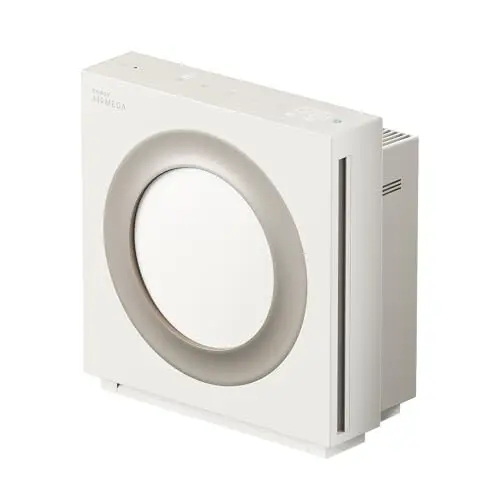
Airmega Mighty2 – Large-Room HEPA for Damp Basements
A large-room HEPA purifier with an active carbon Max2 filter, a laser particle sensor, and a washable pre-filter. It is built for damp, musty spaces where you want automatic operation and low maintenance guesswork.
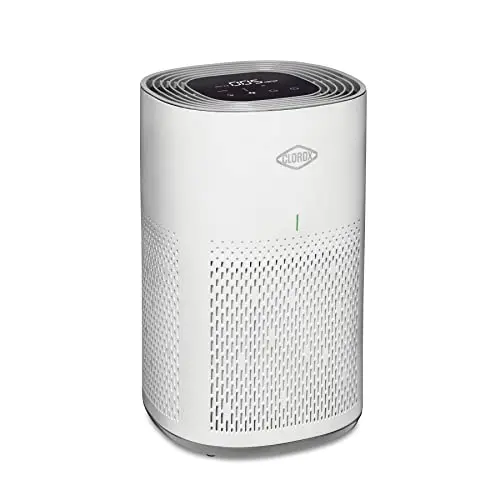
Medium Room 11030 – Mold-Focused HEPA Filtration
A medium-room true HEPA purifier with an explicit mold-reduction claim, a PM2.5 display, and auto mode. It is the most mold-focused compact option here for smaller damp spaces.
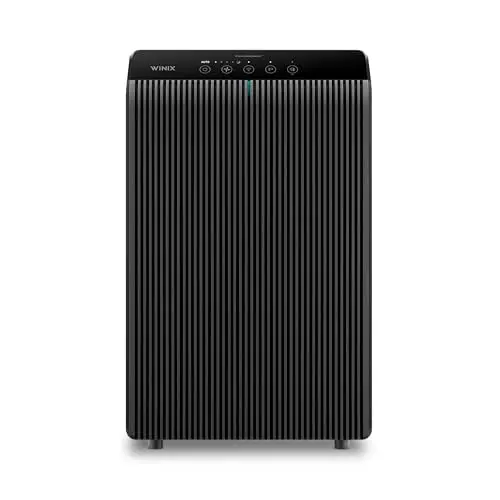
5510 – Large-Coverage HEPA with Smart Sensors
A large-coverage true HEPA purifier with high-deodorization carbon, a smart app, and auto mode. It suits bigger open basements where you want sensor-driven control and odor headroom.
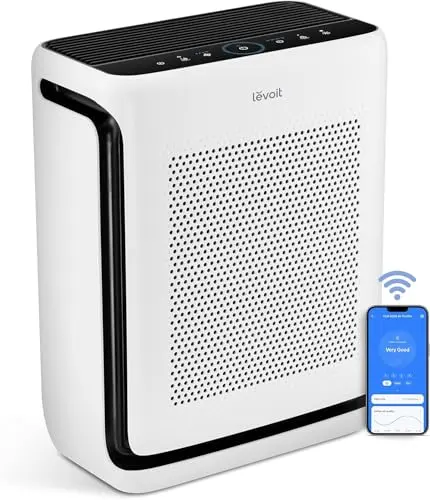
Vital 200S-P – Smart HEPA for Allergy-Prone Basements
A smart large-room HEPA purifier with AHAM-verified CADR, a U-shaped air intake, and app control. It is designed for allergy-prone homes and basement spaces that need strong particle turnover.
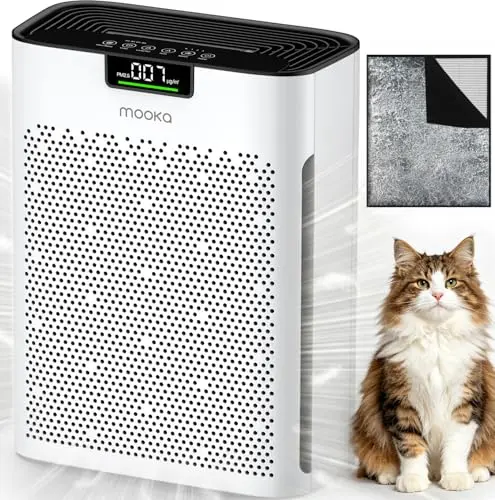
KJ190H – Budget HEPA with Washable Pre-Filter
A budget-friendly large-room HEPA purifier with a washable pre-filter, PM2.5 display, and a very quiet sleep mode. It is a sensible entry point for a basement that needs basic mold-spore and odor control.
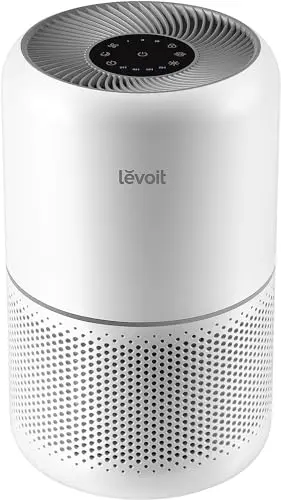
Core 300-P – Compact Quiet HEPA for Smaller Basements
A compact, quiet HEPA purifier with AHAM-verified performance and a small footprint. It is best for smaller basements, laundry corners, or bedrooms where space is tight.
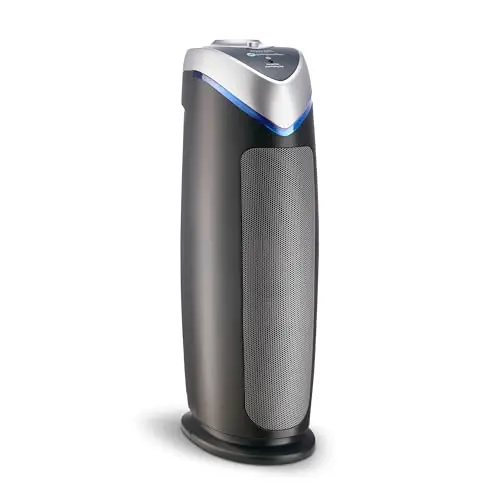
AC4825E – UV-C HEPA Tower for Musty Rooms
A tower-style HEPA purifier with an optional UV-C light and activated carbon. It is a straightforward choice for a small musty room, with a quiet sleep mode and simple controls.
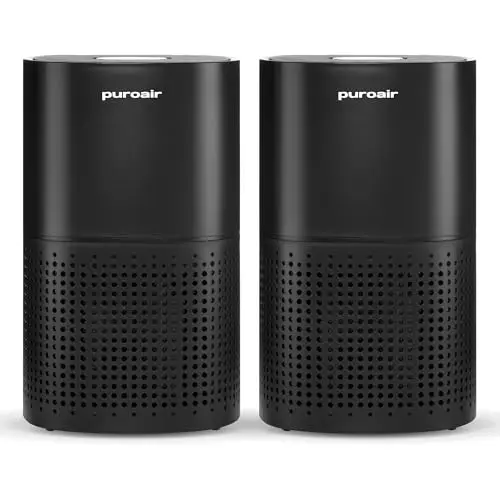
240 2-Pack – Sensor-Driven HEPA for Two Spaces
A two-pack of sensor-driven HEPA purifiers with carbon filtration and auto mode. It is a practical setup if you want one unit for the basement and one for another damp or dusty room.
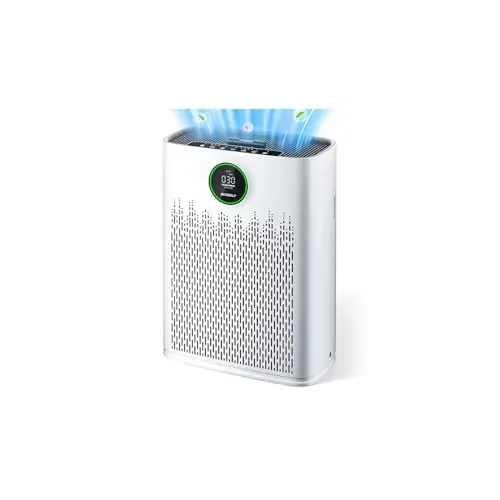
HAP603 – Budget Large-Room HEPA with AQI Display
A budget large-room HEPA purifier with PM2.5 display, auto mode, and aromatherapy. It is a low-cost option for a basement where you want coverage and quiet operation without spending much.
How We Evaluated These Air Purifiers for Basement Mold
We didn’t run controlled mold-spore chamber tests or long-term damp-basement trials. What we did: cross-referenced 9 air purifier models from 8 distinct brands across six decision axes – true HEPA filtration, carbon odor control, room coverage and CADR, sensor-driven auto mode, noise for continuous operation, and filter maintenance. We triangulated published specifications, feature sets, and owner feedback where available, then mapped each unit against realistic basement-mold scenarios, from small damp corners to large open finished spaces. We weighed washable pre-filter designs and replacement cadence too, since a basement purifier often runs around the clock and maintenance friction matters as much as peak airflow.
The scoring framework weighted real-world fit (70%) – how well each purifier handles spores, musty odors, and continuous basement use – against feature differentiation (30%) – sensor quality, filter stack, warranty, and maintenance design. We have no commercial relationship with the brands here; recommendations track fit and differentiation, not brand preference. If you want the most complete all-around package, the Airmega Mighty2 is the match; if mold-specific auto response in a smaller space matters more, the Clorox Medium Room is the better route. We also kept an eye on noise and display behavior, because a purifier that is annoying at night is less likely to stay running in a guest room or workspace. That matters in basements used as bedrooms, gyms, or laundry rooms.
How to Choose the Right Air Purifiers for Basement Mold
1. Why Basement Mold Needs Moisture Control First
An air purifier can capture mold spores that are already airborne, but it cannot dry a wet wall or stop mold from growing. Moisture control comes first: fix leaks, run a dehumidifier, and ventilate when you can. A purifier is the cleanup layer for spores, musty odors, and VOCs that linger after the source is addressed.
2. What to Look for in an Air Purifier for Basement Mold
For basement mold, the non-negotiables are a true HEPA filter, a carbon layer for musty odors, and enough CADR for the room. An auto mode with a particle sensor helps because basement air quality swings with weather and laundry. If you want the strongest all-around match, the Airmega Mighty2 is the pick; its sensor and filter stack suit damp, musty spaces.
3. HEPA Filtration and Mold Spores: What the Specs Actually Mean
HEPA ratings describe particle capture, not mold remediation. A true HEPA filter traps spores that pass through the unit, while a washable pre-filter catches larger dust and pet hair first. Look for CARB certification and a sealed filter path; those details matter more than a dramatic mold claim. For a mold-focused smaller space, the Clorox Medium Room is the most explicit option here.
4. Coverage, CADR, and Basement Layout
Coverage claims assume open, well-mixed air. Basements are often divided into rooms, so use the CADR number and the air changes per hour figure as your reality check. A 1,800-square-foot claim is not the same as cleaning a 1,800-square-foot finished basement with closed doors. For a big open basement, the Winix 5510 has the coverage headroom and sensor-driven auto mode to match.
5. Carbon Filters, Musty Odors, and VOC Reduction
The musty smell in a basement is not just spores; it is also VOCs and odor compounds. A carbon filter helps with those, but carbon has limited capacity and needs replacement. Do not expect a purifier to mask a persistent damp smell; that is a moisture problem first. A unit with a filter-life indicator makes carbon replacement less of a guess.
6. Noise, Auto Mode, and Running a Basement Air Purifier 24/7
Basements are often living spaces, guest rooms, or workspaces, so sleep-mode noise matters. A model that runs at low decibels and has a display-off option is easier to leave on overnight. If budget is the deciding factor, the MOOKA KJ190H gives you a washable pre-filter, AQI display, and quiet sleep mode at an entry-level tier.
Frequently Asked Questions
1. Do air purifiers actually help with basement mold?
They help with the airborne part of the problem, not the source. A true HEPA filter can capture mold spores that pass through the unit, and a carbon filter can reduce musty odors and some VOCs. But mold needs moisture, so the real fix is stopping dampness with leak repair, a dehumidifier, and ventilation. If you want a purifier that handles both particles and odors well while you work on moisture, the Airmega Mighty2 is the strongest all-around choice here.
2. What's the difference between the Coway Airmega Mighty2 and Winix 5510 for a damp basement?
Both are large-room HEPA purifiers with sensors and auto modes. The Airmega Mighty2 leans on a Megascan laser sensor, a three-year warranty, and a filter-life display, while the Winix 5510 counters with slightly higher coverage, a high-deodorization carbon filter, and app control. For a musty basement where odor control and long-term support matter most, the Coway is the more complete package; for a bigger open space with app control on your wish list, the Winix makes more sense.
3. Is the Clorox Medium Room or Levoit Core 300-P better for a small basement with mold?
The Clorox is the more mold-focused pick: it pairs true HEPA filtration with an explicit mold reduction claim, a PM2.5 display, and auto mode. The Levoit Core 300-P is smaller, quieter, and simpler, with AHAM-verified performance and a compact footprint. For a small basement where you want the purifier to react to changing air quality, the Clorox Medium Room is the better fit; for a bedroom-sized corner where simplicity matters, the Levoit is easier to live with.
4. How often should I run an air purifier in a basement with mold?
Run it continuously on auto mode if the basement is damp or musty, because spore levels rise and fall with humidity and activity. A low-speed 24/7 setting is usually more useful than blasting it for an hour after you notice a smell. Change the carbon filter on schedule; a loaded carbon layer stops helping with odors even if the HEPA filter still looks fine.
5. Do I need a carbon filter for basement mold odors?
Yes, if musty smells bother you. HEPA captures particles, but odor compounds and VOCs need activated carbon. Carbon is not a permanent fix and it does not kill mold, but it makes a damp basement more tolerable while you address moisture. Look for a purifier with a filter-life indicator so you actually replace the carbon before it is exhausted.
Final Verdict
For most basement-mold situations, the Airmega Mighty2 is the pick – it pairs true HEPA and carbon filtration with a laser particle sensor, strong large-room coverage, and a three-year warranty. It is the one we would choose for a damp, musty basement that needs set-and-forget operation. If mold is the specific concern and your space is smaller, the Clorox Medium Room is the most mold-focused option here, with auto mode and a PM2.5 display. For a bigger open basement, the Winix 5510 gives you more coverage headroom and app control. And if you want the best entry-level route, the MOOKA KJ190H covers the basics with a washable pre-filter and quiet sleep mode. Match the purifier to the room, then fix the moisture – that is the one-two punch that actually works.
