
Best Air Purifiers For Chemical Fumes – 2026 Reviews

You notice it before you can name it. Maybe it’s the new sofa that’s been off-gassing for a week, the paint in a hallway you close the door on, or a rented apartment that still smells faintly of the last tenant’s cleaning products. Whatever it is, it hangs in the air in a way dust never does, and a standard allergy purifier does almost nothing about it.
That’s because chemical fumes aren’t particles. Most of what comes off furniture, adhesives, paint, and cooking is gas, and gas passes straight through a HEPA filter like water through a sieve. The part of a purifier that actually grabs those molecules is activated carbon – and how much carbon a unit carries, and whether its filter is designed for gases rather than just odors, is the dividing line between purifiers that make a real difference and ones that just move air around.
The second axis is honest sizing. Plenty of units advertise enormous square footage at a single air change per hour, which is a low bar for a problem you can smell. Below we’ve cross-shopped the major brands and grouped them by what they’re actually built for, so you can match the carbon load and the air-change rate to the room where the smell lives.
Best Air Purifiers for Chemical Fumes – 2026 Reviews
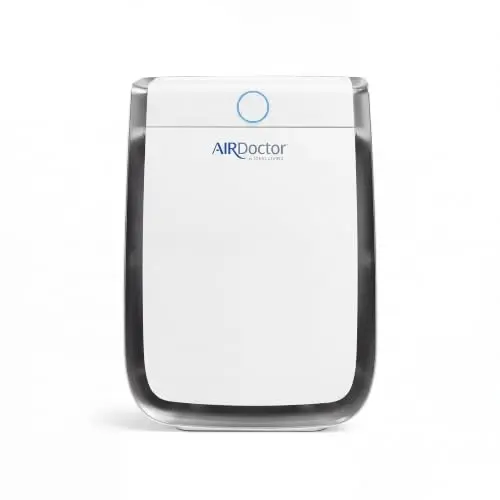
AD3500 – Premium Carbon for Gases and VOCs
A three-stage purifier built around gas handling: pre-filter, premium activated carbon with potassium permanganate, and an UltraHEPA stage rated to 0.003 microns. Covers 630 square feet in 15 minutes and up to 2,520 square feet in an hour. Auto mode runs off PM2.5 sensors with a color-coded halo display, plus four fan speeds, a timer, and a filter indicator.
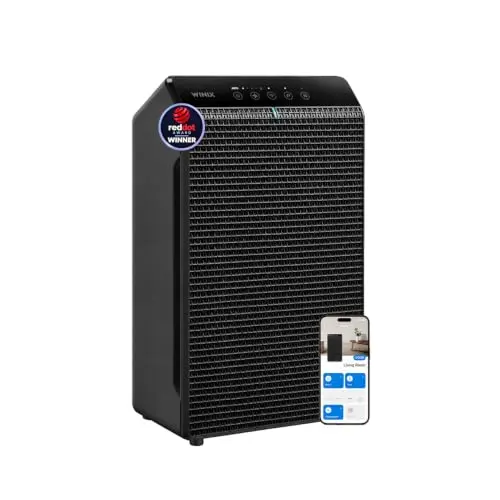
5520 – True HEPA With Advanced Odor Control
True HEPA capture down to 0.01 microns, backed by an advanced odor control carbon filter aimed at VOCs, cooking fumes, and smoke. Washable fine mesh pre-filter, LED air quality indicator, smart sensors with auto mode, app control, and a light-activated sleep mode that runs at 23.5dB. Cleans up to 1,882 square feet in one hour.
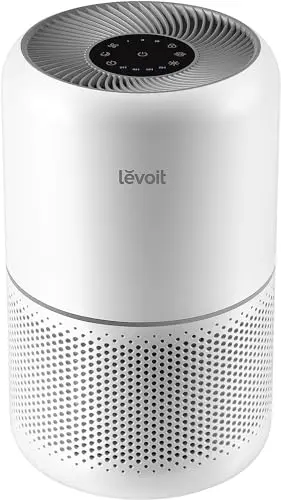
Core 300-P – Budget Pick With VOC Filtration
A compact 3-in-1 purifier pairing a pre-filter, HEPA-grade main filter, and activated carbon layer. Listed as targeting VOCs, smoke, dust, pollen, dander, and odors, with a 143 CFM smoke CADR verified under AHAM. Covers 222 square feet at nearly five air changes per hour, runs at 24dB in sleep mode, and includes a timer, display-off, and filter indicator.
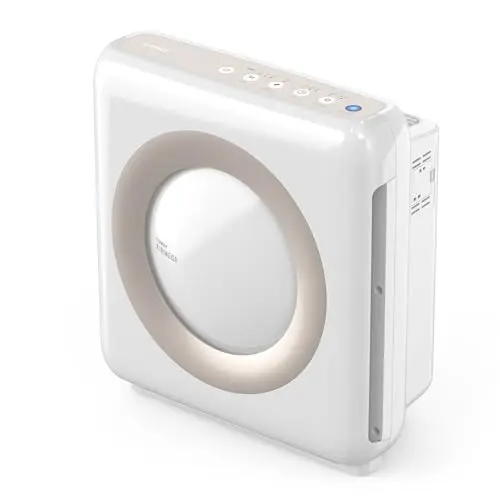
Mighty AP-1512HH – Four-Stage Filtration Classic
A four-stage design combining a washable pre-filter, deodorization filter, bipolar device, and HEPA media that captures 99.97% of 0.3-micron particles. Coway states it reduces volatile organic compounds and odor as well. Cleans up to 1,748 square feet in an hour, with auto mode, a color-coded air quality indicator, sleep-friendly light control, filter alerts, and a three-year warranty.
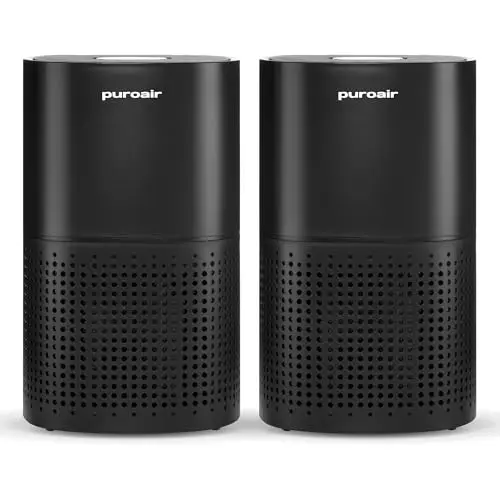
PuroAir 240 – Two Units for Whole-Room Coverage
Sold as a pair, each unit runs a three-layer stack of pre-filter, HEPA, and activated carbon, listed as filtering up to 99.9% of pollutants including dust, pollen, smoke, dander, and VOCs. Each covers up to 1,000 square feet in an hour with a PuroIQ particle sensor driving auto mode, a quiet sleep mode, and 360-degree intake. CARB, ETL, ISO, and UL certified.
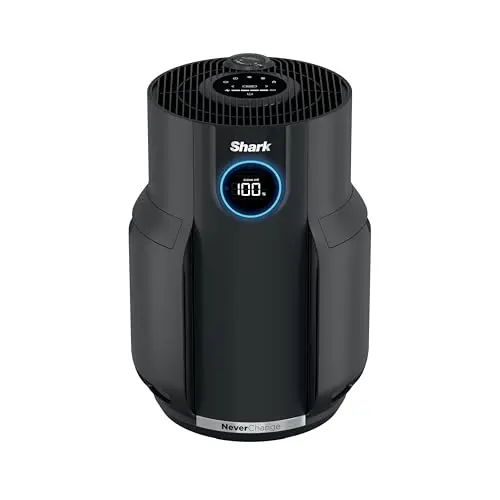
NeverChange HP152 – Low-Maintenance Particle Control
A compact purifier built around Shark’s NeverChange long-life filtration, which exceeds HEPA standards on particle capture and includes an odor neutralizer cartridge. CleanSense IQ shows a live air quality readout, a washable debris defense screen catches hair before it reaches the main filter, and coverage runs to 650 square feet in an hour. Dimmable lights and an eco mode round it out.
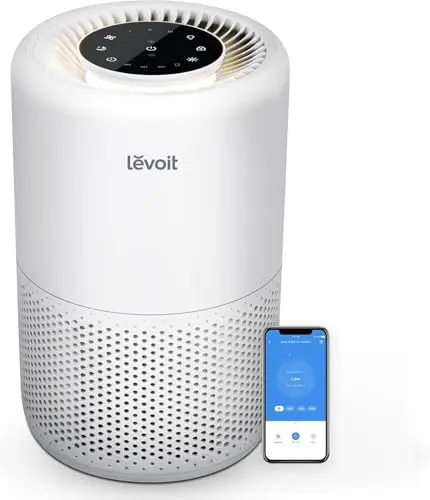
Core 200S-P – Smart Compact for Small Rooms
A small-room purifier with 360-degree intake and a 3-in-1 filter combining a nylon pre-filter, high-efficiency activated carbon layer, and main filter rated down to 0.1 microns. Refreshes 140 square feet at nearly five air changes per hour, runs at 27dB, and supports app, Alexa, and voice control with filter life tracking and a display-off mode.
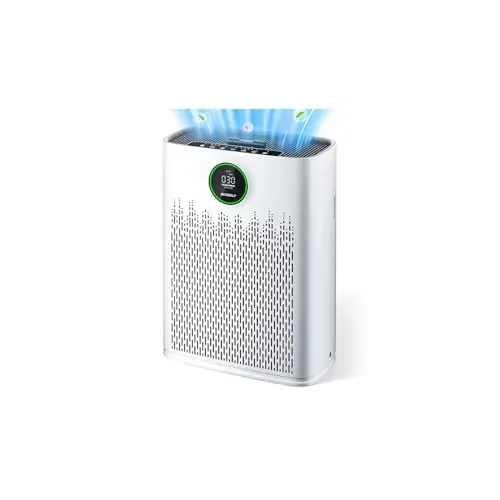
HAP603 – Aromatherapy Plus a PM2.5 Readout
A room purifier with a PM2.5 air quality display driven by an infrared sensor that adjusts fan speed automatically. The filtration stack captures 99.97% of airborne particles, with a filter indicator, timer, multiple fan speeds, and lock controls. Sleep mode runs at 22dB, and an aromatherapy tray adds a scent option. ETL, FCC, EPA, CARB, and DOE certified.
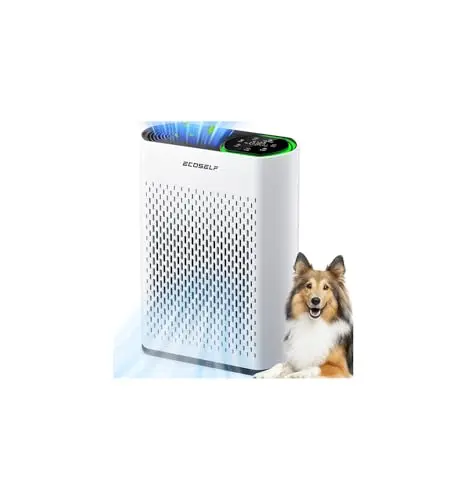
HAP602 – Budget Monitoring for Spare Rooms
A compact purifier with a PM2.5 sensor and real-time display that shifts color as air quality changes, driving an auto mode that raises fan speed on its own. Three-stage filtration targets dust, pollen, dander, and smoke, with three manual fan speeds, a child lock, and a near-silent sleep mode on a simple touch panel.
How We Evaluated These Air Purifiers for Chemical Fumes
We didn’t run these purifiers in a sealed chamber with calibrated VOC meters, and we didn’t measure off-gassing rates over weeks. What we did: cross-referenced nine air purifier models from seven distinct brands across six decision axes – filtration media and activated carbon volume, particle capture rating, smoke clean air delivery rate, realistic room coverage, noise and sleep behavior, and filter replacement burden. We triangulated published specifications, feature sets, and owner feedback where available, then mapped each unit against the specific job of clearing chemical fumes rather than everyday dust. That distinction matters more than any single spec sheet number: a purifier that’s excellent at pollen can be close to useless against a solvent smell.
The scoring framework weighted real-world performance for fumes (70%) – how much carbon actually sits in the air path, whether the brand specifies gas and VOC reduction, and whether coverage is sized to cycle your room several times an hour – against feature differentiation (30%), which covers sensor quality, display readability, app control, and maintenance design. Recommendations track fit and differentiation, not brand preference, and no brand paid for placement. If a paint, adhesive, or new-furniture smell is the complaint, the AirDoctor AD3500 is the match; if you want strong carbon without the premium tier, the Winix 5520 is the smarter spend. Both handle particles comfortably; the gap between them is almost entirely in the gas stage.
How to Choose the Right Air Purifier for Chemical Fumes
1. Why Activated Carbon Does the Heavy Lifting Against Chemical Fumes
A HEPA filter is a physical sieve. It catches particles by interception and impaction, and it does that job well – but the molecules coming off fresh paint, adhesive, or a new sofa aren’t particles. They’re far smaller than anything HEPA is designed to capture, and they pass straight through. What grabs them is activated carbon, a porous material with an enormous internal surface area that traps volatile organic compounds and other gases through adsorption.
That’s the single most important thing to understand before you shop. Two purifiers can both advertise HEPA and 99.97% and behave completely differently in a room that smells of solvent, because one has a token carbon sheet and the other has a real gas-stage filter. For chemical fumes, the carbon is the product and the HEPA stage is the supporting act.
2. How Much Carbon Filter Do You Need for Chemical Fumes?
Carbon volume is the number nobody prints on the box. A thin carbon-impregnated sheet is there to knock down cooking smells; it saturates quickly and offers little against a sustained source of fumes. A pelleted or honeycomb carbon bed with real weight behind it lasts longer and holds more. Some designs go further and add potassium permanganate, which chemically breaks down certain gases rather than simply holding them.
Then there’s the honest math of cycling air. Air changes per hour determines whether carbon gets a chance to work at all: a unit rated to clean a huge room once per hour is doing far less for fumes than one that turns over a smaller room four or five times. If fumes are your specific problem, the Winix 5520 is the mid-range pick whose carbon stage is explicitly aimed at VOCs, cooking fumes, and smoke.
3. HEPA Still Matters: Particles That Travel With Fumes
Fumes rarely arrive alone. Off-gassing from furnishings, a kitchen mishap, and wildfire smoke all carry particles alongside the gases, and those particles are often what your eyes and throat react to first. A unit with strong carbon but weak particle capture leaves half the problem in the room.
Look for a stated capture rating and, where possible, independent verification. AHAM Verifide units have been tested for clean air delivery rate, while CARB or ETL listing tells you the electrical and emissions side has been checked. Ratings quoted at 0.3 microns and 0.1 microns are common; a few units reach lower, and that extra range is real, if rarely the deciding factor.
4. Sizing an Air Purifier: CADR and Air Changes Per Hour in Real Rooms
Coverage numbers on the box are almost always calculated at one air change per hour, which is a low bar. A huge square-footage claim might mean a full hour for an entire floor – not useful when you need the smell gone from a 200-square-foot bedroom. CADR, or clean air delivery rate, is the more honest spec because it’s measured rather than extrapolated.
Our rule of thumb: take the room you actually care about and look for a unit that clears it at least four times an hour. That usually means choosing a model rated for several times your square footage, or accepting that one purifier covers one room rather than a floor plan. The compact Levoit Core 300-P is a good example of an honest spec sheet – its headline coverage assumes one air change, but the 222-square-foot figure at nearly five changes is the number that matters.
5. Replacement Costs and Maintenance Reality Across Brands
Filters are the real cost of ownership, and carbon is the part that expires first. A carbon stage working against steady fumes will saturate well before a HEPA layer clogs, so six-month carbon replacement is a reasonable planning assumption on gas-focused units. Check what the brand charges for the carbon stage specifically, not just the combined filter.
Pre-filters matter here too. A washable pre-filter keeps hair and dust off the expensive layers and stretches every other filter in the stack. A few brands push long-life designs that go years between swaps, trading upfront cost against ongoing spend. Whichever route you take, buy genuine filters – off-brand carbon is where performance gaps show up first.
6. Common Air Purifier Buying Mistakes When Fumes Are the Problem
The most common mistake is buying a particle purifier for a gas problem. Strong allergy-season reviews don’t transfer to solvent smells. The second is trusting a coverage number that assumes one air change per hour. The third is ignoring scent features: an odor neutralizer or aromatherapy tray that releases fragrance is masking, not removing, and it’s the last thing a chemically sensitive household wants.
Finally, don’t expect any portable unit to handle a continuous source. New flooring or fresh paint will out-gas for weeks regardless of what you plug in. Ventilation plus a carbon-heavy purifier is the realistic combination. The Coway Mighty AP-1512HH is a sensible generalist for mild odors, but if the smell is sharp and persistent, budget for a unit with a real gas stage rather than hoping a deodorization filter keeps up.
Frequently Asked Questions
1. What's the difference between the AirDoctor AD3500 and the Winix 5520 for chemical fumes?
They sit at different points on the carbon spectrum. The AirDoctor AD3500 uses a premium activated carbon filter with potassium permanganate, which the brand positions as breaking down gases and airborne chemicals rather than only trapping them, paired with an UltraHEPA stage rated to 0.003 microns. It’s the more capable unit for persistent solvent or paint fumes, and also the heavier and pricier of the two.
The Winix 5520 takes a different route: a strong odor control carbon filter aimed at VOCs, cooking fumes, and smoke, paired with True HEPA at 0.01 microns, app control, and light-activated sleep mode. For everyday fumes across a broader room, it’s the better-balanced buy; for a genuine chemical problem, the AirDoctor has more gas-stage headroom.
2. How does the Levoit Core 300-P compare to the Coway Mighty AP-1512HH?
Both are generalists, but they weight different things. The Coway Mighty AP-1512HH runs a four-stage stack with a dedicated deodorization filter and a stated reduction in volatile organic compounds and odor, cleans a very large space in an hour, and backs it with a three-year warranty. The Levoit Core 300-P is smaller, cheaper, and more focused on the bedroom case: 143 CFM smoke CADR, a 24dB sleep mode, and a filter indicator.
If you want one unit for a living area with mild cooking or pet odors, the Coway’s extra filter stage and longer warranty make sense. If you’re treating a single room and want the lowest entry point that still lists VOCs, the Levoit is the sensible buy.
3. Do air purifiers actually remove chemical fumes and VOCs?
Only the carbon stage does, and only while it’s fresh. HEPA filtration is built for particles and won’t capture gas molecules. What removes volatile organic compounds is activated carbon, which adsorbs them – and once that carbon is saturated, performance falls off quietly rather than dramatically.
That’s why carbon volume and replacement cadence matter more than a headline particle percentage. A unit with a thin carbon sheet will handle a cooking smell and little else; a unit with a real gas bed will make a measurable difference on paint or adhesive fumes for a while, then need new carbon.
4. How often do carbon filters need replacing when you're targeting fumes?
Sooner than a combined filter’s overall rating suggests. Brands commonly specify carbon replacement around the six-month mark on gas-focused units, while HEPA layers often run longer. If you’re actively fighting fumes rather than general dust, treat the shorter number as your schedule.
Watch for warning signs instead of trusting the calendar alone: a smell that returns, a unit that seems to run harder for the same air quality, or a filter indicator that trips early. A washable pre-filter buys you time on the particle side, but it does nothing for a saturated carbon bed.
5. Do I need one air purifier per room for chemical fumes?
Often, yes – or at least more than one position. Fumes spread, and a single unit rated for a whole floor at one air change per hour won’t keep up with a source in one room. A two-unit setup lets you place one where the smell originates and one where it drifts, which is far more effective than one large unit running flat out.
That’s the case for the PuroAir 240, which ships as a pair and covers 1,000 square feet per unit in an hour with a three-layer stack ending in activated carbon. Two units also mean two replacement schedules, so factor that into the running cost.
Final Verdict
For most people dealing with a genuine chemical smell, the AirDoctor AD3500 is the answer. Its potassium-permanganate carbon stage is the only one in this lineup built specifically to break down gases rather than just hold them, and the oversized coverage means it isn’t straining to keep up. If you want most of that gas handling at a mid-range tier, the Winix 5520 is the smarter spend – a VOC-focused carbon filter, True HEPA, and a very livable sleep mode. On a tight budget, the Levoit Core 300-P still lists VOCs among its targets and won’t embarrass itself on a stuffy bedroom or a faint paint smell. Start with where the smell actually lives, then buy carbon for that room.
