
Best Air Purifiers For Classroom – 2026 Reviews

A classroom is one of the hardest-working rooms in any building. A roomful of kids breathing, sneezing, and shedding dander for six hours straight, windows that barely open, and a heating unit recirculating the same air all winter. That is why teachers tend to ask about air purifiers in the same breath as tissues and hand sanitizer.
The trouble is that most purifier shopping advice is written for bedrooms. A classroom asks different questions: can this thing actually turn over a real room, and will it be quiet enough to talk over for forty-five minutes at a stretch? Those two axes – verified coverage and noise at the speed you’ll actually run – separate the genuinely useful classroom units from the ones that just have a big number on the box.
We looked across the market rather than within one brand’s lineup, weighing filtration depth, ongoing filter requirements, and the small details that decide whether a purifier survives a school year – child locks, dark-mode displays, washable pre-filters. Here’s how the current field shakes out for classroom duty.
Best Air Purifiers for Classroom – 2026 Reviews
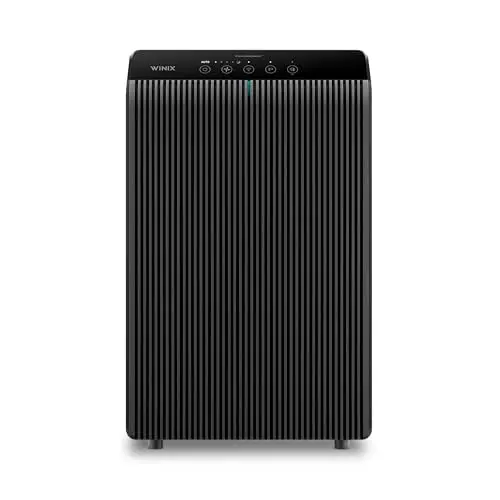
5510 – App-Connected True HEPA for Full-Size Rooms
The 5510 is the current generation of Winix’s 5500-series tower, adding app control on top of the same True HEPA and heavy carbon filtration. It’s AHAM verified for a 392 square foot room and rated to clean up to 1,881 square feet in an hour, with a built-in air quality sensor, an LED indicator, and a sleep mode that activates automatically when the room darkens.
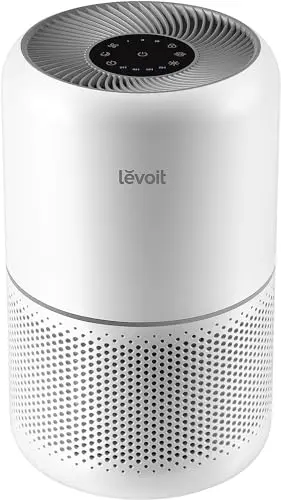
Core 300-P – Verified Filtration with a Near-Silent Sleep Mode
A compact, AHAM VERIFIDE purifier built around a 56W high-torque motor and a 143 CFM CADR rating. Levoit rates it to refresh a 222 square foot room nearly five times an hour, and Sleep Mode drops the noise to a near-silent 24 dB with the display lights switched off. A 2, 4, 6, or 8 hour timer and a filter check indicator round out the controls.
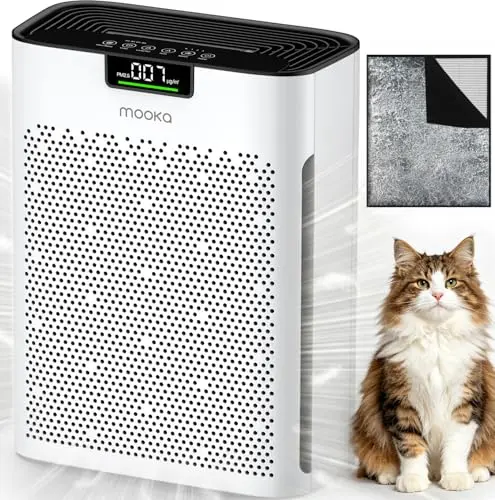
KJ190H – Real-Time PM2.5 Display and Auto Mode
MOOKA’s KJ190H pulls air from a wide front inlet and dual side inlets, then runs it through a three-stage filter with a washable pre-filter and activated carbon pellets. The headline feature is a real-time PM2.5 sensor with a digital display and four-color air quality indicator, feeding an Auto Mode that ramps the fan whenever readings climb.
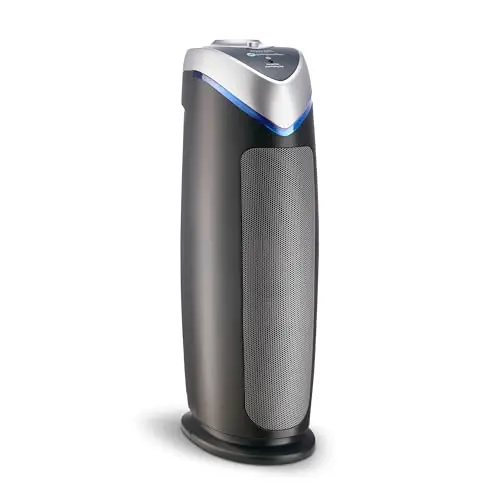
AC4825E – Slim Tower HEPA with Optional UV-C
A slim tower that has been a classroom and bedroom staple for years. The HEPA PURE filter is rated to capture 99.97% of allergens as small as 0.1 microns, an activated carbon layer handles cooking and pet scents, and an optional UV-C bulb adds a second stage. Three speeds include a quiet sleep setting, and the narrow footprint tucks into corners.
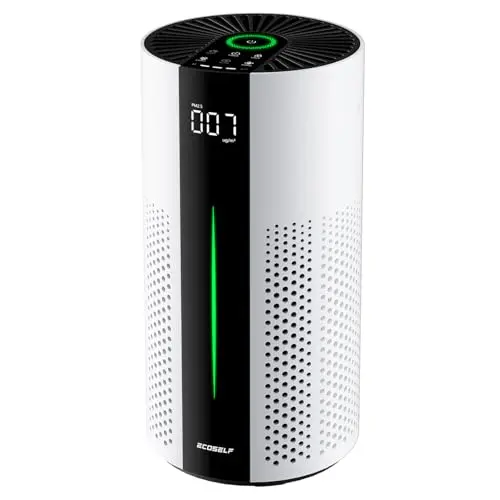
HAP609 – 360 Intake with Smart PM2.5 Auto Mode
A 360-degree intake design rated for rooms up to 1,800 square feet, with a top outlet that pushes air back into the room. Three-stage filtration pairs with a PM2.5 sensor and four-color indicator, and Auto Mode adjusts fan speed as readings change. Sleep Mode runs at 20 dB with the lights off, and there’s a child and pet lock for the panel.
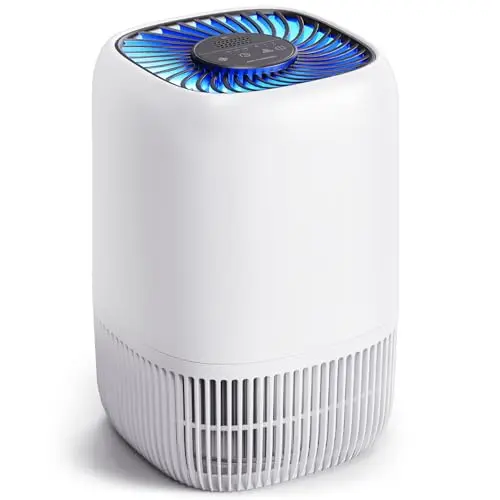
DH-JH12 – Compact 360 Airflow with Aroma Tray
A genuinely small purifier – roughly 6.7 inches square and under ten inches tall – built around 360-degree intake and a triple-layer filter. It lists 22 dB operation, three speeds, a timer, and an essential oil tray, plus an unusually full spread of certifications including CARB, ETL, FCC, and DOE.
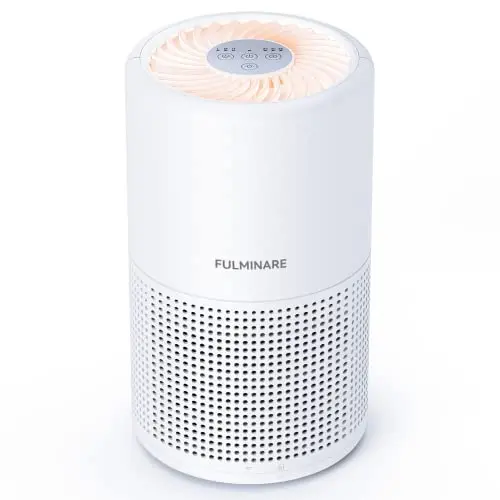
PU-P05 – Mini H13 HEPA with Night Light
A mini H13 HEPA purifier designed to sit on a desk, shelf, or windowsill. It uses dual-channel 360-degree output, runs around 20 dB on low, and includes an independent night light and five timer settings. The plug-in adapter ships inside the base cover, and the filter’s plastic wrap needs to come off before first use.
How We Evaluated These Air Purifiers for Classrooms
We didn’t run particle counters in a sealed classroom or measure CADR in a lab chamber. What we did: cross-referenced seven air purifier models from seven distinct brands across six decision axes – verified room coverage, noise at each speed, filtration stages, ongoing filter requirements, smart-mode behavior, and classroom practicality such as dark-mode displays and panel locks. We triangulated published specifications, manufacturer certifications like AHAM, CARB, and ETL, owner feedback where available, and how each unit’s design maps onto a room where someone is talking over it for most of the day.
Coverage numbers got the hardest scrutiny. A manufacturer’s maximum square footage usually assumes one air change per hour, which is a low bar for a space where people sit for six hours. Where the published specs and the owner signal disagreed, we said so in the write-up instead of smoothing it over.
The scoring framework weighted real-world fit for classroom use (70%) – whether a unit can genuinely move enough air for a learning space without becoming a distraction – against feature differentiation (30%) – the details that separate one tower from another, like washable pre-filters, on-unit air quality readouts, and light-sensing sleep modes. We have no commercial relationship with any brand featured here; recommendations track fit and differentiation, not brand preference. For a full-size classroom, the Winix 5510 is where we’d start. For a smaller room or a space you share between two classes, the Levoit Core 300-P is the easier fit.
How to Choose the Right Air Purifiers for Classrooms
1. How Much Air Purifier Does a Classroom Actually Need?
Coverage is the most inflated number on any purifier box. Manufacturers quote a maximum square footage that usually assumes a single air change per hour – the unit filters the room’s volume once in sixty minutes, which is a low bar for a space where people sit breathing the same air all day.
The number to shop by is the AHAM-verified room size, which is tied to a real CADR (clean air delivery rate) measured for smoke, dust, and pollen. A standard classroom wants a unit verified somewhere near its actual footprint, and a room with a door opening to a busy hallway all day wants more headroom than a closed bedroom of the same size.
2. Why Noise Matters More Than Any Other Classroom Spec
Every purifier here advertises a sleep-mode decibel figure in the low-to-mid twenties. Those numbers are real, but they describe the lowest fan speed – not the speed you’ll actually run during a lesson. What matters is how the unit sounds at medium and high, and whether its auto mode ramps up loudly the moment a window opens.
Placement helps as much as the spec sheet. Put the unit against a wall away from the front of the room rather than beside your desk, and lean on a sleep or night mode during quiet periods. If you can hear the fan over a normal speaking voice at the back of the room, it’s running too high.
3. Filters, Pre-Filters, and What an Air Purifier Costs Over a School Year
Filtration is where units quietly diverge. All of these use a HEPA-grade main filter, but the layers around it matter: a washable pre-filter traps hair and lint before it reaches the HEPA media, and a real activated carbon layer – pellets rather than a thin sprayed sheet – is what handles odors from art supplies, lunches, and gym bags.
Replacement is the recurring cost nobody plans for. Look for a filter reminder so the unit tells you when it’s due, and note that some designs need a new filter every few months while others stretch further. Genuine replacement filters matter more than they sound – several brands explicitly warn that third-party filters can fit poorly or reduce performance.
4. Smart Modes, Displays, and Classroom-Proof Details
An auto mode with a real sensor is the most useful convenience feature for a classroom, because the purifier handles its own fan speed instead of relying on someone remembering. A PM2.5 readout goes a step further and gives the room a visible air quality signal – genuinely handy with kids around. If that feature matters to you, the MOOKA KJ190H is the pick here.
The unglamorous details decide whether a unit survives a school year: a child lock so nobody resets it, lights that can be switched off, a timer, and a cord you can route against a wall instead of across a walkway. A tower footprint suits a corner; a compact unit suits a desk or reading nook.
5. Winix 5510 vs. Levoit Core 300-P: Which Fits a Classroom?
These two are the strongest all-rounders in this group, and they solve the problem differently. The Winix 5510 is the coverage play: AHAM verified for a 392 square foot room, with a heavy carbon filter, an air quality indicator, app control, and a washable pre-filter. It’s a 25-inch tower, so it lives in one place.
The Levoit Core 300-P is the compact play: verified for a 222 square foot room, a 24 dB sleep mode, a display you can switch off, and a two-year warranty. If your room is small, or you need a unit you can carry between two rooms, it’s the more practical shape. If you’re covering a full class in a bigger space, the Winix has the headroom.
Frequently Asked Questions
1. How big an air purifier do I need for a classroom?
Start with the AHAM-verified room size, not the headline square footage. A typical classroom lands in the 500 to 900 square foot range, and most brands quote their biggest number at a single air change per hour – enough to claim the room, not enough to keep up with a full class. Look for a unit verified at or near your actual footprint, or one with a CADR high enough to turn the room over several times an hour, and plan to run it on medium rather than low during the school day.
If your room is on the larger side, the Winix 5510 is verified at the biggest room size in this group, which is why it carries our overall pick.
2. What's the difference between the Winix 5510 and the Levoit Core 300-P?
Mostly scale and shape. The Winix 5510 is a full-height tower verified for a 392 square foot room, with heavy carbon filtration, an air quality indicator, and app control. The Levoit Core 300-P is a compact unit verified for a 222 square foot room, with a 24 dB sleep mode, a display you can turn off, and a two-year warranty.
In practice: pick the Winix if the room is large or the smell load is high, and pick the Levoit if the space is smaller, quieter, or needs to move between rooms.
3. Are mini air purifiers like the FULMINARE PU-P05 enough for a classroom?
Not for a whole classroom, no. Mini units like the PU-P05 and the VOOPNU DH-JH12 are built around small filter media and low airflow, which is fine for a desk, a reading corner, or a supply closet, but they can’t turn over the volume of a room full of people.
Where they earn their place is as a supplemental unit near a specific spot – a teacher’s desk, a quiet corner, a small intervention room. For the main space, you want a unit with a verified room size in the hundreds of square feet and a bigger filter.
4. Should a classroom air purifier run during lessons?
Yes – the point is continuous filtration, not a blast of clean air between periods. The practical approach is to leave it on auto mode or a medium setting during teaching and let it run through the day, since a purifier only helps while air is moving through it.
The tradeoff is noise. If the fan is audible over your normal speaking voice at the back of the room, drop a speed and accept slightly slower turnover. A unit with a quiet sleep mode and a lights-off display gives you more room to run it continuously without it becoming a distraction.
5. MOOKA KJ190H vs. ECOSELF HAP609: which is better for a classroom with an air quality display?
They’re closely matched on features. Both pair a PM2.5 sensor with a visible indicator and an auto mode that responds to readings, and both include a lock so nobody changes settings mid-lesson.
The KJ190H has the edge on proven feedback and adds a washable pre-filter that cuts replacement frequency, while the HAP609 is lighter and easier to reposition but newer with a thinner track record. For a classroom that will run all year, the MOOKA KJ190H is the safer bet.
Final Verdict
If you teach in a standard-to-large classroom and want one unit that genuinely keeps up, the Winix 5510 is our pick – verified coverage and a heavy carbon layer handle the two things that actually matter in a room full of people and smells. For a smaller room or a shared office-sized space, the Levoit Core 300-P gets you AHAM-verified filtration in a lighter package that’s easy to move between rooms. And if a visible air quality readout is part of the point – something the class can watch – the MOOKA KJ190H delivers it alongside a washable pre-filter and a child lock. Whichever you pick, size it to the room, not to the headline number on the box.
