
Best Air Purifiers For Home With Pets – 2026 Reviews

The first sign usually isn’t an air-quality reading. It’s the fur tumbleweed under the sofa, the film on the coffee table, and the fact that the living room smells like the dog even after you’ve vacuumed. Pet households ask an air purifier to do more than catch dust: it has to grab hair before it clogs the filter, pull dander out of the air, and keep everyday odor from settling into upholstery.
That’s why the useful split in this category isn’t just small versus large. It’s how well a unit handles pet hair, dander, and odor in the room where your pet actually spends time. Coverage and CADR matter, but so does the filter stack: a washable pre-filter, a real HEPA stage, and enough carbon to make a difference. Noise and auto mode decide whether you’ll actually leave it running.
We looked across the market at purifiers positioned for homes with pets, from compact bedroom units to large-room machines with smart sensors. The goal is straightforward: match the right purifier to your pet, your floor plan, and your tolerance for filter maintenance.
Best Air Purifiers for Home with Pets – 2026 Reviews
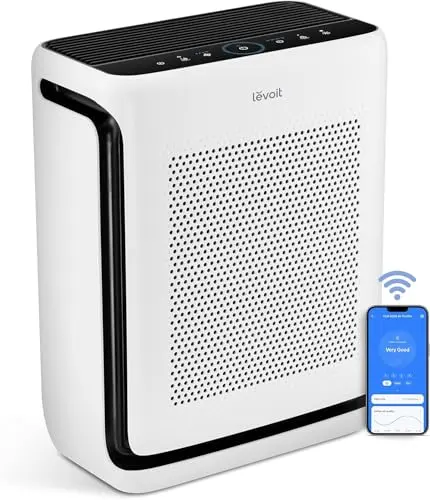
Vital 200S-P – Whole-Room Pet Hair and Dander Control
A large-room Levoit built around allergy and pet households, with AHAM-verified CADR, a U-shaped inlet for hair and dander, and smart app control. It covers open living spaces without giving up quiet sleep operation.
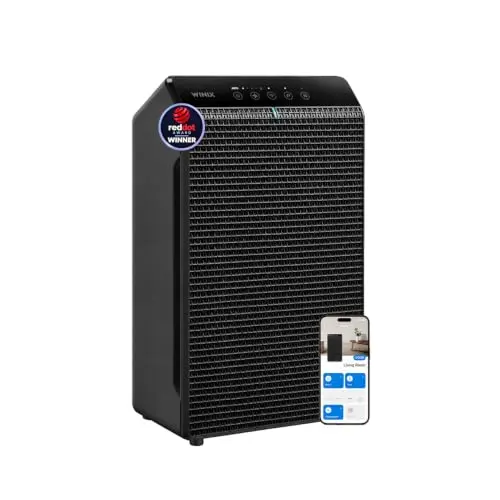
5520 – True HEPA for Allergies and Odor
Winix’s large-room purifier pairs True HEPA filtration with a high-deodorization carbon filter and light-sensing sleep mode. It’s an allergy-focused option for pet homes that also want odor control and app monitoring.
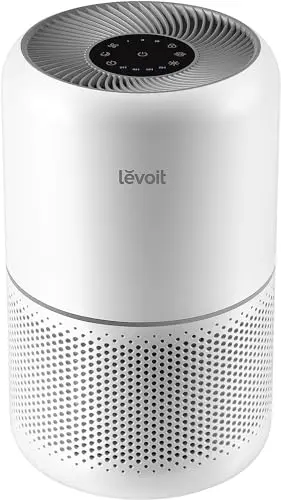
Core 300-P – Quiet Bedroom Pet Air Cleaner
A compact, AHAM-verified Levoit for bedrooms and smaller pet areas. It brings HEPA-grade filtration, a near-silent sleep mode, and a small footprint that fits where larger purifiers won’t.
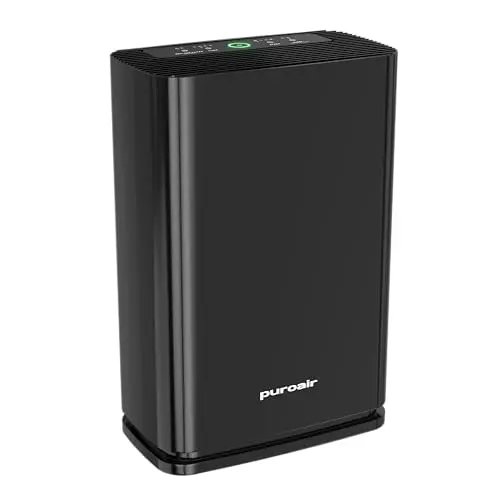
400 – Large-Room Auto Filtration
A large-room PuroAir with a three-layer HEPA and carbon filter, a PuroIQ sensor for auto-mode adjustments, and a quiet sleep setting. It’s built for whole-room coverage and continuous running.
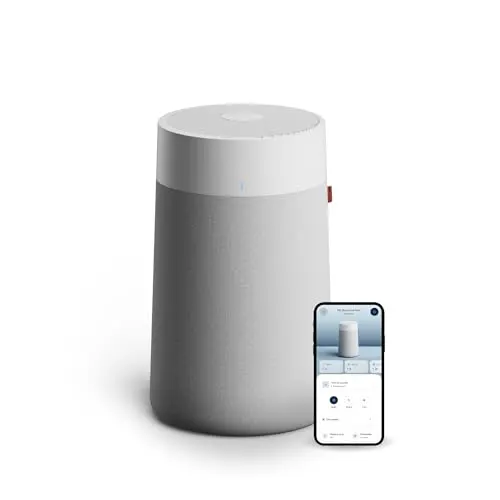
311i Max – Smart HEPASilent for Pet Dander
Blueair’s smart mid-size purifier uses HEPASilent dual filtration, a washable pre-filter, and app-based auto control. It’s a quiet, design-forward option for pet dander and dust in living areas.
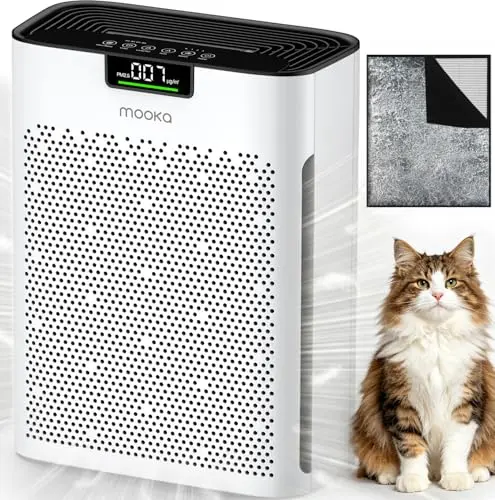
KJ190H – Budget-Friendly Pet Air Cleaner
A value-focused MOOKA with large-room coverage, a washable pre-filter, PM2.5 auto mode, and a 20dB sleep setting. It’s an affordable way to add pet-hair and odor filtration to a busy room.
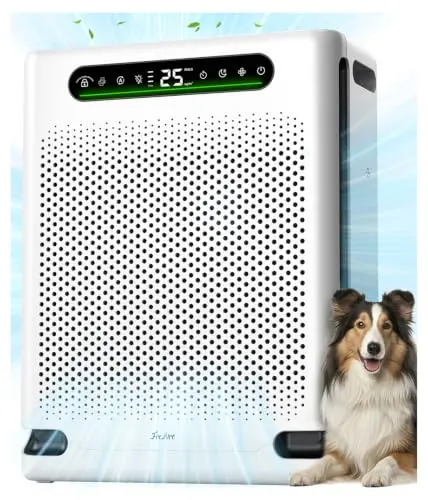
HAP605 – Turbo Pet Mode for Large Spaces
A large-room FreAire with triple air intake, a dedicated Turbo Pet Mode, PM2.5 display, and a washable pre-filter. It’s aimed at pet households that want faster hair and odor capture.

HAP607 – Washable HEPA for Pet Homes
A similar large-room FreAire with triple intake, four fan speeds including turbo, PM2.5 display, and a framed washable pre-filter. It’s a straightforward pet-home purifier with a useful maintenance design.
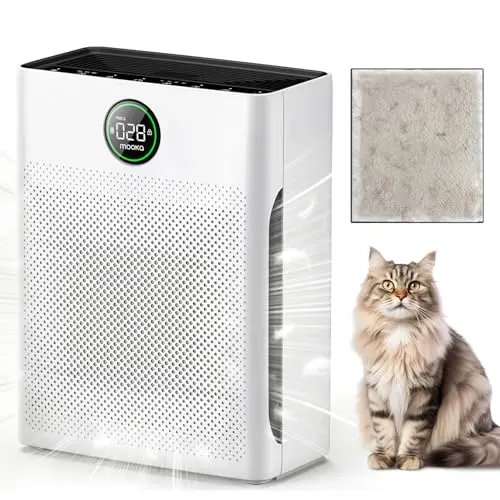
PR1 – Pet Mode with PM2.5 Display
A large-room MOOKA with a dedicated Pet Mode, PM2.5 display, washable pre-filter, and six fan speeds. It’s a budget-friendly option for pet hair, dander, and everyday odor.
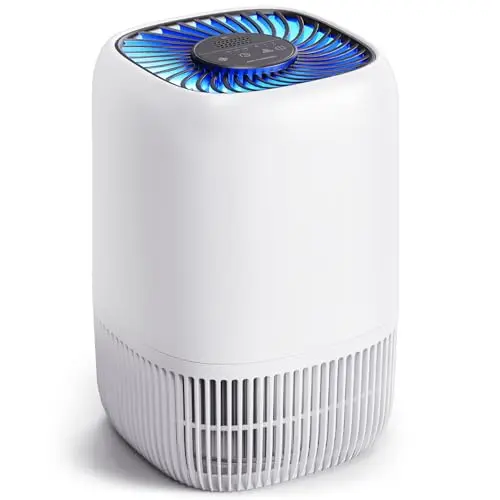
DH-JH12 – Compact Quiet Air Cleaner
A compact VOOPNU for desks, nurseries, and secondary rooms, with 360-degree intake, a triple-layer filter, and a 22dB sleep mode. It’s an affordable way to add localized pet-hair filtration.
How We Evaluated These Air Purifiers for Home with Pets
We didn’t run lab-grade particle counters or multi-month filter-life trials in pet-filled homes. What we did: cross-referenced 10 air purifier models from 7 distinct brands across six decision axes – pet-hair capture, dander filtration, odor control, room coverage, noise in sleep mode, and maintenance routine. We triangulated published specifications, feature sets, owner feedback where available, and use-case fit for households with shedding pets. We also mapped each unit against real pet-household layouts: a bedroom with a closed door, an open-plan living area, and the high-traffic zone around a litter box or dog bed.
The scoring framework weighted real-world performance (70%) – how well each purifier handles hair, dander, and everyday pet odor where people actually live – against feature differentiation (30%) – washable pre-filters, auto sensors, app control, and quiet-night operation. We audited claims against the published filter stack and coverage figures, then pressure-tested the practical side: filter access, replacement reminders, and whether the quiet mode is genuinely livable at night. We weighed those practical details alongside the raw numbers, which kept the final ranking grounded in daily use rather than spec-sheet bravado. We have no commercial relationship with any brand here; recommendations track fit and differentiation, not brand preference. If your main pet zone is a large living room, the Vital 200S-P is the natural starting point; if you want a true-HEPA allergy specialist with strong odor control, the Winix 5520 is the better match.
How to Choose the Right Air Purifiers for Home with Pets
1. Why Pet Households Need a Different Air Purifier Strategy
Pet hair and dander don’t behave like ordinary dust. Hair clogs the first layer fast, while dander is small enough to stay airborne and settle into upholstery, rugs, and bedding. That makes the pre-filter and HEPA stage the first things to check, not the marketing badge.
Odor is a separate job. Hair and dander are particles, but pet smell comes from gases and volatile compounds that need activated carbon. A purifier that only catches particles may leave the room smelling unchanged, especially in homes with multiple pets or a litter area.
2. Match CADR and Room Coverage to Your Pet Areas
CADR is the clean-air delivery rate, and it matters more than a single ‘up to” room number. For a pet home, size the purifier for the room where the pet actually spends time, then account for doorways, open floor plans, and furniture that blocks airflow.
A unit that cleans a bedroom quickly may struggle in a connected living-and-kitchen space. If your main pet zone is large and open, the Vital 200S-P is the pick here because its coverage and pet-hair inlet design are built for that scale. For a closed bedroom, a smaller purifier can be the smarter fit.
3. Filter Stages That Actually Matter for Pet Hair and Dander
Look for a washable pre-filter or fine mesh first. That layer catches the visible hair and lint before it reaches the HEPA media, which helps the main filter last longer and keeps airflow from dropping.
The HEPA stage should be rated for fine particles, and the carbon layer should be substantial enough for pet odor, not just a thin dust sheet. A filter reminder is genuinely useful in pet homes because replacement timing depends on shedding, cooking, and how often the unit runs.
4. Noise, Auto Mode, and Placement in Pet Homes
Night noise is where good purifiers separate from annoying ones. A sleep mode in the low 20s dB range can disappear into the background, while a unit that only gets quiet on its lowest setting may still be too much for a bedroom.
Auto mode is useful around pet zones because it ramps up when dander, dust, or odor spikes and settles down when the air clears. Place the purifier near the pet’s main resting area but clear of curtains and walls. If the bedroom is the priority, the Core 300-P is the compact pick for that job.
5. Budget vs. Premium Air Purifiers for Homes with Pets
Budget purifiers can absolutely help in a pet home, especially in a bedroom, office, or secondary room. The trade-offs usually show up in coverage, sensor quality, filter life, and how pleasant the unit is to live with day after day.
Premium models buy larger coverage, better odor control, app monitoring, and quieter operation. If you want strong pet features without moving into the premium tier, the MOOKA KJ190H is the value pick; if you need whole-room coverage, spend for it.
6. Filter Maintenance and Replacement Costs to Expect
Pet homes burn through filters faster than pet-free homes. Rinse a washable pre-filter every few weeks, vacuum the intake vents, and replace the HEPA/carbon cartridge when the filter indicator triggers or airflow visibly drops.
Use genuine replacement filters when the manufacturer specifies them; off-brand filters can fit poorly and reduce performance. The ongoing cost matters more than the upfront tier, so check filter availability before you commit.
Frequently Asked Questions
1. What's the difference between the Levoit Vital 200S-P and Winix 5520 for pet hair?
The Vital 200S-P leans into large-room coverage with a pet-hair-friendly U-shaped inlet and strong CADR across smoke, dust, and pollen. The Winix 5520 counters with True HEPA rated down to 0.01 microns and a more serious carbon odor filter, plus a light-sensing sleep mode.
Choose the Vital 200S-P if your pet traffic is spread across an open living area. Choose the Winix if allergies and odor are the louder complaints. Both are strong; the deciding factor is room layout and how much you value odor-specific filtration.
2. Is the Levoit Core 300-P or Blueair 311i Max better for a pet-friendly bedroom?
For a smaller bedroom, the Core 300-P is the easier fit: compact, quiet in sleep mode, and simple to live with. The Blueair 311i Max brings more coverage, HEPASilent filtration, and app-based auto control, but it’s a bigger commitment and reliability is the caveat to weigh.
If the room is small and the priority is quiet nights, go with the Core 300-P. If you want a smart purifier for a larger bedroom or nursery, the Blueair is the more feature-rich choice.
3. How much air purifier coverage do I need for a home with pets?
Start with the room where the pet spends the most time, not the total square footage of the house. A CADR rating and a realistic air changes per hour target matter more than a headline coverage number. For a bedroom, one focused unit can be enough; for an open living area, size up or use two units.
Pet homes also need odor control and a washable pre-filter, so don’t chase coverage alone. Placement near the pet zone and regular filter maintenance do as much work as a bigger spec sheet.
4. Do washable pre-filters really help in pet households?
Yes, because they catch the visible hair and lint that would otherwise load the HEPA media. A washable pre-filter is not a substitute for the main filter, but it can extend filter life and keep airflow steadier between replacements.
The routine matters: rinse it, dry it fully, and reinstall it before running the unit again. In a heavy-shedding home, that maintenance is the difference between a purifier that keeps up and one that clogs early.
5. Can an air purifier remove pet odor or just pet hair?
It can help with both, but they are different filtration jobs. HEPA filtration captures hair, dander, and other particles; activated carbon is the layer that adsorbs many odor-causing gases. A purifier with a thin carbon sheet will do less for smell than one with a substantial carbon filter.
Source control still matters. Litter boxes, bedding, and carpets need cleaning regardless of how good the purifier is. Think of the purifier as ongoing support, not a replacement for pet-house cleaning.
Final Verdict
For most pet households, the Vital 200S-P is the answer. It pairs large-room coverage with a pet-hair-friendly inlet, strong AHAM-verified CADR, and quiet-enough operation for a busy living area. If allergies and odor are the main concern, the Winix 5520 is the better specialist thanks to True HEPA filtration and a more substantial carbon layer. And if you’re outfitting a bedroom or a smaller pet zone on a tighter budget, the MOOKA KJ190H gets you washable filtration, a PM2.5 display, and a genuinely quiet sleep mode without overbuying capacity. Start with the room your pet actually uses, then match the purifier to that space rather than to a spec-sheet fantasy.
