
Best Air Purifiers For Kitchen – 2026 Reviews

You sear a steak, and the smoke alarm sings. You fry fish on Tuesday, and the smell is still camped out on the couch cushions by Thursday. Kitchen air is its own beast – a swirl of fine smoke, aerosolized grease, and stubborn odors that settle into every corner of an open-plan home.
That’s why a purifier built for a bedroom often disappoints here. Two things separate the options that genuinely help from the ones that just look good on a spec sheet: how well they handle odors and chemical fumes, and how much air they can cycle through while a pan is actively smoking. A thin, token carbon layer won’t touch last night’s dinner. Neither will a unit that cleans your whole kitchen once an hour.
This is a cross-brand look at the air purifiers worth considering for kitchen duty, from compact countertop units to large-room models. The right pick depends on how you cook, how open your kitchen is, and how much maintenance you’re willing to do – not on which brand shouts the loudest. Here’s how to sort through them.
Best Air Purifiers for Kitchen – 2026 Reviews
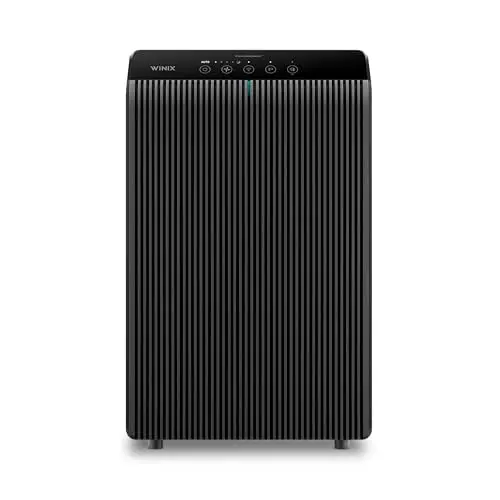
5510 – Whole-Room Odor Control for Kitchens
A large-capacity purifier that leans hard into odor control, pairing a dedicated carbon filter with smart sensors that ramp up when cooking smoke drifts through the room.
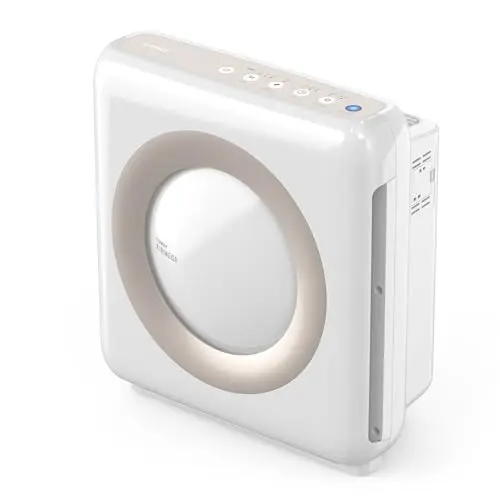
Mighty AP-1512HH – Four-Stage Filtration with Air Quality Monitor
A long-standing workhorse that pairs four-stage filtration with a real-time pollution sensor and a washable pre-filter – useful when kitchen air quality swings minute to minute.
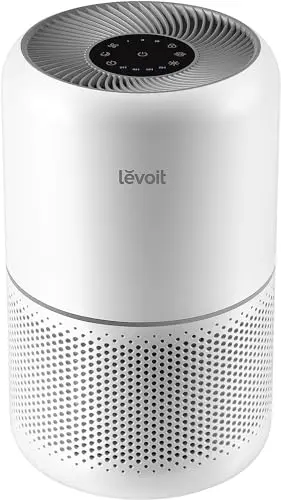
Core 300-P – Quiet Compact Air Cleaner
A compact, quiet purifier with independently verified performance that slots onto a counter or into a corner without hogging prep space.
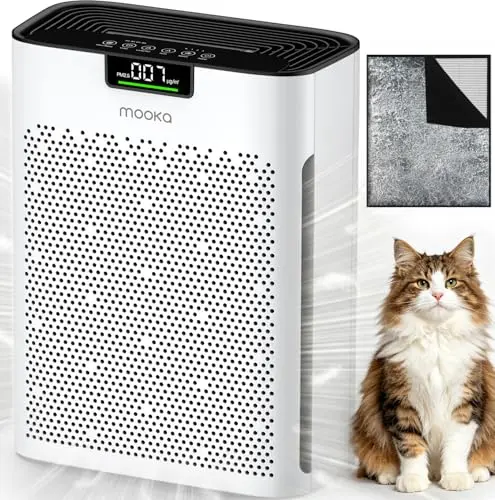
KJ190H – Washable Pre-Filter and PM2.5 Display
A value-focused large-room purifier with a washable pre-filter, dual-side intake, and a live PM2.5 readout – well suited to smoky or high-traffic kitchens.
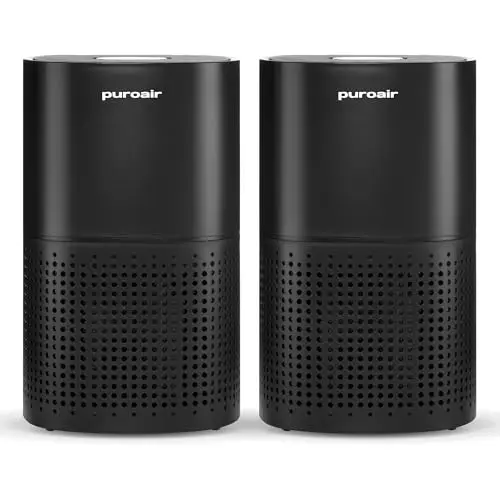
PuroAir 240 – Sensor-Driven Auto Purification
A two-pack of sensor-driven purifiers that auto-adjust to air quality, letting you cover a kitchen and an adjoining room in one go.
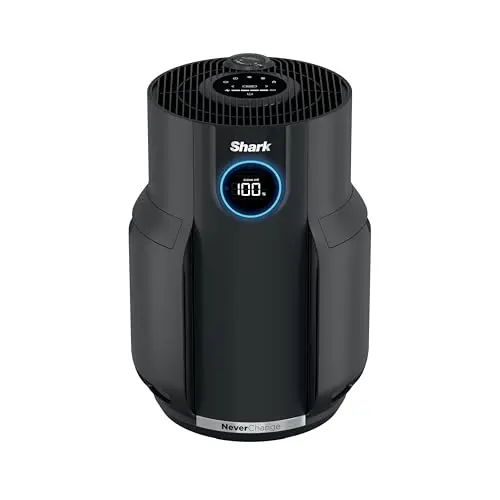
HP152 NeverChange – Low-Maintenance Odor Control
A compact purifier built around long-life filtration and an odor-neutralizer cartridge, with a live display that tracks air quality in real time.

B-D02L – Aromatherapy HEPA for Small Kitchens
A budget-friendly true-HEPA purifier with an aromatherapy pad and a soft night light, sized for smaller kitchens and nooks.
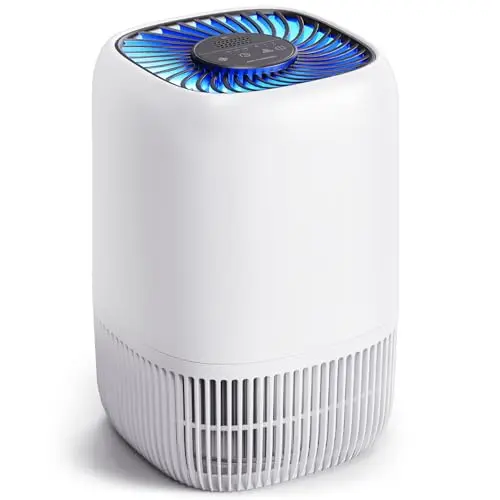
DH-JH12 – Budget Compact Air Cleaner
An entry-level compact purifier with 360-degree intake and an essential-oil tray, best suited to small kitchens and countertop duty.
How We Evaluated These Air Purifiers for Kitchen
We didn’t stage controlled cooking sessions to measure smoke and odor clearance in a sealed kitchen. What we did: cross-referenced 8 air purifier models from 7 distinct brands across 6 decision axes – filtration depth, odor and VOC control, coverage relative to typical kitchen footprints, noise in real-world conditions, maintenance and filter routine, and smart or auto-adjust features. We triangulated published specifications, feature sets, and aggregated owner feedback where available, then mapped every model against representative kitchen buyer profiles.
Those profiles ranged from small galley kitchens and countertop setups to open-plan spaces where cooking smells drift into living areas, plus heavy-cooking households that roast, fry, and sear often. Strong performers earned their place on how well they actually handle what kitchens throw at them: grease-laden air, cooking smoke, and lingering odors that outlast the meal. A spec sheet that looks great on paper means little if the carbon layer is too thin to touch real cooking smells.
The scoring framework weighted real-world performance (70%) – how well each unit delivers on kitchen air-cleaning, not just advertised coverage – against feature differentiation (30%), meaning genuine advantages like dedicated carbon filters, washable pre-filters, or live air-quality readouts. We have no commercial relationship with any brand featured here; recommendations track fit and differentiation, not brand preference. If you cook hard and often, the Winix 5510 is your match; if you’re working with a compact kitchen, the Levoit Core 300-P serves you better.
How to Choose the Right Air Purifier for Kitchen
1. Why Kitchen Air Needs a Different Kind of Air Purifier
Cooking throws a specific mix of pollutants into the air: fine smoke particles, aerosolized grease, and VOC-heavy odors that a dust-focused purifier won’t fully address. A unit built for a bedroom prioritizes quiet and basic particle capture. A purifier that earns its place in the kitchen needs a substantial carbon layer to handle cooking smells, plus enough air-exchange capacity to cycle the room while a pan is actively smoking.
The key insight is that HEPA handles particles but only carbon addresses odor – so look at what the carbon stage is actually built to do, and whether the manufacturer treats it as a real deodorization stage or an afterthought.
2. Matching Coverage to Your Kitchen Layout
Coverage numbers can mislead, so match the purifier to your actual kitchen footprint rather than the biggest figure on the box. A CADR rating for smoke, dust, and pollen tells you how much clean air the unit moves, and it’s a more honest guide than the headline square footage. Compare room size and airflow together: a purifier that cleans a large space once an hour is working far less hard than one that refreshes a small kitchen several times per hour.
If your kitchen opens to a living or dining area, factor in open-plan spillover – you’re not just cleaning the cooking zone, you’re keeping smells from settling on the sofa. A compact unit like the Levoit Core 300-P suits a tight galley; a larger model makes more sense for open layouts.
3. Odor and VOC Control: The Real Kitchen Test
Odor is where most purifiers fall short, and it’s the single most important kitchen criterion. The carbon stage does the work, and not all carbon is equal – a thin mesh layer barely touches strong cooking smells, while a denser activated carbon filter with more pellets absorbs more. Look for units that describe their carbon as a dedicated deodorization stage rather than a token add-on.
Auto-adjusting real-time sensors are genuinely useful in a kitchen because air quality swings sharply with cooking. A sensor that ramps up fan speed when smoke appears keeps you from manually babysitting the dial while you’re at the stove.
4. Maintenance and Filters: What Kitchens Demand
Kitchens are hard on filters. Airborne grease and larger debris clog a HEPA layer fast, which is why a washable pre-filter is a real advantage – it catches the bulk before it reaches the expensive filter and can be rinsed instead of replaced. Wash it regularly or performance quietly degrades.
Stick with genuine replacement filters from the manufacturer where you can, since off-brand options may not seal or filter as reliably. Budget for filter cadence up front: the smaller the carbon layer, the more often you’ll be swapping it to keep odor control sharp.
5. Winix 5510 vs Coway AP-1512HH: Which Handles Cooking Odors Better?
These two are the strongest odor-focused picks here, and they solve the problem differently. The Winix 5510 leans on a dedicated advanced odor-control carbon filter plus a much larger coverage ceiling, which suits open-plan kitchens where smells travel. The Coway AP-1512HH relies on a four-stage system with its own deodorization stage and adds a real-time air quality readout; it’s the more informative unit minute to minute, though odor results vary.
If cooking smells are your chief complaint, lean Winix. If you want to watch air quality respond in real time and prefer a washable pre-filter, Coway is the better fit.
6. Budget vs Premium: Where the Money Goes
At the entry tier, you get basic HEPA filtration, a modest carbon layer, and quieter operation, but coverage claims are often optimistic and odor control is mild. The premium tier buys you denser carbon, smart sensors, larger coverage, and features like live displays or app control. Filter cost is the hidden variable – a cheap purifier with pricey replacements can cost more over time than a mid-range model with affordable filters.
For value-focused kitchens, the MOOKA KJ190H hits a strong balance of washable filtration and a live readout without pushing into premium territory.
Frequently Asked Questions
1. What's the difference between the Winix 5510 and the Coway AP-1512HH for kitchen odors?
The Winix 5510 puts a dedicated odor-control carbon filter front and center and backs it with a much larger coverage ceiling, which helps in open-plan spaces. The Coway leans on a four-stage filtration chain with its own deodorization stage and adds a real-time air quality display that’s handy for watching kitchen air respond to cooking.
If strong smells are the main problem, the Winix has the edge. If you’d rather monitor air quality minute to minute and like a washable pre-filter, the Coway fits better.
2. How does the Levoit Core 300-P compare to the MOOKA KJ190H for a small kitchen?
Both fit compact spaces but aim at different priorities. The Levoit Core 300-P brings AHAM-verifide CADR and a near-silent sleep mode, making it the quieter, more verified choice for a tiny galley. The MOOKA KJ190H counters with a washable pre-filter and a live PM2.5 readout, plus a bigger intake that suits smoky or heavy-cooking kitchens.
Choose Levoit for the smallest, quietest spaces and MOOKA when smoke and value matter more than footprint.
3. Where should I place an air purifier in my kitchen?
Position it a few feet from the cooking zone and give it airflow clearance on all sides so it can draw air freely. Avoid placing it not directly beside the stove, where grease and heat can foul the intake. In open-plan kitchens, put it along the path where smells travel toward living areas, and keep it out of open-plan sightlines that block foot traffic.
Running it on auto mode during cooking and for a while afterward tends to work better than short bursts.
4. Do air purifiers actually help with cooking smells and grease?
They help, with realistic expectations. A HEPA layer captures smoke and fine particles, while activated carbon is what actually reduces lingering odors and fumes. Grease is only partly addressed – a washable pre-filter catches larger airborne debris before it gums up the main filter, but range ventilation still does the heavy lifting for heavy frying.
Think of a purifier as a supplement to your hood, not a replacement for it.
5. Will an air purifier help if my kitchen is open to the living room?
Yes, and this is exactly where coverage matters most. Size the unit for the combined square footage rather than just the cooking zone, and lean on auto mode so it ramps up as odors spread. Some buyers run two smaller units – one in the kitchen, one in the living area – to chase smells through the space.
Pair whatever you choose with regular pre-filter cleaning so airflow stays strong.
Final Verdict
For most kitchens, the Winix 5510 is the answer – its dedicated odor-control carbon filter and generous coverage handle real cooking smells without making you think about it. If your kitchen is compact and quiet matters most, the Levoit Core 300-P gets you verified filtration in a footprint that actually fits. Value-focused cooks who sear and roast a lot should look at the MOOKA KJ190H, where the washable pre-filter pays off against smoky air. And if you’d rather not think about filter swaps, the Shark HP152 and its NeverChange filtration keep maintenance low. Match the purifier to how you cook and how open your kitchen is, and the right pick becomes obvious.
