
Best Air Purifiers For Musty Basement – 2026 Reviews

You know the smell the moment you open the basement door – that damp, earthy mustiness that clings to stored boxes and laundry. It’s not just unpleasant; it’s often a sign of mold spores and volatile organic compounds (VOCs) circulating in the air. A standard air purifier can help, but only if it’s equipped to handle both particles and odors in a cool, often damp space.
For a musty basement, two specs matter more than anything else: high CADR for the room size and substantial activated carbon for odor and VOC removal. Coverage claims can be misleading, so we focused on units with credible AHAM ratings or clear CADR numbers. We also weighed continuous-operation noise, filter costs, and whether the design makes sense for a basement’s layout.
We surveyed the market across major brands to find purifiers that actually make a difference in a musty basement. Below you’ll find our top picks, from budget-friendly workhorses to premium units with advanced odor control.
Best Air Purifiers for Musty Basement – 2026 Reviews
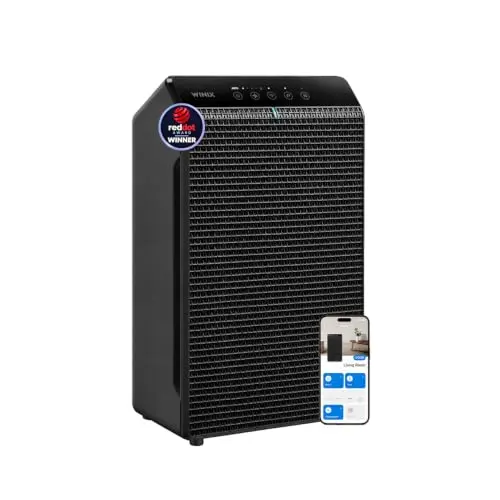
5520 – Large-Room Odor Control
A powerful large-room purifier with a high-deodorization carbon filter, True HEPA, and auto mode. It’s AHAM Verifide and designed to handle odors, smoke, and pet dander.
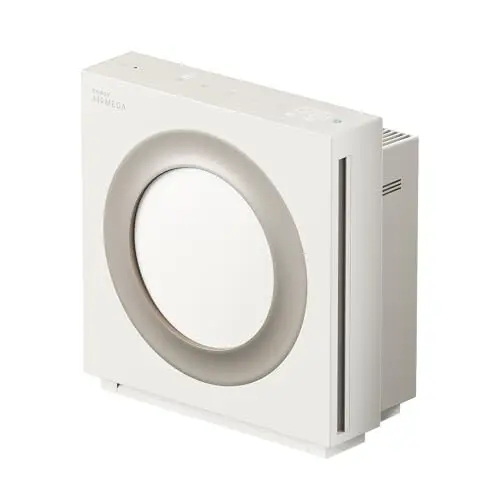
Airmega Mighty2 – Premium VOC Removal
A premium purifier with an upgraded HEPA and Active Carbon Max2 filter that reduces VOCs by more than 99.5%. It features a MegaScan laser sensor, smart mode, and a 3-year warranty.
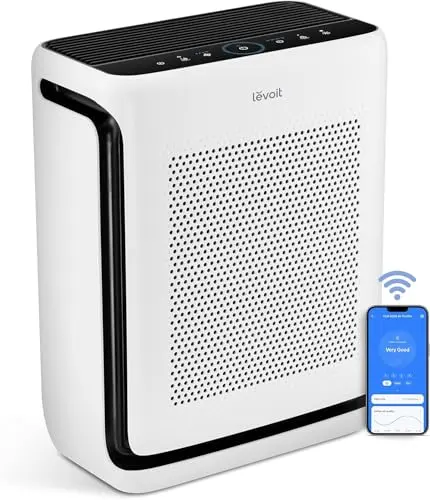
Vital 200S-P – Large-Room Allergy Support
A well-rounded large-room purifier with AHAM Verifide performance, a dual air intake, and smart app control. It’s designed for allergy sufferers and covers up to 1,875 sq ft.
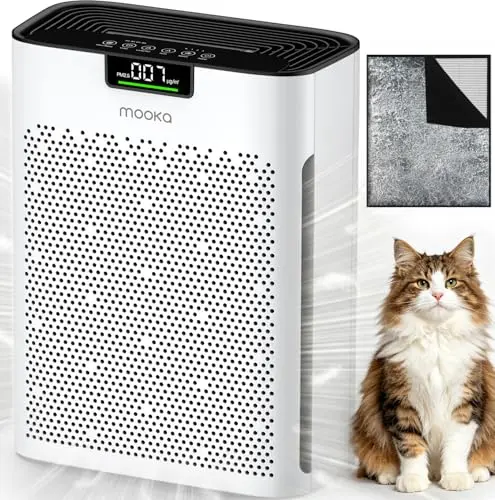
KJ190H – Budget Workhorse for Big Basements
An affordable large-room purifier with a washable pre-filter, activated carbon pellets, and a PM2.5 auto mode. It covers up to 2,200 sq ft and runs at just 20 dB in sleep mode.

HAP607 – High-Coverage Budget Alternative
A high-coverage budget purifier with a washable pre-filter, turbo mode, and auto mode. It covers up to 2,600 sq ft and runs quietly at 22 dB in sleep mode.
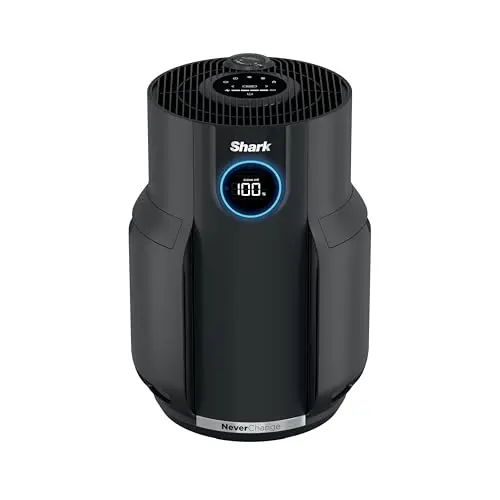
NeverChange HP152 – Compact Odor Neutralizer
A compact purifier with an Odor Neutralizer cartridge and filters that exceed HEPA standards. It covers up to 650 sq ft and is ideal for small basements or crawlspaces.
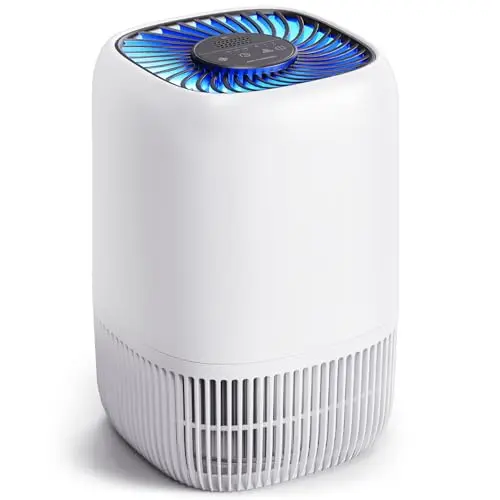
DH-JH12 – Ultra-Compact Budget Purifier
An ultra-compact budget purifier with 360-degree air intake, essential oil option, and 22 dB sleep mode. It covers up to 1,076 sq ft but is best for small spaces.
How We Evaluated These Air Purifiers for Musty Basement
We didn’t run controlled lab tests for CADR or VOC removal. What we did: cross-referenced 7 air purifier models from 7 distinct brands across 6 decision axes – room coverage (CADR or AHAM ratings), filtration type (HEPA plus carbon), odor and VOC removal capability, noise levels, smart features, and long-term filter costs. We triangulated published specifications, aggregated owner feedback where available, and mapped each unit against the specific demands of a musty basement: persistent moisture-related odors, mold spores, and often larger, irregular room layouts. We also weighed how easy each unit is to live with in a basement – whether it has a washable pre-filter, how often the carbon needs replacing, and whether the display is readable in low light.
The scoring framework weighted real-world fit for a musty basement (70%) – how well each purifier handles both particles and odors in a cool, damp space – against feature differentiation (30%) – unique advantages like advanced carbon filters, washable pre-filters, or smart sensors. We have no commercial relationship with any of the brands featured; recommendations track fit and differentiation, not brand preference. If you want the best all-around odor fighter, the Winix 5520 is our top pick; if you need maximum VOC removal and a longer warranty, the Coway Airmega Mighty2 is the upgrade.
One caveat: we can’t tell you how a specific unit will perform in your exact basement without testing it there. Basement humidity, square footage, and air circulation vary widely. What we can do is point you toward purifiers with credible odor-fighting specs and a track record of owner satisfaction in real homes.
How to Choose the Right Air Purifiers for Musty Basement
1. Why a Musty Basement Needs a Different Air Purifier
Basements are their own microclimate. They’re often cooler, damper, and less ventilated than the rest of the house, which creates the perfect conditions for mold, mildew, and the volatile organic compounds (VOCs) that cause that distinctive musty smell. A standard air purifier focused only on dust and pollen won’t cut it. You need a unit with robust activated carbon to adsorb odors and VOCs, plus a True HEPA filter to capture mold spores and fine particles. And remember: an air purifier is not a dehumidifier. It can’t fix a moisture problem, but it can significantly reduce the airborne symptoms once you’ve addressed the source.
2. Coverage and CADR: Sizing an Air Purifier for Your Basement
Coverage claims can be confusing because some brands rate for one hour and others for 30 minutes. Look for CADR (Clean Air Delivery Rate) or an AHAM Verifide seal, which tells you the unit was independently tested. As a rule of thumb, you want a purifier that can cycle the air in your basement at least four to five times per hour. For a large basement over 1,000 square feet, the Winix 5520 is the pick for raw coverage. For tighter spaces, the Shark NeverChange HP152 is a better fit.
3. Activated Carbon Is Non-Negotiable for Musty Odors
HEPA alone won’t remove musty smells. Odor molecules are gases, not particles, so they require carbon filtration to be adsorbed. Look for a purifier with a substantial carbon filter or an odor neutralizer cartridge, not just a thin carbon sheet. Some units combine a washable pre-filter with a carbon layer, while others like the Coway use a dedicated carbon mix. The more carbon, the longer it lasts before odors break through.
4. Noise, Sleep Mode, and Continuous Operation in a Basement
If your basement is near a living area or bedroom, noise matters. Look for a unit that runs below 30 dB on its lowest setting. A sleep mode that dims lights and reduces fan speed is a bonus. For continuous operation, check the energy consumption and whether the fan can run at a low, steady speed without being distracting. Auto mode can help by ramping up only when air quality drops.
5. Filter Maintenance and Replacement Costs to Expect
Basements are dustier and damper than above-ground rooms, so filters may need more frequent attention. A washable pre-filter is a big plus because it catches large debris and extends the life of the HEPA filter. Still, you’ll need to replace the HEPA and carbon filters periodically. Check the replacement costs before you buy, and look for a filter life indicator that tells you when it’s time. Some brands use proprietary filters that cost more over time.
6. Smart Sensors, Auto Mode, and Basement Placement
A PM2.5 sensor and auto mode make a purifier easier to live with because the unit adjusts itself instead of you fiddling with speeds. Placement also matters: keep the purifier away from walls and furniture so air can circulate freely. In a basement, avoid corners and try to position it near the center of the room or the source of the musty smell.
Frequently Asked Questions
1. Do air purifiers actually help with musty basement smells?
Yes, but only if they have activated carbon. HEPA filters capture mold spores and particles, but the musty smell itself comes from VOCs and other gases that only carbon can adsorb. A purifier with a thin carbon sheet won’t do much; look for one with a substantial carbon filter. Also, an air purifier won’t fix a moisture problem – pair it with a dehumidifier and fix any leaks first.
2. What's the difference between the Winix 5520 and the Coway Airmega Mighty2?
Both are excellent for musty basements, but they have different strengths. The Winix 5520 has a high-deodorization carbon filter and covers up to 1,882 sq ft, and it’s usually more affordable. The Coway Airmega Mighty2 steps up with an Active Carbon Max2 filter that reduces more than 99.5% of VOCs, plus a 3-year warranty. If you want the best value, the Winix 5520 is the better buy; if you want maximum VOC removal and a longer warranty, the Coway justifies its higher price.
3. How big of an air purifier do I need for a basement?
Measure your basement’s square footage and ceiling height. You want a purifier with a CADR that can cycle the air at least four times per hour. For a space over 1,000 square feet, look for a unit rated for 1,800 sq ft or more. For smaller basements, a compact unit like the Shark NeverChange HP152 may be enough. Pay attention to air changes per hour rather than just the headline coverage number.
4. Which is better for a damp basement: the Levoit Vital 200S-P or the Shark NeverChange HP152?
It depends on your basement size. The Levoit Vital 200S-P covers up to 1,875 sq ft and has AHAM Verifide performance, making it the better choice for larger or open basements. The Shark NeverChange HP152 is much more compact and includes an odor neutralizer cartridge, but it only covers 650 sq ft. For a small finished basement or crawlspace, the Shark is a neat fit; for a full-size basement, go with the Levoit Vital 200S-P.
5. How often should I replace the filter in a basement air purifier?
It varies with usage and air quality. In a musty basement, plan on replacing the carbon filter every 6 to 12 months to keep odor control strong. The HEPA filter typically lasts 12 to 18 months, but damp, dusty basements may shorten that. A washable pre-filter helps extend both. Check your unit’s filter indicator and follow the manufacturer’s guidance, but don’t ignore musty smells – they’re a sign the carbon is spent.
Final Verdict
For most musty basements, the Winix 5520 is the answer – it combines a high-deodorization carbon filter with serious coverage and quiet operation, all at a reasonable price. If you’re on a tighter budget, the MOOKA KJ190H gets you large-room coverage and a washable pre-filter for a lot less. And if you want the strongest VOC removal and a longer warranty, the Coway Airmega Mighty2 is worth the splurge. For small basements or crawlspaces, the compact Shark NeverChange HP152 is a smart supplemental pick. Whichever you choose, pair it with a dehumidifier to address the source of the mustiness – no air purifier can fix moisture on its own.
