
Best Air Purifiers For Musty Smell – 2026 Reviews

A musty smell is rarely just a smell. It is usually a signal that damp air, hidden moisture, or poor ventilation is feeding mold and mildew somewhere you cannot see. An air purifier can help with the airborne part – spores, dust, and odor-causing gases – but it works best when you also deal with the source.
The tricky part is that two purifiers with similar HEPA claims can perform very differently in a musty room. Particle capture matters, but odor control depends on the carbon stage: how much activated carbon is there, whether it is a dedicated deodorization filter, and how quickly the unit moves air through it. Coverage and auto mode matter too, because musty rooms often sit unused for hours and then get hit with a burst of damp air.
We compared the market with that split in mind. The picks below range from odor-focused workhorses to compact bedroom units and budget-friendly options, and each one earns its place for a different kind of musty space.
Best Air Purifiers for Musty Smell – 2026 Reviews
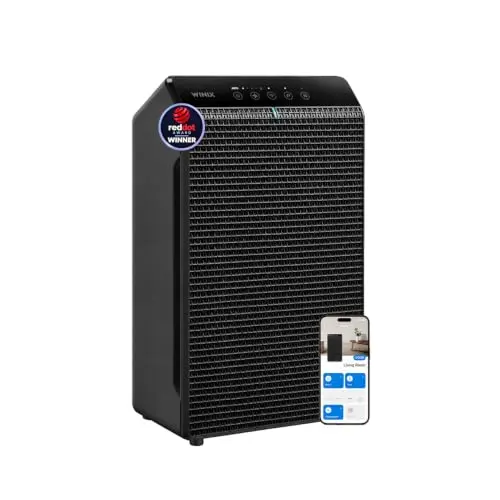
5520 – High-Capacity Odor Control
The Winix 5520 is built around odor control as much as particle capture. Its high-deodorization carbon filter targets VOCs and household smells, while the True HEPA layer captures pollen, dust, smoke, and pet dander. Auto mode and a real-time air quality indicator make it easy to leave running in a damp basement or bedroom.
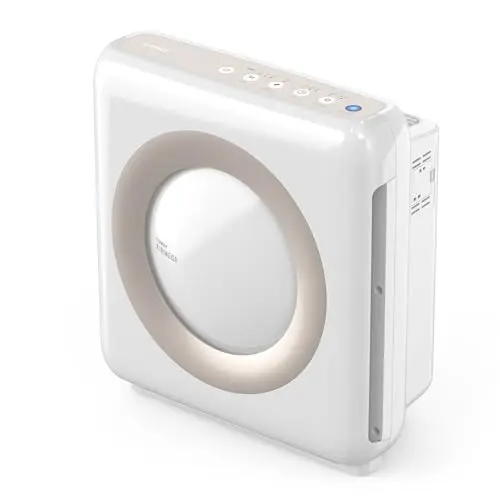
AP-1512HH – Four-Stage HEPA and Deodorization
Coway’s AP-1512HH pairs a four-stage filtration path with a dedicated deodorization filter and HEPA media. It monitors air quality and adjusts fan speed automatically, and the LED indicator can be dimmed for sleep. For musty rooms, the carbon/deodorization stage is the part that matters most.
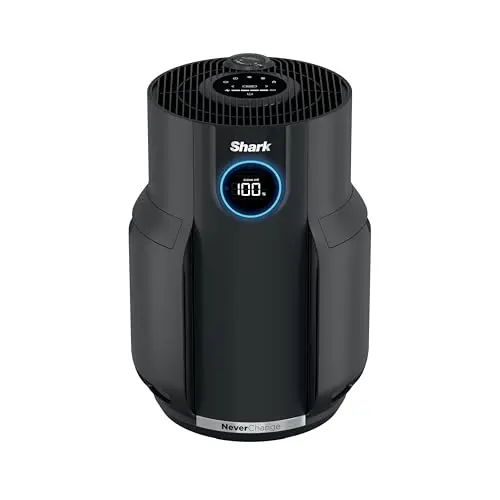
HP152 – NeverChange Odor Neutralizer
Shark’s HP152 uses NeverChange filtration and an Odor Neutralizer cartridge to guard against smells while releasing a light scent. The CleanSense IQ display shows air-quality changes in real time, and the washable debris screen helps keep larger particles off the main filter. It is a strong fit for a living room or bedroom that needs constant odor management.
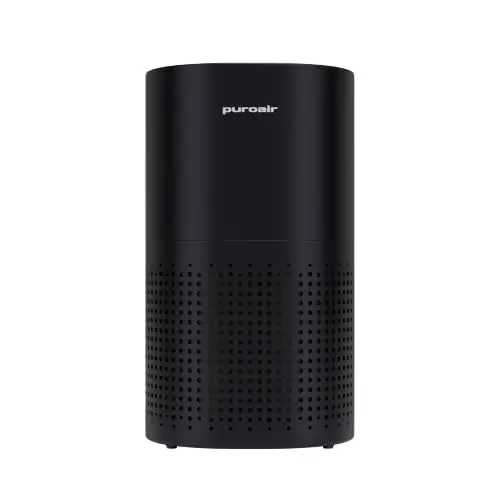
240 – Carbon-HEPA for Smoke and Odors
PuroAir’s 240 combines a HEPA filter with activated carbon and a PuroIQ sensor that bumps fan speed when air quality drops. It is designed for large rooms and runs a quiet sleep mode for overnight use. The carbon stage is the key piece for smoke, cooking, and musty odors.
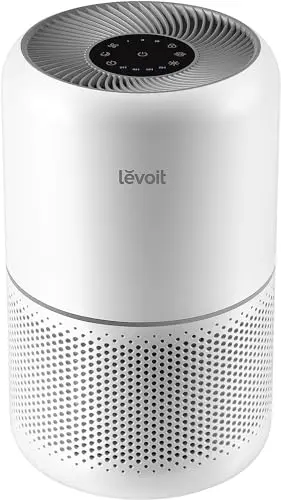
Core 300-P – Quiet HEPA for Bedrooms
The Core 300-P is a compact, quiet HEPA purifier with a three-stage filter and a sleep mode that drops noise to a whisper. Its AHAM Verifide CADR ratings cover smoke, dust, and pollen, and the display can be turned off at night. It suits bedrooms and smaller damp rooms where odor is noticeable but not overwhelming.
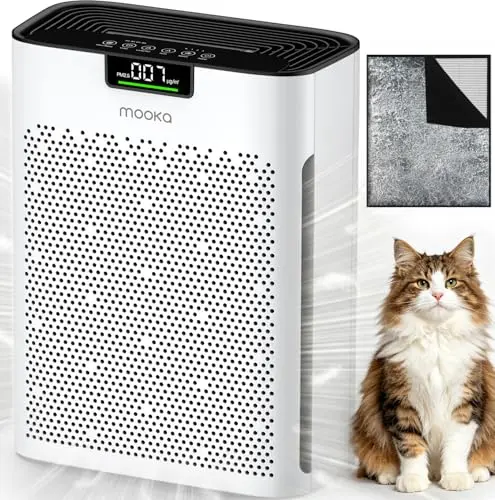
KJ190H – Smart Auto Mode with Carbon Pellets
MOOKA’s KJ190H brings auto mode, a PM2.5 display, and a washable pre-filter into a low-cost package. The three-stage filter includes activated carbon pellets for odors, and the aromatherapy pad can add a scent if you want one. It is a practical choice for a bedroom, basement, or pet area with lingering mustiness.
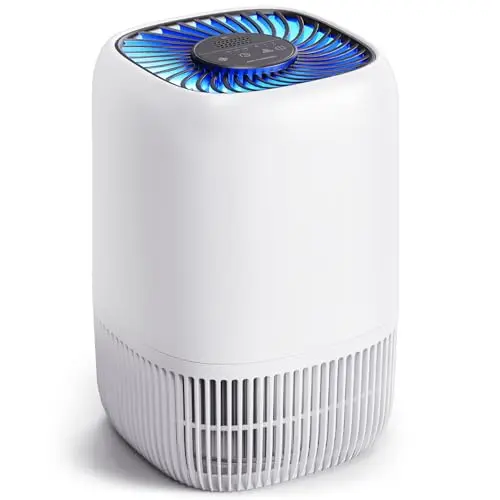
DH-JH12 – Compact 360-Degree Airflow
VOOPNU’s DH-JH12 is a compact 360-degree intake purifier with a triple-layer filter and three fan speeds. It runs quietly in sleep mode and includes an essential-oil tray for a fresher scent. It is best for small rooms, closets, or offices where space is tight and odor is mild.
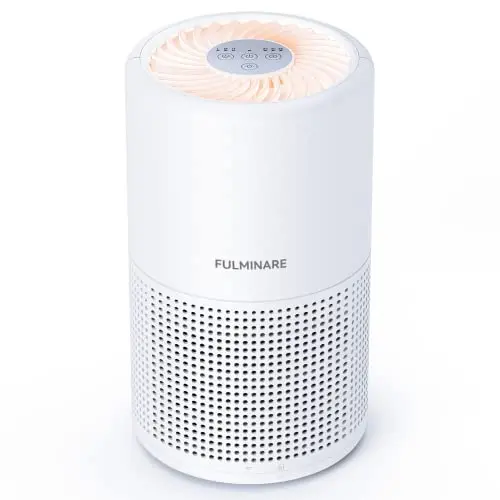
PU-P05 – Tiny HEPA with Night Light
FULMINARE’s PU-P05 is a tiny H13 HEPA purifier with a built-in night light and simple controls. It is designed for desks, dorm rooms, and small bedrooms, with timers and a near-silent sleep mode. The small filter and limited airflow make it a supplemental option rather than a whole-room odor solution.

4-Pack – Filterless Plug-In Ionizers
This four-pack of plug-in ionizers uses negative-ion technology and no replaceable filter. The units are small enough for bathrooms, closets, basements, and hallways, and they run quietly around the clock. They can help a small space feel fresher, but they are not a substitute for carbon and HEPA filtration when musty odor is persistent.
How We Evaluated These Air Purifiers for Musty Smell
We didn’t run controlled chamber tests or multi-month filter-life trials. What we did: cross-referenced nine air purifier models from nine distinct brands across six decision axes – odor filtration media, particle filtration, room coverage, auto-sensing, noise, and maintenance. We triangulated published specifications, feature sets, and owner feedback where available, then mapped each unit against realistic musty-room scenarios like basements, bathrooms, bedrooms, and damp closets. Where a spec sheet was thin, we kept the assessment narrower instead of filling gaps with guesswork.
The scoring framework weighted real-world fit for musty odor (70%) – how well each purifier combines carbon odor control with enough airflow for the room – against feature differentiation (30%) – unique advantages in filtration, sensors, sleep modes, and filter longevity. We audited the lineup for the things that actually change day-to-day ownership: how often filters need attention, how loud the unit gets when odors spike, and whether auto mode reacts in a useful way. We also weighed filter availability and replacement cadence, because odor control depends on fresh carbon. That matters more in a damp basement than in a dry bedroom. We have no commercial relationship with any brand here; recommendations track fit and differentiation, not brand preference. If you want the most complete odor-focused package, the Winix 5520 is the first one to shortlist. If you prefer a proven HEPA design with a dedicated deodorization stage, the Coway AP-1512HH is the better match.
How to Choose the Right Air Purifier for Musty Smell
1. Why Musty Smell Needs Carbon Filtration, Not Just HEPA
A musty smell usually comes from damp materials, mold, or mildew, and the odor itself is a mix of gases rather than just particles. HEPA filtration is excellent at capturing spores, dust, and pet dander, but it does not adsorb odor molecules. That is why a purifier can have a great particle filter and still leave a basement smelling like a basement.
Activated carbon is the layer that tackles odors and many VOCs associated with musty spaces. Look for a substantial carbon stage, a dedicated deodorization filter, or carbon pellets rather than a thin carbon sheet. The more carbon mass and the better the airflow design, the longer the odor control tends to last.
2. Match Air Purifier Coverage to the Damp Room
Coverage claims are useful, but CADR and room coverage should be read together. A unit rated for a large room will cycle a small bedroom quickly, while a compact purifier may only keep up in a closet or office. For musty basements, choose more capacity than you think you need because damp air and stored items can keep releasing odor.
Think in air changes, not just square footage. A purifier that moves more air through its carbon stage will respond faster when the room gets humid or when you open a door to a musty crawl space. If the room is closed most of the day, auto mode and a real-time sensor become more valuable.
3. Air Purifier Odor Control Features That Matter for Musty Smell
The most important feature is a real deodorization filter or carbon stage, not a washable pre-filter alone. Auto mode helps because musty odor often comes in waves, and a good air quality sensor can bump the fan when particles or odors rise. A washable pre-filter is a practical bonus because it keeps dust and hair from clogging the carbon layer.
If you want the strongest odor-focused package, the Winix 5520 is the pick. For a quieter bedroom-first option, the Levoit Core 300-P is easier to live with, though it is not built for a large damp basement.
4. Noise, Auto Mode, and Maintenance for Musty Spaces
Odor control works best when the purifier runs consistently, so sleep mode noise matters more than you might expect. A unit that is too loud at night will get switched off, and that undermines the whole job. A filter indicator is also useful because carbon can lose effectiveness before it looks dirty.
Carbon life is the hidden cost of odor control. In a damp basement or smoky room, expect to replace the carbon stage more often than the HEPA filter. If value matters, the MOOKA KJ190H includes auto mode and a washable pre-filter, which helps stretch the main filter.
5. Winix 5520 vs. Coway AP-1512HH for Musty Smell
The Winix 5520 leans harder into odor control with a high-deodorization carbon stage, larger coverage, and app monitoring. The Coway AP-1512HH counters with four-stage filtration, a dedicated deodorization filter, and straightforward filter alerts. Both are strong HEPA purifiers; the Winix is the more odor-focused tool, while the Coway is the simpler proven design.
If you want the set-and-forget HEPA package with a deodorization stage, the Coway AP-1512HH is the pick. If musty odor is the main complaint and you want more coverage and app control, go with the Winix.
Frequently Asked Questions
1. Do air purifiers actually remove musty smell?
They can reduce it, but they do not fix the source. A purifier with a strong activated carbon stage can adsorb many odor molecules, while a HEPA filter captures spores and particles that travel with damp air. If the musty odor keeps returning, the real fix is finding the moisture problem behind it. Treat the purifier as cleanup support, not a substitute for ventilation or leak repair.
2. What's the difference between the Winix 5520 and Coway AP-1512HH for musty smell?
The Winix 5520 is more odor-focused, with a high-deodorization carbon filter, larger coverage, and app controls. The Coway AP-1512HH uses four-stage filtration with a dedicated deodorization stage and simpler operation. If musty odor is the main issue and you want more capacity, the Winix 5520 is the better fit. If you prefer a proven HEPA design with straightforward reminders, the Coway is the calmer choice.
3. Is a HEPA filter enough for musty smell, or do I need carbon?
HEPA alone is not enough for odor. It captures particles, but musty smell is largely made of odor molecules and VOCs that pass through a particle filter. You need a carbon layer or deodorization filter to adsorb those gases. The best setup combines both: HEPA for spores and dust, carbon for the smell.
4. Shark HP152 vs. Levoit Core 300-P: which is better for a damp bedroom?
The Shark HP152 is the stronger odor manager because of its Odor Neutralizer cartridge and NeverChange filtration. The Levoit Core 300-P is quieter and more compact, with a quiet sleep mode that suits smaller rooms. If the bedroom smells musty and you want active odor control, the Shark HP152 is the pick. If you mainly want quiet particle filtration and a low-profile bedside unit, the Levoit is easier to live with.
5. How long should I run an air purifier for musty smell?
Run it as close to continuous operation as you can tolerate, especially during humid weather. Auto mode helps because it ramps up when air quality drops, and steady airflow supports more air changes through the carbon filter. In a damp season, leaving it on low all day is often more effective than a short high-speed blast.
Final Verdict
For most musty rooms, the Winix 5520 is the answer: it pairs high-deodorization carbon with True HEPA, wide coverage, and auto mode that reacts to changing air quality. If allergies are the bigger concern, the Coway AP-1512HH is the calmer, proven HEPA pick with a dedicated deodorization stage. On a tighter budget, the MOOKA KJ190H gives you smart controls, a washable pre-filter, and carbon pellets without the premium price. And if you want odor neutralization in a compact footprint, the Shark HP152 is purpose-built for that job. Start with the room that smells musty most often, size the purifier for that space, and fix the moisture source – the purifier is the cleanup crew, not the leak repair.
