
Best Air Purifiers For Pet Allergies And Asthma – 2026 Reviews

When pet dander and pollen start circulating, a good air purifier can be the difference between a restless night and a genuinely comfortable room. Asthma adds another layer: you’re not just chasing visible hair, you’re thinking about fine particles, odors, and how consistently the unit can clean the air without becoming a nuisance.
The strongest models for this job aren’t simply the ones with the biggest headline coverage number. We looked at true HEPA filtration, real-world pet-hair handling, sleep-friendly noise levels, auto mode behavior, and how easy the filters are to live with in a pet household.
This is a cross-brand guide, not a loyalty test. Some picks are compact bedroom units, some are whole-room workhorses, and others are budget-friendly overachievers. The right choice depends on the room, the severity of the allergy or asthma triggers, and how much maintenance you’re willing to take on.
Best Air Purifiers for Pet Allergies and Asthma – 2026 Reviews
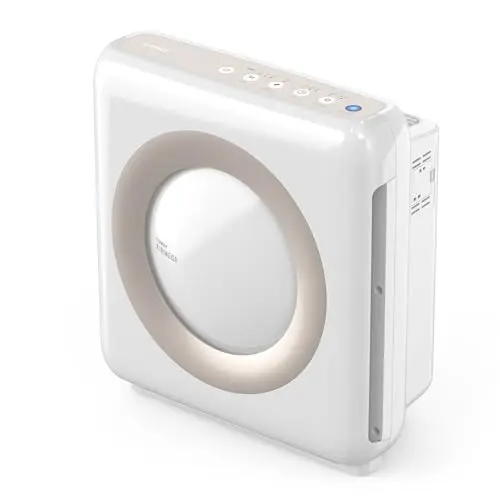
Mighty AP-1512HH(W) – Whole-Room Allergy Defense
A well-rounded true HEPA purifier with a four-stage filtration path, real-time air quality indicator, and auto mode that responds to changing particle levels. It’s a strong fit for bedrooms and living rooms where pet dander and dust are constant.
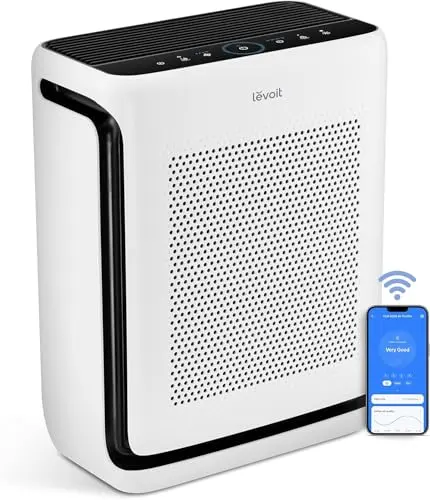
Vital 200S-P – Pet-Hair Focused Large-Room Cleaner
A smart Levoit model built around allergy groups, with high CADR ratings, a U-shaped secondary inlet for pet hair, and app control. It’s the better fit for larger open rooms and homes where hair clogs are a constant worry.
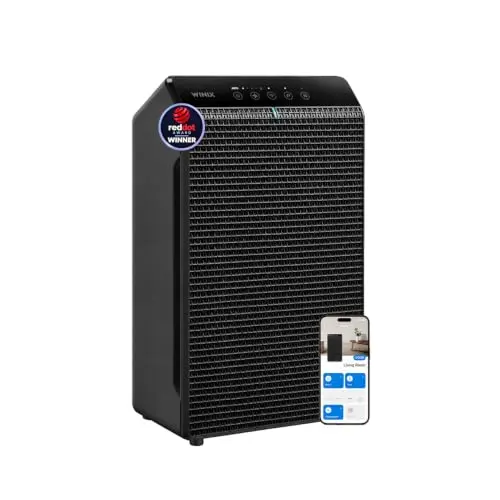
5520 – Odor-Control Powerhouse for Pet Homes
A large-room Winix with True HEPA filtration, a high-deodorization carbon filter, smart sensors, and app control. It’s aimed at households where pet odors, smoke, and dander all compete for attention.
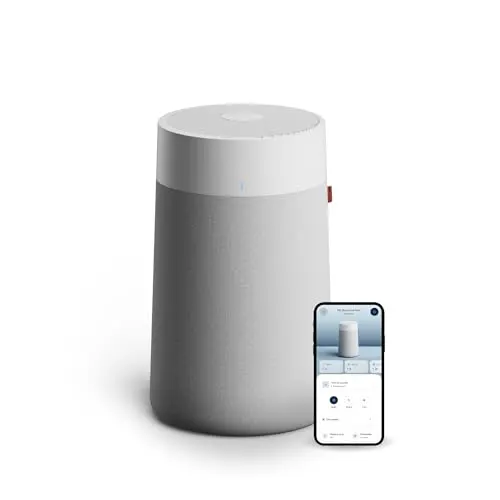
Blue Pure 311i Max – Smart Mid-Room Purifier
A quiet, app-connected Blueair with HEPASilent dual filtration, 360-degree intake, and a washable pre-filter. It’s a good match for medium rooms where design and low noise matter as much as particle capture.
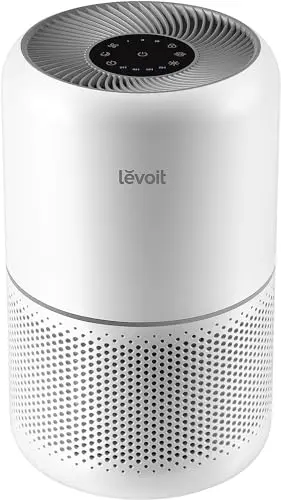
Core 300-P – Quiet Bedroom Value
A compact, budget-friendly Levoit with HEPA-grade filtration, a near-silent sleep mode, and simple controls. It’s best for smaller bedrooms and offices where you want steady particle reduction without spending a lot.
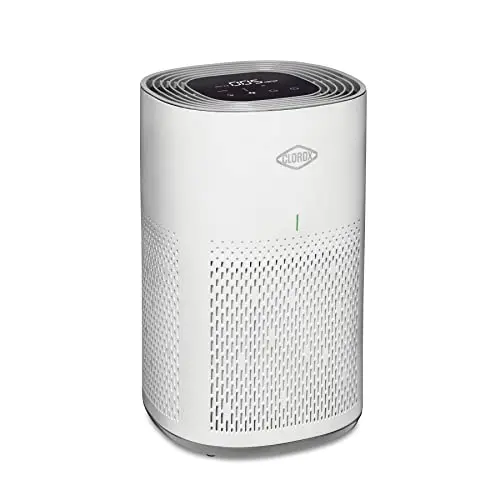
Medium Room True HEPA – Compact Allergy Support
A compact Clorox purifier with true HEPA filtration, a three-stage 360-degree filter, and a PM2.5 display. It’s designed for medium rooms and simple day-to-day operation.
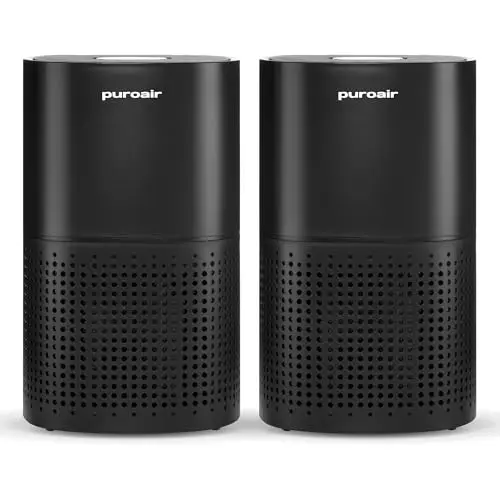
240 2-Pack – Multi-Room Allergy Relief
A two-pack of PuroAir’s 240 model, each with HEPA and carbon filtration, a particle sensor, auto mode, and quiet sleep mode. It’s a practical way to cover two rooms without buying one large unit.
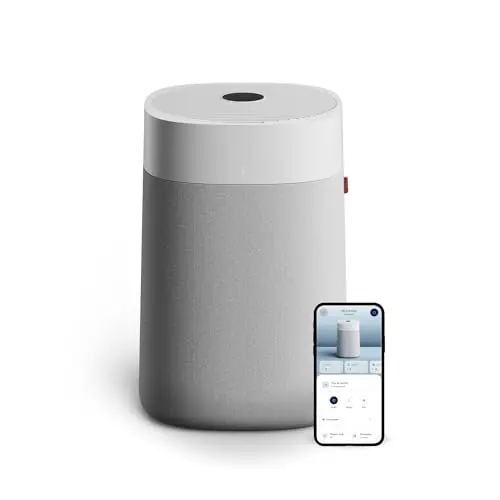
Blue Pure 211i Max – Large-Space Allergen Fighter
A high-airflow Blueair built for large living areas, with HEPASilent filtration, 360-degree intake, app control, and a washable pre-filter. It’s the pick when one purifier needs to handle an open floor plan.
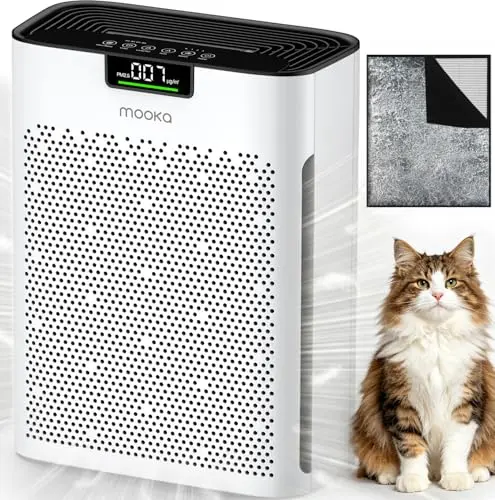
KJ190H – Budget Pet-Hair Purifier
A low-cost MOOKA purifier with a washable pre-filter, PM2.5 display, auto mode, and a quiet sleep setting. It’s aimed at budget-conscious pet owners in smaller rooms.
How We Evaluated These Air Purifiers for Pet Allergies and Asthma
We didn’t run controlled particulate-chamber tests or measure CADR in a lab. What we did: cross-referenced 9 air purifier models from 7 distinct brands across 5 decision axes – true HEPA particle capture, CADR and room coverage, pet-hair and dander handling, sleep-friendly noise, and filter maintenance. We triangulated published specifications, feature sets, owner feedback where available, and fit against the daily realities of a pet household with allergy or asthma concerns. That meant weighing how each unit behaves when dander is constant, hair accumulates, and a bedroom needs to stay quiet overnight.
We did not physically test filtration speed, noise output, or long-term filter life. Our assessment is built on published performance claims, feature sets, owner feedback where available, and use-case fit. The scoring framework weighted real-world performance for pet allergies and asthma (70%) – how well each unit’s filtration, airflow, auto mode, and maintenance match the use case – against feature differentiation (30%) – unique intake designs, carbon layers, app controls, and convenience features. We audited filter replacement guidance and available certifications to avoid picks that look good on paper but create ongoing hassle. We have no commercial relationship with any brand featured; recommendations track fit and differentiation, not brand preference. We also mapped likely buyer profiles: small bedrooms, open living areas, multi-room coverage, and odor-heavy homes.
If you want the most balanced starting point, the Coway AP-1512HH is our top pick. If pet hair and larger rooms are the priority, the Levoit Vital 200S-P is the stronger fit.
How to Choose the Right Air Purifier for Pet Allergies and Asthma
1. What Pet Allergies and Asthma Need From an Air Purifier
Pet allergies aren’t just about visible hair. The bigger triggers are dander, saliva proteins, and fine airborne particles that settle into soft surfaces and get stirred up by movement. Asthma adds sensitivity to fine particulates, smoke, and strong odors, so the best air purifiers for this job need consistent particle capture, not just a high fan speed.
Look for a true HEPA filter rated to capture 99.97% of particles at 0.3 microns, plus a pre-filter that catches hair before it reaches the main filter. A carbon layer helps with pet odors and VOCs, but it shouldn’t replace particle filtration. The unit also has to run often enough to matter, which makes noise and auto mode part of the allergy equation.
2. HEPA Filtration, CADR, and Room Coverage in Air Purifiers
CADR tells you how much clean air the purifier delivers for smoke, dust, and pollen; higher numbers mean faster cleaning in a given room. Room coverage claims can be optimistic, so compare CADR with your actual room size rather than the biggest number on the box. For a bedroom, a compact high-CADR unit often beats a large purifier that never leaves the corner.
For a balanced whole-room option, the Coway AP-1512HH pairs strong HEPA filtration with auto mode and a clear air quality indicator. If your room is larger or open-plan, prioritize higher airflow and a 360-degree intake so the unit can pull from more than one direction.
3. Pet Hair vs Pet Dander: Why Intake Design Matters
Pet hair is visible and clogs filters; pet dander is the smaller allergen that stays airborne longer. A purifier with a washable pre-filter and a wide intake is easier to live with because hair gets trapped before it smothers the HEPA layer. Units with a U-shaped inlet can also keep airflow steadier in shedding season.
If hair is the main nuisance, the Levoit Vital 200S-P is the more purpose-built choice, thanks to its U-shaped inlet and high CADR ratings. For a smaller room, a compact model with a washable pre-filter is usually enough.
4. Noise, Sleep Mode, and Nighttime Asthma Triggers
Asthma symptoms often feel worse at night, so a purifier that’s too loud for the bedroom won’t get used consistently. Look for a sleep mode that lowers fan speed and dims or turns off display lights. A low-speed rating in the low-20-decibel range is a good sign, but airflow still matters: a quiet unit that barely cleans the room isn’t doing you favors.
Placement helps too. Keep the purifier a few feet from the bed and avoid blocking the intake with curtains or furniture. If you want a bedroom-focused pick, a compact model with display light control and a timer is easier to live with every night.
5. Filter Maintenance and Long-Term Cost in Pet Households
Pet homes go through filters faster than pet-free homes. A washable pre-filter cuts down on replacement frequency by catching hair and large dust before the HEPA layer. Check filter replacement intervals and the cost of genuine filters before buying; a budget-friendly purifier with pricey filters can cost more over time.
The Levoit Core 300-P is a sensible budget-friendly bedroom pick because filters are easy to source and the unit is simple to maintain. For larger rooms, expect to replace filters more often if pets shed heavily.
6. Do Smart Sensors and Auto Mode Help With Pet Allergies?
Auto mode is genuinely useful in a pet home because dander and odor levels change when pets move, doors open, or someone vacuums. A particle sensor can ramp the fan up before you notice the air has changed. That said, a good purifier doesn’t need every smart feature; app control is convenient for scheduling and filter tracking, but manual speeds and a timer cover the basics.
If you want a set-and-forget unit for a pet room, prioritize reliable auto mode over app extras. If you travel or manage multiple rooms, app control earns its keep.
Frequently Asked Questions
1. What's the difference between the Coway AP-1512HH and Levoit Vital 200S-P for pet allergies?
The Coway AP-1512HH is the more balanced all-rounder: a four-stage filtration system, a real-time air quality indicator, and auto mode make it easy to live with in a bedroom or living room. The Levoit Vital 200S-P is more pet-hair focused, with a U-shaped secondary inlet and higher CADR ratings for larger, open rooms. If you want one simple purifier for a standard room, the Coway AP-1512HH is the safer starting point; if shedding and square footage are the main issues, the Vital 200S-P is the stronger fit.
2. Is the Winix 5520 or Blueair 311i Max better for asthma triggers?
The Winix 5520 leans harder into odor and smoke control, thanks to its high-deodorization carbon filter and True HEPA capture. That makes it a better match if cooking, pets, or smoke are constant triggers. The Blueair 311i Max is quieter and more design-friendly, with HEPASilent dual filtration and a washable pre-filter, but reliability feedback is more uneven. For asthma triggers that include odors, the Winix 5520 is the more complete pick; for a medium room where low noise matters most, the Blueair is the calmer choice.
3. How much room coverage do I need for pet allergies and asthma?
Start with the room where you spend the most time, usually the bedroom or main living area. A purifier with enough CADR for that room’s size will clean the air faster than a larger unit placed far away. Coverage claims often assume ideal conditions, so size down if the room has doorways, furniture, or heavy shedding. For asthma, consistent nighttime operation matters more than covering every square foot of the house.
4. Do air purifiers actually help with pet allergies and asthma?
They can help, but they’re one part of a broader routine. A true HEPA filter captures dander and fine particles that trigger symptoms, while a carbon layer reduces odors and some VOCs. The biggest gains come from running the unit continuously in the room where you sleep or spend the most time, and from washing bedding and vacuuming regularly. An air purifier won’t replace allergy medication or source control, but it can reduce the airborne load your lungs deal with.
5. How often should I replace filters in a pet household?
Expect to replace the HEPA filter more often than the manufacturer’s standard interval if you have a heavy shedder. A washable pre-filter can be cleaned every few weeks to keep airflow steady, while the main filter usually needs attention when the filter indicator lights up or airflow drops noticeably. Check the genuine replacement filter price before buying, because a budget-friendly purifier with expensive filters can be a false economy.
Final Verdict
For most pet households managing allergies and asthma, the Coway AP-1512HH is the easiest recommendation. It pairs proven HEPA filtration with auto mode, a clear air quality indicator, and a sleep-friendly design that works in real bedrooms, not just showrooms.
If pet hair and larger rooms are the main challenge, go with the Levoit Vital 200S-P. Its U-shaped inlet and high CADR ratings make it the more purpose-built choice for shedding-heavy homes. And if you’re outfitting a smaller bedroom on a tighter budget, the Levoit Core 300-P delivers the essentials quietly and without a lot of fuss. The right pick is the one that matches your room, your triggers, and your willingness to keep up with filters.
