
Best Air Purifiers For Pet Hair – 2026 Reviews

Pet hair doesn’t politely stay where it lands. It drifts into corners, coats the sofa, and lifts back into the air the moment you sit down. A generic air purifier helps around the edges, but the models that actually keep pace with a shedding dog or cat are doing a few specific things differently.
The biggest variable is intake design. Hair is bulky and mats quickly, clogging a standard front grille within weeks, which is why the better pet-focused purifiers add wide side inlets and pre-filters you can rinse. The second axis is odor control, and it’s a separate problem from shedding. Dander and smell need different stages, and only a real carbon layer handles the second one.
We compared the purifiers across the category that market themselves for pet households, weighing filtration, airflow, noise, and long-term maintenance. Some are genuinely built for the job; others just borrowed the word “pet” for the packaging. Here’s how to tell them apart and which ones are worth your money.
Best Air Purifiers for Pet Hair – 2026 Reviews
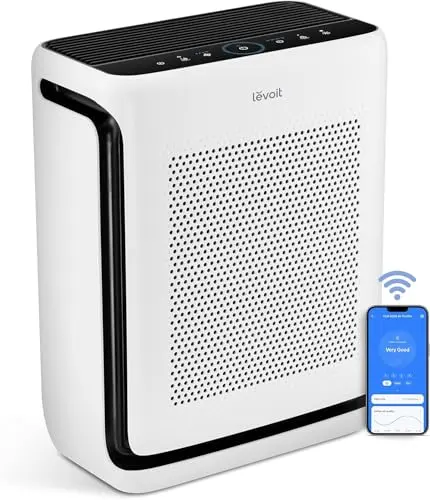
Vital 200S-P – Pet-Focused Whole-Room Cleaning
The Vital 200S-P is Levoit’s pet-household specialist. Alongside a traditional front inlet it adds a U-shaped secondary intake that pulls in airborne hair and dander without clogging, and the CADR ratings are strong for its size class. A built-in air quality monitor and app control make it one of the more hands-off options in the lineup.
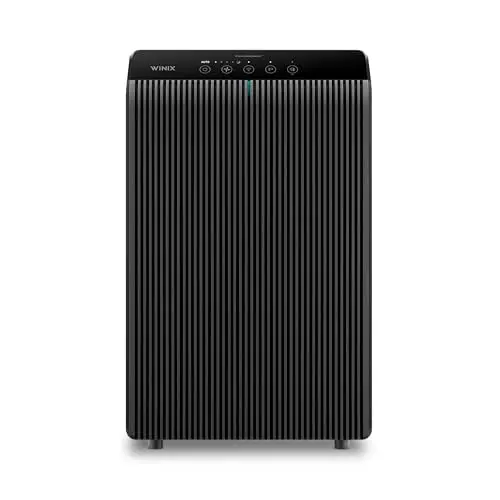
5510 – True HEPA With Advanced Odor Control
The 5510 is Winix’s current-generation tower, adding app support to a proven formula. It pairs True HEPA filtration with a heavy deodorization carbon stage, and its light-sensing sleep mode flips the fan down automatically when the room goes dark – a genuinely useful touch in a pet household where odor lingers overnight.
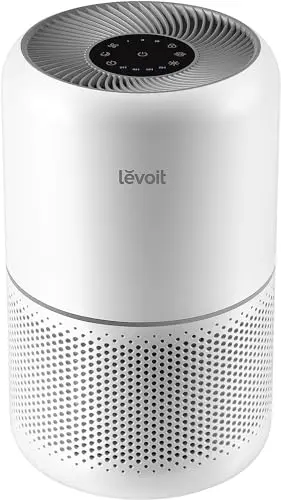
Core 300-P – Quiet Bedroom All-Rounder
The Core 300-P is the quiet, affordable all-rounder of the group. It’s AHAM Verifide, runs near-silent in sleep mode, and hides its display lights entirely at night – which is why it keeps showing up in bedrooms shared with light sleepers and nervous pets.
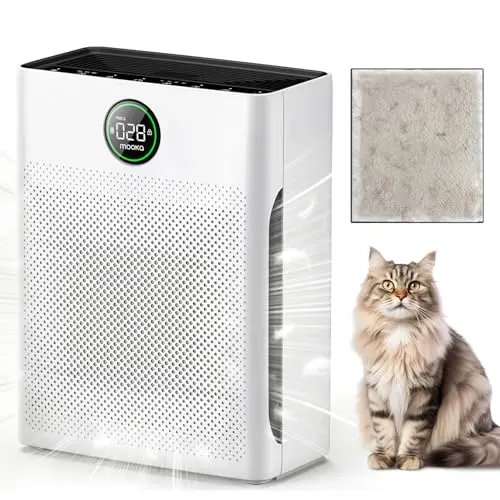
PR1 – Dedicated Pet Mode on a Budget
The PR1 is MOOKA’s pet-focused budget model, built around a dedicated Pet Mode and a wide side inlet that grabs hair before it reaches the HEPA core. It’s the cheapest way into a purifier that actually names pet hair as a target rather than an afterthought.
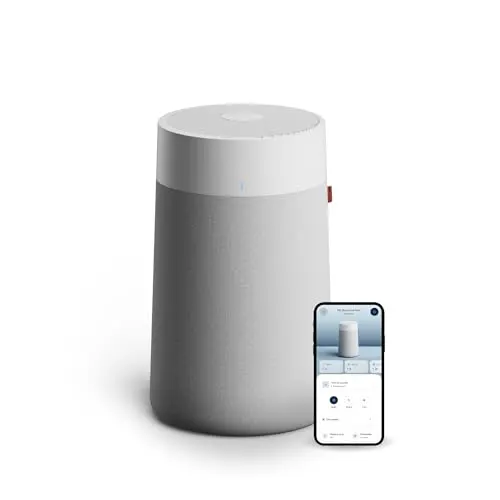
311i Max – Big-Room Filtration With Smart Sensors
The 311i Max leans on Blueair’s HEPASilent dual filtration and a 360-degree intake, wrapping big-room coverage in a clean Scandinavian shell. Sensors and app control do most of the thinking, so it quietly takes care of itself once placed.
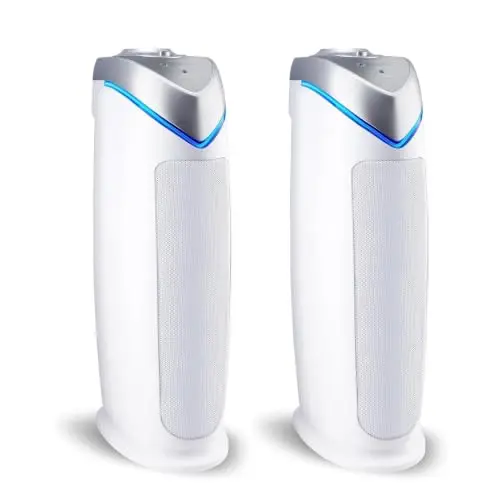
AC4825W2PK – Two-Tower Coverage for Multi-Pet Homes
The AC4825W2PK ships as a two-pack of GermGuardian’s 22-inch towers, which is a practical answer to a multi-pet home: put one in the bedroom and one wherever the hair collects. HEPA PURE filtration, an activated carbon stage, and an optional UV-C light cover the basics.
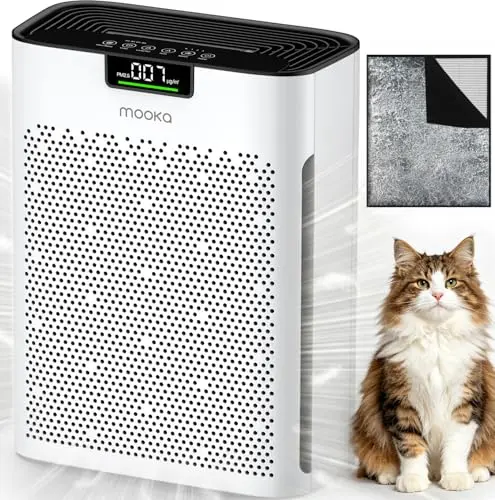
KJ190H – Compact Value With PM2.5 Readout
The KJ190H is a compact unit with a bigger feature list than its size suggests: a PM2.5 readout, auto mode, aromatherapy, and a sleep mode that drops to 20dB. It’s aimed at pet owners who want visible feedback that the air is actually improving.
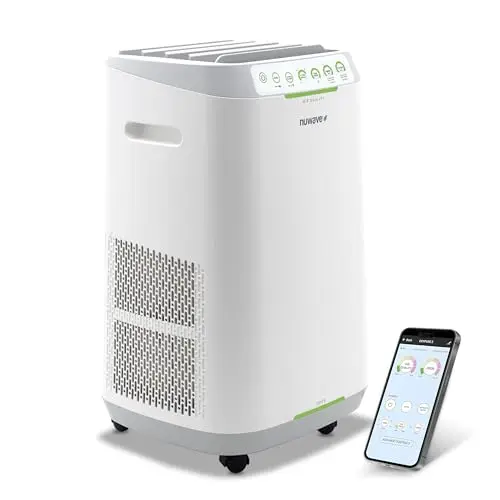
Forever – Premium With Washable Reusable Filters
The Forever is the lineup’s premium outlier, built around a system of washable, reusable filters that you never replace. Seven filtration stages and a stainless-steel pre-filter target odor, smoke, and fine particles in large spaces.

HAP607 – Turbo Mode for Stubborn Pet Odor
The HAP607 is a newer entry that leans on a turbo mode and a triple-intake design to move a lot of air for its footprint. A PM2.5 display, auto mode, and a framed washable pre-filter round out a budget-friendly package.
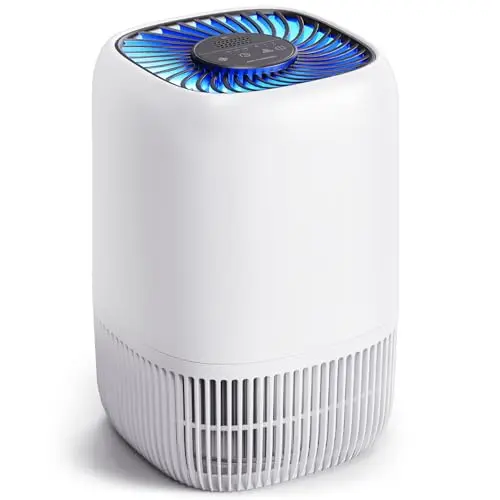
DH-JH12 – Tiny Footprint, Entry Budget
The DH-JH12 is the smallest unit in the lineup, designed for a desk or a child’s room rather than a whole living space. A 360-degree intake, three-way filtration, and an essential oil tray make it a flexible little companion purifier.
How We Evaluated These Air Purifiers for Pet Hair
We didn’t run these purifiers through months of shedding season in a multi-pet household. What we did: cross-referenced 10 purifier models from 8 distinct brands across six decision axes – filtration efficiency and CADR, pet-hair handling through intake design and pre-filter type, odor control, noise, room coverage, and long-term running costs. We triangulated published specifications, aggregated owner feedback where available, and mapped each unit against how a pet household actually uses a purifier: near the litter box, in the bedroom, and in the main living space where hair collects fastest. We also weighed third-party verifications such as AHAM Verifide, CARB, and ETL, because certification is one of the few objective signals in a category full of marketing claims. Where owner feedback was thin, we leaned on published specs rather than guess.
The scoring framework weighted real-world fit for pet households (70%) – how well each unit traps hair and dander, controls odor, and stays livable day to day – against feature differentiation (30%) – design choices like dedicated pet modes, washable filter systems, and smart air-quality sensors. We have no commercial relationship with any brand here; recommendations track fit and differentiation, not brand preference. If your main complaint is shedding volume, the Levoit Vital 200S-P is the most purpose-built option; if odor is the headache, the Winix 5510 is the stronger route. Neither is a knock on the other – they simply solve different halves of the pet-hair problem.
How to Choose the Right Air Purifier for Pet Hair
1. Why Pet Hair Is a Different Filtration Problem
Pet hair isn’t like ordinary dust. It’s long, bulky, and it mats. Standard pleated filters clog at the surface, airflow drops, and the purifier that worked great in week one is wheezing by week six. That’s why the pet-focused models add wide secondary inlets – more paths in, less chance of a single grille bridging over with fur.
The other thing hair carries is dander, which is the actual allergen, and dander is fine enough that it needs real HEPA-grade media, not a washable mesh. Treat hair and dander as two problems that need two different stages.
2. Match Coverage to the Room Your Pets Actually Live In
Coverage numbers get quoted at once-per-hour air exchange, which sounds impressive until you realize that’s a slow turnover. For a bedroom where you sleep eight hours, that pace is fine. For a living room where the dog spends the day, you want a unit that cleans the space closer to four or five times per hour – which usually means a smaller claimed coverage number than the box advertises.
Measure the room, halve the headline square footage, and you’ll land closer to real-world performance.
3. Intake Design and Washable Pre-Filters Matter Most for Pet Hair
Two features separate a pet purifier from a generic one: a multi-directional intake and a washable pre-filter you can rinse. The pre-filter catches hair before it reaches the HEPA media, and that’s the difference between replacing the main filter twice a year and twice a quarter.
Look for a framed pre-filter over a loose sponge – framed versions hold their shape and are easier to vacuum clean.
4. Carbon Filters Are What Handle Pet Odor
A HEPA filter does almost nothing for smell. Odor needs activated carbon, and the amount matters – a thin carbon dusting on the HEPA media won’t cut it in a multi-pet home. Better units use a dedicated carbon stage or carbon pellets, and some add a separate odor-control layer.
If odor is your main complaint rather than shedding, weight carbon capacity heavily in your decision.
5. Noise, Sleep Modes, and Where an Air Purifier Lives
Pet owners often run a purifier continuously, which makes noise a daily quality-of-life issue. A unit that’s silent overnight but intrusive on high is a compromise – you’ll want one where auto mode rarely needs to max out. Look for listed sleep-mode decibels in the low-to-mid 20s and a way to kill the display lights.
If the purifier sits near a nervous animal, the light-kill feature matters as much as the noise figure.
6. Running Costs and Filter Replacement
The sticker price is the smallest part of the cost. Replacement filters are where pet purifiers get expensive, because hair load means more frequent changes. Washable pre-filters offset this, and a few units go further with reusable media – the Nuwave Forever is built entirely around that idea.
Weigh the price of a genuine filter, and how often the brand recommends changing it, against the purchase price before you commit. A cheap unit with frequent filter changes can cost more over a couple of years than a pricier one with a washable core.
7. Winix 5510 vs Levoit Vital 200S-P: Which for a Pet Household?
These are the two strongest picks for different reasons. The Winix 5510 leans on True HEPA plus heavy carbon and a light-sensing sleep mode – if pet odor is your top complaint and you want a set-and-forget tower, go with the Winix.
The Levoit Vital 200S-P counters with its U-shaped inlet and smart air quality monitoring, which suits a home where hair volume is the bigger issue than smell. If you can’t decide, odor points to Winix, hair volume points to Levoit.
Frequently Asked Questions
1. How often should I run an air purifier in a home with pets?
Most pet owners run one continuously, and that’s the right instinct. Hair and dander are constant, not episodic, so a purifier only earns its keep when it’s cycling air all day. Auto mode makes continuous operation practical: the unit idles quietly when the room is clean and ramps up when dander spikes.
If you only run it for an hour after the dog comes in, you’re cleaning the air and then letting it refill. Modern units are efficient enough that energy use stays low – some quote under a single kilowatt-hour for a full day at top speed.
2. What's the difference between the Levoit Vital 200S-P and the Winix 5510?
Both are top picks, but they solve different problems. The Vital 200S-P is built around a U-shaped inlet that pulls in bulky hair without clogging – it’s the better pick if shedding volume is your main complaint, and its air quality monitor and app make it easy to keep an eye on the room.
The Winix 5510 leans harder on odor, pairing True HEPA filtration down to 0.01 microns with an advanced deodorization carbon filter. If smell is the issue, go Winix; if hair is the issue, go Levoit.
3. Do air purifiers actually remove pet hair, or just dander?
Both, but differently. Large hair is mostly caught by the pre-filter and intake grille – that’s a physical trapping job, and a washable pre-filter is what makes it manageable instead of a weekly filter swap. Dander is microscopic and sticky, and clearing it is the HEPA stage’s job.
Units like the FreAire HAP607 add a framed pre-filter that holds its shape through rinsing. If you want both handled well, look for that plus genuine HEPA-grade media.
4. Winix 5510 vs Blueair 311i Max: which handles pet odor better?
The Winix 5510 has the more dedicated odor setup, with an advanced deodorization carbon filter designed specifically to reduce VOCs and pet smells. The Blueair 311i Max leans on HEPASilent dual filtration, which excels at particles and dander but treats carbon as a supporting stage.
So for smell, Winix. For sheer coverage in a large open room, Blueair’s 360-degree intake and higher airflow win out.
5. Will an air purifier help with cat or dog allergies?
It can meaningfully reduce symptoms by clearing dander, but it’s one tool, not a cure. Dander settles on surfaces and gets kicked back up by movement, so a purifier works best alongside regular vacuuming and washing of bedding.
Position matters too: put it where the pet spends time and where you sleep. HEPA-grade media and a real carbon stage make the biggest difference for allergy households, and running it continuously beats occasional bursts.
Final Verdict
For most pet households, the Levoit Vital 200S-P is the answer. Its U-shaped inlet handles bulky hair without choking the filter, the coverage is generous, and the air quality monitor means you’re not guessing. If you’re working with a tighter budget and one problem room, the Levoit Core 300-P covers the essentials – AHAM Verifide filtration, a genuinely quiet sleep mode, and a two-year warranty.
When odor is the complaint rather than shedding, the Winix 5510 and its heavy carbon stage is the one to beat. And if you’d rather never buy a replacement filter again, the Nuwave Forever is built for exactly that tradeoff. Pick by your biggest problem – hair, smell, or long-term cost – and the right purifier is easy to spot.
