
Best Air Purifiers For Small Rooms – 2026 Reviews

A small room is where an air purifier earns its keep and where it’s most likely to annoy you. A bedroom, dorm, nursery, or home office puts the machine within arm’s reach of your pillow or desk, so the unit that vanishes into a big living room becomes a visible, audible roommate. The square footage printed on the box rarely describes that reality.
Two things separate a good small-room pick from a mediocre one. The first is verified clean air delivery rate – the CADR figure tied to smoke, dust, and pollen – because a small room only needs a modest number, but it needs that number to be real rather than extrapolated from a much larger space. The second is the noise floor in sleep mode and how much light the thing throws at two in the morning. A purifier that’s technically capable but glows and hums all night will get switched off, and a switched-off purifier cleans nothing.
What follows is a cross-brand survey of compact units, from app-connected models to twin-pack minis built for covering more than one room at once. We’ll walk through which ones actually deliver on small-room performance, where each one makes tradeoffs, and how to read the specs that matter before you buy.
Best Air Purifiers for Small Rooms – 2026 Reviews
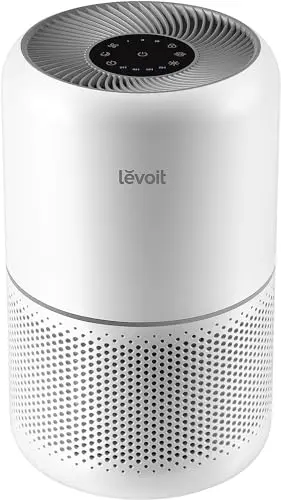
Core 300-P – Verified CADR for Small Rooms
A compact, AHAM VERIFIDE purifier with published CADR figures for smoke, dust, and pollen. The 3-in-1 cartridge handles pre-filter, HEPA-grade media, and carbon in one piece, and sleep mode drops to a near-silent 24 dB with the display lights switchable off.
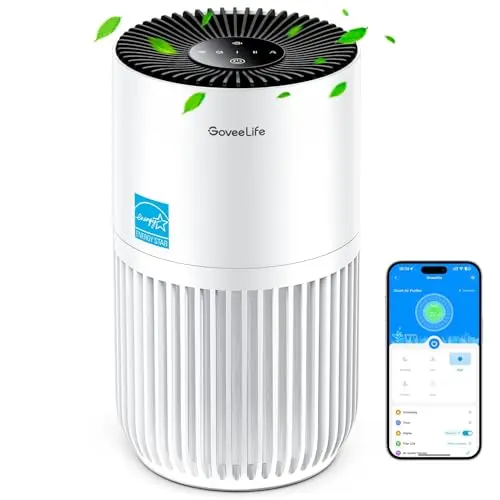
H7126 Smart Mini – App-Controlled Air for Small Spaces
The most connected unit in this group, with app scheduling, Alexa and IFTTT support, and three custom preset windows. Filtration runs through a dual-channel 360-degree intake, sleep mode sits at 24 dB, and an aroma pad sits under the outlet for optional scent.
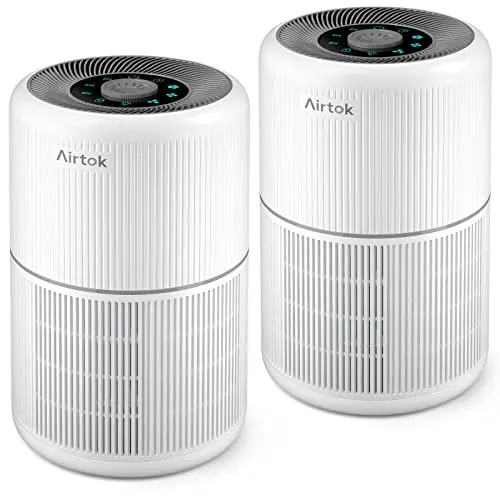
AP0601 2-Pack – Two Mini Purifiers, Two Rooms
Two complete mini purifiers in one box, each with a 4-in-1 filter, three speeds, an 8-hour timer, child lock, aroma pad, and a switchable night light. Sized for a small bedroom or home office rather than an open-plan space.
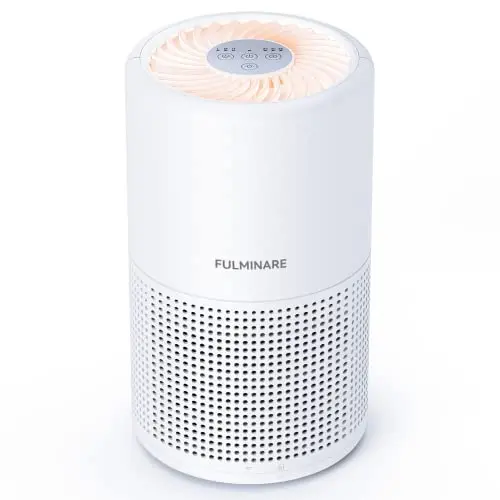
PU-P05 – Tiny Footprint, Quiet HEPA
A genuinely small purifier with an H13 HEPA filter, a 20 dB low setting, an independent night light, and five timer options. The 5.7-inch body and 1.85-pound weight make it easy to place on a shelf or dresser.
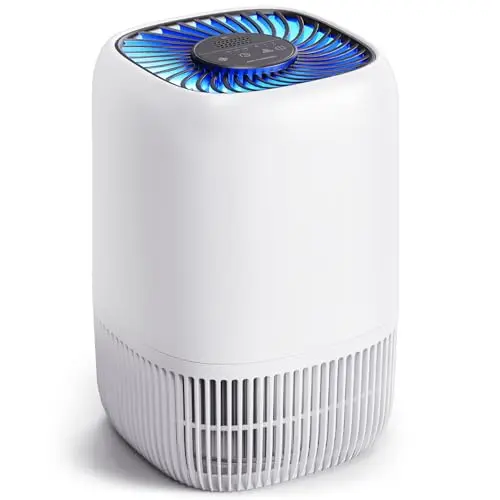
DH-JH12 – One-Button Purification With 360 Intake
A no-fuss compact purifier with a 360-degree surround intake, a triple-layer filter stack, single-tap controls, and a 22 dB sleep mode. An essential oil tray sits inside, and the unit carries DOE, ETL, FCC, and CARB certifications.
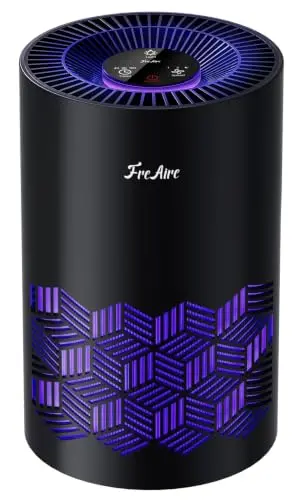
KN-6391 – Ambient Light With 20 dB Sleep Mode
A compact purifier built around a three-level filter stack rated to 0.3 microns, with a 360-degree dual-channel airflow design and a 20 dB sleep mode. Three ambient light settings let it double as a soft night light.
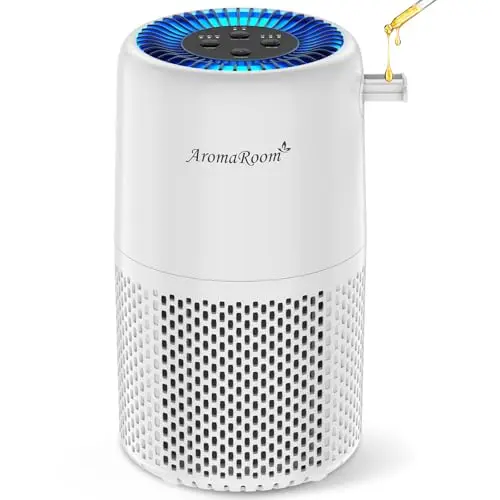
AP103-A – Aromatherapy for the Nursery
A nursery-friendly compact purifier with True HEPA filtration, twice-hourly air turnover in a modest room, a 22 dB sleep mode, 2/4/8-hour timers, and a fragrance pad for optional essential oil.
How We Evaluated These Air Purifiers for Small Rooms
We didn’t run these in a sealed test chamber with a particle counter, and we didn’t measure noise with a calibrated meter. What we did: cross-referenced seven compact air purifier models from seven distinct brands across six decision axes – verified clean air delivery rate, sleep-mode noise, footprint and weight, filter architecture and replacement cadence, controls and scheduling, and safety certifications. We triangulated published specifications, feature sets, and owner feedback where available, then weighed each unit against the realities of a small room: how close it sits to your bed, how much surface it eats, and how often you’ll have to touch it.
The scoring framework put real-world small-room performance at 70% – whether the machine can turn over the air in a bedroom or office and stay quiet doing it – and feature differentiation at 30%, meaning the app controls, timers, aromatherapy, and lighting that separate one unit from another. We audited coverage claims against their stated air-change assumptions rather than taking the largest number on the box at face value, and we benchmarked verified CADR figures against room-volume math for typical bedrooms and home offices.
None of these brands has a commercial relationship with us; recommendations track fit and differentiation, not brand preference. If you want verified performance numbers above all else, the Core 300-P is the straightforward answer. If scheduling from your phone matters more than published CADR, the H7126 Smart Mini is where to look.
How to Choose the Right Air Purifiers for Small Rooms
1. Why Verified CADR Beats a Big Coverage Number in a Small Room
CADR – clean air delivery rate – is the only performance figure in this category that gets independently measured. It’s expressed in cubic feet per minute for three contaminants: smoke, dust, and pollen. A unit carrying the AHAM VERIFIDE seal has had those numbers tested to a published standard instead of calculated from a marketing formula.
Coverage claims are where shoppers get misled. A manufacturer can honestly say a purifier handles over a thousand square feet – if they assume one air change per hour, which is barely stirring the room. The same machine might deliver four or five air changes per hour in a small bedroom, and that’s the number that matters for allergies, smoke, or litter odor. When you see a coverage figure, look for the air-change assumption behind it. If you want the benchmark case, the Core 300-P publishes both the CADR and the room size it was tested at.
2. How to Size an Air Purifier for a Small Room
Start with cubic feet, not square feet. A 10×12 bedroom with an eight-foot ceiling is 960 cubic feet. To hit four air changes per hour, you need a unit moving roughly 64 CFM. That’s a modest ask – which is why compact purifiers make sense in small rooms and why oversized units are mostly a waste of money and floor space.
Then subtract for reality. A purifier tucked behind a curtain loses efficiency, and a 360-degree intake design tolerates tight placement better than a front-grille model. The DH-JH12 is a clean example of the surround-intake approach. If you’re covering a bedroom and a home office, a two-unit bundle sidesteps the sizing question entirely by putting a modest purifier in each space.
3. Noise Floor: The Spec That Decides Small-Room Comfort
In a small room the purifier is usually within a few feet of your head, so sleep-mode decibels matter more than maximum airflow. The compact units here cluster between 20 and 24 dB on low, which is roughly the difference between a faint hum and near silence – but every unit runs noticeably louder on high, and you will hear it.
Light is the other half of the equation. A bright display or an always-on power LED will bother you more than the fan does. Look for display-off capability, and treat built-in night lights as a genuine bonus only if they can be switched off independently of the purification.
4. Filter Architecture, Replacement Cadence, and Ongoing Cost
Most compact purifiers use a three-stage cartridge: a pre-filter for hair and lint, HEPA media for fine particles, and a carbon layer for odors and VOCs. Carbon volume is where budget units cut corners, so a thin carbon mat will handle yesterday’s cooking smell but not a litter box.
Replacement intervals in this category run three to six months under continuous use. Genuine cartridges cost more upfront and are worth it – off-brand filters can be undersized, which stresses the motor and quietly cuts efficiency. Several brands here offer pet-care or smoke-focused filter variants; those are worth the small premium if that’s your specific problem.
5. Smart Controls, Timers, and Aromatherapy: Filler or Function for a Small Room?
An app-connected purifier earns its keep more in a small room than a large one. You’ll notice the fan speed changing while you’re sitting there, so scheduling louder cleaning for when you’re out is real quality of life. The H7126 Smart Mini is the clearest example here, with preset windows and voice control.
Timers are straightforwardly useful. Aromatherapy pads are more debatable – they’re a pleasant extra, not a reason to buy, and results vary from unit to unit. Don’t let a fragrance feature outweigh CADR or noise in your decision.
6. What to Skip When Shopping for a Small-Room Air Purifier
Skip ozone generators entirely – they’re a different product category wearing similar marketing language. Skip units whose only performance claim is a coverage number with no CADR behind it. Skip anything that won’t fit where the air actually is: a purifier on the floor behind an armchair is mostly decoration.
And skip the temptation to buy one big unit for the whole home. In a small room, a purpose-sized purifier runs quieter, costs less to operate, and gives you the flexibility to move it to wherever the problem is that week.
Frequently Asked Questions
1. Is a mini air purifier actually enough for a small bedroom?
Usually yes, as long as you check the CADR rather than the coverage headline. A bedroom in the 100 to 150 square foot range needs very little airflow to reach four air changes per hour, and most compact units can meet that. The Core 300-P is the clearest case – its verified smoke CADR is high enough to refresh a small room several times an hour, and the machine is only 8.7 inches wide.
What a mini won’t do is keep up with an open-plan space or a room where someone smokes indoors. Match the unit to the cubic footage, keep the filter clean, and a small purifier does real work.
2. What's the difference between the Levoit Core 300-P and the GoveeLife H7126?
The Core 300-P is built around verified filtration performance – published CADR numbers, an AHAM VERIFIDE seal, and a 3-in-1 cartridge. The H7126 is built around control: app scheduling, Alexa and IFTTT integration, three custom preset windows, and an aroma pad.
Pick the Levoit if measured air cleaning in one room is the priority. Pick the GoveeLife if the purifier should run on a schedule you set from your phone and slot into a smart-home routine. Both are quiet in sleep mode – 24 dB on each – so the decision comes down to filtration credentials versus automation.
3. How does the AIRTOK 2-pack compare to the FULMINARE PU-P05?
They answer different questions. The AIRTOK pair gives you two complete purifiers for a bedroom plus a second space, each with a 4-in-1 filter, child lock, and timer – useful when you’re outfitting a nursery and a guest room at once.
The PU-P05 is a single, smaller unit with an H13 HEPA filter, a 20 dB low setting, and five timer options. If one room is all you need covered, it’s the more focused buy; if you need two, the AIRTOK bundle saves you a second decision.
4. Do small-room air purifiers help with pet hair and litter odor?
Partly. A HEPA-grade filter catches dander and airborne hair, and a carbon layer handles some odor – but carbon volume varies a lot between compact units, and thin carbon mats saturate quickly in a room with a litter box. Running the unit continuously on low works better than occasional blasts on high.
For persistent odor, look for a unit that offers a pet-focused filter variant and plan on replacing it more often than the standard interval.
5. How often should I replace the filter in a small-room air purifier?
Most manufacturers in this category specify three to six months under normal use, and closer to three if you run it continuously in a room with pets, smoke, or heavy dust. A check-filter indicator takes the guesswork out.
Don’t stretch a filter past its interval to save money. A clogged cartridge reduces airflow and raises noise, which defeats the two things you bought the purifier for in the first place.
Final Verdict
For most small rooms, the Core 300-P is the answer. It’s the unit here with independently verified CADR published for smoke, dust, and pollen, and it stays near-silent with the display switched off – the two things a bedroom purifier has to get right.
If budget is the constraint, the PU-P05 delivers quiet HEPA filtration and a night light for very little. If you’d rather the purifier ran on your schedule than its own, the H7126 Smart Mini is the pick. And if your small-room problem is really two small rooms, the AP0601 2-Pack solves it in one purchase.
Start with cubic footage, check the CADR behind the coverage claim, then choose only the features you’ll actually use. That order gets you the right purifier more reliably than any spec-sheet headline.
