
Best Air Purifiers For Smoke Smell – 2026 Reviews

Smoke smell has a way of settling into a room even after the fire is out. The visible haze fades, but the odor lingers in curtains, upholstery, and the air itself – and a standard fan just pushes it around. That is why the best air purifiers for smoke smell need two jobs done well: particle capture for the smoke that is still floating, and carbon filtration for the odor molecules that keep reminding you it happened.
The category splits along that line. Some purifiers lean on HEPA media and strong CADR numbers; others invest in carbon, odor-neutralizer cartridges, or dedicated smoke filters. The strongest options do both while still being livable – quiet enough for a bedroom, smart enough to react when air quality drops, and simple enough that you will actually keep the filter fresh.
We looked across brands and room sizes to sort the practical picks from the spec-sheet standouts. The goal is not to crown one universal winner; it is to match you with the air purifier that fits your smoke problem, whether that is a bedroom, a larger living space, or a wildfire-smoke week when you want the air cleaner running constantly.
Best Air Purifiers for Smoke Smell – 2026 Reviews
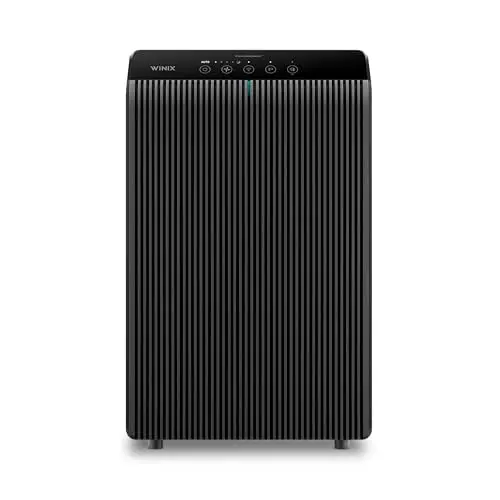
5510 – Large-Room Smoke and Odor Control
Winix’s 5510 pairs True HEPA filtration with an advanced odor-control carbon filter and smart auto mode. It is built for larger rooms and smoke episodes where both particles and lingering odor need attention.
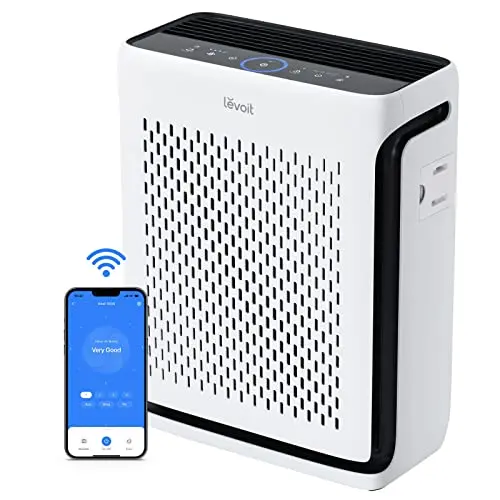
Vital 100S-P – Smart Smoke-Focused Filtration
A smart Levoit tower with a washable pre-filter, auto mode, and support for a dedicated Smoke Remover filter. It is aimed at rooms where smoke, pet odor, and changing air quality are regular concerns.
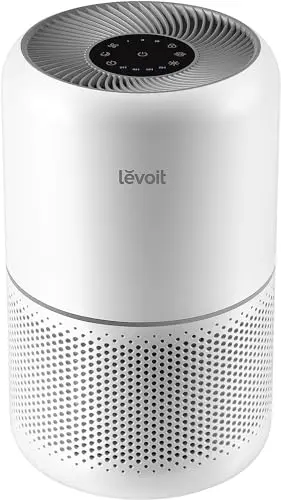
Core 300-P – Quiet Smoke and Odor Removal
A compact, AHAM-verified Levoit with a smoke CADR rating and a genuinely quiet sleep mode. It is a strong fit for bedrooms and smaller living spaces where smoke smell lingers.
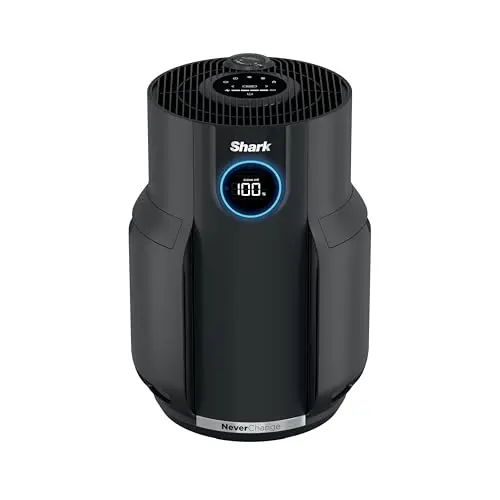
HP152 – NeverChange Odor Neutralizer
Shark’s NeverChange purifier uses an odor-neutralizer cartridge, a washable debris screen, and CleanSense IQ readouts. It is designed for everyday odor control without frequent filter swaps.
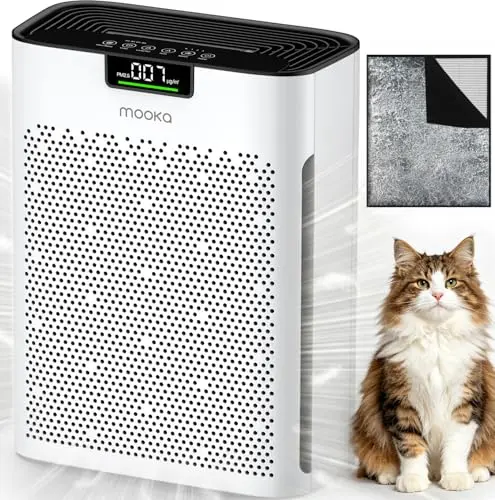
KJ190H – PM2.5 Auto Smoke Response
A budget-friendly tower with a PM2.5 display, auto mode, washable pre-filter, and strong smoke-response positioning. It is for shoppers who want visible air-quality feedback without spending premium money.
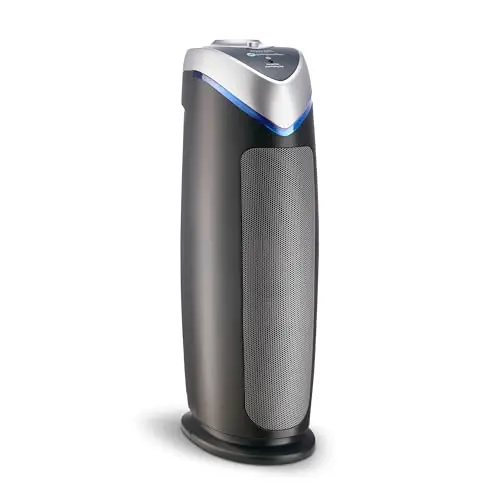
AC4825E – HEPA Tower with UV-C
A longstanding HEPA tower with an activated carbon layer and optional UV-C light. It is simple, relatively compact, and aimed at bedrooms, offices, and smaller rooms.
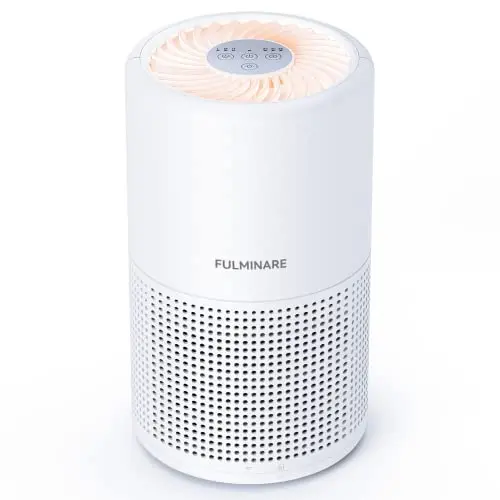
PU-P05 – Compact Night-Light Purifier
A tiny H13 HEPA purifier with a night light, multiple timers, and a very compact footprint. It is best for desks, nurseries, and small rooms rather than whole-home smoke events.
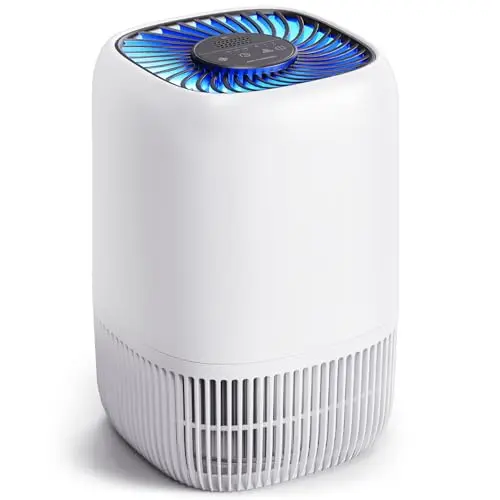
DH-JH12 – Compact 360 Airflow
A compact 360-degree purifier with three speeds, a timer, and an essential-oil tray. It is positioned for small spaces where quiet operation matters.
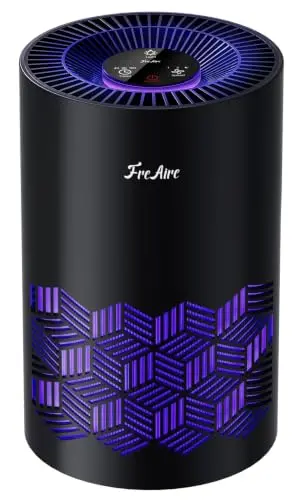
KN6391RGB – Ambient Light Purifier
A compact HEPA purifier with ambient lighting and an aroma pad, aimed at bedrooms and nurseries. It is more about quiet, gentle operation than heavy smoke removal.
How We Evaluated These Air Purifiers for Smoke Smell
We did not run controlled smoke-chamber tests or lab particle counters. What we did: cross-referenced 9 air purifier models from 8 distinct brands across six decision axes – smoke CADR and particle capture, carbon odor control, room coverage, noise and sleep behavior, smart sensors and auto modes, and filter maintenance. We triangulated published specifications, feature sets, and aggregated owner feedback where available, then mapped each option against realistic smoke-smell scenarios – a bedroom after a wildfire alert, a kitchen with lingering cooking smoke, and an open living area with persistent odor. We weighed noise at low speed and the practicality of sleeping with each unit, since smoke smell often matters most at night. We also audited how clearly each brand explains coverage, because ‘up to” room sizes can assume one air change per hour or a much faster turnover. Where specs were vague, we treated the claim as a ceiling, not a promise.
The scoring framework weighted real-world smoke-and-odor performance (70%) against feature differentiation (30%) – dedicated carbon capacity, smoke-specific filter options, auto response, and maintenance burden. We also compared filter availability and whether replacement media is easy to source. Recommendations track fit and differentiation, not brand preference. If you want the most complete large-room package, the Winix 5510 is the strongest match; if you want a smoke-focused filter option and app scheduling, the Levoit Vital 100S-P is the more targeted choice.
How to Choose the Right Air Purifiers for Smoke Smell
1. Why Smoke Smell Needs Both HEPA Filtration and Carbon Odor Control
Smoke smell is a two-part problem. True HEPA filtration catches the particles that carry smoke, dust, and ash; activated carbon is what addresses the odor molecules that HEPA cannot trap. A purifier with a thin carbon layer can help with light cooking smells, but persistent smoke smell usually needs more carbon surface area or a dedicated smoke filter. Look for gas-phase odor control language, not just a HEPA badge.
2. Match Smoke CADR and Room Coverage to Your Space
For smoke smell, the useful number is the CADR for smoke, not the biggest room-size claim on the box. A high smoke CADR means the unit moves a lot of filtered air quickly. Coverage claims are usually based on air changes per hour, and one air change per hour is a baseline, not a deep clean. Match room size to the space where the smoke smell actually lives, then size up if you want faster clearing. For a bedroom or modest living room, the Levoit Core 300-P is a practical starting point because its smoke CADR and compact size suit that scale.
3. Carbon Filters and Smoke Smell: What Actually Helps
Carbon quality matters more than carbon quantity alone. A carbon filter quality difference shows up in how long odor control lasts and whether the unit can handle VOCs from smoke, cooking, or pets. Some brands offer a dedicated Smoke Remover filter or a Toxin Absorber option; those are useful when smoke is a recurring problem rather than an occasional kitchen event. If you want that flexibility, the Levoit Vital 100S-P is the pick here because it supports a smoke-focused replacement filter and smart scheduling.
4. Noise, Auto Mode, and Sensors for Smoke Emergencies
Smoke does not announce itself on a schedule, so auto mode and a PM2.5 sensor are genuinely useful. A good auto mode ramps up when air quality drops and settles back down when the room clears. Sleep mode matters if you run the purifier overnight, but check the low-speed noise rather than the marketing word quiet. A display that dims or turns off is a small feature that makes a big difference in a bedroom.
5. Filter Maintenance and Long-Term Cost Planning
A purifier only helps smoke smell while its filters are clean. A washable pre-filter cuts down on replacement frequency, and a clear filter replacement schedule prevents the unit from becoming a fan with dirty media. Think about long-term cost before you buy: replacement filters vary a lot, and smoke can shorten filter life if you run the unit hard during fire season. The Shark HP152 is worth a look if you want a washable debris screen and a NeverChange design that reduces how often you think about filters.
6. Budget, Mid-Range, and Premium Air Purifiers for Smoke Smell
Entry-level purifiers can handle a bedroom or a desk, but they usually trade away carbon capacity, sensor quality, or raw airflow. Mid-range models are the sweet spot for most smoke-smell shoppers: better filtration, quieter operation, and useful auto modes without a premium jump. Premium picks add larger coverage, more sophisticated sensors, or lower-maintenance filter systems. The right tier depends on how often smoke is a problem and how large the room is, not on chasing the longest feature list.
Frequently Asked Questions
1. How long does it take an air purifier to clear smoke smell?
There is no single clock because room size, smoke CADR, fan speed, and carbon quality all change the result. A purifier can cycle the air several times per hour in a small room and still need longer to address odor that has soaked into soft furnishings. Run it on a higher speed during the acute smoke event, then drop to auto or sleep mode once the air clears.
For smoke smell, particle removal is usually faster than odor removal. Carbon filtration is doing the slower work, so give the unit time and keep windows and doors closed while it runs.
2. What's the difference between the Winix 5510 and Levoit Vital 100S-P for smoke smell?
The Winix 5510 leans on large-room coverage, an advanced carbon odor filter, and smart auto mode with app control. It is the easier pick if you want one purifier to handle an open living area and you value a strong odor-control layer.
The Levoit Vital 100S-P is more targeted: it supports a Smoke Remover filter, offers schedules in the VeSync app, and includes a washable pre-filter. Choose it if smoke is a recurring issue and you want filter flexibility plus smart scheduling in a smaller footprint.
3. Do I need a dedicated smoke filter, or is HEPA enough?
HEPA filtration is necessary but not sufficient for smoke smell. It captures particles, while activated carbon is what adsorbs odor molecules and VOCs. A dedicated smoke filter can improve odor performance, especially for wildfire smoke, but it still works best when the unit has enough airflow and you replace the filter on schedule.
4. How does the Levoit Core 300-P compare with the Shark HP152?
The Core 300-P is the smaller, simpler option: a 143 CFM smoke CADR, quiet sleep mode, and a compact footprint make it a natural bedroom pick. The Shark HP152 adds an Odor Neutralizer cartridge, a CleanSense IQ display, and a washable debris screen, with more of a medium-room focus.
If you want the lowest-fuss smoke cleanup for a bedroom, Core 300-P is the easier fit. If odor treatment and visible air-quality feedback matter more, Shark HP152 is the more feature-rich choice.
5. Can a small air purifier handle smoke smell in a large room?
Usually not. Small purifiers can be effective in bedrooms, nurseries, or offices, but room coverage claims often assume one air change per hour, which is not the same as quickly clearing smoke. If the smoke smell is spread across an open living area, choose a unit with a stronger smoke CADR and more carbon capacity rather than relying on a compact model’s maximum square-footage number.
Final Verdict
For most people dealing with smoke smell, the Winix 5510 is the pick – it pairs strong particle capture with an advanced carbon odor filter and enough coverage for a large room. If smoke is a recurring problem and you want a dedicated filter option, the Levoit Vital 100S-P is the more targeted choice. Budget-conscious shoppers should look at the Levoit Core 300-P for bedrooms, where its smoke CADR and quiet sleep mode make more sense than paying for extra coverage. And if you want built-in odor neutralizer convenience, the Shark HP152 is the low-maintenance alternative. Start with the room where the smoke smell bothers you most, match the purifier to that space, and size up only if you need faster clearing.
