
Best Air Purifiers For Smoking Neighbors – 2026 Reviews

You notice it before you can explain it. Cigarette smoke threads through a window frame or a shared vent, and twenty minutes later the whole living room smells like the inside of an ashtray. Cracking a window sometimes makes it worse, and a candle just layers vanilla on top of the problem.
What actually moves the needle with a neighbor’s smoke is a combination most product listings gloss over: a genuinely heavy carbon stage for the odor and the volatile compounds, plus enough smoke-specific air movement to cycle your room several times an hour. A HEPA filter on its own catches particles but does nothing about the smell.
The third piece is patience. Neighbor smoke arrives in bursts, so a unit that senses a spike and ramps up on its own beats one you have to remember to crank to high every evening. We’ve mapped the market across brands, from palm-sized bedroom units to large-room machines, and matched each option to the buyer it actually suits.
Best Air Purifiers for Smoking Neighbors – 2026 Reviews
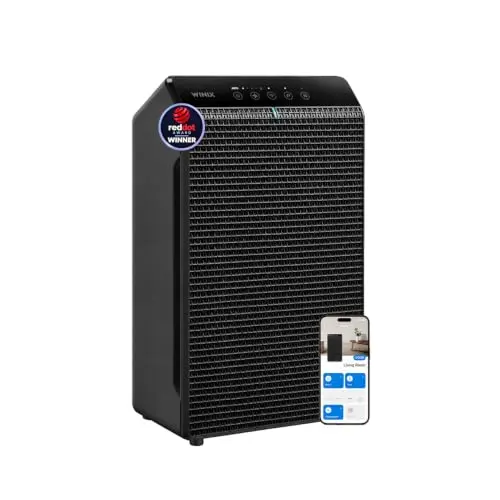
5520 True HEPA – Smoke and Odor Control for Large Rooms
Winix’s large-room workhorse pairs True HEPA capture down to 0.01 microns with a genuinely substantial deodorization carbon filter, then adds an air quality sensor, auto mode, and app control so it reacts to smoke without you touching a dial.
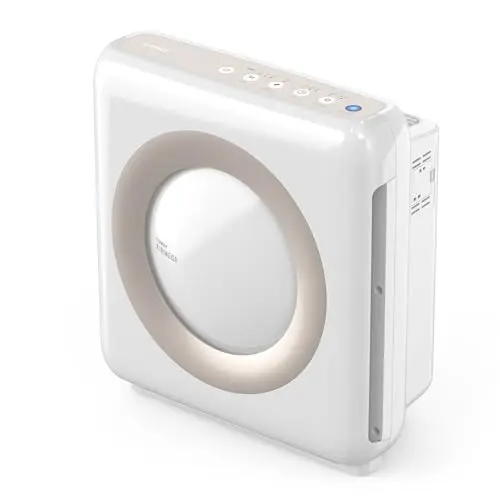
AP-1512HH(W) – Four-Stage Filtration With Auto Mode
A four-stage Coway with a washable pre-filter, a separate deodorization stage, a bipolar device, and HEPA, plus auto and eco modes, a real-time air quality LED, and the longest warranty in this roundup.
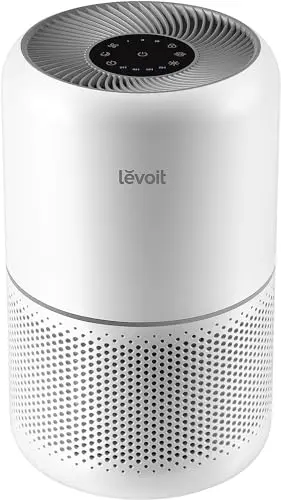
Core 300-P – Bedroom-Friendly Smoke and Odor Pick
A compact bedroom purifier with an AHAM Verifide smoke CADR rating and a published 24 dB sleep mode. Small footprint, clear numbers, and a filter that’s easy to source.
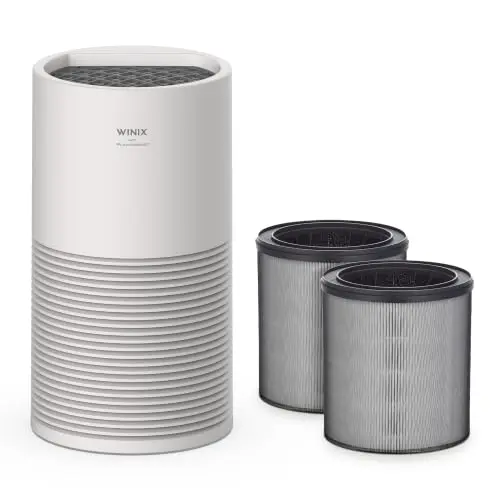
AT40 – Extra-Large Coverage With Two Years of Filters
The biggest coverage claim in this lineup, plus two years of 360 all-in-one True HEPA filter sets in the box, a digital air quality readout, and app control over WiFi.
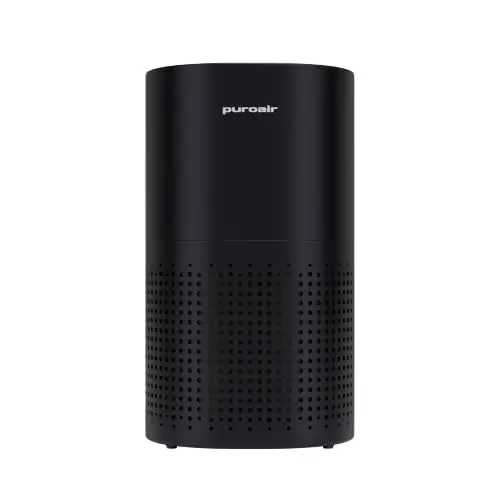
PuroAir 240 – Sensor-Driven Auto Mode for Odor Spikes
A tall 360-intake purifier with a three-layer pre-filter, HEPA, and activated carbon stack, driven by a particle sensor that ramps the fan automatically when air quality drops.
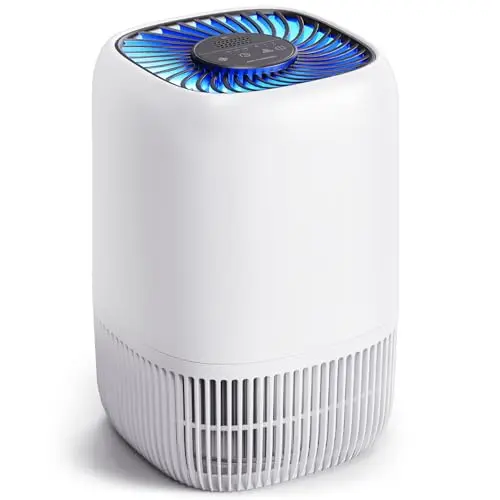
DH-JH12 – Compact Purifier With Aroma Tray
A palm-sized purifier that claims coverage well beyond its size, running at 22 dB with a built-in aroma tray and a simple three-speed control panel.
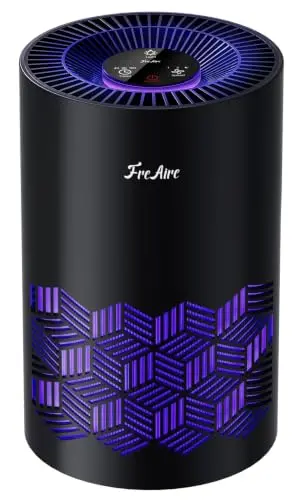
KN-6391RGB – Little Purifier With Ambient Lights
A small bedroom unit with three ambient light settings, an aroma pad, and a 20 dB sleep mode, aimed at nurseries and nightstands rather than whole apartments.
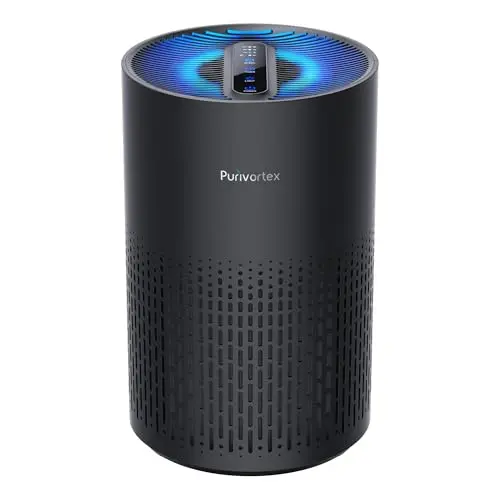
PX500 – Budget Coverage With a Thicker Filter
A budget purifier with an unusually thick six-inch filter stack, four fan speeds, timers, and four night light colors packed into a compact tower.
How We Evaluated These Air Purifiers
We didn’t run particle-count decay tests in a sealed room with a burning cigarette. What we did: cross-referenced eight air purifier models from seven distinct brands across five comparison dimensions – published smoke CADR and verified room sizing, gas-phase carbon depth, sensor and auto-mode behavior, noise and sleep-mode specifications, and long-term filter cost. We triangulated manufacturer specs, feature sets, and owner feedback where available, then mapped each unit against the profile of someone whose apartment takes on a neighbor’s cigarette smoke.
Smoke is a two-part problem, and we weighted accordingly. Particle capture gets you the visible haze; carbon mass gets you the smell and the volatile compounds. Units that published a smoke-specific CADR figure and carried a substantial carbon stage scored higher than models with a token carbon sheet and vague coverage language. The scoring framework weighted real-world fit for smoke exposure (70%) against feature differentiation (30%) – sensor quality, app control, warranty length, and filter availability.
We have no commercial relationship with any brand here; recommendations track fit and differentiation, not brand preference. A few things we can’t tell you: how a unit behaves in your building’s particular airflow, or how fast carbon saturates in your room. What we can do is point you to the models whose specs and owner track record match a smoke problem. If you want the least fuss, the 5520 is your match; if you want the most replaceable filtration stages and the longest warranty, the AP-1512HH(W) serves you better.
How to Choose the Right Air Purifiers for Smoking Neighbors
1. What Separates Air Purifiers Built for Smoke From the Rest
Smoke is two problems wearing one coat. The visible haze and the fine particles need a HEPA stage with real airflow behind it; the smell and the irritating gases need activated carbon, and a lot of it. Plenty of budget units include a carbon element, but it’s often a thin impregnated sheet stretched over a frame – enough to freshen a closet, not enough to keep up with a neighbor who smokes indoors every evening.
So the first question isn’t how many filtration stages a unit claims. It’s how much gas-phase filtration media sits inside, and whether the manufacturer publishes a smoke-specific CADR rather than only a room-size headline. A purifier with a verified smoke number and a chunky carbon block is worth more here than one with five stages and no data.
2. Match Smoke CADR and Room Size Before Anything Else
CADR – clean air delivery rate – is the honest measure of how much filtered air a unit moves, quoted separately for smoke, dust, and pollen. The smoke number is the one that matters for you, and it’s usually the lowest of the three. AHAM Verifide certification means an independent body confirmed those figures, which is why it’s worth looking for on the box.
Room-size claims deserve scrutiny. Most ‘covers up to’ numbers are calculated at one air change per hour, a light-duty standard. For a room that fills with smoke several evenings a week, you want enough turnover to cycle that room’s air four to five times an hour. If the smoke reaches one bedroom, the Core 300-P has the smoke CADR to handle that room properly; if it reaches an open living area, step up to a large-room machine.
3. For Smoking Neighbors, Auto Mode and a Sensor Earn Their Keep
Neighbor smoke is intermittent, which makes auto mode more valuable than raw top-end fan speed. A purifier with a particle sensor idles quietly, notices the air turning, and ramps on its own. The alternative is leaving a unit on high all evening – louder, harder on filters, and easy to forget.
A real-time air quality indicator is the visible half of that system, and it’s genuinely reassuring to watch a reading fall back to normal. The AP-1512HH(W) is a good example of the pattern done simply: sensor, colored LED, auto mode, and a light you can kill at bedtime.
4. Noise, Sleep Mode, and Where the Unit Actually Lives
Sleep mode figures in the low twenties in decibels are common in this category and roughly comparable to a quiet room. The catch is that a purifier only helps while it’s running, and a unit too loud for the bedroom ends up switched off at exactly the time you’re breathing recirculated air for eight hours straight.
Look for display dimming or light-off options, and think about placement before you buy. A tall 360-degree intake unit wants clearance on all sides; a compact one can sit on a nightstand. Shared walls, ducted vents, and door gaps are the usual entry points for a neighbor’s smoke, so the room you actually occupy matters more than your total square footage.
5. Filter Costs and Replacement Cadence in Smoke-Heavy Homes
Carbon is consumable, and smoke burns through it faster than ordinary household dust does. Expect a replacement cadence shorter than the manufacturer’s generic estimate if a neighbor smokes most days, and plan for it – a purifier with affordable filters that you actually change beats a premium unit running a saturated filter.
A washable pre-filter helps more than it sounds like it would, catching lint and dust before it reaches the carbon and HEPA stages. Stick with genuine filters where the brand specifies them, since several manufacturers warn that third-party media can reduce efficiency. The AT40 includes two full years of filter sets, the simplest way to take this variable off the table.
6. Budget vs. Premium Air Purifiers for Smoking Neighbors
At the budget tier you’re buying airflow and a basic filter stack. That’s not nothing – a compact unit in a small bedroom noticeably reduces smoke haze and smell. What you usually give up is carbon mass, sensor accuracy, and long-term reliability, and the coverage claims get more optimistic as the price drops.
Moving up the range buys three concrete things: genuinely heavy carbon media, a sensor accurate enough to trust in auto mode, and longer warranties with better filter availability. Whether that’s worth it depends entirely on how often the smoke arrives. For occasional drift, a mid-tier unit is plenty; for a nightly problem, the premium tier pays for itself in fewer filter changes and less manual intervention.
Frequently Asked Questions
1. Will an air purifier actually help with a neighbor's cigarette smoke?
Inside the room it serves, yes – meaningfully. A HEPA stage captures the fine secondhand smoke particles that hang in the air and settle into fabric, and a carbon stage reduces the gas-phase odor and the volatile compounds behind that stale smell. What a purifier can’t do is stop smoke from entering, so it works alongside source control: a door sweep, weatherstripping on windows, sealing gaps around shared walls.
Set expectations accordingly. A purifier shortens how long the smell lingers and lowers the airborne particle load in your room. It won’t make an apartment next to a heavy smoker smell like a forest.
2. What's the difference between the Winix 5520 and the Coway AP-1512HH(W)?
They take different routes to the same goal. The Coway separates filtration into four stages, including a dedicated deodorization filter you replace independently of the HEPA, and it carries the longest warranty in this roundup at three years. The Winix leans harder on carbon load inside a single high-deodorization filter, pairs it with a 0.01-micron HEPA claim, and adds app control plus an automatic sleep mode.
Practically: choose the Coway for a simpler control set, more replaceable stages, and warranty coverage. Choose the Winix for the heavier carbon emphasis and remote monitoring. If warranty and stage count tip it for you, the AP-1512HH(W) is the pick.
3. How does the Levoit Core 300-P compare to the PuroAir 240?
The Core 300-P is the smaller, more transparent option. It publishes an AHAM Verifide smoke CADR of 143 CFM and a 24 dB sleep figure, which makes it easy to size against a bedroom. The PuroAir 240 is taller, uses a 360-degree intake, and leans on its PuroIQ sensor to manage fan speed automatically – a real advantage when smoke arrives in unpredictable bursts.
PuroAir claims more coverage and a stronger auto-mode experience; Levoit gives you clearer verified numbers and a lower entry point. For a small room where you’ll run it constantly anyway, Levoit’s published specs are easier to trust.
4. How big an air purifier do I need for a large living room near a smoking neighbor?
Size for air changes per hour, not the biggest number on the box. A room that fills with smoke regularly wants four to five turnovers an hour, and most coverage claims are quoted at one. As a rule of thumb, look at the AHAM Verifide room size on the spec sheet rather than the marketing headline – it’s typically a third of the advertised figure.
For an open floor plan or a room that shares a wall with the neighbor, go large. The AT40 claims nearly two thousand square feet at one air change per hour and ships with two years of filters, which suits a big space you don’t want to think about again.
5. Are cheap air purifiers worth it if I'm dealing with smoke?
Sometimes, with conditions. In a small bedroom, a compact budget unit genuinely reduces haze and takes the edge off the smell. What you’re usually trading away is carbon mass – a thin carbon layer saturates quickly against daily smoke – plus sensor accuracy and long-term durability.
Two things to check before buying cheap: whether the brand publishes any independent certification, and how easy and affordable filter replacement is. A cheap purifier with filters you can’t source is a disposable appliance. If the smoke is a nightly event rather than occasional drift, spend up for real carbon depth and a verified smoke rating.
Final Verdict
For most people dealing with a neighbor’s smoke, the 5520 is the answer – its carbon stage is the part that actually neutralizes cigarette smell, and the auto sensor means you’re not babysitting a fan switch. If one bedroom is the problem and you don’t want to spend much, the Core 300-P publishes a verified smoke CADR and stays quiet enough to sleep beside. And if the smoke drifts into an open-plan living area, the AT40 moves the most air through filtration per hour and arrives with two years of filters in the box.
Buy for your worst room, not your whole square footage. Seal what you can, run the unit on auto, and change carbon on schedule – that trio does more than any single purchase decision.
