
Best Air Purifiers For Vape Smoke – 2026 Reviews

Vape smoke doesn’t behave like a quick burst of cooking steam. The visible cloud may thin out fast, but the odor and fine aerosol hang around, settle into soft furnishings, and keep recirculating every time the HVAC kicks on. A standard fan just moves that mixture around; an air purifier has to capture particles and tackle odor at the same time.
Two specs separate the useful picks from the disappointing ones. First is smoke CADR and room coverage, because a purifier that’s undersized for the room will never get ahead of steady vaping. Second is the carbon stage, since HEPA alone is good at particles but not at the smell and VOCs that make vape smoke noticeable.
The models below come from different brands and take different routes: some lean on high-deodorization carbon, some on large-room airflow, and some on compact smart features. The goal is to match the purifier to how much you vape, where you vape, and how much noise or upkeep you’re willing to live with.
Best Air Purifiers for Vape Smoke – 2026 Reviews
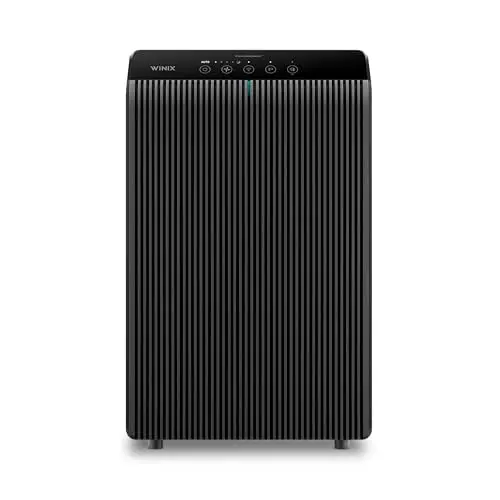
5510 – High-Deodorization True HEPA for Smoke
Winix calls the 5510 the new generation of its 5500-series, adding app support while keeping the smoke-focused carbon filtration that makes it a strong fit for vape odor. It pairs a True HEPA filter with an advanced odor-control carbon layer and a washable pre-filter, then adds auto mode, an air-quality indicator, and a light-activated sleep mode.
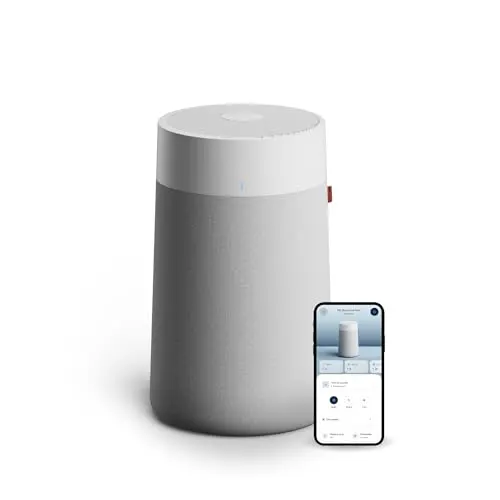
Blue Pure 311i Max – Large-Room HEPASilent Filtration
Blueair’s 311i Max is built for bigger open spaces, with HEPASilent dual filtration, a washable pre-filter, and app-connected auto mode. It’s a quieter, design-forward option for smoke, dust, and pet dander in living areas.
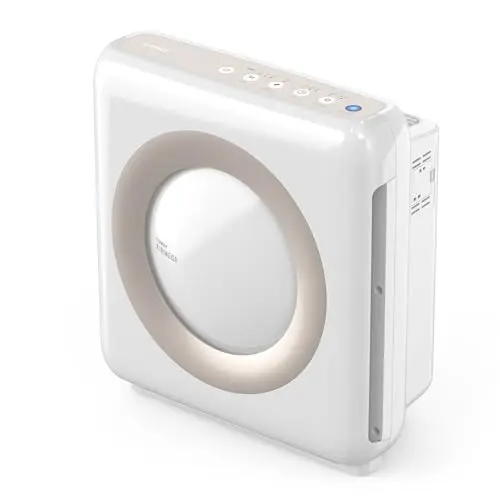
Mighty AP-1512HH – Four-Stage Filtration and Auto Mode
Coway’s Mighty AP-1512HH is a long-running four-stage design with a washable pre-filter, deodorization filter, Bipolar device, and HEPA filter. Auto mode, Eco mode, and a color-coded air-quality indicator make it easy to leave running.
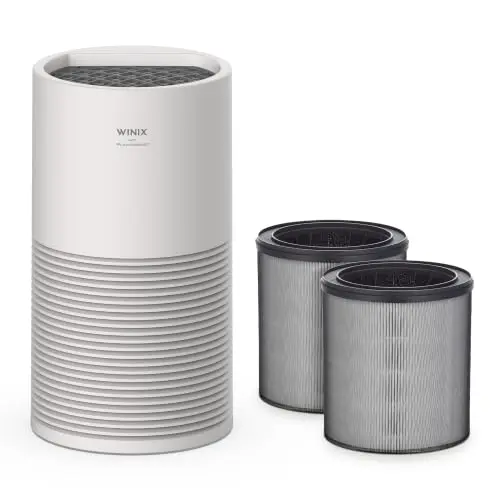
AT40 – Two Years of Filters for Large Rooms
The Winix AT40 bundles two 360 All-in-One True HEPA filter sets, which makes it a practical long-haul pick for smoke and odor. It adds a real-time air-quality display, WiFi app control, and auto mode in a large-room package.
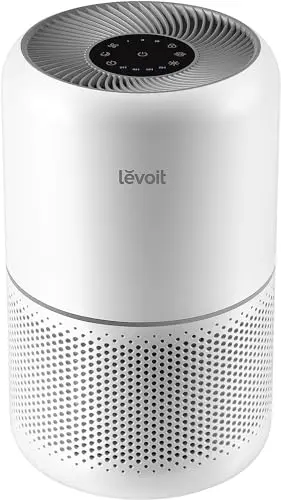
Core 300-P – Budget HEPA for Smoke and Odor
Levoit’s Core 300-P is a compact, AHAM Verifide purifier with a 3-in-1 filter and a genuinely quiet sleep mode. It’s a strong first purifier for a bedroom where vape smoke and odor are occasional rather than constant.
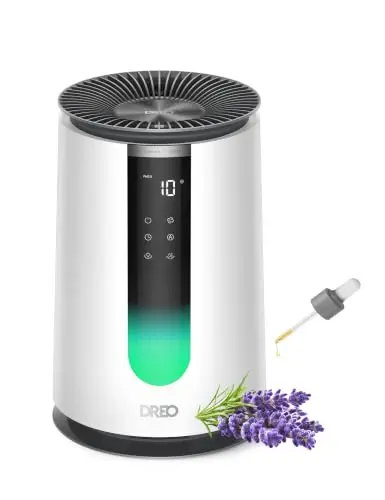
338 – Compact PM2.5 Monitoring and Turbo Mode
Dreo’s 338 is a compact AHAM Verifide purifier with a PM2.5 sensor, four speeds, and a scent diffuser. Turbo mode and a real-time AQI display make it easy to react when vape smoke builds up.
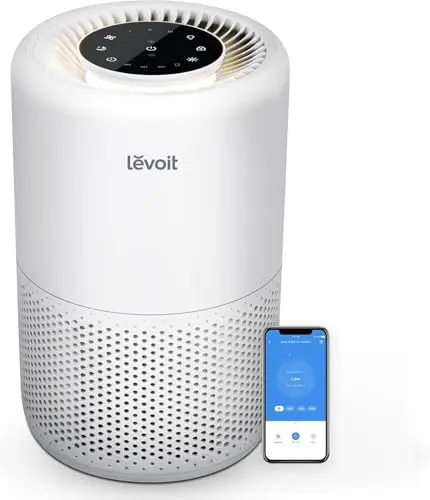
Core 200S-P – Smart Compact Purifier for Bedrooms
The Core 200S-P is Levoit’s compact smart purifier, with WiFi, Alexa control, and a 3-in-1 filter in a small footprint. It’s best suited to bedrooms, nurseries, and offices rather than open living spaces.
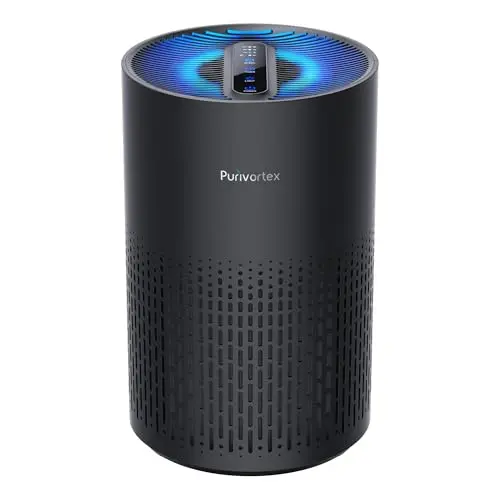
PX500 – Big-Filter Budget Purifier
Purivortex’s PX500 takes a value-first approach with a taller 6-inch filter, three-stage HEPA and carbon filtration, and a built-in nightlight. It’s a low-cost option for small bedrooms and dorms.
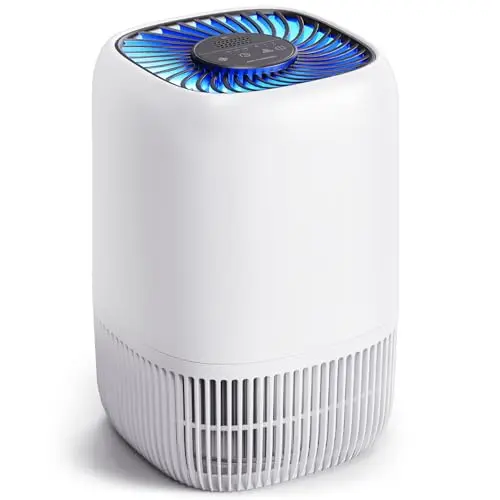
DH-JH12 – Compact Quiet Purifier With Aroma Tray
VOOPNU’s DH-JH12 is a tiny desktop-friendly purifier with 360 intake, three speeds, a timer, and an essential-oil tray. It’s a convenience-first option for very small spaces.
How We Evaluated These Air Purifiers for Vape Smoke
We didn’t run controlled vape-exposure chamber tests or measure particulate decay with lab instrumentation. What we did: cross-referenced 9 air purifier models from 7 distinct brands across 6 decision axes – smoke CADR, carbon and odor filtration, room coverage, noise, smart/auto behavior, and filter upkeep. We triangulated published specifications, feature sets, and owner feedback where available, then mapped each model to realistic vape-smoke scenarios: a bedroom with occasional use, a home office with steady use, and an open living area where odor has more room to travel.
The scoring framework weighted real-world fit for vape smoke (70%) – how well each purifier combines particle capture with odor control in the room sizes people actually use – against feature differentiation (30%) – unique technical advantages like high-deodorization carbon, PM2.5 displays, app control, and long filter bundles. We also weighed whether a unit’s carbon stage is substantial versus a token layer, because that’s often the difference between briefly masking vape odor and steadily reducing it. We audited filter replacement requirements, because smoke duty can shorten filter life and change the long-term value of an otherwise strong purifier. We have no commercial relationship with any brand here; recommendations track fit and differentiation, not brand preference. If you want the strongest smoke-and-odor package, the Winix 5510 is the pick; if you’re clearing a larger open room, the Blue Pure 311i Max is the better fit.
How to Choose the Right Air Purifiers for Vape Smoke
1. Why Vape Smoke Needs Carbon and HEPA, Not Just a Fan
Vape smoke is a mix of fine aerosol particles, moisture, and odor-carrying compounds, so particle capture alone gets you only part of the way. A HEPA filter handles the airborne particles that keep the cloud visible and can settle on surfaces. Activated carbon is the layer that helps with the smell and VOCs that make vape smoke linger in a room. A purifier without a meaningful carbon stage may clear the haze while leaving the odor behind.
That’s why a cheap fan or a filter-free ionizer isn’t a full substitute. If the room already has poor ventilation, a purifier can help reduce what’s floating around, but it doesn’t replace opening a window or running an exhaust fan. Treat it as one part of the cleanup plan, not a magic eraser.
2. Match CADR and Room Size to Your Air Purifier
Smoke CADR is the number to look for first, because it tells you how much smoke-cleaned air the unit moves. Coverage claims get inflated by one-air-change-per-hour math, so compare the room size at a higher air-change rate when you can. AHAM Verifide ratings are useful because they put smoke, dust, and pollen CADR on a common footing.
A purifier sized for a bedroom will struggle in an open living area, even if the box claims a big number. If your vaping space connects to a hallway or kitchen, size up. In a small closed bedroom, a compact unit with a real carbon layer can be enough.
3. Carbon Filters and Odor Control for Vape Smoke
Carbon is where vape-smoke purifiers separate. A deodorization filter or a thick activated-carbon layer has more material to adsorb odor, while a thin carbon sheet can saturate quickly. That matters because vape odor is the part guests notice first, even after the visible cloud is gone.
Think about replacement cadence before you buy. Smoke and odor duty are harder on carbon than ordinary dust duty, so filters may need changing sooner than the manufacturer’s generic estimate. Washable pre-filters help by catching larger particles before they load up the main filter.
4. Noise, Auto Mode, and Placement for Daily Air Purifier Use
Auto mode is more useful for vape smoke than a fixed fan speed because it ramps up when the sensor sees air quality drop, then quiets down afterward. A 360-degree intake also helps placement, since the unit can pull air from more than one side instead of needing a clear wall-facing front.
Put the purifier near where vaping happens, but don’t box it into a corner or behind furniture. Running it continuously on low or auto is usually more effective than blasting it for ten minutes after the fact. If noise matters, look for a sleep mode in the low-20s dB range and a display-off option.
5. Filter Costs and Maintenance: The Hidden Air Purifier Ownership Cost
Filter bundles can change the value math more than the sticker price does. A purifier that includes an extra year or two of filters may cost more upfront but save you from repeat purchases during heavy smoke season. Washable pre-filters are also worth having because they cut down on how often the main filter loads up.
Check the replacement interval and whether the carbon stage is sold separately. If you vape indoors daily, assume the filter will work harder than the manual’s best-case scenario. If you want to minimize replacement churn, the Winix AT40 ships with two years of filters.
6. Cross-Brand Differences: Coway vs Winix vs Levoit for Smoke
Coway’s AP-1512HH uses four-stage filtration with a deodorization filter and a strong allergy reputation, but vape-odor feedback is mixed. Winix leans harder into smoke duty with high-deodorization carbon on the 5510 and a two-filter bundle on the AT40. Blueair’s HEPASilent design is excellent for large-room airflow and quiet operation, though it’s less explicitly odor-focused.
Levoit sits in the budget-friendly lane with compact filters, smart controls, and low sleep-mode noise. For a small bedroom where cost matters, the Levoit Core 300-P is the budget anchor. For a larger room with steady vaping, spend more on carbon capacity and airflow instead of smart extras.
Frequently Asked Questions
1. Do air purifiers actually remove vape smoke and odor?
They can remove a meaningful share of the particles and some of the odor, but the result depends on the filter stack and the room. HEPA filtration captures fine particles, while activated carbon is what helps with odor and VOCs. A HEPA-only purifier may clear the visible haze without doing much for the smell.
Don’t expect a purifier to erase a cloud instantly. Ventilation, placement, and running the unit continuously matter just as much as the spec sheet. In a closed bedroom, a well-sized unit with real carbon can make a noticeable difference; in a large open room, you need more airflow.
2. What's the difference between the Winix 5510 and Coway AP-1512HH for vape smoke?
The Winix 5510 is the more targeted smoke pick because its high-deodorization carbon filter is explicitly aimed at VOCs and smoke odor, and it adds app control plus a light-activated sleep mode. The Coway AP-1512HH counters with four-stage filtration, a long track record, and a useful auto mode, but its odor feedback is less consistent for heavy vape use.
If odor is the main complaint, lean Winix. If you want a proven all-rounder for allergies and dust with smoke as a secondary concern, Coway is still a sensible choice.
3. Is the Levoit Core 300-P enough for vape smoke in a bedroom?
For occasional vaping in a closed bedroom, yes. The Levoit Core 300-P has a smoke CADR of 143 CFM, a 3-in-1 filter with activated carbon, and a sleep mode that’s quiet enough to leave running overnight. It’s a practical fit for small bedrooms and home offices.
It is not the right tool for steady vaping in an open living area. The carbon layer is modest, and the unit will be working near its limit. If that’s your pattern, size up to a larger Winix or Blueair model.
4. How does the Blueair 311i Max compare with the Winix AT40 for larger rooms?
The Blue Pure 311i Max is the quieter large-room specialist, with HEPASilent dual filtration, a washable pre-filter, and app-connected auto mode for spaces up to 2,107 sq ft. It’s excellent at moving air and capturing particles, but it doesn’t make odor control the headline.
The Winix AT40 is more vape-smoke-focused thanks to its carbon odor control and a filter bundle that covers two years, plus a real-time air-quality display. For heavy indoor vaping, Winix’s carbon emphasis is the more direct answer; for a large room where quiet airflow matters most, Blueair is compelling.
5. Where should I place an air purifier to clear vape smoke faster?
Put it as close to the vaping area as practical without blocking the intake. Good placement means the unit can pull smoky air before it spreads into the whole room. Keep it off the floor in a corner if the model has a 360-degree intake, and leave a little clearance on all sides.
Run it on auto mode so it can respond to air-quality changes, and clean the pre-filter on schedule. If you vape in a bedroom, a spot near the door but not in the direct path of a fan or vent usually works better than tucking it behind a chair.
Final Verdict
For most people dealing with vape smoke, the Winix 5510 is the clear first stop: it pairs high-deodorization carbon with large-room coverage, auto sensing, and quiet sleep operation. If your vaping happens in a big open living area, the Blue Pure 311i Max is the better airflow specialist, though it’s less odor-focused. On a tight budget, the Levoit Core 300-P handles a bedroom or small office without asking for much space or money. And if you want a compact unit with real-time air feedback for a desk or small room, the Dreo 338 is the smart little alternative. Start with the room, then match the carbon stage to how heavy your vape use really is.
