
Best Air Purifiers For Weed Smell – 2026 Reviews

You know the drill: someone sparks up in the next room, and twenty minutes later the whole apartment smells like a dorm room. Weed smell doesn’t just hang in the air, either. It settles into curtains, couch cushions, and bedding, then releases back into the room long after the smoke is gone. A regular fan just pushes it around.
That’s why the best air purifiers for weed smell need two things working together: a real HEPA layer for smoke particles and enough activated carbon to tackle the odor molecules. Airflow matters too, because a purifier that’s undersized for the room will run flat-out and still lose ground. Noise is the quiet dealbreaker – if the unit is too loud to leave on, it won’t do the continuous job odor control requires.
This guide surveys the market across brands and focuses on how each option handles cannabis smoke, lingering smell, and everyday livability. We’ll cover carbon depth, room coverage, auto modes, and the tradeoffs that separate a good odor purifier from a basic dust filter.
Best Air Purifiers for Weed Smell – 2026 Reviews
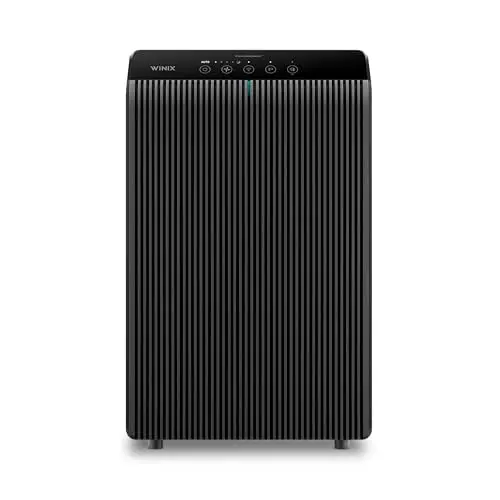
5510 – Heavy-Odor True HEPA for Large Rooms
A large-room true HEPA purifier with a high-deodorization carbon stage, auto mode, and app support. It’s built for households that want odor control to run in the background.
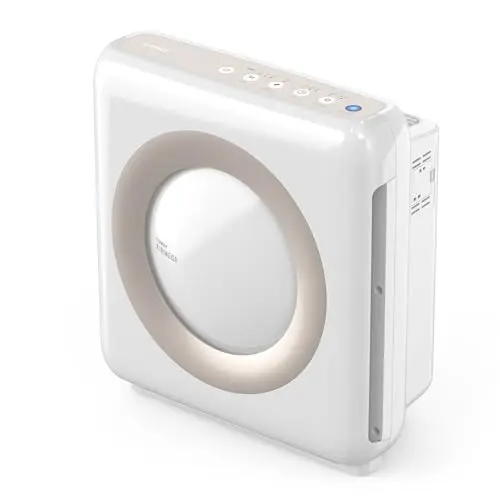
Mighty AP-1512HH – Four-Stage Coverage for Large Rooms
A four-stage purifier with a deodorization filter, auto mode, and real-time air quality indicator. It covers big rooms and runs quietly.
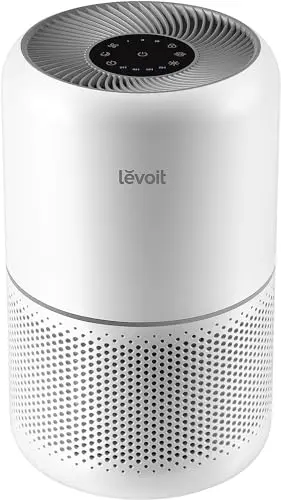
Core 300-P – Quiet HEPA Value for Smoke and Odor
An AHAM-verified compact purifier with a three-stage filter, quiet sleep mode, and strong CADR for bedrooms and offices.
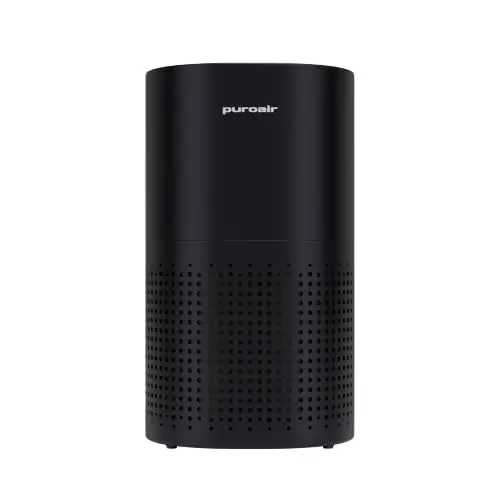
240 – Sensor-Driven HEPA for Bedroom Odors
A tall, sensor-driven HEPA purifier with a three-layer filter and quiet sleep mode for bedrooms and medium rooms.
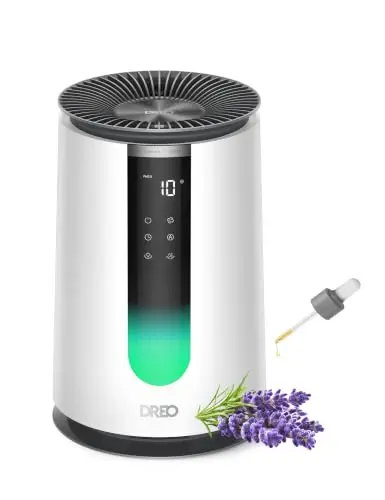
338 – Compact Auto HEPA with PM2.5 Monitor
A compact auto-mode purifier with a PM2.5 display, turbo setting, and scent diffuser for small rooms.
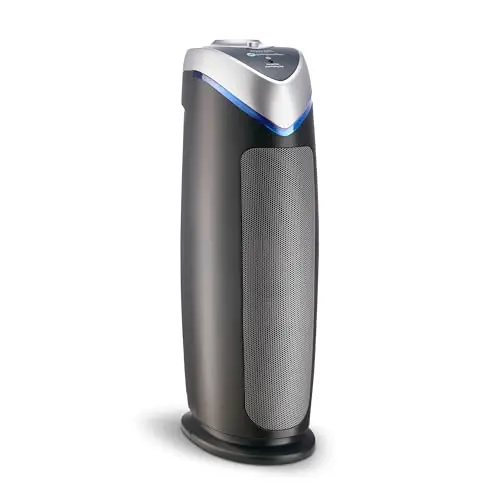
AC4825E – Slim Tower HEPA with UV-C
A slim tower purifier with HEPA filtration, an activated carbon pre-filter, and optional UV-C light.
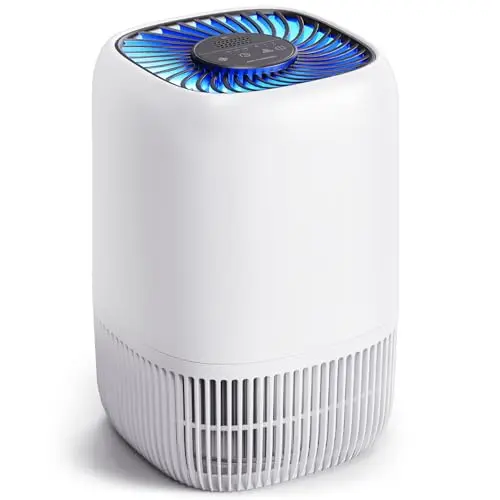
DH-JH12 – Compact Quiet Purifier with Aroma Tray
A tiny, quiet purifier with 360-degree airflow, an aroma tray, and simple one-touch controls.
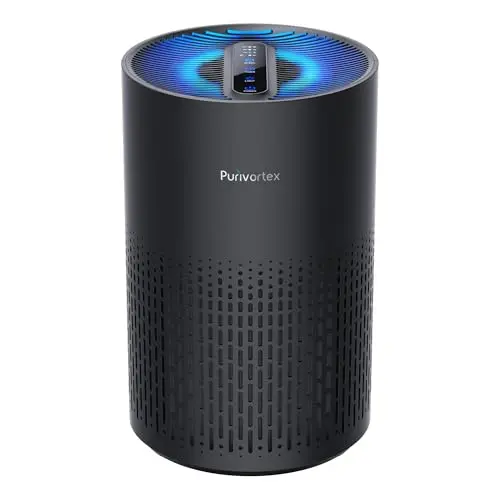
PX500 – Budget HEPA for Small Rooms
A budget-friendly compact purifier with a three-layer filter, night light, and timer settings for small rooms.
How We Evaluated These Air Purifiers for Weed Smell
We didn’t burn cannabis in a sealed test chamber or measure VOC decay with lab instruments. What we did: cross-referenced 8 air purifier models from 8 distinct brands across 6 decision axes – carbon filtration depth, CADR and room coverage, airflow and air-change potential, noise and sleep operation, smart sensors and auto mode, and filter replacement cadence. We triangulated published specifications, feature sets, owner feedback where available, and use-case fit for cannabis smoke and lingering odor. That meant weighing carbon capacity more heavily than a generic dust-and-pollen pitch, because weed smell is a gas-and-particle problem, not just a particle problem. We also considered whether a unit could realistically run 24/7 without becoming a nuisance. Where owner feedback was thin, we leaned on published specs and did not invent hands-on claims.
The scoring framework weighted real-world fit for weed smell (70%) – how well each purifier handles smoke particles, odor molecules, and continuous operation – against feature differentiation (30%) – unique advantages like high-deodorization carbon, sensor-driven auto mode, and genuinely quiet sleep settings. We have no commercial relationship with the brands featured; recommendations track fit and differentiation, not brand preference. If you want the strongest odor-focused package, the Winix 5510 is the pick; if you’re purifying a large open room, the Coway AP-1512HH is the better fit. We audited the lineup for relevance to cannabis smoke rather than treating every air purifier as interchangeable.
How to Choose the Right Air Purifier for Weed Smell
1. Why Carbon Filtration Matters More Than HEPA Alone for Weed Smell
HEPA is the particle specialist: it captures smoke particulates, but it doesn’t do much for the gases that make weed smell linger. That’s why activated carbon is the difference-maker. Carbon adsorbs volatile organic compounds and odor molecules; the more carbon surface area and the deeper the filter, the longer it can work before saturating. A purifier with a thin carbon pre-filter may knock down fresh smoke but lose ground over a long session. Look for a dedicated carbon stage or a deodorization filter, not just a token carbon pad. The Winix 5510 is the clearest example in this lineup, with a high-deodorization carbon filter built for VOCs and household odors.
2. Match CADR and Room Size to Your Weed-Smell Problem
CADR tells you how much clean air the purifier delivers, and it matters more than a room-size sticker. For weed smell, you want enough air changes per hour to clear smoke before it settles into upholstery. A small bedroom needs less raw airflow than an open living area; a purifier that’s undersized will run at high speed constantly and still lose. Use the room-size guidance as a ceiling, not a promise. If smoke drifts in from another room, aim for extra capacity and place the unit between the source and the rest of the space. For large rooms, the Coway AP-1512HH is the pick here because its four-stage design and big coverage give you more margin.
3. Carbon Filter Depth and Replacement Cadence
Carbon doesn’t last forever. Once it saturates, odor control falls off even if the fan still runs. A deep carbon filter or a high-deodorization stage buys you more time between replacements, but heavy weed smoke shortens that window. Check the replacement cadence and filter cost before you buy; a cheap purifier with frequent filter changes can cost more over time. Keep a spare filter on hand if the unit runs daily. The Levoit Core 300-P is a good example of a budget-friendly purifier where staying ahead of filter changes matters.
4. Noise, Sleep Mode, and Running an Air Purifier for Weed Smell 24/7
Odor control works best when the purifier runs continuously, so sleep mode and low-speed noise matter more than peak airflow. A unit that’s too loud gets turned off, and a turned-off purifier doesn’t remove anything. Look for a near-silent low setting, display-off options, and a timer that doesn’t force you to restart the unit every few hours. If you need white noise, a slightly louder fan is fine; if you need silence, prioritize a model with a genuinely quiet sleep mode. Continuous operation also makes filter replacement more predictable.
5. Smart Sensors, Auto Mode, and Real-World Odor Response
A PM2.5 sensor or air quality indicator can help a purifier react when smoke appears, but it’s not a weed-specific odor sensor. These sensors track fine particles, so they’ll catch fresh smoke better than residual smell in fabrics. Auto mode is still useful because it raises airflow without you thinking about it. Treat sensor readings as a guide, not a guarantee. A manual turbo mode is worth having for the first few minutes after smoke appears.
6. Air Purifier Placement and Source Control for Weed Smell
No purifier can outrun an open window and a lit joint in the same room. Source control – smoking near an exhaust fan or in a smaller, closed space – reduces the odor load the purifier has to handle. Placement matters too: keep the unit near the smoke source, not tucked behind furniture, and give it enough clearance for intake and exhaust. If odor is coming through a doorway, put the purifier between that doorway and the rest of the home. Running a fan to move air toward the purifier can help, but don’t create a cross-breeze that spreads smoke first.
Frequently Asked Questions
1. Do air purifiers actually remove weed smell, or do they just mask it?
A good purifier with activated carbon can remove some odor molecules and smoke particles; a bad one just moves air. HEPA captures smoke particulates, while carbon adsorbs VOCs and odor compounds. If the carbon stage is thin or saturated, you’re mostly stirring the smell around. Look for a dedicated carbon filter and replace it on schedule. Masking with fragrance is a separate job – useful for residual smell, not a substitute for filtration.
2. Winix 5510 vs Coway AP-1512HH: which is better for weed smell?
For heavy weed smell, the Winix 5510 has the edge because its high-deodorization carbon filter is explicitly aimed at VOCs and household odors, and its auto mode reacts to air-quality changes. The Coway AP-1512HH is the better pick for very large rooms and simpler operation, with four-stage filtration and a deodorization filter of its own. If you want the strongest odor-focused package, go with the Winix 5510; if coverage and set-and-forget auto mode matter more, the Coway is the calmer choice.
3. Levoit Core 300-P vs PuroAir 240: which handles smoke odor better?
The Levoit Core 300-P is the better value for a bedroom, with AHAM-verified CADR, a three-stage filter, and a genuinely quiet sleep mode. The PuroAir 240 adds a PuroIQ sensor and auto mode that react to air quality, plus a taller body and a 360-degree intake. For light to moderate weed smell, the Levoit Core 300-P is the practical pick; for a bedroom where you want automatic sensor response and don’t mind a larger footprint, the PuroAir is the more hands-off choice.
4. How long does it take an air purifier to clear weed smell?
It depends on room size, airflow, and how much smoke is in the air. A purifier with adequate CADR can noticeably reduce smoke particles in a small room within a short session, but odor molecules can linger in fabrics and walls. Carbon filtration helps with the airborne gases, while source control and ventilation do the rest. Expect faster results in a closed bedroom than in an open living area, and plan on continuous operation for persistent smell.
Final Verdict
For most people dealing with weed smell, the Winix 5510 is the pick that balances odor-focused carbon filtration, large-room coverage, and hands-off auto operation. It’s the one we’d choose first for a living room or basement where smoke drifts in regularly. If you’re treating a bedroom on a tighter budget, the Levoit Core 300-P gets you credible HEPA and carbon filtration with a quiet sleep mode. For a big open space, the Coway AP-1512HH is the calmer large-room alternative, with four-stage filtration and a responsive auto mode. And if you want sensor-driven convenience in a medium bedroom, the PuroAir 240 is the more automated option. Start with the room you actually need to fix, then size the purifier to that space rather than the other way around.
