
Best Air Purifiers With Uv-C Light – 2026 Reviews

A UV-C light inside an air purifier sounds like a simple upgrade: one more stage to deal with germs, odors, and the stuff a HEPA filter can’t trap. In practice, the UV-C bulb is only one part of the story. The purifier still has to move enough air, seal the filter path properly, and match the room size you’re actually trying to clean.
That’s why two purifiers with the same UV-C claim can feel very different in a bedroom. One might be quiet enough to sleep beside; another might clean a large living area but demand more space and more maintenance. The useful split is between HEPA grade, UV-C implementation, room coverage, and noise and upkeep.
We compared the UV-C air purifiers below across those decision points, from compact bedroom units to larger towers, so you can match the purifier to your room rather than the marketing label. The right pick is the one whose filter, airflow, and noise level fit how you’ll actually use it.
Best Air Purifiers with UV-C Light – 2026 Reviews
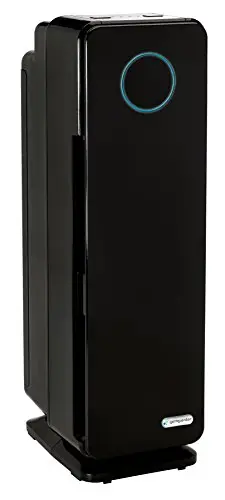
AC4300BPTCA – 5-in-1 HEPA Tower with UV-C
A five-stage tower that pairs a HEPA Pure filter with an activated carbon layer and UV-C light, sized for large rooms. The touch controls, three speeds, and three-year warranty make it an easy set-and-forget pick for bedrooms and living areas.
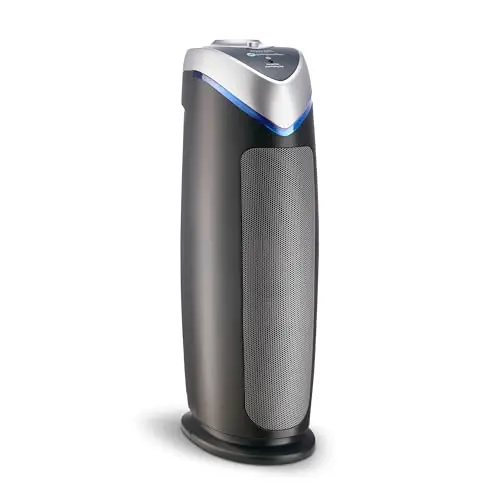
AC4825E – HEPA Tower with Optional UV-C
A straightforward HEPA tower with an optional UV-C stage and enough coverage for large rooms. It keeps controls simple, includes a quiet sleep mode, and uses easily sourced replacement filters.
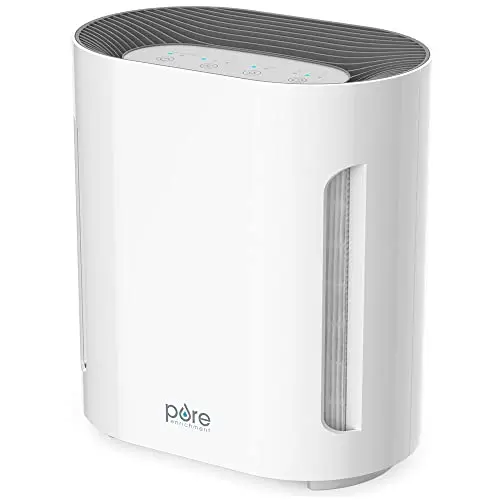
PureZone – Quiet 4-Stage UV-C Purifier
A compact four-stage purifier with a true HEPA filter, activated carbon, and UV-C light. Its low noise floor, timer settings, and long warranty make it especially suited to bedrooms and nurseries.
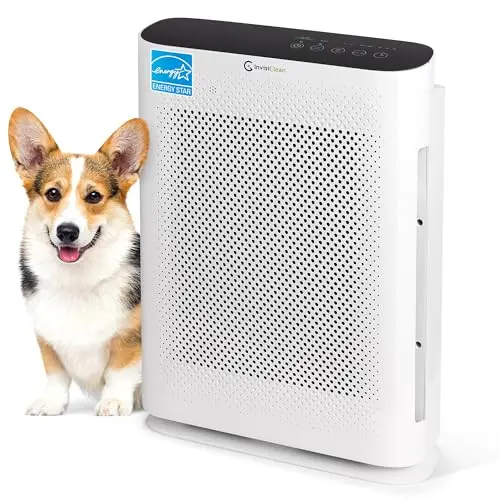
Aura II – 4-in-1 HEPA with Ionizer
A flexible four-in-one purifier with H13 HEPA, carbon pre-filtration, UV-C light, and an optional ionizer. Published CADR and multi-room coverage figures make it easy to compare airflow.

TotalClean 5-in-1 – UV-C Tower with Aromatherapy
A feature-heavy tower with UV-C, HEPA-type filtration, carbon odor control, an optional ionizer, and aromatherapy pads. It adds remote control, multiple speeds, and a large-room coverage claim.
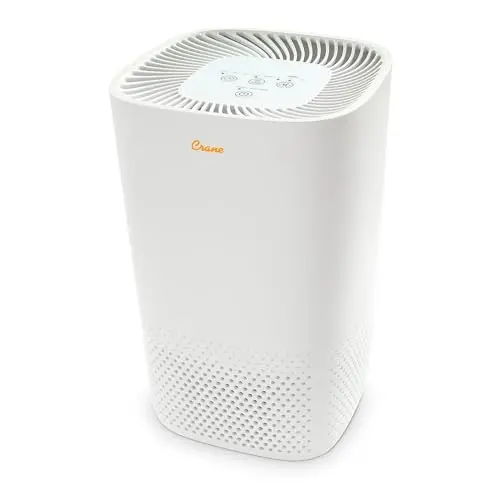
EE-5067 – Compact True HEPA with UV
A compact three-stage purifier with a washable pre-filter, true HEPA filtration, and a UV lamp. Sleep mode and timer settings make it a practical fit for small bedrooms and offices.
How We Evaluated These Air Purifiers with UV-C Light
We didn’t run lab particle-count tests or measure UV-C irradiance. What we did: cross-referenced six UV-C air purifier models from five distinct brands across five decision axes – filtration stages, room coverage, UV-C implementation, noise character, and long-term upkeep. We triangulated published specifications, feature sets, and owner feedback where available, mapped each unit to realistic bedroom and living-room layouts, and audited filter and bulb replacement requirements. We also separated true HEPA from HEPA-type claims rather than treating every filter label as equal. We did not test these units in a sealed chamber or independently verify virus-reduction percentages.
The scoring framework weighted real-world fit and performance at 70% – how well each purifier cleans the room it claims to serve, how liveable its noise levels are, and how clearly its UV-C stage is integrated. Feature differentiation made up the other 30% – true HEPA versus HEPA-type filtration, coverage at useful air-change rates, timers, warranties, and control options. We have no commercial relationship with any of the brands featured; recommendations track fit and differentiation, not brand preference. Our focus stayed on what a buyer can verify: filter class, airflow, coverage, noise, and maintenance. If you want the most balanced starting point, the AC4300BPTCA is the pick; if you want the value-focused tower, the AC4825E is the better match.
How to Choose the Right Air Purifiers with UV-C Light
1. What UV-C Light Actually Adds to an Air Purifier
A UV-C light is a supplemental treatment stage, not a replacement for filtration. On most air purifiers with UV-C light, the bulb is positioned after the filter, so it sees air that has already passed through the prefilter and HEPA media. That order matters: the HEPA filter captures particles, while the UV-C stage is intended to reduce exposure to certain airborne microorganisms on the way out.
Don’t treat a UV-C label as a guarantee of germ-killing performance. The dose, dwell time, bulb placement, and whether the chamber is enclosed all affect how much UV-C energy the air actually receives. A well-sealed HEPA purifier with a modest UV-C stage can be more useful than a leaky unit with a bright bulb and a vague claim.
2. HEPA Grade and Filter Fit Matter More Than the Bulb
True HEPA is the baseline to look for; it should capture 99.97% of particles at 0.3 microns, with some models claiming 0.1 microns. HEPA-type filters are a looser label, so read the spec sheet rather than the badge. A washable prefilter is a practical bonus because it catches hair and large dust before the main filter.
Also check the carbon layer. It’s the part that handles cooking, pet, and smoke odors, and a thin carbon sheet will fade faster than a heavier one. If odors are your main complaint, prioritize a purifier with a real carbon stage over one that leans entirely on UV-C. For a balanced HEPA-and-carbon setup, the AC4300BPTCA is the pick here.
3. Match Room Coverage to Real Air Changes per Hour
Ignore the biggest coverage number for a moment. A purifier that cleans 743 sq. ft. in one air change per hour is doing much less work than one that cleans 228 sq. ft. at nearly five air changes per hour. For a bedroom, aim for a unit that can turn over the room’s air four to five times per hour; for a living area, two to three is a reasonable target.
Use the CADR rating when it’s published. It gives you a clearer airflow comparison than a room-size claim alone. A compact unit with a strong CADR for its size can outperform a larger tower that moves air lazily.
4. Noise, Sleep Modes, and Bedroom Placement
Noise character matters as much as decibels. A purifier that hums at a low, steady pitch is easier to sleep beside than one with a sharper fan tone. Look for a sleep mode that dims or turns off indicator lights, plus a low setting that still moves meaningful air.
For bedrooms, place the unit a few feet from the bed and avoid blocking the intake or exhaust. If you need silence more than maximum coverage, the PureZone is the pick for smaller rooms.
5. Filter, Bulb, and Warranty Costs to Plan For
Budget for replacement filters and, on some models, a UV-C bulb. HEPA filters typically last around six to twelve months depending on use and dust load; carbon layers often need changing sooner. A filter reset indicator is a small convenience that prevents guesswork.
Warranty length is a useful tiebreaker. A three-year or five-year warranty signals more confidence than a standard one-year term, especially on a device that runs continuously. Check whether the bulb is covered and whether replacement parts are easy to find.
6. GermGuardian vs Pure Enrichment vs InvisiClean: Which UV-C Air Purifier Fits?
The GermGuardian AC4300BPTCA is the more feature-complete GermGuardian tower, with a five-stage design, touch controls, and a three-year warranty. The Pure Enrichment PureZone gives up coverage but wins on bedroom quietness and warranty length. The InvisiClean Aura II is the airflow-focused choice, with a published CADR and an optional ionizer.
If you want one purifier for a large living area, favor the higher coverage and stronger airflow. If the unit is going in a bedroom or nursery, favor low noise, a dimmable or off display, and a sealed filter path. The Homedics TotalClean is the feature-heavy pick for larger rooms, while the Crane EE-5067 keeps things simple for small spaces.
Frequently Asked Questions
1. Do UV-C air purifiers actually kill germs, or is the light mostly marketing?
UV-C can reduce certain airborne microorganisms, but the result depends on dose and dwell time, not just the presence of a bulb. In a typical air purifier with UV-C light, the air moves past the bulb quickly, so the UV-C stage is best treated as a supplemental layer rather than a standalone sanitizer. The HEPA filter is still doing the heavy lifting on particles, dust, pollen, and pet dander.
Look for an enclosed chamber, a clearly replaceable bulb, and a manufacturer that publishes its UV-C claims. If a product only says ‘UV-C’ without explaining the stage, treat that as a marketing signal rather than proof.
2. Pure Enrichment PureZone vs InvisiClean Aura II: which is better for a bedroom?
The Pure Enrichment PureZone is the easier bedroom pick because its 30 dB low setting, compact cabinet, and five-year warranty suit a nightstand or dresser. Its 300 sq. ft. coverage is honest for average bedrooms. The InvisiClean Aura II has more airflow flexibility and a higher coverage ceiling, but its stronger fan settings may be more than a light sleeper wants. For bedrooms, the PureZone is the pick.
3. Homedics TotalClean vs GermGuardian AC4300BPTCA: which handles larger rooms better?
The Homedics TotalClean 5-in-1 has the larger headline coverage at 1,593 sq. ft., plus a remote, five speeds, and aromatherapy pads. The GermGuardian AC4300BPTCA is more conservative at 743 sq. ft., but it uses a HEPA Pure filter and a three-year warranty that make it easier to recommend for everyday use. If you want the most features for a big open room, the TotalClean is the pick; if you want a more straightforward HEPA tower, the AC4300BPTCA is the safer fit.
4. Are UV-C purifiers safe to run around pets and kids?
An enclosed UV-C chamber is the key safety feature; you don’t want exposed UV light in a room. Choose a unit that is zero ozone verified and avoid optional ionizers if someone in the home has respiratory sensitivity. Keep the purifier out of reach of young children, and follow the manufacturer’s instructions for bulb replacement.
UV-C bulbs are not a substitute for basic safety around pets and kids, but a sealed, CARB-certified purifier is a reasonable addition to a bedroom or nursery.
5. How often do UV-C bulbs and HEPA filters need replacing?
Most HEPA filters need replacement every six to twelve months, and carbon layers often need attention sooner. A UV-C bulb may last longer, but it still degrades over time; check the manual for the manufacturer’s replacement interval. A filter reset indicator helps, but don’t ignore visible dust buildup or a drop in airflow.
Final Verdict
For most buyers, the GermGuardian AC4300BPTCA is the answer – it balances true HEPA filtration, a useful UV-C stage, large-room coverage, and a three-year warranty without overcomplicating the controls. If you want to spend less, the AC4825E gets you the same coverage and a simpler feature set for a budget-friendly price. For bedrooms and nurseries, the Pure Enrichment PureZone is the quieter, more compact pick, with a five-year warranty that adds peace of mind. And if you want the most features for a large living area, the Homedics TotalClean 5-in-1 brings remote control, five speeds, and aromatherapy extras. Start with the room, then choose the purifier whose coverage and noise level fit it.
