
Best Alarm Clocks For College Students – 2026 Reviews

The 8 a.m. lecture is the easy part. The hard part is waking up in a dorm room where the heat clicks on at 6:45, your roommate’s phone is buzzing, and your alarm is buried under a hoodie. A good alarm clock for college students has to do more than make noise – it has to be readable from a lofted bed, dim enough for a shared room, and reliable when the power flickers.
Two features separate the useful picks from the annoying ones: adjustable alarm volume and dimmable display brightness. Volume control matters because heavy sleepers and light sleepers share the same tiny room. Brightness control matters because a clock that lights up the whole wall at 2 a.m. is a roommate problem waiting to happen. Battery backup and a USB charging port are the practical extras that make a dorm desk work harder.
We compared the market across brands to find clocks that fit campus life, from bare-bones budget models to sunrise simulators with white noise and Bluetooth. The goal is simple: help you pick the right clock for your sleep style, your room, and your morning routine.
Best Alarm Clocks for College Students – 2026 Reviews
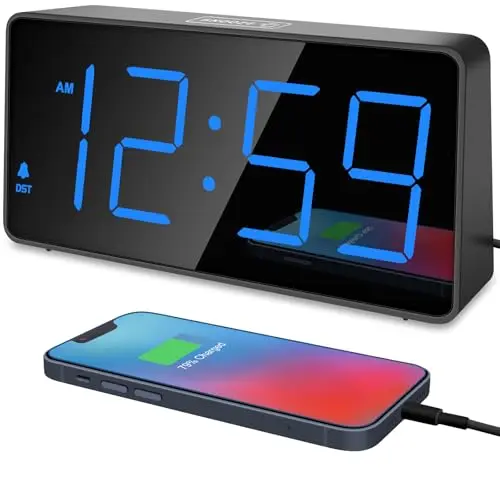
MHP6010 – Dorm-Ready Loud Alarm with USB Charging
A dorm-desk workhorse with 2-inch LED digits, five brightness levels, five alarm-volume settings, and a USB port for charging a phone overnight. Battery backup keeps the alarm armed during a power blip.
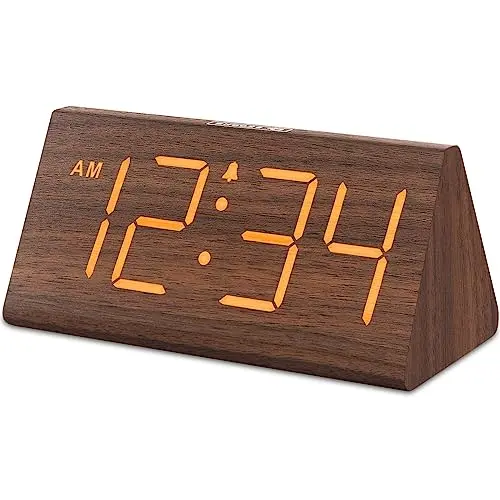
DS2201 – Wooden Desk Clock with Big Numbers
A wooden-finish bedside clock with 1.8-inch digits, five dimmer levels plus off, adjustable alarm volume, manual DST, and a USB charging port. The battery backup only runs the alarm during an outage, not the display.
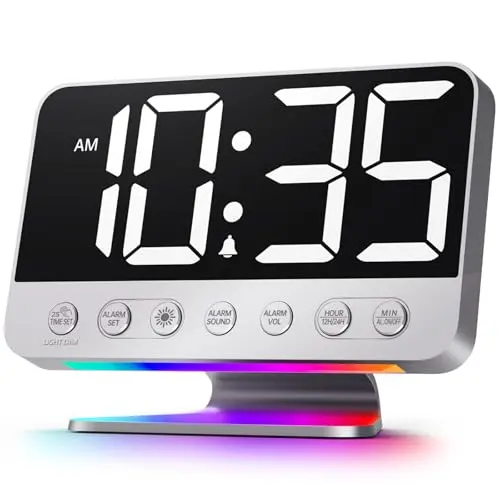
U2 – Heavy-Sleeper Alarm with Night Light
A feature-dense digital clock with 2-inch bold digits, five dimmer levels, eight night-light colors, five wake sounds, and alarm volume up to 110dB. Front-mounted buttons make setup less fumbly in a dark dorm.
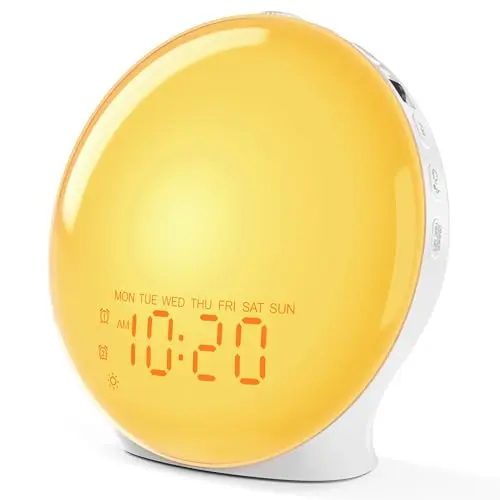
K8 – Sunrise Wake-Up for Shared Rooms
A sunrise simulator with a full-screen light panel, 25 sleep sounds, FM radio, dual weekday/weekend alarms, and a 5W Bluetooth speaker. It’s built for gentler wake-ups and shared spaces, though programming takes patience.
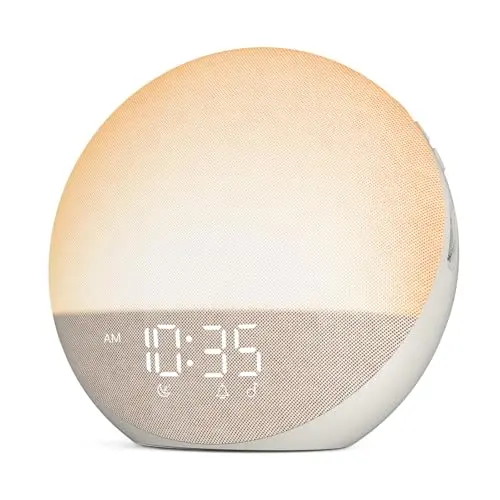
H03 – Sunrise and Sound Machine Combo
A premium sunrise clock with a 5-60 minute light ramp, 25 soothing sounds, Bluetooth audio, a 0-100% display dimmer, and 12 night-light colors. Three wake modes let you choose light only, sound only, or both.
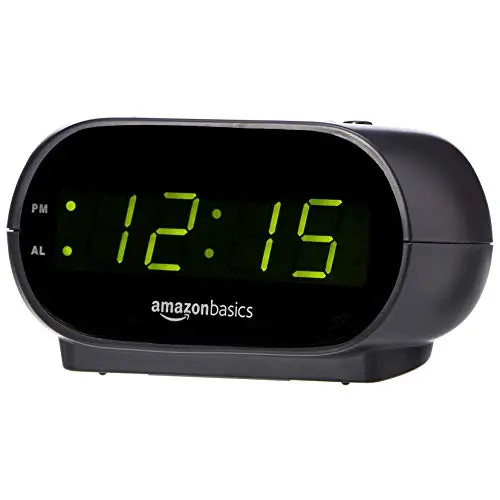
TT1001 – Simple Budget Alarm Clock
A compact oval clock with a green LED display, built-in nightlight, repeating snooze, and battery backup for retaining time and alarms. It’s the no-frills pick for a desk or bookshelf.
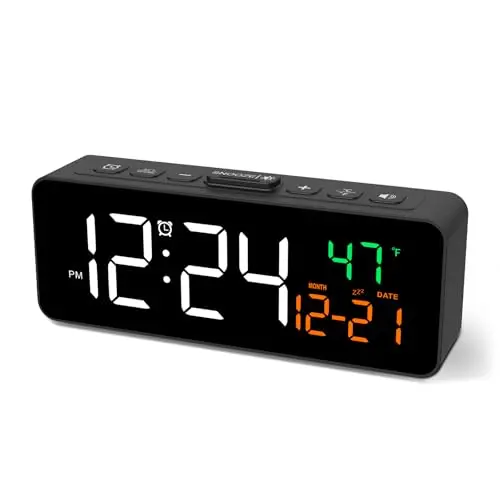
T338B – Compact 3-in-1 Desk Clock
A compact 3-in-1 display that shows time, date, and indoor temperature, with four brightness levels plus off and three alarm volumes. The top button controls brightness without menu digging.
How We Evaluated These Alarm Clocks for College Students
We didn’t run a semester-long dorm trial or measure alarm loudness with a decibel meter. What we did: cross-referenced seven alarm clock models from six brands across six decision axes – display readability, alarm-volume range, brightness control, power backup, charging convenience, and dorm footprint. We triangulated published specifications, feature sets, owner feedback where available, and use-case fit for college routines such as early lectures, shared rooms, and late-night study sessions. We also audited included power hardware and backup behavior, because a plug-in clock that forgets your alarm after a power blip is a bad dorm companion. Where the published details were thin, we leaned on the features a student would actually touch every morning: the snooze button, the dimmer, and the alarm-off switch.
The scoring framework weighted real-world fit (70%) – how well each clock handles waking up, charging a phone, and living on a cramped nightstand – against feature differentiation (30%) – unique alarm sounds, display dimming, sunrise lighting, and other extras. We have no commercial relationship with any of the brands featured; recommendations track fit and differentiation, not brand preference. We also weighed setup friction, since a clock that needs a manual at 11 p.m. is less likely to be programmed correctly. If you need the most practical all-rounder, the Peakeep MHP6010 is the first one we’d point to; if you want a wooden clock that blends into a dorm desk, the DreamSky DS2201 is the better match.
How to Choose the Right Alarm Clock for College Students
1. What College Students Actually Need From an Alarm Clock
The best alarm clock for college students is the one that fits a dorm routine, not the one with the longest feature list. Start with adjustable alarm volume so you can wake up without punishing a roommate, then look for dimmable display controls that won’t turn the room into a landing strip at midnight. Easy-to-read digits matter more than screen size in a tight room, and battery backup is cheap insurance against a power blip before an exam.
2. Why Volume Control Matters in a Dorm Room
Dorm walls are thin, and sleep schedules rarely line up. A clock with multiple volume levels lets heavy sleepers get the jolt they need while light sleepers keep things civil. Pay attention to snooze length too; a nine-minute snooze is standard, but some clocks let you customize it. Roommate courtesy is not a spec sheet line, but it is the reason adjustable volume belongs near the top of your list.
3. Size, Brightness, and Roommate Etiquette
A compact footprint matters when your nightstand is also a bookshelf and a charging station. More important is a display dimmer that goes low enough to disappear at night; if the clock doubles as a night light, make sure that feature can be turned off. Think about the angle you’ll see it from, too – a lofted bed changes what easy to read means.
4. Battery Backup, USB Charging, and Campus Power Realities
Battery backup keeps your alarm settings alive when the outlet dies, but read the details: many clocks only use the battery to trigger the alarm, not to light the display. A USB charging port is a small convenience that saves an outlet for your phone, especially in older dorm buildings with limited plugs. These clocks are still plug-in power devices, so battery backup is a safety net, not a portable power source. If you only need a simple backup clock, the Amazon Basics TT1001 is the budget pick.
5. Sunrise Clocks vs. Standard Digital Clocks for College Students
A sunrise simulation gradually brightens the room before the alarm, which can feel gentler than a phone buzzer and works well in shared spaces. The tradeoff is complexity: sunrise clocks often pack in white noise, Bluetooth audio, and multiple light modes, and the menus can take a few nights to learn. Standard digital clocks are easier to set and usually louder, which is why heavy sleepers often prefer them. For a calmer start, the JALL K8 pairs sunrise light with sleep sounds.
6. How Much Should College Students Spend on an Alarm Clock?
Budget-friendly clocks cover the basics: a readable display, a loud-enough alarm, and maybe a nightlight. Mid-range models add adjustable volume, dimmers, battery backup, and USB charging. The premium tier brings sunrise lighting, white noise, Bluetooth speakers, and more granular light control. None of that matters if the clock is annoying to set, so treat setup friction as part of the value equation. If you want the best balance of dorm-friendly features without jumping to the premium tier, the Peakeep MHP6010 is the practical middle.
Frequently Asked Questions
1. What's the difference between the Peakeep MHP6010 and DreamSky DS2201?
Both are plug-in digital clocks with large numerals, dimmable displays, and battery backup that keeps the alarm alive during outages. The Peakeep MHP6010 leans practical: five alarm-volume settings, a USB charging port, and a squat body that fits a dorm desk. The DreamSky DS2201 is more decor-forward, with a wooden finish and a manual DST button. If you want the most dorm-proof feature set, go with the Peakeep MHP6010; if you care more about how the clock looks on a shelf, the DreamSky is the better fit.
2. Is the JALL K8 sunrise alarm clock worth it for a dorm room?
It is if you want a gentler wake-up and you share a room. The full-screen sunrise brightens gradually, the 25 sleep sounds can mask hallway noise, and the dual alarms handle weekday and weekend schedules. The catch is programming: some users find the menu fiddly at first. If you need a loud, simple alarm, choose a standard digital clock instead; for a calmer routine, the JALL K8 is a strong fit.
3. What's the difference between the JALL K8 and Odokee H03 sunrise clocks?
Both simulate dawn, play sleep sounds, and stream audio, but they emphasize different extras. The JALL K8 adds FM radio, 17 lighting effects, and a 5W Bluetooth speaker; the Odokee H03 counters with a 0-100% display dimmer, three wake modes, and a 12-color night light. If radio is non-negotiable, JALL is the pick. If you want finer control over light-only versus sound-only wake-ups, Odokee H03 is more flexible.
4. Do college students need a battery backup alarm clock?
It’s a smart safety net for dorm power blips. Battery backup usually keeps time and alarm settings alive, and on many models it triggers the alarm even when the display goes dark. It is not a full battery-powered clock, though; check the manual so you know whether the screen stays on. If your building has frequent outages, prioritize a model with clear backup behavior.
5. Are sunrise alarm clocks good for college students?
They can be, especially in shared rooms where a blaring alarm feels rude. A gradual light ramp plus nature sounds is easier to wake up to than a jolt, and the built-in white noise helps cover dorm noise. They are not magic for very heavy sleepers, so choose one with a sound alarm you can turn up.
6. How loud should a dorm alarm clock be?
Loud enough to wake you, but not so loud that it terrorizes a roommate. Look for adjustable volume with at least a few levels, plus a snooze button you can hit without thinking. Heavy sleepers should prioritize the top end of the range; light sleepers can keep it low. A gradual volume ramp is a nice compromise if the clock offers it.
Final Verdict
For most college students, the Peakeep MHP6010 is the alarm clock to buy first. It combines a genuinely loud, adjustable alarm with a dimmable 2-inch display, USB charging, and battery backup – the features that matter when you’re waking up for an 8 a.m. lecture in a shared room. If you want a clock that looks better on a dorm desk, the DreamSky DS2201 brings the same practical basics in a wooden body. Budget shoppers can save with the Amazon Basics TT1001, provided they can live with fixed brightness and volume. And if you’re a heavy sleeper who needs the loudest wake-up call, the Odokee U2 is the more aggressive pick. Match the clock to your sleep style and your roommate’s patience, and you’ll actually use the snooze button less.
