
Best Alarm Clocks For Deaf People – 2026 Reviews

For a deaf person, the wrong alarm clock isn’t just annoying – it’s a missed shift, a missed class, a missed flight. Sound alone doesn’t solve the problem, especially when you sleep without hearing aids. The useful options in this category wake you through vibration, light, or a bed shaker you can feel through the mattress.
The best alarm clocks for deaf people get three things right: the shaker is strong and easy to place, the wake-up system has redundancy, and the controls are readable in a dark bedroom. A wired shaker under the mattress and a wireless puck under the pillow solve different problems. A clock with battery backup and dual alarms is more forgiving than one that depends on a single outlet and a single wake time.
We looked across brands and form factors – travel-friendly rechargeable units, projection clocks, classic dual-alarm boxes, and simple bedside models – to find the picks that make sense for deaf and hard-of-hearing sleepers rather than just the loudest siren in the room.
Best Alarm Clocks for Deaf People – 2026 Reviews

Sonic Bomb SBB500SSR – Dual Alarm with Bed Shaker
A classic heavy-sleeper alarm with a wired bed shaker, red flashing alert lights, and a 113 dB dual alarm. You can wake by vibration, buzzer, or both, and adjust alarm duration and snooze length to suit your morning.
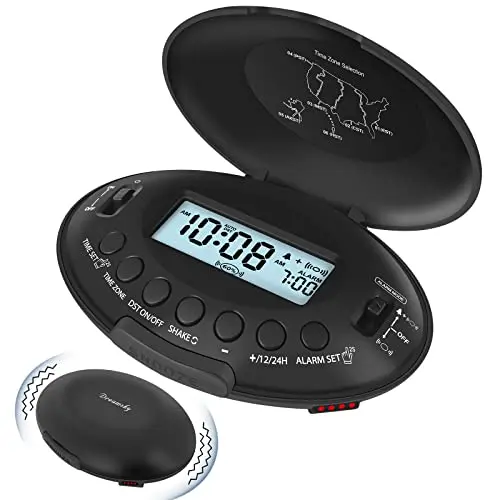
DS2202 – Rechargeable Under-Pillow Shaker
A compact, rechargeable travel alarm with a wireless bed shaker that slips under a pillow or quilt. It offers five vibration levels, vibration-only or vibration-plus-beep modes, and automatic DST.
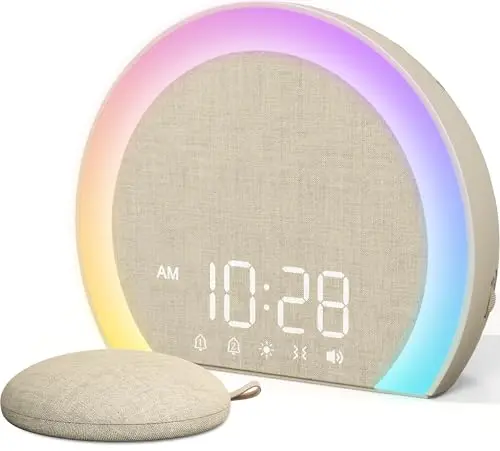
KX213 – Wireless Bed Shaker with Night Light
A plug-in bedside alarm with a wireless bed shaker, dual alarms, eight sounds, and a dimmable nine-color night light. It’s built for deep sleepers and hearing-impaired users who want strong vibration plus loud backup.

CR1001i – Projection Clock with Bed Shaker
A projection alarm clock with a wired bed shaker, dual alarms, and a large dimmable LED display. It projects the time onto a wall or ceiling and includes a USB charging port for bedside devices.
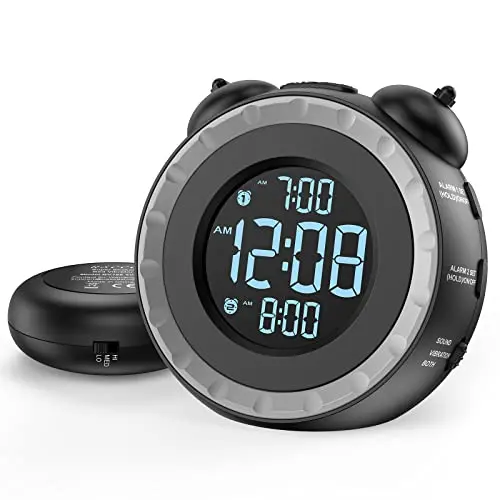
UE-188 – Classic Dual Alarm with Adjustable Shaker
A classic dual-bell-style alarm with a three-level bed shaker, dual alarms, and a 0-100% dimmer. It wakes by vibration, sound, or a combination and includes a USB charging port.

GX-GY – Cordless Under-Pillow Vibration
A cordless alarm clock with a built-in vibration motor, three wake-up modes, and five vibration levels. It sits under a pillow, charges on a magnetic dock, and has an auto-dimming display.

6208ZD – RGB Vibrating Alarm on a Budget
A plug-in vibrating alarm with a bed shaker, dual alarms, RGB display colors, and five brightness levels. It offers ring-only, vibration-plus-ring, and vibration-only modes.

CR1001EM – Large Display with Bed Shaker
A plug-in alarm clock with a bed shaker, dual alarms, and a large 7.5-inch LED display. It includes five brightness levels, a USB charging port, and memory backup for settings.

L02 – Portable Rechargeable Bed Shaker
A compact rechargeable alarm with a bed shaker, five vibration levels, and 15 volume steps. It has an auto-dim display, five alarm sounds, and tap-to-snooze.
How We Evaluated These Alarm Clocks for Deaf People
We didn’t sleep with each clock for weeks or measure vibration output with lab equipment. What we did: cross-referenced nine alarm clock models from nine brands across six decision axes – bed-shaker design, vibration adjustability, alarm redundancy, display and control accessibility, power backup, and portability. We triangulated published specifications, feature sets, owner feedback where available, and use-case fit for deaf and hard-of-hearing sleepers.
The scoring framework weighted real-world wake-up fit (70%) – how well each clock delivers a reliable physical alarm for someone who can’t depend on sound – against feature differentiation (30%) – unique advantages like wireless shakers, projection, or rechargeable travel designs. We mapped each model against common bedroom setups: a fixed nightstand, a shared bed, a dorm room, and a travel bag. We also audited how each alarm communicates a wake-up when sound is irrelevant: shaker placement, vibration steps, visual cues, and whether the shaker keeps working on backup power. Where owner feedback was uneven, we treated the gap as a caution rather than a reason to pad the recommendation. We have no commercial relationship with the brands featured; recommendations track fit and differentiation, not brand preference.
If you want the most proven wired-shaker setup, the Sonic Bomb is the place to start; if portability matters more, the DreamSky DS2202 is the stronger match. We weighed battery backup carefully because a shaker that dies in an outage is less useful than the spec sheet suggests.
How to Choose the Right Alarm Clock for a Deaf Person
1. What Makes an Alarm Clock Work for a Deaf Person
The first job of an alarm clock for a deaf person is to deliver a wake-up you can feel, not just hear. A bed shaker – a vibrating puck or built-in motor that sits under a pillow or mattress – is the core feature. Look for adjustable vibration levels because sensitivity varies and a shaker that’s too weak is useless while one that’s too strong can be jarring. Visual alerts like flashing lights or a bright display can add a second channel, but they shouldn’t replace vibration.
Redundancy matters. A dual-alarm clock gives you a backup wake time, and a battery backup keeps settings alive through outages. If the clock is corded, check whether the shaker still works on battery – often it doesn’t, which is a critical detail for anyone who depends on vibration.
2. Wired vs Wireless Bed Shakers for Deaf Sleepers
Wired bed shakers are the traditional design: a cable runs from the clock to a puck you slide under the mattress or pillow. They’re simple, don’t need charging, and usually deliver a strong, consistent shake. The tradeoff is placement – the cable limits where the shaker can go and can be a nuisance in a hotel or dorm bed.
Wireless bed shakers avoid the cable and are easier to reposition, especially for travel. They need their own battery or charging routine, and the wireless link adds one more thing that can fail. For a primary bedside alarm, a wired shaker is often the more set-and-forget choice; for travel or shared beds, wireless is worth the convenience.
3. Accessibility Features: Display, Light, and Controls
A deaf sleeper still needs to read the time and set alarms in a dark room. Look for a dimmable display with a low setting that won’t light up the bedroom, and large digits if you read the clock from bed. A projection display can be genuinely useful because it puts the time on the ceiling or wall without forcing you to roll over.
Controls matter more than they seem at 6 a.m. Clearly labeled buttons, a dedicated snooze button, and tactile cues help when you’re half asleep. If you want a night light and a wireless shaker in one unit, the ANJANK KX213 is the pick here; if you’d rather have ceiling projection, the Mesqool CR1001i is the better fit.
4. Battery Backup and Power for Deaf Sleepers
Power design is a safety feature in this category. A battery backup that preserves time and alarm settings is useful, but read the fine print: many clocks keep the alarm time but not the shaker or display during an outage. If you need the vibration to work without wall power, a rechargeable clock is the better route.
Portable rechargeable alarms work well for travel, dorms, and guests, but battery life varies widely. A unit rated for about a day of use needs a different charging routine than one rated for weeks. If you want the shaker built into the clock with no separate puck, the REACHER GX-GY is the cordless option to consider.
5. Budget vs Premium Alarm Clocks for Deaf People
Entry-level vibrating alarms cover the basics: a bed shaker, a loud alarm, and usually a dimmer. They’re a sensible first step if you’re testing whether vibration works for you. Mid-range models add dual alarms, better displays, USB charging, or projection. Premium picks focus on wireless shakers, rechargeable batteries, night lights, and more polished controls.
Spend more only for features you’ll actually use. A deaf sleeper who mostly needs a reliable shaker under the mattress may not care about RGB lighting or a projector. A frequent traveler, on the other hand, may value a rechargeable cordless design enough to pay for it.
Frequently Asked Questions
1. What should a deaf person look for in an alarm clock?
Prioritize a bed shaker you can feel through a pillow or mattress, adjustable vibration levels, and a backup wake-up method such as a loud alarm or flashing light. Check whether the shaker works during a power outage if that matters to you, and look for clearly labeled controls and a dimmable display that won’t light up the room. A dual-alarm clock is also useful if you want a second safety net.
2. What's the difference between the Sonic Alert Sonic Bomb and the DreamSky DS2202?
The Sonic Bomb is a fixed bedside alarm with a wired bed shaker, red flashing lights, and a 113 dB dual alarm. The DreamSky DS2202 is smaller and rechargeable, with a wireless under-pillow shaker and five vibration levels. The Sonic Bomb is the better primary alarm for a permanent nightstand; the DS2202 is easier to travel with. If you want a set-and-forget shaker at home, the Sonic Bomb is the stronger fit.
3. What's the difference between the Mesqool CR1001i and the ANJANK KX213?
The Mesqool CR1001i adds ceiling projection and a large 7-inch display to a wired shaker setup. The ANJANK KX213 uses a wireless shaker, adds a nine-color night light, and has dual alarms. Choose the Mesqool if you want projection and a big readout; choose the ANJANK KX213 if a wireless shaker and softer bedroom lighting matter more. Neither is the simplest clock here, so be ready to learn the controls.
4. Can a bed shaker alarm clock wake someone who is completely deaf?
Yes, that’s the point of a bed shaker. A vibrating puck or built-in motor creates a physical cue you can feel through a mattress or pillow, so it doesn’t rely on hearing. Effectiveness depends on shaker strength, placement, mattress thickness, and individual sensitivity. A vibration-only mode with adjustable levels is more useful than a fixed shake, and pairing it with a flashing light or loud alarm adds a second channel if you want one.
5. Are wireless bed shakers as reliable as wired ones?
Not automatically. Wired bed shakers are simpler and don’t need charging, so there’s less to maintain. Wireless bed shakers are easier to place and better for travel, but they depend on a battery and a wireless link. Look for a clear low-battery warning, a rechargeable battery with realistic runtime, and a charging routine you’ll actually keep. For a primary bedside alarm, wired is often the safer default; for travel or shared beds, wireless convenience can be worth it.
Final Verdict
For most deaf sleepers, the Sonic Bomb SBB500SSR is the answer: it pairs a strong wired bed shaker with flashing lights, dual alarms, and enough adjustability to fit a real morning routine. It’s the one I’d trust as a primary bedside alarm.
If you travel or split time between beds, the DreamSky DS2202 is the better companion – cordless, rechargeable, and easy to reposition under a pillow. On a tight budget, the Netzu 6208ZD covers vibration and dual alarms for far less, though it’s plug-in only. And if you share a bed with a partner who wakes at a different time, the ANJANK KX213 adds a wireless shaker and dual schedules. Match the clock to your bed setup, not to a spec sheet.
