
Best Alarm Clocks For Hard Of Hearing – 2026 Reviews

A standard alarm clock assumes you will hear it. For someone who is hard of hearing, that assumption is the whole problem. Volume alone helps, but it can fail against deep sleep, muffled hearing, or a pillow over your ear. The better solution is redundancy: a bed shaker that physically nudges you, flashing or bright visual cues, and a sound profile you can actually adjust.
The hard of hearing category spans a wide range. Some people need a powerful shaker and little else. Others want a loud alarm with a large display they can read across the room. The picks below reflect that spread: we compared vibration strength and modes, display visibility, alarm flexibility, and backup behavior across multiple brands.
This guide is built for cross-shopping. We will explain which designs suit profound hearing loss, which work for mild-to-moderate cases, and where a simple loud clock stops being enough.
Best Alarm Clocks for Hard of Hearing – 2026 Reviews

Sonic Bomb SBB500SSR – Bed Shaker and Flashing Alert
A dedicated vibrating alarm clock with a wired bed shaker, red flashing alert lights, and a very loud adjustable alarm. Dual alarms and a battery backup make it a serious option for deaf and hard of hearing sleepers.
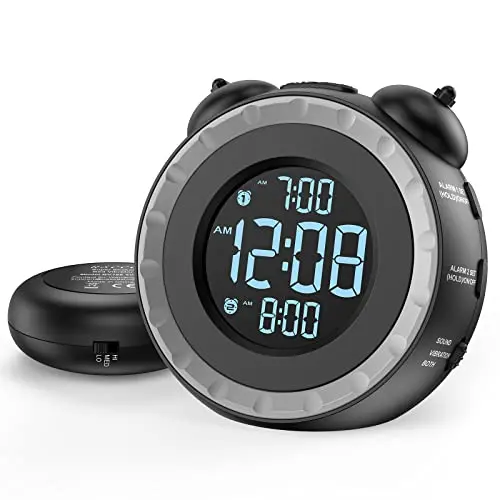
UE-188 – Simple Bed Shaker Alarm
A compact bedside alarm with a three-level bed shaker, dual alarms, and a clean 0-100% dimmer. The dial-style controls make it one of the easier vibrating clocks to set without a manual.
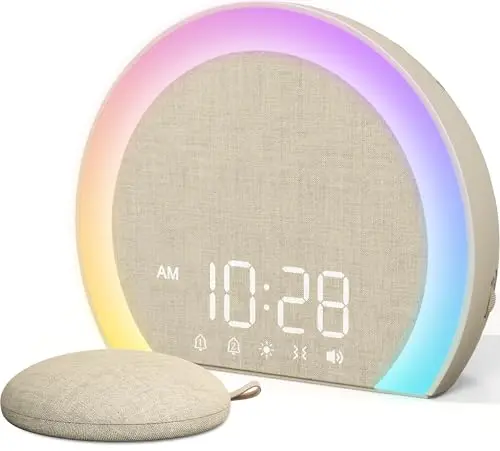
KX213 – Wireless Bed Shaker Alarm
A feature-rich vibrating alarm with a wireless bed shaker, 112 dB alarm, dual alarms, and a customizable night light. The shaker runs on a rechargeable battery and can sit under a pillow without a cable running across the bed.

CR1001EM – Bed Shaker with 7.5-Inch Display
A budget-friendly vibrating alarm with a large 7.5-inch LED display, dual alarms, and three wake modes. The shaker can work alone or with sound, and the display dims across five levels.

6208ZD – Vibrating RGB Alarm
A budget vibrating alarm with a 115 dB alarm, three wake modes, and a customizable RGB display. It is a straightforward option for heavy sleepers who want a shaker without spending much.
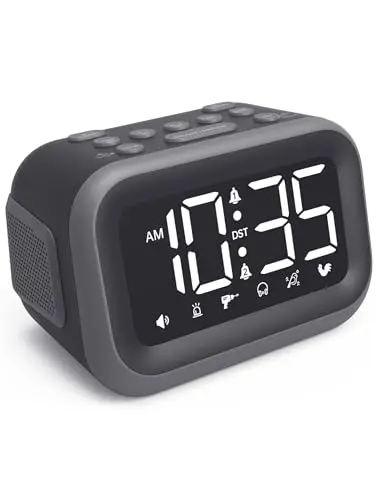
L01 – 115dB Loud Alarm
A loud alarm clock with a 115 dB maximum, six alarm sounds, dual alarms, and a 4.2-inch LED display. It lacks a bed shaker, but the volume range and large display make it a useful backup for mild hearing loss.
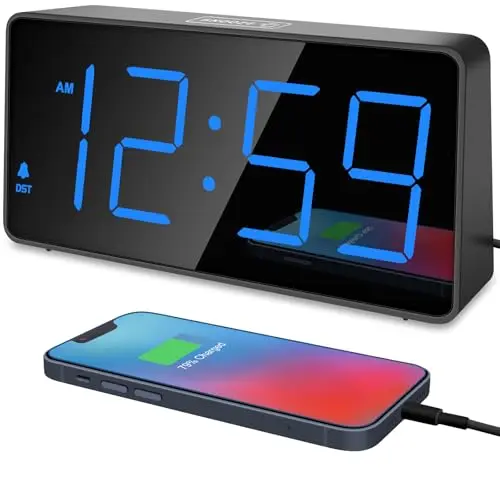
MHP6010 – Large-Display Loud Alarm
A simple digital alarm with two-inch numbers, five volume levels, and a USB charger. It is not a vibrating clock, but the large display and adjustable loudness suit seniors and anyone with mild hearing loss.
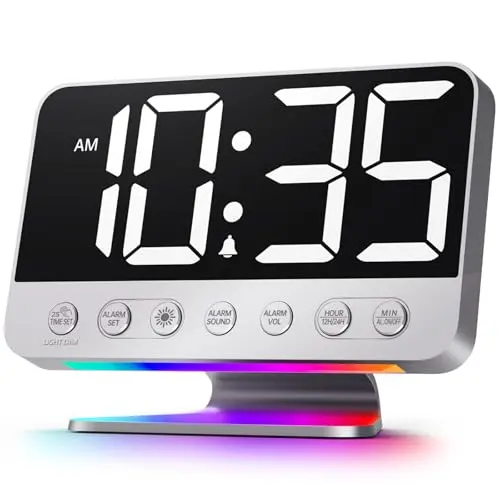
U2 – Loud Alarm with Night Light
A compact alarm clock with a 110 dB maximum, five wake sounds, two-inch digits, and an eight-color night light. It is a loud visual clock rather than a vibrating one.
How We Evaluated These Alarm Clocks for Hard of Hearing
We didn’t sleep through a full week with each clock or measure alarm output with a calibrated sound meter. What we did: cross-referenced eight alarm clocks from eight distinct brands across six decision axes – vibration strength and modes, alarm loudness and tone options, display size and dimming, backup behavior, ease of setup, and dual-alarm flexibility. We triangulated published specifications, audited feature sets, and weighed owner feedback where available against the practical needs of hard of hearing sleepers. We also mapped each clock to realistic scenarios: profound hearing loss with hearing aids removed, mild hearing loss in a shared bedroom, and seniors who need a readable display more than a shaker.
The scoring framework weighted real-world fit for hard of hearing users (70%) – how well each clock actually delivers a wake signal through vibration, volume, or visual cues – against feature differentiation (30%) – unique advantages like wireless shakers, larger displays, or more flexible alarms. We have no commercial relationship with any brand here; recommendations track fit and differentiation, not brand preference. If your priority is the strongest established shaker, the Sonic Bomb SBB500SSR is the match; if you want a simpler dial-based setup, the uscce UE-188 serves you better.
A final transparency note: we did not run durability trials or test these clocks across multiple mattresses. The vibration impressions below come from published shaker specs, owner feedback where available, and the design of each wake system. That is enough to separate a serious hard of hearing alarm from a standard loud clock, but it is not a lab certification.
How to Choose the Right Alarm Clock for Hard of Hearing
1. Why Vibration Matters Most for Hard of Hearing Wake-Ups
A loud alarm is only useful if you hear it. For many people with hearing loss, sound gets muffled by pillows, earplugs, or the simple act of removing hearing aids at night. A bed shaker bypasses that problem by sending a physical signal through the mattress. It is the single most important feature to prioritize when shopping for hard of hearing alarm clocks. Wired shakers are usually the most reliable because they do not need charging. Wireless shakers are more convenient but add a battery routine. If you want a large display and a shaker on a budget, the Roxicosly CR1001EM is the pick.
2. How Loud Should a Hard of Hearing Alarm Clock Be?
Look for an adjustable volume range rather than a single loudness claim. Many heavy-sleeper clocks top out around 110 to 115 dB, but the useful part is the lower end: you want an alarm loud enough to wake you without being painful for a partner. A gradual volume ramp can help you wake without a jolt, while a sharp siren tone may cut through deep sleep better. If loud sound is your main strategy and you do not need a shaker, the Acedeck L01 is the pick.
3. Display Size, Dimming, and Visual Alerts for Hard of Hearing Users
A large display is not just a convenience. If you cannot hear a clock radio across the room, being able to read the time from bed helps you decide whether to get up or roll over. Look for two-inch digits or larger, plus a wide dimming range that can go dark at night. Flashing lights are a separate feature: they add a visual wake signal that can supplement sound or vibration. Not every hard of hearing clock includes them, so check before you buy.
4. Wired vs. Wireless Bed Shakers: Which Is Better for Hard of Hearing Sleepers?
A wired bed shaker draws power from the clock and rarely needs maintenance. The tradeoff is a cable running from the nightstand to the mattress. A wireless shaker avoids that cable and can be placed under a pillow, but it needs its own battery and charging routine. Wireless models are easier to live with in a shared bed; wired models are easier to trust over years. If you want the wireless route, the ANJANK KX213 is the pick.
5. Battery Backup and Power Outage Wake-Ups
Read the backup fine print. Some clocks keep time and alarm settings but do not power the display or shaker during an outage. Others will still trigger the alarm, including vibration, on battery power. A battery backup is not a substitute for a shaker, but it matters if you live in an area with storms or rolling blackouts. Check whether the backup uses AAA batteries or a 9-volt battery, and whether those are included.
6. Matching an Alarm Clock to Your Hearing Level and Sleep Habits
For profound hearing loss, prioritize a shaker and a visual alert. For mild hearing loss, a loud adjustable alarm with a large display may be enough. Couples should look for dual alarms and a vibration-only mode. Seniors often prefer simple controls and readable digits over app connectivity or RGB lighting. The best hard of hearing alarm clock is the one whose wake signals match your actual morning routine, not the one with the longest feature list.
Frequently Asked Questions
1. Are vibrating alarm clocks better than loud alarm clocks for hard of hearing users?
For many hard of hearing sleepers, yes. A bed shaker delivers a physical signal that does not depend on your ears, while a loud alarm still relies on some hearing and can be muffled by a pillow or earplugs. The strongest setup is usually vibration plus sound plus a visual cue. That is why the Sonic Alert Sonic Bomb is our top pick: it combines a powerful shaker with flashing lights and a loud alarm. If your hearing loss is mild, a loud adjustable alarm may be enough, but a shaker is the safer choice for profound loss.
2. What's the difference between the Sonic Alert Sonic Bomb and the uscce UE-188?
The Sonic Bomb is the more aggressive wake system. It has a 113 dB alarm, red flashing alert lights, and a shaker that can be set to vibration only. The uscce UE-188 is calmer and simpler: a three-level shaker, dual alarms, and a 0-100% dimmer with dial-style controls. Choose the Sonic Bomb if you want maximum redundancy; choose the uscce if you want easier setup and do not need flashing lights.
3. How does the ANJANK KX213 compare with the Roxicosly CR1001EM?
The ANJANK KX213 is the more flexible design. Its wireless bed shaker can sit under a pillow without a cable, and it adds a 9-color night light, 112 dB alarm, and USB-C charging. The Roxicosly CR1001EM is a wired shaker clock with a 7.5-inch display and a lower price tier. If you want the cleanest bedside setup, the ANJANK KX213 is the pick; if you want a big display and a simple wired shaker, the Roxicosly is the value choice.
4. Can a hard of hearing person use a sunrise alarm clock?
Yes, but it works best as a supplement, not a primary wake system. A sunrise simulation can help light sleepers and people who wake gradually, but it does not provide the physical vibration that many hard of hearing users need. If you try a sunrise clock, pair it with a bed shaker or a loud backup alarm rather than relying on light alone.
5. Do I need a bed shaker if I'm only mildly hard of hearing?
Not necessarily. If you hear a loud alarm reliably, a clock with adjustable volume and a large display may be enough. But if you sleep deeply, share a bed with someone who wakes earlier, or remove hearing aids at night, a bed shaker adds a safety margin. Think of it as redundancy: the more channels your alarm uses, the less likely you are to sleep through it.
Final Verdict
For most hard of hearing sleepers, the Sonic Bomb SBB500SSR is the safest starting point. It combines the strongest established bed shaker with flashing lights and a loud alarm, so you are not relying on a single wake channel. If you want a simpler dial-based setup, the uscce UE-188 gets you a three-level shaker with less fuss. Budget shoppers should look at the Netzu 6208ZD for vibration-only mode and a bright RGB display at the entry tier. And if a cable across the nightstand is the dealbreaker, the ANJANK KX213 is the wireless shaker pick. None of these are worth buying if the shaker is an afterthought; the best models make vibration, volume, and visual cues work together.
