
Best Alarm Clocks For Kids – 2026 Reviews

The morning routine often comes down to one question shouted from the next room: is it okay to get up yet? A kids alarm clock is less about telling time and more about drawing a clear line between bedtime and morning.
The category splits into three rough camps: sleep trainers that use color and facial cues, sunrise clocks that wake with light, and basic digital alarms that just beep. The right pick depends on whether your child needs visual permission to rise, a gentle wake-up, or a simple loud alarm. We compared the cross-brand options to help you match the clock to your kid’s routine, not to a marketing feature list.
Best Alarm Clocks for Kids – 2026 Reviews
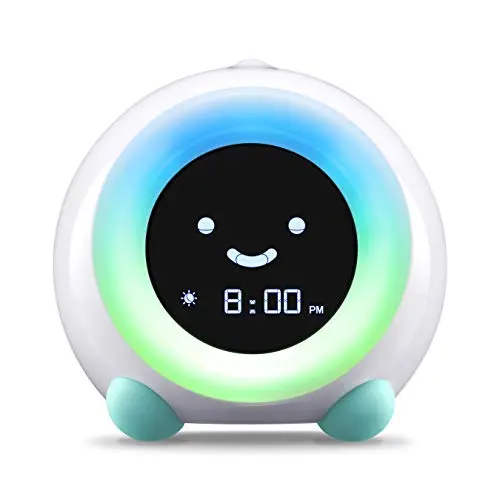
Mella – Sleep Trainer with OK-to-Wake
A sleep trainer, night light, and sound machine in one small bedside package. The Mella uses facial expressions and color changes to show when it’s time to stay in bed and when it’s okay to get up.
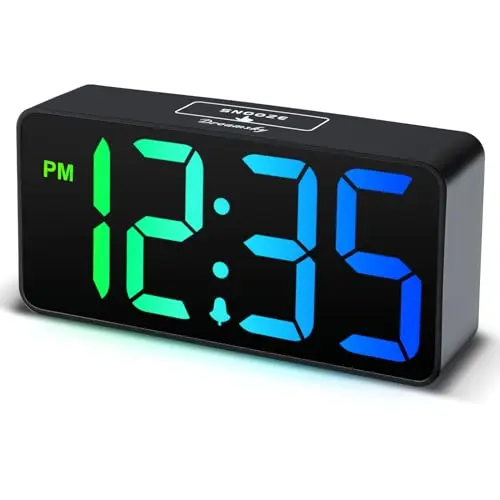
DS312 – RGB Kids Clock with Large Numbers
A compact color-changing digital clock with big numbers, adjustable brightness, and a kid-friendly RGB display. It keeps the setup simple and adds a USB charging port.
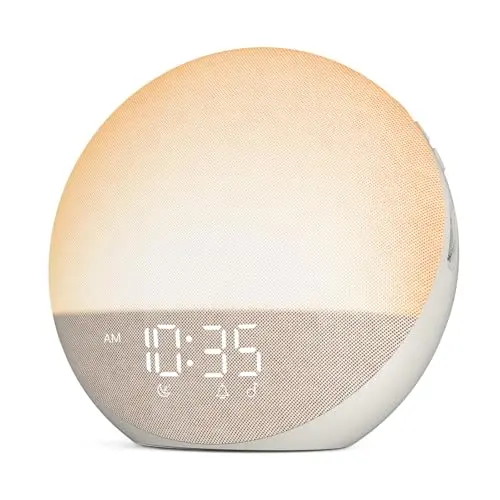
Sunrise Alarm Clock – White Noise and Bluetooth
A sunrise alarm clock and white-noise machine with Bluetooth audio, dimmable display, and 25 soothing sounds. It’s designed for a gentle wake-up rather than a jolt.
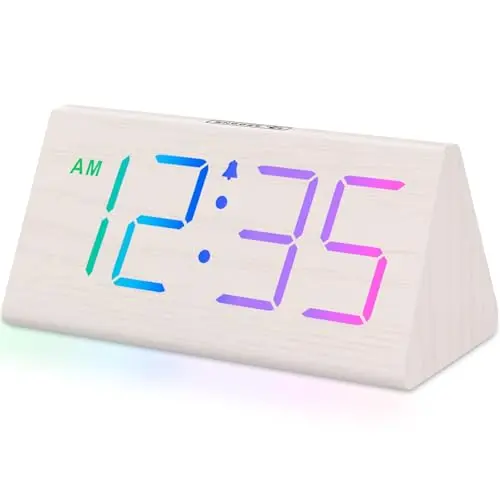
DS2201 – Loud Wooden Alarm with RGB Display
A wooden-finish digital alarm clock with a loud adjustable alarm, RGB display, and large numbers. It’s built for kids who need a stronger morning nudge.
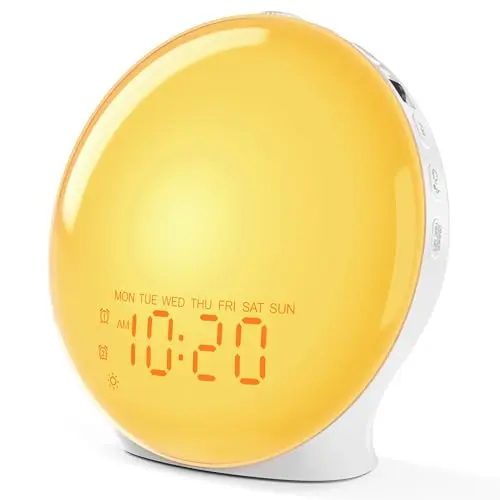
Sunrise Alarm Clock – Gentle Wake-Up with 25 Sounds
A full-screen sunrise alarm clock with 25 nature sounds, FM radio, dual alarms, and a 5W Bluetooth speaker. It’s a multi-purpose bedside device for families.
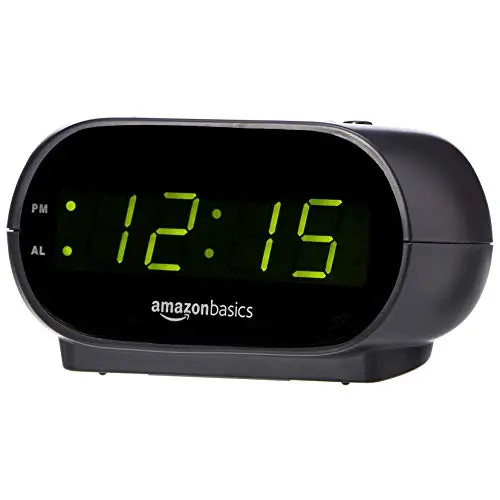
Small Digital Oval – Simple Nightlight Alarm
A compact digital oval clock with a green LED display, built-in nightlight, and repeating snooze. It’s a straightforward bedside clock for simple routines.
How We Evaluated These Alarm Clocks for Kids
We didn’t run lab accuracy tests or months-long durability trials. What we did: cross-referenced 6 alarm clock models from 5 distinct brands across 6 decision axes – wake-up signaling, ease of use for kids, night-light and sound options, display readability, alarm volume control, and power backup. We triangulated published specifications, feature sets, owner feedback where available, and use-case fit for families with toddlers, school-age kids, and light sleepers. We also compared how each alarm is silenced, snoozed, and reset without a manual.
The scoring framework weighted real-world fit (70%) – how well each clock helps a child understand bedtime and morning – against feature differentiation (30%) – unique wake-up methods, lighting, and sound options. We have no commercial relationship with any of the brands featured; recommendations track fit and differentiation, not brand preference. If you want the most complete sleep-training package, the LittleHippo Mella is the clear starting point; if you want a low-fuss color display for a school-age kid, the DreamSky DS312 is the practical alternative.
We mapped each option against real kid-room scenarios rather than treating them as generic bedroom clocks. That means we weighted simple controls, gentle wake-up cues, and parent-friendly setup more heavily than radio features or app extras that rarely matter at 6 a.m. A clock that a parent can set in under a minute and a child can read from bed earned more credit than a feature list that looks good on paper.
How to Choose the Right Alarm Clocks for Kids
1. What Makes a Good Alarm Clock for Kids?
A good kids alarm clock has to do more than keep time. It should make the morning transition obvious without requiring a parent to mediate every wake-up. The most effective models use color-based wake signals or a sleep trainer that tells a child when to stay in bed and when it’s okay to get up. Simple controls matter just as much, because a clock that’s hard to set will get abandoned.
For younger kids, look for a clear visual cue and a dim, kid-friendly night light. For older kids, a readable display and an alarm they can silence themselves may be enough.
2. Color-Based Wake Signals vs. Sound-Only Alarms
Sleep trainers give kids visual permission to rise: the clock changes color when it’s okay to leave the bedroom. That works well for toddlers and preschoolers who can’t read a digital clock yet. A sound-only alarm is simpler and usually cheaper, but it doesn’t solve the “is it morning yet?” question on its own.
Older kids often do fine with a loud alarm and snooze, especially if they need help getting out the door for school. The tradeoff is that a beeping alarm can wake the whole house, so volume control is worth checking.
3. Night Lights, Sound Machines, and Bedtime Routines
Many kids clocks double as a dimmable night light or a white noise machine. That’s useful in a shared room or a bedroom that gets early morning light. A clock with a built-in sleep timer can also replace a separate sound machine on the nightstand.
If bedtime routine is the priority, the Odokee sunrise clock is the pick here because it pairs a slow sunrise with white noise and a dimmable night light.
4. Simple Controls and Readable Displays for Kids
Kids need large numbers they can read from bed, and parents need a brightness dimmer that goes low enough for sleep. An adjustable alarm volume is equally important: too loud can startle a light sleeper, too soft won’t wake a heavy one. Physical buttons with clear labels usually beat menu-driven controls for a child’s room.
5. Power, Backup, and Placement in a Kid's Room
Most kids alarm clocks are corded power devices, so plan for a nearby outlet and a safe cable route. A battery backup is mainly useful for keeping time and alarm settings through short outages; it rarely powers the display or sounds. Place the clock within sight from bed but out of reach for very young kids who might treat buttons as toys.
6. LittleHippo Mella vs. DreamSky DS312: Which Kids Alarm Clock Fits Your Routine?
These two represent the main split in the category. Choose the LittleHippo Mella if you want color-based sleep training, a night light, and sleep sounds in one package. Go with the DreamSky DS312 if your kid mostly needs a readable, colorful clock with a straightforward alarm and a lower entry point.
Frequently Asked Questions
1. What's the difference between the LittleHippo Mella and the DreamSky DS312?
The Mella is a sleep-training clock first: it uses colors and facial expressions to tell a child when to stay in bed and when to get up. The DS312 is a more conventional color-changing display with a straightforward alarm, dimmer, and large digits. The Mella is the better fit if your child needs morning permission cues; the DS312 is a simpler basic bedtime alarm for kids who already understand the routine.
If you want the full sleep-training package, the LittleHippo Mella is the pick here.
2. How does the Odokee sunrise clock compare with the JALL sunrise alarm clock?
Both use sunrise simulation to wake kids gradually, but they lean in different directions. The Odokee adds Bluetooth audio and a 12-color night light, which makes it more of a bedtime sound-and-light device. The JALL has a larger full-screen light panel, FM radio, and dual alarms for separate weekday and weekend schedules.
For a younger kid who needs a softer bedtime routine, the Odokee sunrise clock is the more natural fit; for a family that wants radio and two alarm schedules, the JALL is the better match.
3. Do kids' alarm clocks need a night light and sound machine?
Not always. A night light and white noise are helpful if your child is scared of the dark, shares a room, or wakes easily. For older kids who sleep well and just need a morning cue, a basic clock with a dim display is often enough. The extra features are convenient, but they shouldn’t replace a consistent bedtime routine.
4. Can a basic alarm clock work for a child's room?
Yes, especially for school-age kids who can read numbers and understand the alarm. Look for a large display, a brightness control, and a simple snooze button. A basic model can be a good first clock because it doesn’t add another app, speaker, or menu to the bedside table.
5. Are color-changing displays helpful or distracting for kids?
They can be either. A color change gives a clear morning routine cue, which is why sleep trainers work well for toddlers. But a bright dimmable display is essential, because a colorful screen can become a bedtime distraction if it’s too bright or constantly cycling. Look for a dimmer and, ideally, a way to fix the color.
Final Verdict
For most families, the LittleHippo Mella is the answer – it turns bedtime and morning into a simple color-and-face routine, and it adds a night light and sleep sounds without clutter. If you want a budget-friendly kids clock with a colorful display and easy dimming, the DreamSky DS312 is the practical pick. For a gentler sunrise wake-up with white noise, choose the Odokee sunrise clock. And if your child sleeps through ordinary alarms, the DreamSky DS2201 wooden clock has the louder alarm and big numbers to get them moving. None of these require an app or a complicated setup, so the choice comes down to the wake-up style your child responds to.
