
Best Alarm Clocks For Tweens – 2026 Reviews

The first time your kid is responsible for waking themselves up, the whole morning routine changes hands. Suddenly the alarm clock matters – not as decor, but as the thing standing between them and a tardy slip.
Shopping for a tween is its own puzzle. They’re old enough to want control over their own setup and picky enough about how their room looks, but they’re not always ready for a clock with twelve menus and a Bluetooth pairing screen. The models that work best tend to share a few traits: digits they can read from bed without squinting, brightness they can dial down so the display doesn’t glow like a runway, and an alarm loud enough to actually do its job.
We looked across the market at digital clocks, sunrise wake-up lights, and sound-machine hybrids to figure out which ones a tween can genuinely run on their own – and which are better left for parents who want a fancier nightstand. The picks below span the entry level to the premium tier, and the right one comes down to what your mornings actually look like.
Best Alarm Clocks for Tweens – 2026 Reviews
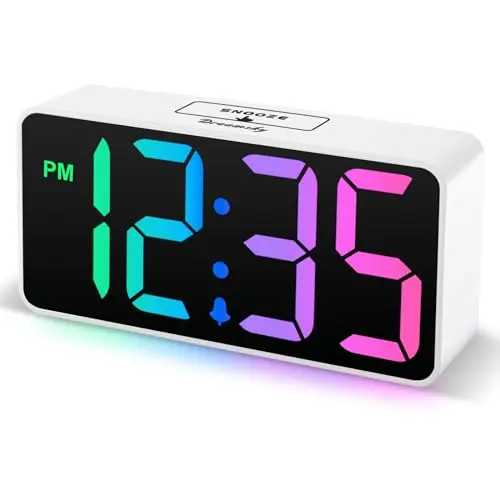
DS312 – Big-Number Clarity with Kid-Friendly Controls
The DS312 pairs a genuinely big illuminated display with the kind of granular controls a tween actually needs – a dimmer for the numbers, an alarm that can be dialed from a whisper to a proper wake-up, and a single on/off button that makes weekend lie-ins easy. Colored digits and a compact white body keep it looking at home on a kid’s nightstand, and a USB port means one less wall charger to hunt for.
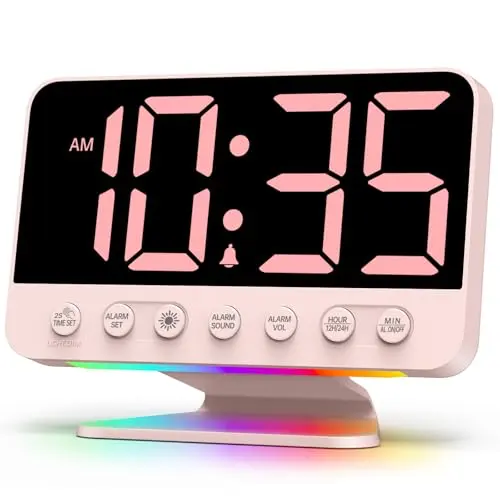
U2 – Pink, Loud, and Tween-Ready
Built specifically with kids and teens in mind, the U2 leans into the details that matter: front-mounted buttons a tween can actually figure out, a range of wake-up sounds, and an alarm that can go from gentle birdsong to a full blast at the top of its range. The sakura-pink body and eight-color night light make it feel like a piece of room decor rather than a piece of hardware.
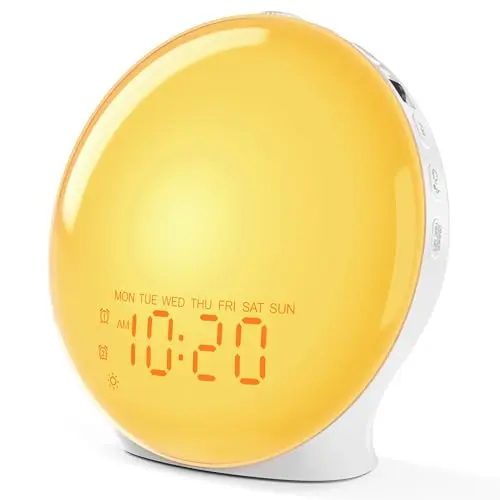
K8 – Sunrise Wake and Sleep Sounds
The K8 is less a traditional alarm clock and more a bedside sleep-and-wake system: a sunrise panel that brightens over a stretch of minutes, a library of nature sounds and white noise for falling asleep, and dual alarms for weekday and weekend routines. It’s the option to look at if jarring beeps are the problem you’re trying to solve.
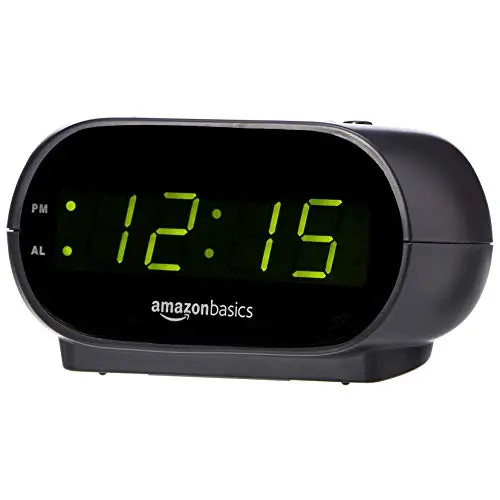
TT1001 – Simple, Affordable Bedside Basics
The basics, done cheaply and competently. A compact oval body, clear green LED digits, a built-in nightlight, and a repeating snooze cover the essentials without a single extra menu. If you want a first alarm clock that’s easy to replace if it gets knocked off the nightstand, this is the sensible starting point.
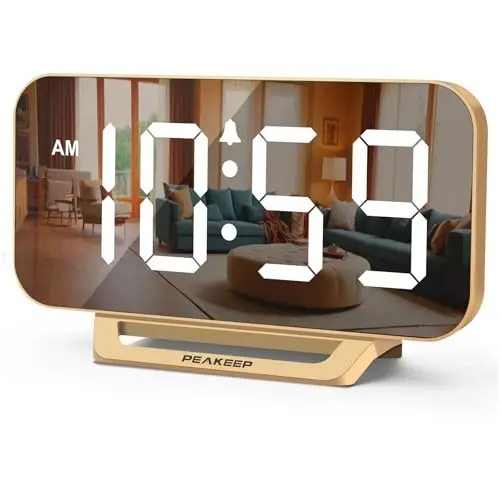
MHP6030 – Mirror-Finish Display with Adjustable Alarm
A mirror-finish face and gold casing make the MHP6030 the most decor-forward clock in this lineup, but it backs the looks up with a genuinely readable 6-inch display, six brightness levels, and five alarm volumes. It’s the pick for a tween whose room has a look they care about.
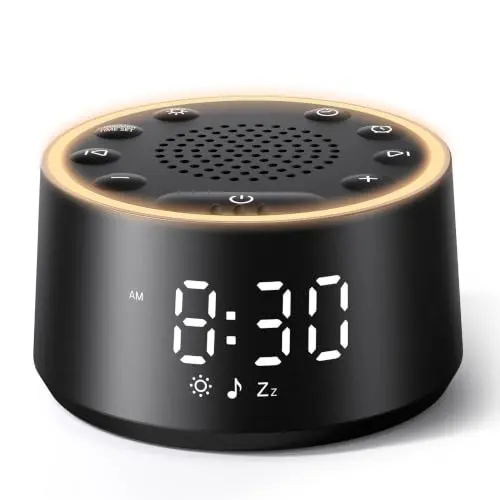
D1 Nova – Sound Machine Meets Alarm Clock
The D1 Nova merges two nightstand devices into one: a 25-sound white noise machine for falling asleep and a dimmable clock with seven gentle alarms for waking up. It’s a smart fit if your tween struggles to settle at night as much as they struggle to get up.
How We Evaluated These Alarm Clocks for Tweens
We didn’t sleep beside these clocks for weeks or measure alarm loudness with a decibel meter. What we did: cross-referenced 6 alarm clock models from 6 distinct brands across 6 decision axes – display readability, brightness control, alarm volume range, setup complexity, power and battery backup, and how well each suits a tween’s actual bedtime routine. We triangulated published specifications, aggregated owner feedback where available, and mapped each option against the realities of a kid-run morning. Because this is a tween-focused roundup, we weighted independent setup and readability more heavily than raw feature count – a clock a kid can’t program alone isn’t much of an alarm clock.
The scoring framework weighted real-world fit for a tween (70%) – can they read it, set it alone, and actually wake to it – against feature differentiation (30%) – the extras like night lights, sunrise panels, sound libraries, and USB ports that separate one clock from another. No brand gets a pass because of its name. We audited spec sheets for claims that don’t hold up in a real bedroom and pressure-tested each pick against the question every parent asks: will this survive a tween using it unsupervised? Feature breadth still counts – it just doesn’t outrank whether a kid can use the thing. If you want the safest all-round choice, the DreamSky DS312 is the easiest recommendation; if mornings are a genuine fight, the JALL K8 is the step up worth making.
How to Choose the Right Alarm Clocks for Tweens
1. Why Readability and Dimming Matter for Tweens
A tween’s bedroom is usually dim, and a clock they can’t read at 6 a.m. is a clock they’ll ignore. Look for large illuminated digits – a two-inch display is a good benchmark – that stay legible from across the room without glasses. The other half of readability is brightness control. A display with several dimmer levels, or one that can be turned off entirely, is far easier to live with than a fixed-brightness screen that turns the wall into a nightlight.
This matters more for tweens than adults because they’re often sharing a room, bunk beds, or a hallway-adjacent space where light leaks. A clock with a genuine dim-to-dark setting is worth more than one with a bigger screen.
2. How Loud Should an Alarm Clock Be for a Tween?
Loud enough to wake them, quiet enough not to wake the house. That’s the target, and it’s why adjustable alarm volume is the single most useful feature in this category. A fixed alarm is a gamble; an adjustable one lets you start moderate and dial it up if your tween keeps sleeping through it.
Range matters. Some clocks cap out at a modest tone that a deep sleeper will sail past, while others offer a wide volume span – from a soft birdsong to a genuinely loud siren. If your tween is a heavy sleeper, prioritize the top end. If they’re light and anxious about mornings, prioritize the gentle end and gradual volume ramp-up, which eases them awake instead of startling them upright.
3. Ease of Setup: Can Your Tween Program It Alone?
This is where a lot of well-meaning clocks fall down. A clock that needs a parent to reset it after every power blip isn’t building independence – it’s building a habit of shouting down the hall. Look for front-mounted or clearly labeled buttons, a simple set sequence, and an obvious alarm on/off toggle.
Sunrise and sound-machine clocks add wonderful features but also add menu depth, and that complexity is the most common complaint in owner feedback for those models. If your tween is the type to poke at buttons until something works, an intuitive single-purpose layout will serve them better than a feature-packed panel. The Odokee U2 is a good example of the simpler end of that spectrum.
4. Sunrise Clocks vs. Standard Alarm Clocks for Gentle Wake-Ups
A sunrise clock brightens a panel gradually – often over 10 to 60 minutes – before the alarm tone ever sounds. For light-to-average sleepers, that’s a genuinely kinder way to start the day, and it can make the tone less of a shock when it arrives. For deep sleepers, the light alone may not be enough, so pair it with an audible alarm you can crank.
Standard digital alarm clocks are simpler and easier to troubleshoot. Neither is strictly better – it comes down to whether your tween needs a gentler sensory wake-up or just a reliable one. If mornings are a real battleground, a sunrise model like the JALL K8 is worth the extra setup effort.
5. Power, Battery Backup, and Nightstand Practicalities
Nearly every clock here is adapter-powered, which is fine, but the fine print matters. On most models, the backup batteries don’t run the clock – they only hold the time and alarm settings in memory through an outage. Some will still sound the alarm on battery, others won’t, and some displays go completely dark. Read that line in the specs before you buy.
Two practical extras are worth seeking out: a USB charging port so your tween’s phone and clock share one outlet, and a reasonably long adapter cord so the clock can actually reach the nightstand. A short cord plus a crowded power strip is a recipe for a clock that ends up on the floor.
6. What to Expect at Each Price Tier
At the entry level, expect a compact digital clock with clear digits, adjustable or fixed alarm volume, and basic battery backup – enough to learn on, nothing more. The Amazon Basics TT1001 sits squarely here.
The mid-range band is where this category gets genuinely good for tweens: dimmable displays, adjustable alarm volume across a wide range, night lights, wake-up sound choices, and USB ports. Step up to the premium tier and you’re paying for sunrise simulation, sound libraries, and occasionally a built-in speaker – features that matter if mornings are hard, and are mostly overkill if they aren’t.
Frequently Asked Questions
1. What's the difference between the DreamSky DS312 and the Odokee U2?
Both are plug-in digital clocks aimed at younger users, but they lean in different directions. The DreamSky DS312 emphasizes readability and control – 2-inch digits, a brightness dimmer, an alarm volume adjustable from a soft beep to a proper wake-up, and a USB port. It’s a single-alarm clock and stays fairly understated in looks.
The Odokee U2, by contrast, is the more tween-styled option: a sakura-pink body, an eight-color night light, five wake-up sounds, and a wider volume ceiling. It also puts its buttons on the front for easier setup. If you want the safer, more neutral pick, go DreamSky; if you want personality and a louder top end, go Odokee.
2. Is a sunrise alarm clock like the JALL K8 worth it for a tween?
If your tween wakes up groggy, cranky, or genuinely hard to rouse, a sunrise clock can help – the gradual light brightening does a lot of the work before any sound plays. The JALL K8 also folds in white noise and nature sounds for bedtime, which is useful if settling at night is part of the problem.
Be realistic about the trade-off: sunrise clocks are the most complex to program, and that’s the most consistent criticism in owner feedback for this style. If your tween needs something they can manage alone at 10 p.m., a simpler alarm is the safer bet.
3. Do tweens need a night light on their alarm clock?
Not strictly, but it’s a genuinely useful extra. A built-in night light means one less device on the nightstand, and a color-adjustable one can double as a wind-down cue. The catch is brightness control – a night light that can’t dim or turn off becomes a sleep disruptor.
Look for models where the night light and the clock display dim independently. That way your tween can keep a soft glow on and still have a dark room.
4. How do I stop my tween from sleeping through the alarm?
Two levers matter most: alarm volume range and wake-up sound choice. A clock that can escalate from a soft tone to something genuinely loud lets you calibrate to your kid rather than guessing. Sounds matter too – some sleepers ignore beeps but respond to birdsong or a siren.
Placement helps as well. A clock across the room forces them out of bed to silence it, which is half the battle. And keep the snooze habit in check – most clocks here offer a 9-minute snooze, which is reasonable, but repeated snoozing undoes the benefit of a loud alarm.
5. Are plug-in alarm clocks safe and practical for a kid's room?
Yes, with a couple of sensible habits. Every clock here runs on an AC adapter, so route the cord behind the nightstand rather than across the floor, and avoid daisy-chaining power strips. Battery backup is worth having even on a plug-in clock – it keeps the time and alarm set through brief outages so nobody wakes up to a blinking 12:00.
Just know that on most models the backup batteries don’t power the display. If the power goes out overnight, the alarm may still sound on some clocks but the screen will be dark.
Final Verdict
For most tweens, the DreamSky DS312 is the straightforward answer. It gets the fundamentals right – big readable digits, a display you can actually dim, an alarm you can tune to your kid, and setup simple enough to hand off. If you want a clock with more personality and a louder top end, the Odokee U2 is the better fit for a tween who’s claimed their room as their own. On a tight budget, the Amazon Basics TT1001 covers the essentials without asking much. And if mornings are a genuine struggle rather than a mild annoyance, the JALL K8 and its sunrise wake-up is the upgrade worth making. Pick by the morning you’re actually trying to fix – that’s the whole decision.
