
Best Alarm Clocks With Bluetooth Speakers – 2026 Reviews

Your phone is technically an alarm clock, a speaker, and a white noise machine rolled into one. It’s also the last thing you want to fumble with at 6:40 a.m., and the reason you end up scrolling when you meant to sleep. A dedicated bedside clock that also streams audio solves two problems at once – it wakes you without a screen glowing in your face, and it gives you somewhere to play rain sounds or a podcast that isn’t your handset.
The category has sprawled in a strange direction, though. Plenty of nightstand gadgets promise Bluetooth audio, sunrise lighting, white noise, and a nightlight in one plastic shell. The gap between a genuinely useful device and a fiddly novelty comes down to two things: whether the alarm actually fires when it’s supposed to, and whether the speaker sounds good enough that you’d use it on purpose.
We compared models across the market – from simple clock radios with Bluetooth to full sunrise simulators with deep sound libraries – and sorted out which buyer each one suits. Everything here is a bedside device first. The audio is the bonus that earns the nightstand space.
Best Alarm Clocks with Bluetooth Speakers – 2026 Reviews
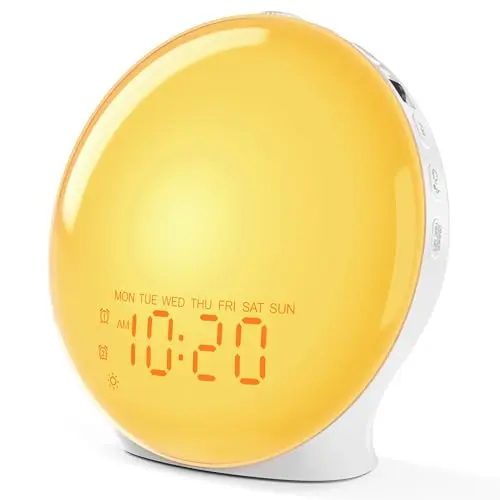
K8 – Full-Screen Sunrise With 25 Sleep Sounds
The K8 is a sunset-to-sunrise wake-up light with a 5W Bluetooth speaker built in, aimed squarely at people who sleep through ordinary alarms. The front panel glows from dark to full brightness over 10 to 60 minutes before your set time, and it doubles as a sound machine with 25 nature sounds and white noise. Dual alarms with weekday and weekend routines make it a workable fit for couples on different schedules.
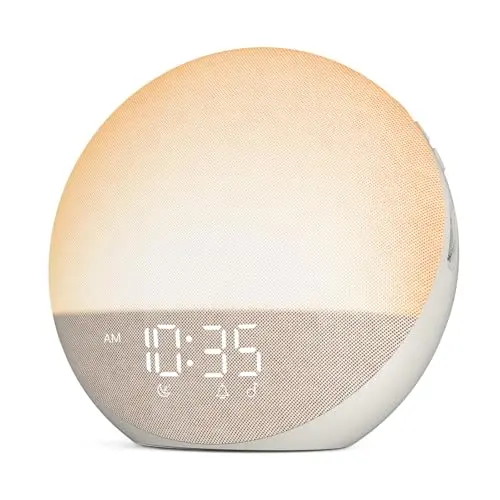
H03 – Sunrise Simulator Built Around Sound
The H03 combines a 5 to 60 minute sunrise simulation with a 25-sound library that spans white, pink, brown, and blue noise alongside waves and rain. A 5W stereo speaker streams from your phone, the display dims fully to black, and the night light offers a dozen colors including a sunset tone. Physical buttons and dials mean setup happens on the device, not in an app.

UE268S – White Noise Hub With 10W Audio
This is the sound-first option: a 10W stereo Bluetooth speaker paired with 21 soothing sounds, a fully dimmable display, and a 10W wireless charging pad for your phone. Eight alarm tones range from birds and waves to piano, and the sleep timer covers everything from a short wind-down to an all-night run.
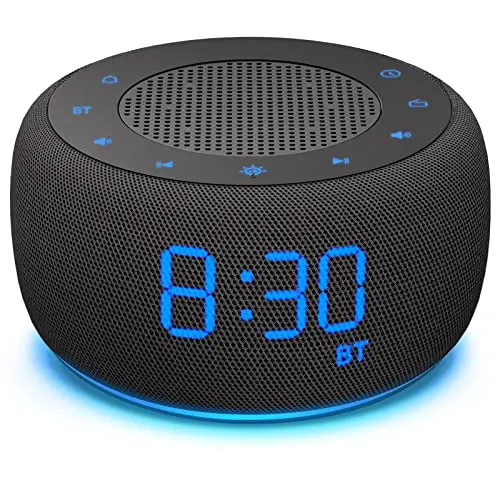
RS11 – Compact Clock Radio With Bluetooth
A deliberately small, plug-in bedside clock that bundles an alarm, FM radio, and Bluetooth speaker without trying to be a light show. Wake tones are nature and piano sounds that rise in volume, the display dims from 0 to 100 percent, and a soft bottom glow gives you enough light to navigate at night. The footprint is tiny.
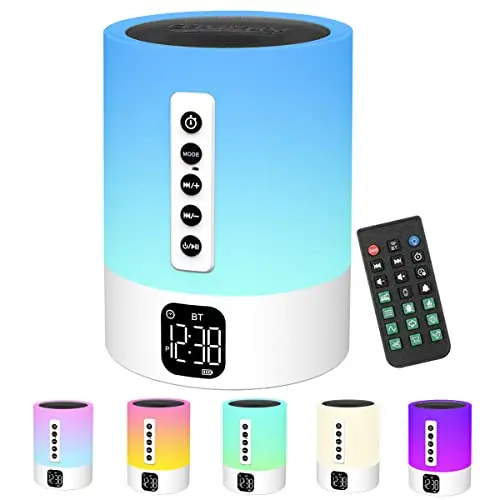
DY29S – All-in-One Night Light and Speaker
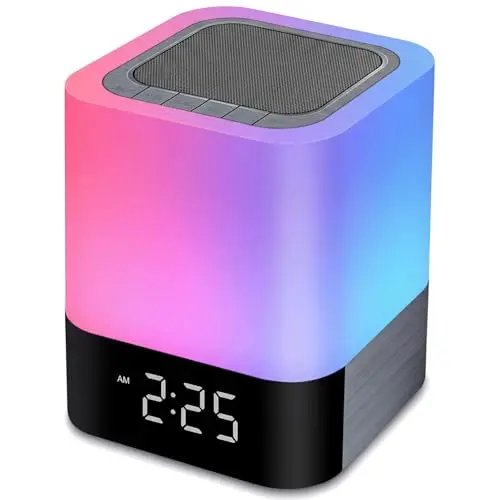
The DY29S squeezes five jobs into one small cylinder: Bluetooth 5.0 speaker, white noise machine with 15 sound options, touch bedside lamp, digital alarm, and a hands-free speakerphone. The 8W speaker is the most powerful of the lamp-style clocks here, and 48 multicolor lighting modes react to your music. It runs on a rechargeable battery, so it can move around the house.
DY28P – Color-Changing Lamp Speaker Clock
The DY28P is the budget-friendly entry into the lamp-speaker-clock format, with a 5W Bluetooth speaker, 48 LED light modes, a three-level warm lamp, and a 4000mAh battery rated for weeks of standby. Alarms include a snooze you trigger by tapping the top once, with a double tap to stop it entirely.
How We Evaluated These Alarm Clocks with Bluetooth Speakers
We didn’t run these clocks on a lab bench or measure speaker output with a sound meter. What we did: cross-referenced 6 alarm clocks with Bluetooth speakers from 5 distinct brands across 6 decision axes – audio capability, alarm reliability and scheduling depth, sunrise and light quality, setup friction, bedside footprint, and power behavior. We triangulated published specifications, feature sets, and owner feedback where available, then mapped each model against the bedside routines it claims to serve.
The scoring framework weighted real-world bedside fit (70%) – whether the alarm fires, whether the display dims low enough to sleep beside, and whether you’d actually stream through the speaker – against feature differentiation (30%) – sunrise simulation design, noise library breadth, nightlight flexibility, and unusual additions like wireless charging or a 10W driver. We audited spec sheets for every model and pressure-tested marketing claims against what the hardware can plausibly deliver.
We have no commercial relationship with any of these brands; recommendations track fit and differentiation, not brand preference. A note on limits: we didn’t measure light output or decibel levels, and we didn’t live with each clock for months. The verdicts rest on specification audits and where the design choices point. If you want the most complete sunrise-and-sound package, the JALL K8 is our default; if audio quality is the deciding factor, the UE268S makes the stronger case.
How to Choose the Right Alarm Clock With Bluetooth Speakers
1. What a Good Alarm Clock With a Bluetooth Speaker Actually Needs
Start with the part nobody advertises: an alarm that fires every time. A bedside device that fails at 6:50 a.m. is worthless no matter how many lighting modes it lists, and alarm programming and reliability are the recurring weak spots in this format. Look for clear, labeled controls or a weekday/weekend schedule you can verify at a glance.
The second requirement is a display that dims to near-black. A clock bright enough to read from across the room at midnight will cost you sleep. Third is honest audio: a 5W speaker is fine for a podcast at bedside volume, while 8W to 10W is what you want if music is the point.
2. Sunrise Simulation: Where the Money Actually Goes
Sunrise alarms brighten over a 5 to 60 minute ramp before your set time. The details that matter are light coverage and minimum brightness: a full front panel spreads light across the room, while a small ring mostly lights the wall behind the clock. Adjustable ramp speed matters more than raw brightness.
Also check whether the sunrise can run silently. If you share a bed with someone on a different schedule, a light-only wake is the difference between a useful device and a nightly argument.
3. Speaker Wattage, Sound Libraries, and White Noise Reality
Wattage is a rough proxy, not a guarantee, but here’s the honest range in this category: most lamp-style hybrids sit at 5W, the loudest lamp hybrid runs 8W, and the best audio lands at 10W stereo. If you want music rather than spoken-word podcasts, the UE268S is the model that clears that bar.
Noise libraries get marketed by count, which is a poor measure. What matters is whether the options are distinct textures – white, pink, and brown noise are meaningfully different for sleep, while twelve variations on the same rain loop are not. A real sleep timer beats three extra sounds.
4. JALL K8 vs Odokee H03: Two Ways to Build a Sunrise Alarm
These two sit closest together on paper and diverge in practice. The JALL K8 pairs a full-screen panel with a 25-sound library, dual weekday/weekend alarms, and FM radio, which makes it the better fit for heavy sleepers and anyone who wants a radio alarm back.
The Odokee H03 goes the other direction: three wake modes including light-only, a deeper noise palette with pink and brown noise, and a 12-color night light. Choose it if a silent sunrise and wind-down lighting matter more than radio.
5. Touch Panels vs Buttons: Where Setup Frustration Comes From
The most common regret in this category isn’t sound – it’s programming friction. Touch tops look clean and work well for switching lamp modes, but they’re a poor interface for setting an alarm time. Physical labeled buttons or a dial are the safer bet if you reset alarms weekly.
Also confirm whether the clock needs an app or Wi-Fi. The better bedside devices here are configured entirely on-device, which means nothing breaks when your router does.
6. Budget, Mid-Range, and Premium Tiers in Bedside Clocks
At the budget tier, you get a compact clock radio with Bluetooth, a dimmable display, and a small speaker – enough for most people, and the RS11 is the clearest example here. The mid-range step adds sunrise simulation, larger sound libraries, and noticeably better speakers.
The premium tier buys the deepest noise palettes, the fullest light panels, and extras like wireless charging or double the speaker power. Those additions are worth it only if you’ll use them nightly – a charging pad you never touch is just a heavier clock.
Frequently Asked Questions
1. Do alarm clocks with Bluetooth speakers actually sound good enough for music?
For spoken word, sleep sounds, and quiet playlists, yes. Beyond that it depends on the driver. Most lamp-style hybrids run 5W, which is comfortable at arm’s length and thin across a room. The 8W hybrids add headroom, and the 10W stereo option in this lineup – the UE268S – is the one we’d choose for actual listening.
If audio quality is your priority, budget for the higher-wattage tier rather than the prettier light show.
2. What's the difference between the JALL K8 and the Odokee H03?
Both are sunrise clocks with real speakers, but they optimize differently. The JALL K8 leans on a full-screen light panel, dual weekday/weekend alarms, FM radio, and a 25-sound library – the better fit for deep sleepers and radio people. The Odokee H03 offers three wake modes including a silent light-only sunrise, a deeper noise palette with pink and brown noise, and a 12-color night light.
Pick the K8 for wake force, the H03 for tunability and shared-bedroom manners.
3. Which option suits a very small nightstand?
Footprint is where compact models win. The BUFFBEE RS11 is a 3-inch display clock radio with Bluetooth and FM, and it sits easily on a narrow shelf or dorm desk. The Biseoamz DY29S is a taller cylinder that adds a touch lamp and 48 light modes – more fun, more surface area.
If space is the constraint, take the clock radio. If you want the light show too, take the cylinder.
4. Is sunrise simulation worth stepping up for?
If you wake before daylight for half the year, yes. A gradual light ramp is the feature people point to as the reason mornings stopped being miserable. If you wake after sunrise or sleep in a bright room, the effect is muted.
In that case a basic clock radio with Bluetooth covers the same job, and the premium tier mostly buys features you won’t notice.
5. Do these clocks need an app or Wi-Fi to work?
The strong options here are configured on the device. The Odokee H03 and BUFFBEE RS11 rely on physical buttons or dials, and the JALL K8 uses Bluetooth time sync while still setting alarms locally. That matters: a clock that depends on your phone or router is a clock that can fail when those do.
Final Verdict
For most people, the JALL K8 is the answer: a visible full-screen sunrise, a 25-sound library, dual weekday/weekend alarms, and a speaker that handles a podcast without complaint. It’s the most complete bedside device here, and the programming quirks are a one-time tax.
If audio is your priority, the UE268S doubles the speaker power and adds wireless charging. If you share a bed or want a silent sunrise, the Odokee H03 gives you light-only waking plus the deepest noise palette. And if you just want a small, dimmable clock that streams, the BUFFBEE RS11 does that for the least money.
