
Best All Season Comforters For Hot Sleepers – 2026 Reviews

Hot sleepers know the trap: a comforter labeled all-season can still turn into a sauna by 2 a.m. The best all-season comforters for hot sleepers solve a narrower problem-keeping enough loft for cool months without trapping heat when the bedroom warms up.
Two things separate the good options from the mediocre ones. First is breathability in the fill-and-shell combo; second is warmth-to-weight ratio, or how much warmth you get without a heavy, heat-trapping drape. Cooling fabrics can help, but construction and fill distribution matter just as much.
We looked across major brands to find comforters that make sense for people who run hot but still want a year-round layer. Some prioritize cool-to-the-touch fabric, some lean on breathable natural fill, and others win on simple, lightweight down alternative construction. Here’s how they compare.
Best All Season Comforters for Hot Sleepers – 2026 Reviews
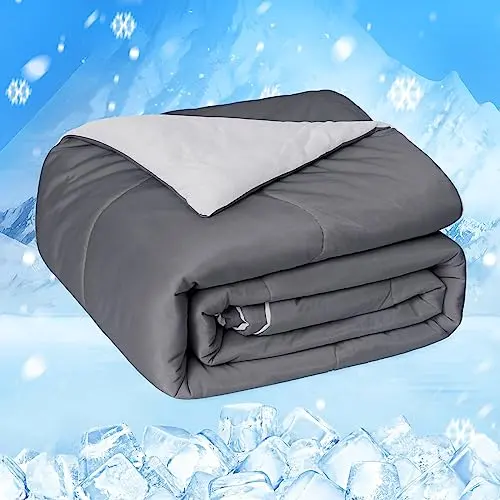
Cooling Comforter – Q-Max 0.45 for Hot Sleepers
A cooling-first comforter for hot sleepers who still want an all-season layer. The double-sided cooling fabric is paired with a lightweight fill and single-needle quilting to keep the filling from shifting.
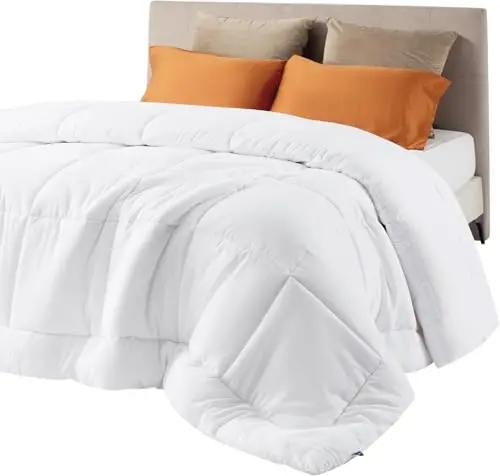
Down Alternative Comforter – Hotel-Style All-Season Comfort
Bedsure’s down alternative comforter is the middle path: enough loft for cool rooms, but a lightweight enough hand for people who overheat. Box stitching and corner tabs make it easy to use with or without a duvet cover.

All-Season Cooling Duvet Insert – Breathable Year-Round Fill
A budget-friendly cooling duvet insert that aims to stay breathable year-round. The box-stitched build and corner tabs keep the fill in place, and the whole thing is machine washable.
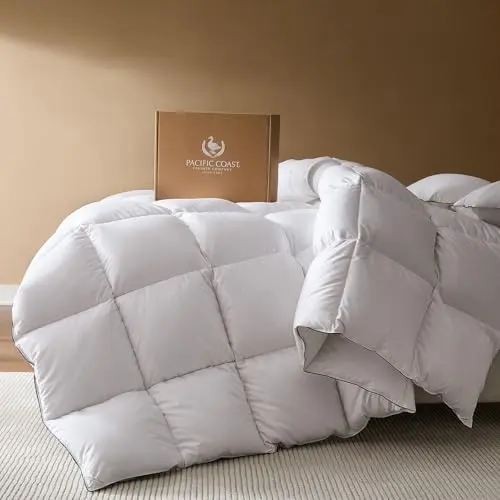
Goose Down Fiber Comforter – Baffle-Box Hotel Luxury
A premium down fiber comforter with a breathable cotton-blend shell and a 3D baffle-box build. It’s aimed at hotel-style loft without the heavy, heat-trapping feel hot sleepers dislike.
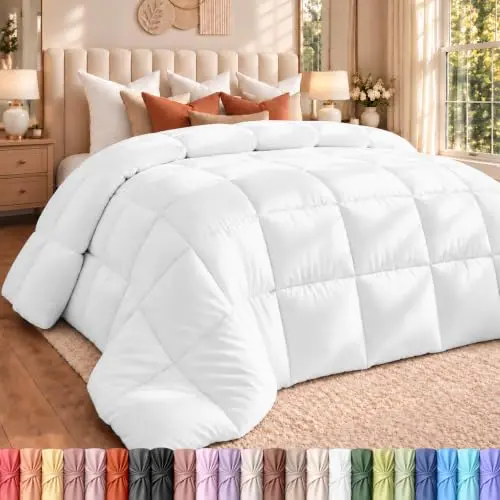
Duvet Insert King – Lightweight All-Season Warmth
A straightforward down alternative comforter with a lightweight feel and a low-maintenance machine-washable build. The box stitching and corner tabs keep it practical as a duvet insert.

Goose Feather Down Fiber Comforter – Breathable Hotel Luxury
A cotton-shell comforter filled with goose feather fiber and down fiber. The all-season medium-warmth version is the one Serta points hot sleepers toward, and the sewn-through boxes keep the fill distributed.

4D Spiral Fiber Comforter – Lightweight All-Season Fill
A lightweight down alternative comforter using 4D spiral fiber fill and baffle-box stitching. It’s designed to deliver down-like warmth without the bulk that can trap heat.
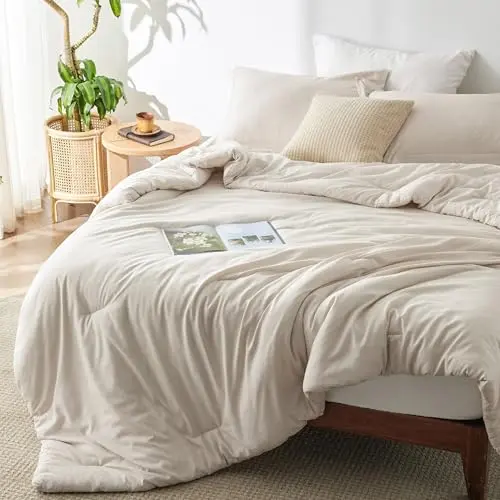
Cationic Dyed Comforter Set – Breathable Bedroom Refresh
A three-piece comforter set with a brushed microfiber shell and a soft heathered finish. It’s lightweight enough for year-round use and includes matching pillow shams.
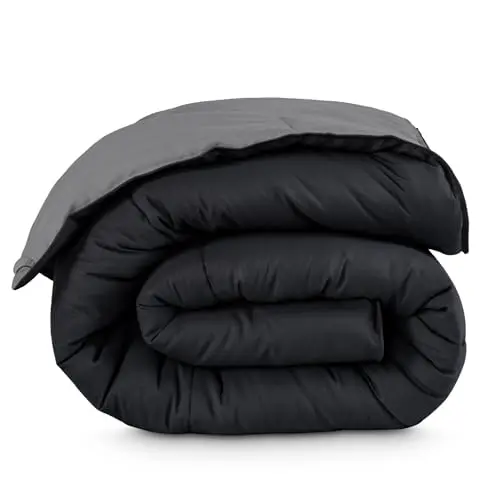
Reversible Comforter – Two-Tone All-Season Softness
A reversible microfiber comforter with a brushed, ultra-soft hand and a two-tone look. The down alternative fill is designed for all-season use, with loops for duvet-cover pairing.
How We Evaluated These All Season Comforters for Hot Sleepers
We didn’t run controlled thermal-resistance tests or multi-week sleep trials. What we did: cross-referenced 9 comforter models from 8 brands across 6 decision axes – fabric and fill breathability, warmth-to-weight balance, fill stability, cooling technology where applicable, size and duvet compatibility, and care requirements. We triangulated published specifications, feature sets, aggregated owner feedback where available, and use-case fit for hot sleepers who still want an all-season layer. We also mapped each option against representative buyer profiles: night sweaters in air-conditioned bedrooms, hot sleepers in mild climates, and shoppers who want a natural down alternative.
The scoring framework weighted real-world fit for hot sleepers (70%) – how well each comforter balances breathability with enough warmth for year-round use – against feature differentiation (30%) – cooling fabrics, baffle-box construction, loop systems, and other details that separate one model from another. We audited care labels and sizing language, and we weighed how each comforter behaves as both a standalone blanket and a duvet insert. Where cooling fabric was claimed, we checked the published Q-max spec and how the shell was described rather than treating cooling as a marketing label. We have no commercial relationship with any of the brands featured; recommendations track fit and differentiation, not brand preference. If your priority is active cooling, the HOMFINE Cooling Comforter is the most direct match; if you want a more traditional all-season comforter feel, the Bedsure Down Alternative Comforter is the better route.
How to Choose the Right All Season Comforters for Hot Sleepers
1. What All-Season Really Means for Hot Sleepers
All-season is a range, not a promise. For a hot sleeper, the useful definition is a comforter that adds a light layer in summer and can be paired with a warmer duvet cover in winter-not one that claims to replace every blanket you own. The best all-season comforters for hot sleepers lean toward lightweight loft and breathable shells, with enough fill to avoid feeling like a sheet but not so much that heat pools under the covers.
That balance is why a dedicated cooling comforter and a traditional down alternative can both make sense. The first prioritizes surface cooling; the second prioritizes a familiar comforter feel. Your sleep temperature, bedroom climate, and whether you use air conditioning matter more than the label.
2. Breathability Comes From the Fill and Shell, Not Just the Label
A breathable comforter starts with the shell fabric. Cotton and cotton-blend shells tend to feel airier than dense microfiber, while brushed microfiber can feel softer but trap more heat. The fill material matters too: down fiber and feather fiber can have a dry, airy quality, while polyester down alternative varies widely by fiber shape and loft.
For hot sleepers, look for lightweight warmth rather than thick bulk. If you want a traditional comforter that won’t sleep like a winter duvet, the Bedsure Down Alternative Comforter is a balanced example; it has enough loft for cool rooms without the heavy hand of a cold-weather comforter.
3. Cooling Tech and Q-Max: What Hot Sleepers Should Know
Q-max is a measure of how cool a fabric feels on contact. A higher Q-max generally signals a stronger immediate cooling sensation, though it doesn’t tell you how breathable the comforter is over a full night. The HOMFINE Cooling Comforter uses a published Q-max 0.45 fabric on both sides, which is a useful benchmark if you want a cool-to-the-touch surface.
Cooling fabric is not magic. It works best in a room that isn’t already overheated, and it doesn’t replace breathable fill or a sensible warmth-to-weight ratio. Think of it as one layer of the solution, not the whole solution. If night sweats are your main issue, the HOMFINE Cooling Comforter is the most direct match in this lineup.
4. Warmth-to-Weight Ratio: Why Loft Matters More Than Bulk
The warmth-to-weight ratio is the quiet spec that separates a comforter you can use year-round from one that only works in winter. A high-loft fill can trap warmth with less weight, while a dense, heavy fill can feel hotter even if the comforter isn’t especially thick. For hot sleepers, lightweight loft is usually more comfortable than a heavy, weighted feel.
Box stitching and baffle-box construction also matter because they keep the fill from migrating into cold spots and hot spots. If you want a budget-friendly option with a breathable, lightweight fill, the COHOME All-Season Cooling Comforter is a sensible starting point.
5. Pacific Coast vs Serta: Down Fiber Comforters for Hot Sleepers
Both the Pacific Coast and Serta comforters use goose feather and down fiber, but they’re built differently. The Pacific Coast Goose Down Fiber Comforter uses a 3D baffle-box design and a cotton-blend shell, with eight corner and center loops for a secure duvet-cover fit. It’s the more premium construction and feels airier for a hot sleeper who wants natural fill.
The Serta uses a 100% cotton shell and sewn-through box construction, with a medium-warmth fill that Serta recommends for hot sleepers. It’s a good middle ground, but it’s dry-clean only and has a more noticeable rustle. Choose Pacific Coast for loft and baffle-box stability; choose Serta if you want a cotton shell at a lower premium tier.
6. Construction, Care, and Duvet Compatibility
Look for corner tabs or loops if you plan to use the comforter inside a duvet cover. Four loops are common; eight loops or corner-and-center tabs keep the insert more stable. Box stitching keeps the fill evenly distributed, while baffle-box construction adds more loft and reduces shifting.
Care is the other practical filter. Machine-washable comforters are easier for year-round use, especially if you have pets or allergies. Down fiber and feather fiber comforters often require dry cleaning or spot cleaning, which is a real ownership cost. Check the care label before you commit, and size up if you have a deep mattress or use an oversized duvet cover.
Frequently Asked Questions
1. What should a hot sleeper look for in an all-season comforter?
Start with breathable shell fabric, a lightweight fill, and a warmth-to-weight ratio that won’t trap heat. A box-stitched or baffle-box build helps keep the fill evenly distributed, and corner loops matter if you use a duvet cover. Cooling fabric can help, but it’s not a substitute for good airflow in the room.
2. Are cooling comforters actually good for hot sleepers?
They can be, especially if you overheat quickly and want a cool-to-the-touch surface. The HOMFINE Cooling Comforter uses a published Q-max 0.45 fabric and a lightweight polyester fill, which makes it a more targeted choice than a standard down alternative. Just don’t expect cooling fabric to overcome a warm room or a heavy duvet cover-breathability still comes from the whole setup.
3. What's the difference between the HOMFINE Cooling Comforter and the Bedsure Down Alternative Comforter?
The HOMFINE is built around active surface cooling, with a double-sided cool fabric and a lighter, flatter hand. The Bedsure Down Alternative Comforter is a more traditional all-season comforter with box-stitched loft and eight corner tabs, so it feels more like a hotel duvet. Choose HOMFINE for night sweats; choose Bedsure for a familiar comforter feel with better breathability than a winter-weight duvet.
4. How does the Pacific Coast Goose Down Fiber Comforter compare with the Serta Goose Feather Down Fiber Comforter?
The Pacific Coast uses a 3D baffle-box build, a cotton-blend shell, and eight loops for a more premium, stable duvet insert. The Serta uses a 100% cotton shell and sewn-through boxes, with a medium-warmth fill that Serta positions for hot sleepers. Pacific Coast is the airier, more luxurious option; Serta is the lower-premium pick, but it’s dry-clean only and has a noticeable rustle.
5. Can an all-season comforter work in summer without air conditioning?
It can, but you’ll want a lightweight comforter with a breathable shell and a low-bulk fill. In a warm, humid room, a cooling fabric or a down alternative with good airflow will feel better than a dense down or feather comforter. If you sleep hot without air conditioning, treat the comforter as a light layer and add a fan or breathable bedding underneath.
Final Verdict
For most hot sleepers, the HOMFINE Cooling Comforter is the answer. It’s the only pick here built around active cooling, with a cool-to-the-touch fabric and a lightweight fill that won’t turn your bed into a sauna. If you want a more traditional comforter feel, the Bedsure Down Alternative Comforter is the best all-season balance-enough loft for cool rooms without the heat trap of a winter duvet.
On a tighter budget, the COHOME All-Season Cooling Comforter gets you a breathable, lightweight duvet insert for less. And if you want natural down fiber with hotel-level loft, the Pacific Coast Goose Down Fiber Comforter is the premium pick, provided you’re okay with dry cleaning. Start with HOMFINE for night sweats, Bedsure for a classic feel, COHOME for value, and Pacific Coast for luxury.
