
Best Allergy Pillow Cases – 2026 Reviews

A pillow should be the most restful thing in your bedroom, not the reason you wake up congested. Allergy pillow cases are the unglamorous layer that makes the difference: they sit under your regular pillowcase and try to keep dust mites, dander, pollen, and other triggers from settling into the pillow itself.
The best allergy pillow cases are not just tightly woven labels. The meaningful differences show up in the barrier design, the zipper and seam coverage, and whether the fabric stays breathable enough that you actually keep using it. A cover that seals well but sleeps hot or crinkles usually gets abandoned.
We looked across brands and price tiers to find covers that balance allergen blocking with real-world comfort. Some prioritize cotton breathability, some add waterproof membranes, and some are built for bed bugs and spills as much as allergies. The right pick depends on your main trigger and how many pillows you need to protect.
Best Allergy Pillow Cases – 2026 Reviews
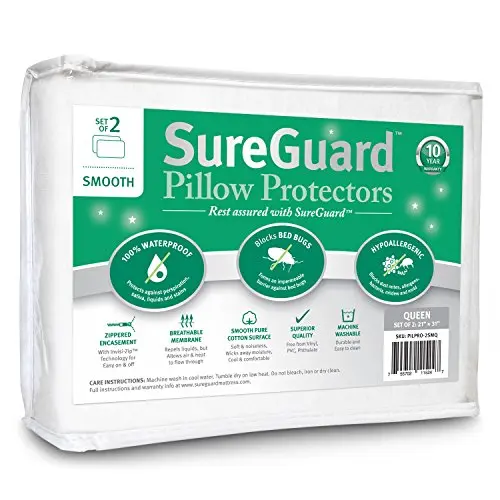
Premium Cotton Pillow Protectors – Waterproof Allergy Defense
A premium cotton pillow protector set with a waterproof backing, fine zipper, and GREENGUARD Gold certification. It is built for allergy-sensitive sleepers who also want bed-bug and spill protection.
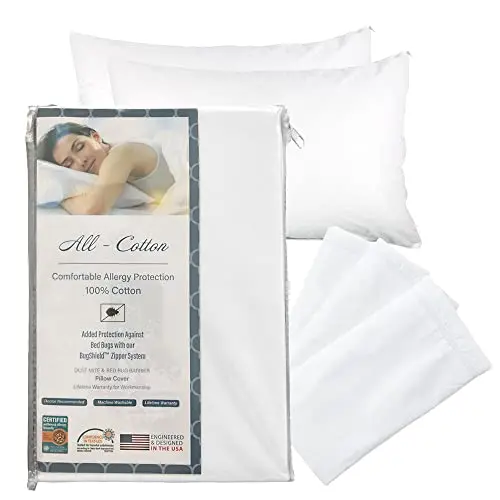
100% Cotton Pillow Protectors – Certified Allergy Barrier
A 100% cotton, AAFA-certified pillow protector with a tightly woven 2.6-micron barrier. It prioritizes breathability and dust-mite defense rather than waterproofing.
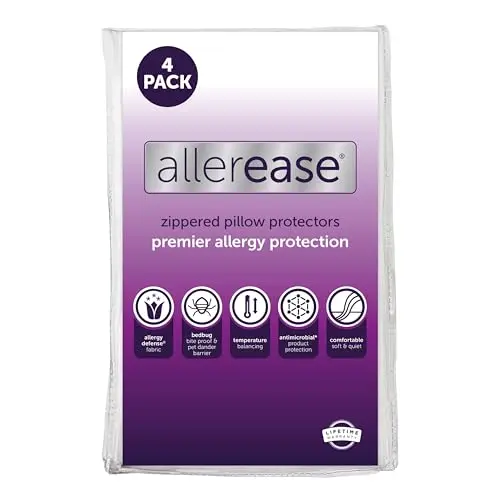
Premier Zipper Pillow Protector – Temperature-Balancing Allergy Cover
A four-pack of soft, zippered allergy pillow protectors with temperature-balancing fabric. A good fit for households that want breathable allergen protection across multiple pillows.
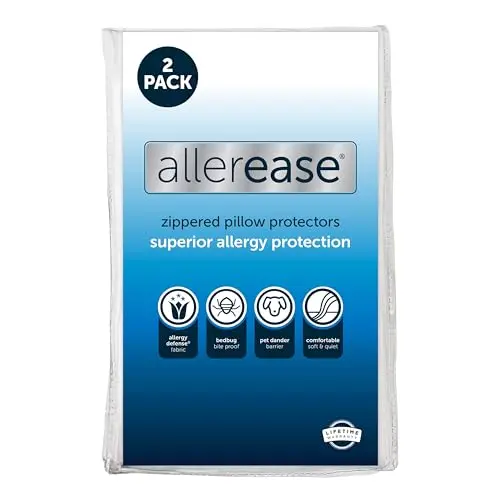
Allergy Pillow Protector – Allergist-Recommended Budget Pick
An allergist-recommended two-pack with tightly woven fabric and a quiet feel. The budget-friendly choice for basic dust and allergen protection, without waterproofing.
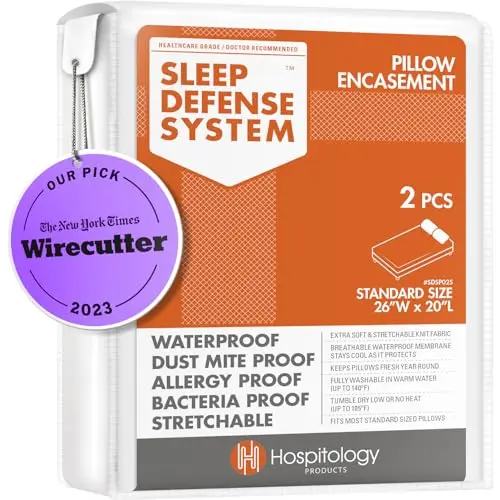
Sleep Defense System Pillow Encasement – Waterproof Bed Bug Barrier
A waterproof zippered encasement sold as a two-pack. It is aimed at spills, bed bugs, and dust mites, with a soft knit surface that works well over memory foam.
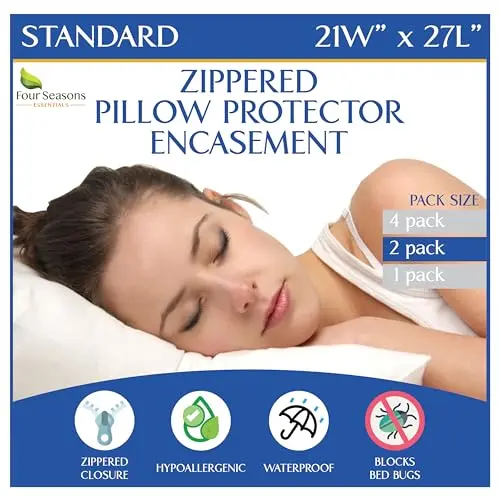
Zippered Pillow Protectors – Waterproof Hypoallergenic Set
A two-pack of zippered standard pillow protectors with a polyurethane waterproof lining. They are designed to be soft and noiseless while blocking liquids and allergens.
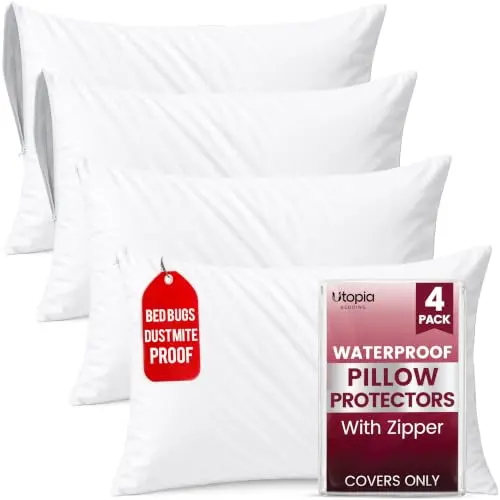
Ultimate Comfort Pillow Protectors – Waterproof Dust Mite Defense
A four-pack of queen-size waterproof pillow protectors with a soft jersey surface. They combine dust-mite and bed-bug protection with easy machine washing.
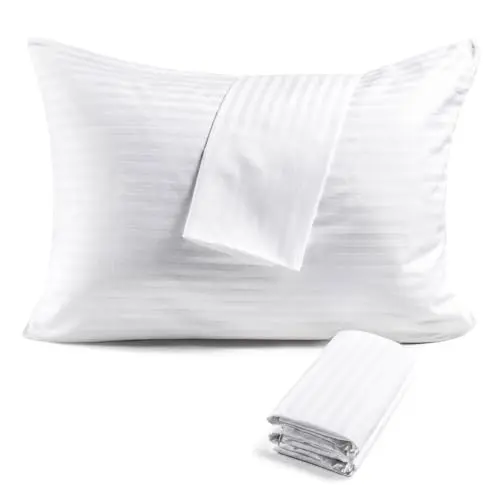
600TC Cotton Pillow Protectors – Hotel-Grade Breathable Covers
A four-pack of 600-thread-count cotton pillow protectors with OEKO-TEX certification. These are hotel-soft, breathable covers for shoppers who prefer cotton over waterproof membranes.
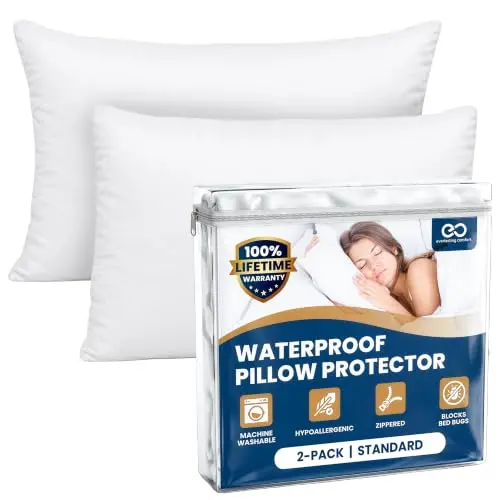
Waterproof Pillow Protectors – Breathable Zippered Set
A two-pack of breathable, waterproof standard pillow protectors with a secure zipper. They are simple, quiet covers for everyday moisture and stain protection.
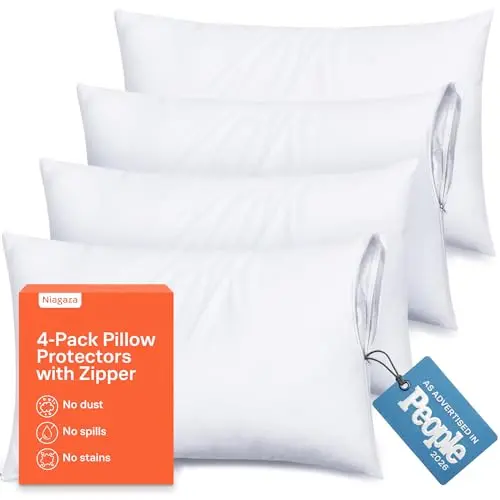
Ultra Soft Pillow Protectors – Microfiber Dust Protection
A four-pack of soft microfiber pillow protectors with an auto-lock zipper. They focus on dust protection and easy care rather than waterproof or certified allergy blocking.
How We Evaluated These Allergy Pillow Cases
We did not run lab allergen-penetration tests or sleep on these covers for a full allergy season. What we did: cross-referenced 10 allergy pillow case models from 9 distinct brands across six decision axes – allergen-barrier construction, fabric and breathability, waterproofing, fit and size range, zipper security, and care or warranty terms. We triangulated published specifications, feature sets, and owner feedback where available, then mapped each option to common sleeper profiles: dust-mite-focused, hot-sleeping, spill-prone, and multi-bed households.
The scoring framework weighted real-world fit (70%) – how well each cover matches its intended allergy or protection job – against feature differentiation (30%) – certified barriers, waterproofing, temperature control, and zipper design. We also audited certification claims and care instructions, because an allergy cover only works if it survives repeated washing and seals properly. We have no commercial relationship with any brand here; recommendations track fit and differentiation, not brand preference.
If dust mites are the main trigger, the National Allergy 100% Cotton Pillow Protectors are the most purpose-built option; if you want one cover that also handles spills and bed bugs, the SureGuard Pillow Protectors are the stronger all-rounder. A few things we can’t tell you: we did not measure airflow or run repeated wash cycles. What we can tell you is which barrier design, closure, and fabric story holds up best against published specs and owner reports.
How to Choose the Right Allergy Pillow Cases
1. What Makes a Pillow Case Truly Allergy-Friendly
An allergy pillow case is a barrier, not just a spare pillowcase. The useful ones rely on full encasement, a tight weave or membrane, and a closure that stays shut. Dust mites and dander are small enough that seams and zipper gaps matter, which is why a certified cover beats a loosely woven decorative sham.
Look for explicit dust mites language, not just soft or breathable. Certifications such as AAFA certification are helpful because they signal third-party review of the allergen-barrier claim. If dust mites are your main trigger, the National Allergy 100% Cotton Pillow Protectors are the most purpose-built pick in this lineup.
2. Weave, Fabric, and Breathability in Allergy Pillow Cases
Fabric choice changes how the cover feels and how well you sleep. A 2.6-micron weave is a pore-size claim, not a thread-count flex, and it is the kind of spec that matters for dust-mite defense. Breathable cotton tends to preserve pillow feel, while polyester and microfiber can feel smoother or more plastic-like depending on the finish.
High thread count alone is not a guarantee. A dense cotton can still be comfortable, but check whether the brand explains pore size or just advertises a number. For hot sleepers, airflow is the difference between a cover you keep and one you strip off at 2 a.m.
3. Waterproof vs. Breathable Allergy Pillow Cases
Waterproofing is useful for spills, sweat, pets, and bed bugs, but it is not automatically better for allergy comfort. A waterproof membrane can block liquids and allergens, yet some sleepers notice trapped heat or a slight crinkle. Breathable cotton covers skip the liquid barrier and focus on dust-mite filtration instead.
If you need both, look for a cover that pairs a quiet surface with a sealed backing. The SureGuard Pillow Protectors are the strongest premium example here: cotton on top, waterproof protection underneath, and a fine zipper. For bed bugs or accident-prone households, that combination is worth the tradeoff.
4. Zipper Security and Full Encasement Matter
A zipper is the weak point on any encasement. An auto-lock zipper helps prevent the slider from drifting open, while a fabric shield under the closure reduces the gap at the seam. A cover that seals on three sides but leaves a loose zipper is only doing part of the job.
Check where the zipper sits, too. A side or hidden zipper is less noticeable under a pillowcase, but it still needs to close fully. If the zipper feels fragile out of the package, treat that as a real warning sign.
5. Size, Fit, and Care for Allergy Pillow Cases
Measure your pillow before buying. A standard-size fit usually lands around 20 x 26 or 21 x 27 inches, while queen covers run larger. A roomy cover can accommodate a lofty pillow, but too much slack can bunch under the case. Check the care label as well: a machine washable cover is only useful if you will actually wash it often.
For a budget multi-pillow setup, the AllerEase Allergy Pillow Protector is the easy add-on. It is not waterproof, but it keeps the cost low and carries allergist-recommended positioning.
6. National Allergy vs. SureGuard: Which Allergy Pillow Case Fits Your Bed?
National Allergy and SureGuard approach the category from opposite directions. National Allergy leans on a breathable cotton barrier and a tight pore size; SureGuard adds waterproof protection and bed-bug sealing on top of a cotton surface. If your main issue is waking up congested, the cotton-first cover may feel easier to live with. If your bed also hosts kids, pets, or spills, the sealed cover is more versatile.
Neither is the right answer for every sleeper. The best allergy pillow case is the one whose barrier, fit, and feel match your actual bedroom, not the one with the longest feature list.
Frequently Asked Questions
1. What makes a pillow case genuinely allergy-friendly?
A real allergy pillow case needs full encasement, a tight weave or membrane, and a closure that seals the pillow completely. Look for certified allergen testing or clear dust-mite language, plus a secure zipper. Breathability matters too, because a cover that sleeps hot often ends up unused.
2. Are waterproof allergy pillow cases breathable enough for hot sleepers?
Some are, but it depends on the membrane. A waterproof membrane can trap heat, while a tight breathable cotton cover usually feels cooler but will not block spills. If you sleep hot, prioritize a cover with a quiet, moisture-wicking surface and accept that trapped heat is the tradeoff for liquid protection.
3. National Allergy vs. SureGuard: which allergy pillow case is better for dust mites?
For pure dust-mite defense, the National Allergy 100% Cotton Pillow Protectors are the more targeted choice. Their 2.6-micron weave is built around a small pore size, they are AAFA certified, and they stay breathable without a plastic liner. The SureGuard Pillow Protectors add waterproof protection, bed-bug sealing, and GREENGUARD Gold certification, so they are better if your pillow also faces spills or pests. Choose National Allergy for breathable dust-mite filtration; choose SureGuard for broader protection.
4. Utopia Bedding vs. Hospitology: which waterproof pillow protector is the better value?
Utopia Bedding wins on four-pack value and queen-size coverage, and its TPU barrier targets spills plus dust mites and bed bugs. Hospitology is a more standard-size encasement with a soft knit feel and a side zipper that stays flat, which suits memory foam pillows. If you are protecting a queen bed or multiple pillows, Utopia is the practical buy; if you want a standard-size waterproof workhorse, Hospitology is the quieter choice.
Final Verdict
For most people, the SureGuard Pillow Protectors are the allergy pillow case to buy – the cotton surface stays quiet, the waterproof backing handles real-life messes, and the sealed zipper addresses dust mites and bed bugs. If your priority is pure dust-mite defense without a membrane, the National Allergy 100% Cotton Pillow Protectors are the more breathable specialist. Budget shoppers protecting a couple of standard pillows should look at the AllerEase Allergy Pillow Protector; it keeps costs low while still carrying allergy credibility. And for queen beds or family use, the Utopia Bedding Ultimate Comfort Pillow Protectors deliver waterproof, dust-mite-focused coverage across a four-pack. Start with the barrier that matches your main trigger – dust, spills, bed bugs, or hot sleeping – and you will end up with a cleaner pillow and fewer morning surprises.
