
Best Android Alarm Clocks – 2026 Reviews

Your Android phone can do almost everything, but it’s not a great alarm clock. The screen is too bright, the snooze button is too easy, and the whole setup pulls you back into notifications the moment you wake up. A dedicated bedside clock fixes that, if you choose one that fits how you actually sleep.
Android alarm clocks aren’t a special operating-system category. In practice, the useful ones fall into a few clear types: loud, shaker-style clocks for heavy sleepers; sunrise clocks that wake you with light; and nightstand clocks that add USB or wireless charging, Bluetooth audio, or app-based routines. The trick is deciding whether you need a gentler wake-up or a more forceful one.
That’s the lens we used for this market survey. We looked at how each clock wakes you, how readable it is at 3 a.m., and whether its extras genuinely simplify a bedside routine. Below are the models worth considering across the spectrum.
Best Android Alarm Clocks – 2026 Reviews
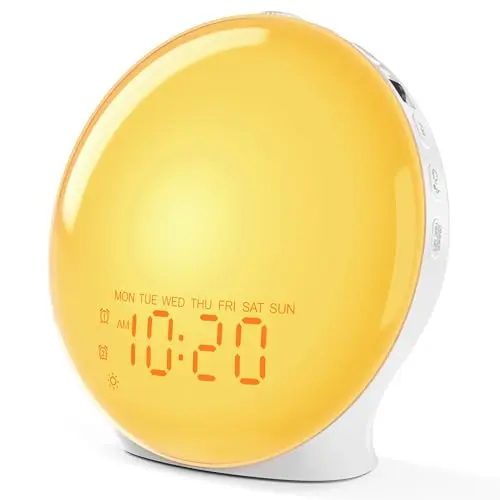
K8 Sunrise Alarm Clock – Full-Screen Dawn Simulation
The JALL K8 is a full-screen sunrise clock for people who want a gentler wake-up without giving up practical alarm features. It combines a dawn simulation, dual routines, nature sounds, FM radio, and a Bluetooth speaker in one bedside unit.
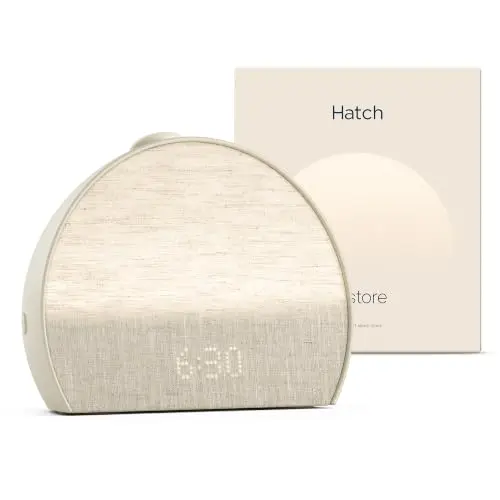
Restore 3 – App-Connected Sunrise and Sleep Audio
The Hatch Restore 3 is a premium sleep-routine device rather than a plain alarm clock. It pairs a sunrise light, white-noise machine, and app-guided bedtime content in a screen-free bedside form.
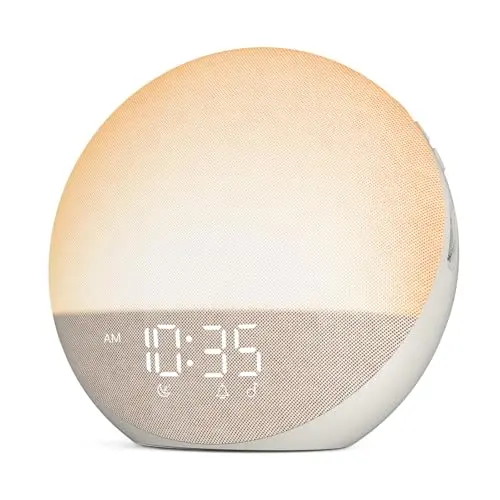
H03 Sunrise Alarm Clock – White Noise and Bluetooth
The Odokee H03 blends a sunrise alarm, white-noise machine, Bluetooth speaker, and dimmable night light into one bedside clock. It’s aimed at buyers who want gentle wake-ups plus audio without a subscription.

Sonic Bomb SBB500SS – Extra-Loud Bed Shaker Alarm
The Sonic Bomb SBB500SS is built for one job: waking people who sleep through normal alarms. It combines an extra-loud buzzer, flashing lights, and a bed shaker in a compact bedside unit.
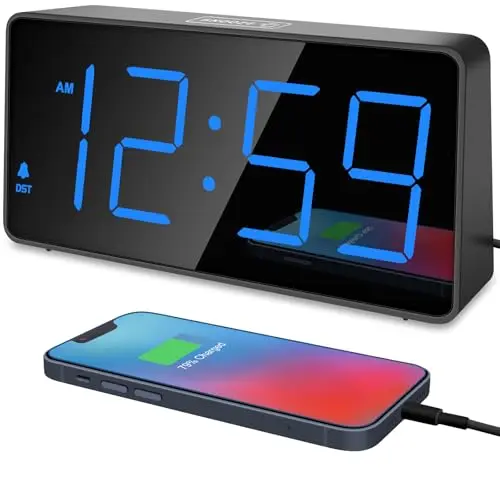
MHP6010 Digital Alarm Clock – Big Numbers and USB Charging
The Peakeep MHP6010 is a straightforward bedside digital clock with large numbers, adjustable brightness, a loud alarm, and USB charging. It focuses on the basics and keeps the price low.
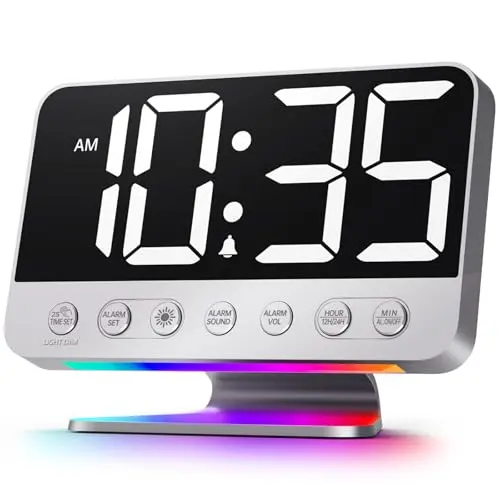
U2 Digital Alarm Clock – Bold Display and Night Light
The Odokee U2 is a compact digital alarm clock with a bold display, color night light, and a genuinely loud alarm. It’s aimed at kids, seniors, and heavy sleepers who want simple controls.
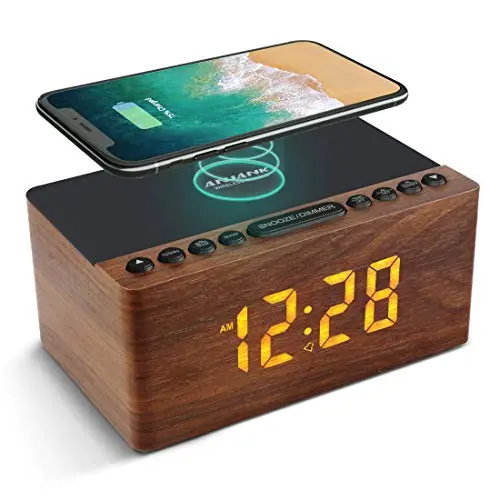
Wooden Digital Alarm Clock – Wireless Charging and FM Radio
The ANJANK wooden alarm clock combines a warm wood-style cabinet with Qi wireless charging, FM radio, and a dimmable LED display. It’s designed to clean up a nightstand while staying easy to read.

DS2203 Wooden Alarm Clock – Wireless Charging and Large Digits
The DreamSky DS2203 is a wooden digital alarm clock with a 10W wireless charging pad, USB port, large digits, and a manual DST switch. It’s a practical nightstand organizer with a furniture-like look.
How We Evaluated These Android Alarm Clocks
We didn’t sleep with each alarm clock for a month or measure sound levels in a lab. What we did: cross-referenced 8 alarm clock models from 7 distinct brands across six decision axes – wake-up style, alarm effectiveness, display readability, bedside charging, sound options, and ease of use. We triangulated published specifications, mapped feature sets, and weighed aggregated feedback where available against representative buyer profiles for this category. We also paid attention to the practical stuff that shows up after the novelty wears off: whether a display can go dark enough, whether an alarm is adjustable rather than just loud, and whether charging features actually simplify a nightstand.
The scoring framework weighted real-world fit (70%) – how well each clock delivers on its stated job, whether that’s gentle sunrise waking, heavy-sleeper reliability, or nightstand convenience – against feature differentiation (30%) – unique technical advantages and use-case specificity. We have no commercial relationship with any of the brands featured; recommendations track fit and differentiation, not brand preference. We did not run controlled dB measurements or long-term reliability trials, so our conclusions rest on published specs, feature comparisons, and the weight of available feedback. If you want the most complete subscription-free sunrise clock, the JALL K8 is the strongest all-around match. If you want app-guided routines and premium sleep audio, the Hatch Restore 3 is the more specialized pick.
How to Choose the Right Android Alarm Clock
1. Start With How You Wake Up, Not the Spec Sheet
The first decision is whether you want to be gently coaxed awake or forcibly pulled out of sleep. Sunrise alarm clocks brighten gradually and add soft sounds, which suits light sleepers and people who hate jarring beeps. Heavy sleepers often need the opposite: a loud alarm, flashing lights, or a bed shaker that physically vibrates. Neither approach is better; they solve different problems.
If you share a bed, think about the other person too. A sunrise light and white noise are less disruptive than a 113 dB buzzer. If you sleep alone and routinely miss alarms, prioritize wake-up force over ambience.
2. What Android-Friendly Features Actually Matter
The phrase Android alarm clock can be misleading. Most bedside clocks don’t run Android; they simply work well alongside an Android phone. The features that matter are USB charging, Qi wireless charging, Bluetooth audio, and occasionally an app-based control layer. Those extras can replace a separate charger or speaker on your nightstand.
Don’t assume every smart-looking clock is equally useful. Wireless charging is convenient when it works, but feedback on charging reliability is mixed across this category. If charging is the main reason you’re buying, treat it as a bonus rather than the core alarm function. A clock that wakes you reliably and charges occasionally is still better than a charger that wakes you never.
3. Display Readability, Dimming, and Nighttime Comfort
A bedside clock has to be readable in the dark without lighting up the whole room. Look for large digits, a multi-level dimmer, and ideally an off setting for the display. Clocks with 2-inch numbers are easier to read from across the room, especially for seniors or anyone who wears glasses.
Light color matters too. Red or amber displays tend to be less disruptive at night than bright blue-white LEDs. If you want a sunrise clock, check whether the light can be dimmed before bed and whether the display can go fully dark. A clock that doubles as a night light is useful only if you can turn that light off.
4. Alarm Sound, Volume, and Heavy-Sleeper Needs
Volume specs can be misleading because loudness depends on tone, distance, and how deeply you sleep. A 113 dB alarm with a harsh buzzer can be more effective than a higher-rated alarm with a gentle chime. For heavy sleepers, look for adjustable volume, escalating alarms, flashing lights, or a bed shaker. The Sonic Bomb is the obvious specialist here because it combines sound and vibration; if you need that level of wake-up force, the Sonic Bomb SBB500SS is the pick.
If you’re a lighter sleeper, don’t buy the loudest clock just in case. A gentle wake-up with nature sounds or radio is easier to live with, especially if you wake before a partner.
5. Sunrise Clocks vs Traditional Alarm Clocks
Traditional alarm clocks are simple, cheap, and reliable. Sunrise clocks add a dawn simulation, often with white noise, nature sounds, and a sleep timer. The best sunrise models feel like a bedside routine device rather than a gadget. They’re especially useful in winter or in dark bedrooms where a normal alarm feels brutal.
If you want the sunrise experience without a subscription or app, the JALL K8 is the most complete option here. It combines light, sound, radio, and a Bluetooth speaker, while the Hatch Restore 3 goes further with app-guided routines for buyers who want that structure.
6. Budget, Mid-Range, and Premium Alarm Clock Tiers
At the entry level, you’re buying large numbers, a loud alarm, and basic charging. The Peakeep MHP6010 nails those basics without extras you may never use, and the Odokee U2 adds a night light for a similar budget-minded approach. Mid-range clocks add sunrise lighting, Bluetooth audio, or wireless charging. Premium models like the Hatch Restore 3 add app-based routines, richer sleep content, and a more polished bedside presence.
Spend more only when the extra feature changes your routine. A premium sunrise clock is worth it if you struggle to wake up gently; a premium charger-clock is harder to justify if charging reliability is uneven.
Frequently Asked Questions
1. Are Android alarm clocks different from regular alarm clocks?
Not in any meaningful hardware sense. An Android alarm clock is usually just a bedside clock that pairs well with an Android phone through USB charging, wireless charging, Bluetooth audio, or an app. The alarm itself runs on the clock, not on Android. If you want a clock that wakes you without pulling you into your phone, a regular digital or sunrise alarm clock is the right starting point.
2. JALL K8 vs Hatch Restore 3: Which sunrise alarm clock is better?
The JALL K8 is the better fit for most people because it delivers sunrise lighting, white noise, FM radio, and a Bluetooth speaker without a subscription. It’s more of a self-contained bedside clock. The Hatch Restore 3 is stronger if you want app-guided routines, meditations, and a more curated sleep system. Hatch also has a premium price and some features sit behind a subscription, so it makes most sense for buyers who will actually use the content. For a straightforward sunrise wake-up, go with the JALL K8; for a guided routine, the Hatch Restore 3 is the specialist.
3. Sonic Bomb vs Peakeep: Which is better for heavy sleepers?
The Sonic Bomb is the more serious heavy-sleeper tool because it adds a bed shaker and flashing lights to an extra-loud alarm. That physical vibration is the difference-maker if sound alone doesn’t wake you. The Peakeep is the better everyday clock for most people: it has a loud adjustable alarm, large digits, and a USB port without the Sonic Bomb’s single-purpose intensity. If you routinely sleep through phone alarms, choose the Sonic Bomb SBB500SS. If you just want a simple loud bedside clock, Peakeep is easier to live with.
4. Do I need Wi-Fi or an app to use an Android alarm clock?
No. Most alarm clocks in this category work entirely on their own, with physical buttons, a built-in alarm, and no network connection. Wi-Fi and apps are optional extras, mostly on premium models like the Hatch Restore 3. If you want a clock that keeps working during an internet outage, choose a standalone model with battery backup. App control is convenient, but it shouldn’t be the only way to set an alarm.
5. What should I look for in an alarm clock for a dark bedroom?
Prioritize a multi-level dimmer or an off setting so the display doesn’t light up the room. Large digits help you read the time without reaching for glasses, and a sunrise light can make dark winter mornings less jarring. If you’re sensitive to light, choose a clock whose display can go completely dark while the alarm still works. A battery backup is also worth having for power cuts.
Final Verdict
For most people, the JALL K8 is the best Android-friendly alarm clock because it covers the full routine: sunrise light, white noise, radio, and Bluetooth audio without asking for a subscription. It’s the one we’d recommend first to a friend who wants a calmer morning.
If you want a more guided sleep system, the Hatch Restore 3 is the premium pick, though its subscription and price make it a specialist choice. Budget-minded shoppers should look at the Peakeep MHP6010 for big numbers and a loud alarm without extras. And if you routinely sleep through everything, the Sonic Bomb SBB500SS is the heavy-sleeper tool to beat.
