
Best Anti Snore Pillows For Side Sleepers – 2026 Reviews

Side sleeping is supposed to be the quiet position. Then 2 a.m. arrives, you roll onto your back, your jaw settles backward, and the snoring starts – loud enough to wake the person beside you and, eventually, you. Position drift is the sneaky part. Plenty of so-called anti snore pillows are really reflux wedges aimed at back sleepers, not at someone who spends most of the night on their side and needs the airway held open in that position.
Two things separate the options that work from the ones that end up in the closet. The first is elevation – a gentle incline that keeps the upper airway from collapsing. The second is loft and neck alignment – the height and contour that stop your chin from tucking toward your chest while you’re on your side. Very few pillows handle both, and the ones that do look nothing alike: some are wedges, some are adjustable shredded-foam pillows, some are ergonomic contour shapes with cutouts for your shoulder.
We cross-shopped the category across brands and compared how each option handles those two jobs for side sleepers specifically, plus the practical stuff – cover breathability, washability, and how much tuning each one demands before it feels right. Here’s what’s actually worth buying.
Best Anti Snore Pillows for Side Sleepers – 2026 Reviews

8-Inch Memory Foam Wedge – Side-Sleeper Elevation
A wide, gently tapered wedge that lifts the upper body to help keep the airway more open, with a thick memory foam top layer and a 0.2-inch leading edge that melts into the mattress instead of digging into your side.

Signature Adjustable Pillow – Custom Loft for Side Sleepers
A shredded memory foam and down-like tuft blend you can top up or thin out with the included extra fill, so side sleepers can build the loft needed to keep the head and jaw from collapsing backward.
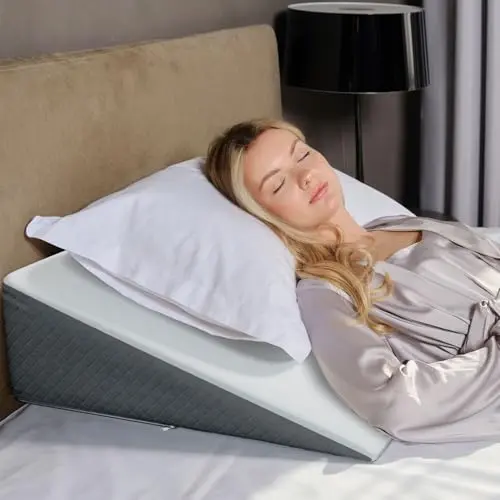
Bed Wedge Pillow 7.5-Inch – Sleep Apnea Elevation
A 24-inch wedge with a 7.5-inch rise and a plush memory foam top layer over a denser support core, built for elevation and postural alignment during sleep.
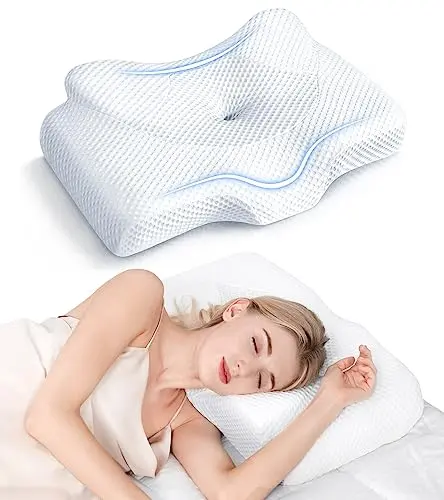
Cervical Contour Pillow – Hollow-Center Neck Support
An ergonomic contour pillow with a hollow center that cradles the head, two rotation-based heights, and a removable insert for finer loft adjustment.

Dual-Height Butterfly Pillow – Cooling Contour Support
A butterfly-shaped cervical pillow with two loft options and shoulder cutouts, designed to support the head, neck, and upper back in side, back, or stomach positions.
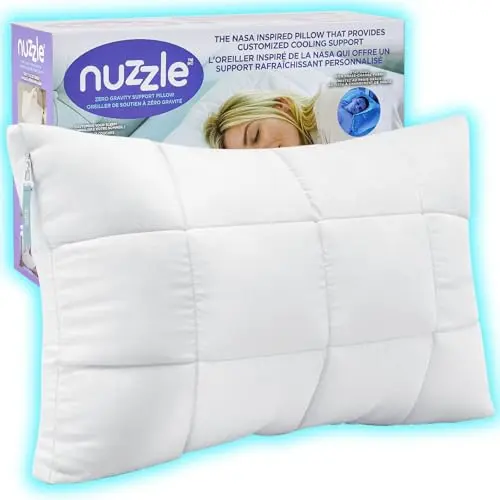
3-in-1 Adjustable Pillow – Layered Loft for Side Sleepers
A stackable three-layer pillow with Nanocoil fiber fill that lets you build a soft, medium, or extra-firm loft depending on how you sleep.
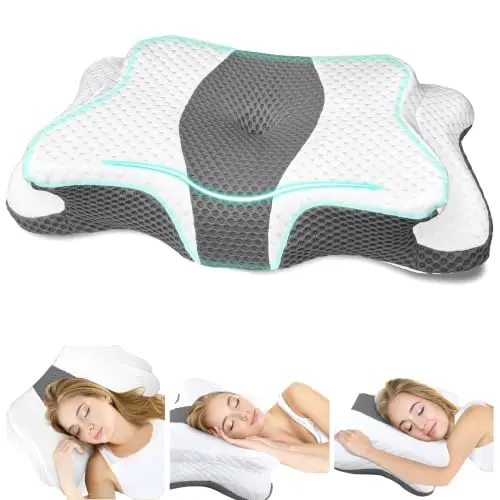
Butterfly Contour Pillow – Adjustable Neck Cradle
An ergonomic contour pillow with a thickened neck bolster, a hollowed center, and two rotation-based heights for side, back, and stomach sleepers.
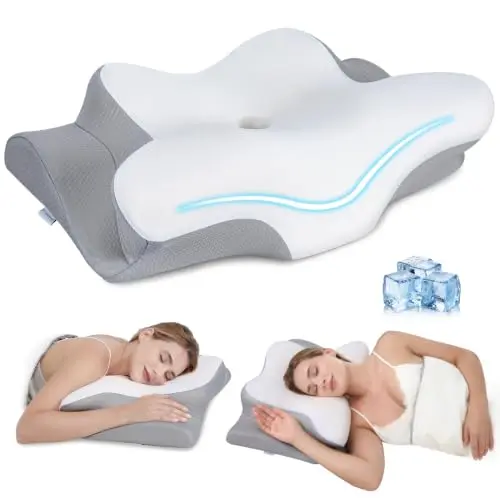
Two-Height Cervical Pillow – Ice Silk Breathable Cover
A slim dual-height cervical contour in slow-rebound memory foam, with a cool-touch ice silk cover and a profile under five inches.
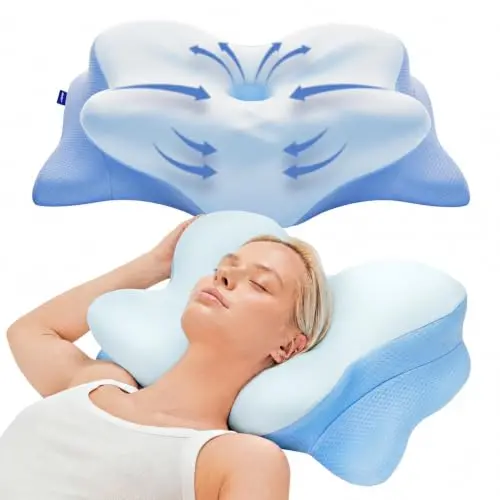
Ergo Butterfly Pillow – Airway-Friendly Elevation
A butterfly contour pillow designed around gentle head elevation and neck support, with a cooling zip-off cover and high-density memory foam.
How We Evaluated These Anti Snore Pillows for Side Sleepers
We didn’t run sleep-lab airway measurements or spend weeks logging decibels beside a bed partner. What we did: cross-referenced 9 anti snore pillow models from 9 distinct brands across six decision axes – elevation height, loft adjustability, contour geometry, fill material and certifications, cover breathability and washability, and usable surface width for side-to-side movement. We triangulated published specifications, feature sets, and owner feedback where available against the realities of side sleeping, which asks more of a pillow than back or stomach sleeping does.
The scoring framework weighted real-world fit (70%) – how well each pillow delivers on airway-friendly positioning for someone who spends the night on their side – against feature differentiation (30%) – the design details that separate one option from the next. We have no commercial relationship with any of the brands featured; recommendations track fit and differentiation, not brand preference, and the spread of brands here reflects what the market actually offers rather than a forced lineup.
If you want straightforward elevation, the Sleepnitez 8-Inch Memory Foam Wedge is the place to start; if you’d rather tune your own loft, the DreamyBlue Signature is the better fit for a side sleeper who sprawls. One caveat worth stating plainly: pillow fit is personal in a way specs only partly predict. Shoulder width, frame size, and how often you flip between side and back all change what works, so we flagged where each option is likely to fall short rather than pretending one shape suits everyone.
How to Choose the Right Anti Snore Pillow for Side Sleepers
1. Why Side Sleepers Snore (and What a Pillow Can Actually Fix)
Side sleeping is generally the quietest position for most people, because gravity keeps the soft tissue in the airway from collapsing backward. The problem is that nobody stays in one position all night. When you drift onto your back – or when your head rolls forward on a pillow that’s too flat – the jaw settles back and the snoring starts.
A pillow can’t fix structural anatomy, and it won’t replace a conversation with a clinician if snoring comes with gasping or heavy daytime fatigue. What it can do is hold your head and neck in a position that keeps the airway open. That means two things: enough height to fill the gap between your shoulder and your ear, and enough support under the neck that your chin doesn’t tuck toward your chest. Everything else – covers, certifications, cooling fabric – is comfort, not function.
2. Elevation vs. Contour: Two Different Anti Snore Strategies
There are two real approaches in this category, and they solve the problem from different directions. Elevation wedges raise your whole upper body on a gentle incline, which uses gravity to help keep the airway from narrowing. They’re the more traditional anti-snore shape and the one most often used for reflux and sleep apnea positioning. If that’s the route you want, the Sleepnitez 8-Inch Memory Foam Wedge is the most side-sleep-friendly version we found.
Contour and cervical pillows work on alignment instead of angle. The raised edges support the curve of your neck while a dip cradles your head, which limits the chin-tuck that narrows the airway. These suit side sleepers who hate the feeling of sleeping on a slope, and they’re easier to travel with. Plenty of people end up wanting both – a slightly elevated contour – which is where dual-height designs earn their keep.
3. Loft Height Is the Spec That Matters Most for Side Sleepers
Here’s the quick test: lie on your side and look at the space between your ear and the mattress. Your pillow needs to fill it completely, keeping your head level with your spine rather than tipped down or pushed up. Too flat and your chin drops; too tall and your neck bends sideways, which is its own kind of miserable.
This is why adjustable fill is such a strong feature for side sleepers – you’re not guessing at a fixed loft, you’re tuning it. Shredded-foam pillows with a zipper and extra fill let you add height until your head sits level, then stop. The DreamyBlue Signature is the clearest example in this lineup. If you’d rather not fiddle, look for a dual-height contour that gives you two loft options in one pillow.
4. Fill Material, Covers, and Certifications Worth Checking
Memory foam gives slow, molding support and holds its shape, which is why most contour pillows use it. Shredded foam is more adjustable and breathes better but needs occasional fluffing. Fiber fill feels like a hotel pillow and is the easiest transition if you’ve never liked foam against your face.
Two certifications are worth looking for: CertiPUR-US for the foam and OEKO-TEX for the textiles. Together they cover the two things people notice first with a new pillow – chemical smell and questionable materials. A removable, machine-washable cover is close to non-negotiable on something you use every night, and a genuinely breathable cover matters more than a cooling claim if you sleep warm.
5. What Anti Snore Pillows Cost at Each Tier
The budget-friendly tier covers basic cervical contours and simpler wedges. You get the shape and the support, usually with a thinner memory foam layer and a plainer cover. It’s a sensible place to start if you’re not sure whether a contour or a wedge will suit you at all.
The mid-range tier is where most of the good options sit. Expect thicker memory foam, dual-height designs, better covers, and certifications. The premium tier adds adjustable fill, higher-grade covers, and larger surfaces – worth it mainly if you’ve already been through a couple of pillows that didn’t work and you want one you can tune instead of replace.
6. Breaking In a New Pillow Without Losing a Week of Sleep
Foam pillows ship compressed. Give yours 24 to 48 hours to fully expand and air out before you judge it – the first night is not a fair test. If the height feels wrong, adjust before you give up: rotate a dual-height pillow, pull out an insert, or take fill out of an adjustable one.
Then give it three or four nights before making a final call. New neck support often feels unfamiliar at first, and that change in position is the entire point. Wash the cover before first use, and keep a spare if you can – it makes the whole thing easier to live with.
Frequently Asked Questions
1. Do anti snore pillows actually work for side sleepers?
They help, with caveats. A pillow can keep your head and neck in a position that reduces the chance your airway narrows, and elevation plus proper neck support is a reasonable first thing to try. What a pillow can’t do is treat obstructive sleep apnea. If snoring comes with gasping, pauses in breathing, or heavy daytime fatigue, that’s a conversation for a clinician, not a product page. Think of a pillow as positioning support rather than a treatment.
2. What's the difference between the Sleepnitez wedge and the Osteo cervical pillow?
They solve the problem from opposite directions. The Sleepnitez is an elevation wedge: it raises your torso on a gentle incline so gravity helps keep the airway open, which suits side sleepers who don’t mind sleeping on a slope. The Osteo is a contour pillow: it works on alignment, using a hollow center and raised bolsters to stop your chin from tucking. Pick the wedge if you want angle, the contour if you want to keep sleeping flat with better neck positioning.
3. Kolbs vs. DreamyBlue: which is better for side sleeping?
Different jobs, both done well. The Kolbs wedge gives you a fixed 7.5-inch incline with a memory foam top layer – simple, effective, and the easier starting point if you’ve never used a wedge. The DreamyBlue is a conventional-shaped pillow with adjustable shredded fill, so you can build exactly the loft your shoulder width needs and change it later. Side sleepers with broad shoulders tend to prefer the adjustable route; side sleepers who snore hardest when they roll onto their back tend to prefer the wedge.
4. Will I slide off a wedge pillow if I sleep on my side?
It’s the most common adjustment complaint with wedges, and the honest answer is sometimes. Wider wedges with a tapered front edge – the ones around 25 to 27 inches across – give you more room to shift without losing support, and a memory foam top layer adds grip compared with a bare foam surface. Give it a week. If you’re still sliding, a contour pillow may be the better route for your frame.
5. How long does it take to adjust to an anti snore pillow?
Plan on three to seven nights. Foam needs a day or two to expand fully, and your neck muscles need longer than that to get used to a new angle. Adjust the height before you give up on it – much of what reads as a firmness problem is really a height mismatch. If it’s still uncomfortable after a week of tuning, the shape probably isn’t right for your shoulder width.
Final Verdict
For most side sleepers dealing with snoring, the Sleepnitez 8-Inch Memory Foam Wedge is the answer. It pairs the two things that matter – real elevation and a wide, cushioned surface you can actually roll on – without the shoulder aches that come from sleeping on a hard foam slope.
If you’re not ready to commit to a wedge, the Osteo Cervical Contour Pillow gets you meaningful neck alignment for less, and if you’d rather tune your own loft, the DreamyBlue Signature is the most adjustable pillow in the lineup. Buy for the position you actually wake up in, not the one you fall asleep in.
