
Best Anti-Theft Bags For Travel – 2026 Reviews

A crowded metro platform is where anti-theft bags earn their keep. You are juggling a phone, a ticket, and a day of walking, and the last thing you want is to keep checking whether your zipper is still closed or your strap is still on your shoulder. The best travel bags solve that with quiet hardware: locking compartments, slash-resistant panels, RFID blocking, and straps that can be secured around a chair or post.
The tricky part is that security features can make a bag heavier, fussier, or less useful for actual travel days. A bag that is all locks and no organization becomes a daily annoyance; a bag that is all pockets and no security is just a nice-looking target. The useful middle ground is a carry option that protects the essentials without slowing you down at security checks, cafe stops, or crowded markets. This guide looks across brands at how each bag balances protection, capacity, comfort, and the way you actually move through a trip.
Best Anti-Theft Bags for Travel – 2026 Reviews
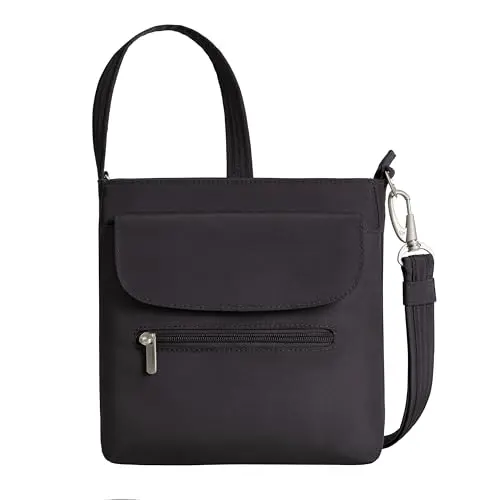
Classic Mini Shoulder Bag – Compact 5-Point Security
A compact shoulder bag built around Travelon’s 5-Point Anti-Theft system, with locking compartments, slash-resistant panels, a cut-proof strap, and RFID-blocking card and passport slots. The small footprint still leaves room for travel essentials and quick-grab pockets.
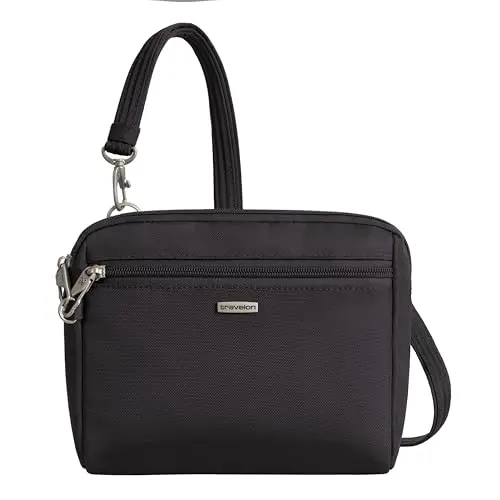
Classic Convertible Crossbody & Waist Pack – Two Ways to Wear
A convertible Travelon bag that wears as a crossbody or a waist pack, with a locking main compartment, slash-resistant construction, a strap that secures to stationary objects, and RFID-blocking passport and card slots.

Anti Theft Crossbody Bag – Waterproof Urban Carrier
A slim anti-theft crossbody made from Oxford textile with a waterproof finish, hidden security compartments, a reflective band, and a wide adjustable strap for long urban days.

Anti-Theft Crossbody Travel Bag – Compact RFID Sling
A compact anti-theft crossbody with an RFID front pocket, cut-resistant fabric and straps, a locking zipper, a switchable shoulder strap, and multiple pockets for a phone, passport, cards, and small essentials.
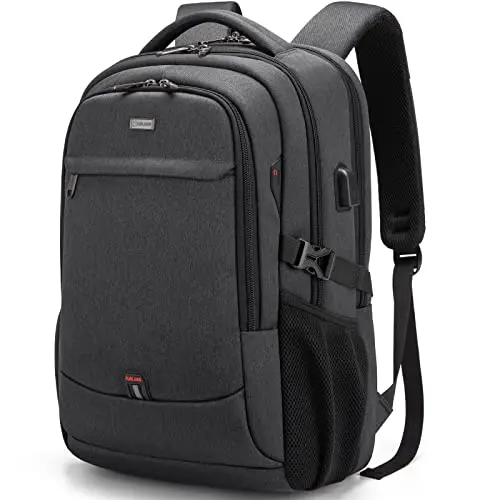
17 Inch Travel Laptop Backpack – Anti-Theft Commuter Pack
A water-resistant 17-inch laptop backpack with a dedicated laptop compartment, a separate tablet sleeve, a built-in USB charging port, a luggage strap, a ventilated back panel, and a hidden anti-theft pocket on the back.
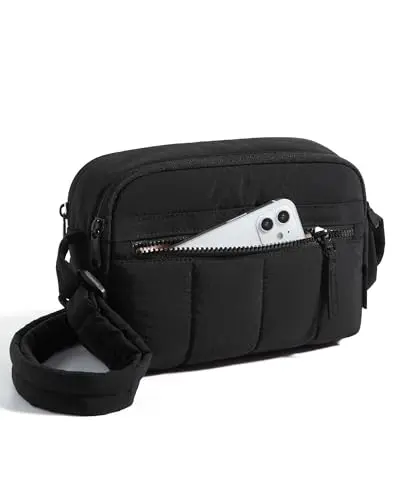
Cross Body Purse – Lightweight RFID Travel Purse
A lightweight water-resistant crossbody purse with five RFID-protected card slots, dual main compartments, an adjustable strap, a quick-access front pocket, and a secure back zipper pocket.

Large Fanny Pack – Hands-Free Hidden-Pocket Carry
A large hands-free fanny pack with four zippered pockets, an adjustable strap, a reflective loop, a key fob hook, and a theft-proof hidden zippered pocket on the back.
How We Evaluated These Anti-Theft Bags
We didn’t run these bags through staged pickpocket attempts or a month of airport days. What we did: cross-referenced 7 anti-theft bag models from 6 distinct brands across 5 decision axes – security hardware, carry comfort, capacity and organization, materials and weather resistance, and travel-specific convenience. We triangulated published specifications, mapped feature sets against real travel scenarios, audited pocket layouts and strap designs, and weighed owner feedback where available. That means we looked for locking zippers, slash-resistant panels, RFID blocking, strap lock-down points, and hidden pockets, then checked whether each bag still made sense as something you’d carry for hours.
The scoring framework weighted real-world travel fit (70%) – how well each bag protects essentials without becoming a hassle – against feature differentiation (30%) – the security and organization details that separate one option from another. That matters because anti-theft bags can fail in two directions: too little protection, or so much hardware that quick access becomes a chore. We have no commercial relationship with any brand here; recommendations track fit and differentiation, not brand preference. If you want the most complete security package in a small shoulder bag, the Classic Mini Shoulder Bag is the pick; if you prefer a waist-pack option that converts to a crossbody, the Classic Convertible Crossbody & Waist Pack makes more sense.
We treated travel as the primary filter, not a side note: a bag had to work at security checks, in crowded transit, and on long walking days.
How to Choose the Right Anti-Theft Bag for Travel
1. What Actually Matters in an Anti-Theft Bag for Travel
The first filter is not the number of pockets; it is whether the bag closes securely and stays closed. Locking zippers slow down a casual thief, slash-resistant panels protect the body of the bag, and RFID blocking shields cards and passports from electronic scanning. A strap lock-down point matters too, because a bag can be taken off a chair or out of a cart when you look away.
After that, consider how the security system feels in normal use. A lock you avoid using is not protection. The best travel bags make the secure action part of the daily routine, not a puzzle you solve every time you want a phone or a transit card.
2. Matching the Bag to Your Travel Style
For city days and crowded transit, a crossbody keeps the bag in front of you and within sight. A waist pack or sling is even more hands-free for markets, festivals, and walking tours, while a travel backpack makes sense when you are carrying a laptop, camera gear, or a full day of supplies. The right format depends on what you need to reach most often and how long you will carry it.
If you want a waist pack that converts to a crossbody, the Classic Convertible Crossbody & Waist Pack is the pick. If the trip includes a laptop, the 17 Inch Travel Laptop Backpack is the better route than forcing a small purse to do commuter duty.
3. Security Features That Earn Their Keep
A full anti-theft system usually means several features working together: locking compartments, slash-resistant fabric, a cut-resistant strap, and RFID-blocking slots. A hidden pocket is useful for a backup card or emergency cash, but it is not the same as a locking main compartment. Read the feature list closely, because some bags use the anti-theft label for one hidden zip and little else.
Prioritize the features that match your risk. If you will be in dense tourist areas, locking hardware and a strap you can anchor matter most. If you are mostly worried about card skimming, RFID protection and a secure wallet pocket move up the list.
4. Capacity, Comfort, and Day-to-Day Carry
Small crossbodies are easier to keep in front of you, but they force choices about what stays behind. A wide strap spreads weight better on long walking days, and a bag that sits flat against your body is less tiring than one that swings. For laptop commutes, a 17-inch laptop sleeve and a ventilated back panel matter more than extra card slots.
Check dimensions against your actual essentials: passport, phone, wallet, sunglasses, a compact umbrella, and a water bottle. A bag that fits the list without overstuffing is more secure in practice, because you are not fighting the zipper every time you open it.
5. Budget vs. Premium Anti-Theft Bags
Entry-level anti-theft bags often give you RFID blocking and a hidden pocket, while premium options add locking compartments, slash-resistant panels, better straps, and more refined organization. The jump is not just about materials; it is about how many security layers work together without making the bag annoying to use.
For a lighter RFID-first option at the entry-level end, the Cross Body Purse is the value pick. If you want the full security checklist, spend for a bag with locking hardware and a cut-resistant strap rather than paying for extra pockets alone.
6. Common Travel Bag Pitfalls to Avoid
One common mistake is overpacking a small crossbody until the zipper strain makes the bag harder to secure. Another is assuming water resistance means waterproof; check the material and care instructions before a rainy trip. Finally, do not ignore durability signals in owner feedback, especially around stitching, zippers, and strap anchors.
A secure bag should still be comfortable enough to wear for a full day. If the strap digs in or the locks are awkward, you will stop using the protection you paid for.
Frequently Asked Questions
1. Travelon Classic Mini vs. WANDER+ Anti Theft Crossbody: Which is better for travel?
The Classic Mini is the more complete anti-theft choice: it uses a full 5-point security system with locking compartments, slash-resistant panels, a cut-proof strap, and RFID-blocking slots. The WANDER+ bag leans more on a waterproof shell, a wide strap, and hidden storage, which makes it comfortable in wet weather and long sightseeing days. The tradeoff is capacity: the Classic Mini is compact and structured, while the WANDER+ feels more like a spacious everyday crossbody. If you want the full security checklist in one small bag, the Classic Mini Shoulder Bag is the safer default.
2. TOPEAST vs. BAGSMART: Which compact anti-theft bag holds more?
The BAGSMART purse has the larger stated capacity at 2.4L, with dual main compartments and five RFID-protected card slots. The TOPEAST bag is smaller at 1.6L but leans harder into security with cut-resistant fabric and straps, a locking zipper, and a switchable shoulder strap. If organization and a bit more room matter most, BAGSMART is easier to live with; if you want a more overt anti-theft build in a tiny package, TOPEAST is the stronger match.
3. Is a crossbody or backpack better for anti-theft travel?
Crossbodies are easier to keep in front of you and quick to open in a shop or transit turnstile. Backpacks carry more weight and make sense for laptop travel, but they put the main compartment behind you, so hidden pockets, locking zippers, and a luggage strap become more important. Neither format is automatically safer; the anti-theft travel advantage comes from how the bag closes, how it rides on your body, and whether you can keep valuables out of easy reach. For laptop trips, the 17 Inch Travel Laptop Backpack is the practical pick; for city days, a crossbody is simpler.
4. Do I need RFID blocking in a travel bag?
RFID blocking is useful if you carry credit cards or a passport with a chip, because it adds a layer against electronic scanning. It is not a substitute for locking zippers, slash-resistant panels, or a secure strap. Treat RFID as one part of the security package, not the whole package. Check that the slots are in a closed compartment and that the bag still closes securely when the wallet section is full.
Final Verdict
For most travelers, the Classic Mini Shoulder Bag is the answer. It packages locking compartments, slash-resistant panels, a cut-proof strap, and RFID blocking into a small shoulder bag that still carries the essentials. If your trip involves rain or long sightseeing days, the Anti Theft Crossbody Bag from WANDER+ is the more weather-ready alternative, with a waterproof shell and a wide strap. If you need to carry a laptop, the 17 Inch Travel Laptop Backpack makes more sense than forcing a tiny crossbody to do commuter duty. And if you want the lightest possible RFID-first pick, the Cross Body Purse is the budget-friendly route. The common thread: choose the security features you will actually use, then match the bag to how you move through a travel day.
