
Best Apnea Pillows – 2026 Reviews

You wake up with a dry mouth, a scratchy throat, and a partner who has quietly relocated to the couch. Snoring and mild sleep apnea are rarely solved by willpower. They’re solved by geometry. Where your head sits relative to your torso changes how open your airway stays overnight, and the pillow under your neck is the easiest variable to change tonight.
Two design philosophies dominate this category. Elevation pillows, mostly wedges, prop your whole upper torso at an incline so gravity works with your airway instead of against it. Cervical and CPAP pillows take the other approach: they cradle the head and neck at a neutral angle, and the apnea-specific versions add side cutouts so a mask and tubing have somewhere to go. Which one you want depends on whether you’re sleeping with a machine or without one.
We compared the leading options across major brands, weighing how each one handles incline or neck alignment, how the foam behaves under a head all night, and how livable the covers are when you’re washing them every week. Some of these are purpose-built for diagnosed apnea. Others are contour pillows that happen to help. Here’s what’s actually worth buying.
Best Apnea Pillows – 2026 Reviews
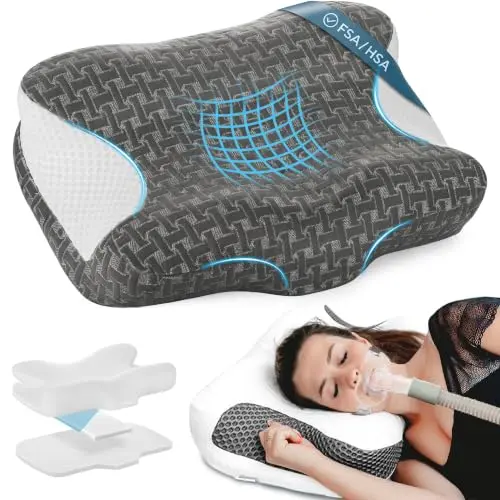
CPAP Pillow – Mask Cutouts and Four Heights
A CPAP-specific pillow with cutouts on both sides so a mask and tubing have room to move without dragging across your face. Two interchangeable foam inserts tune the firmness, and rotating the pillow or pulling the base layer changes the height.
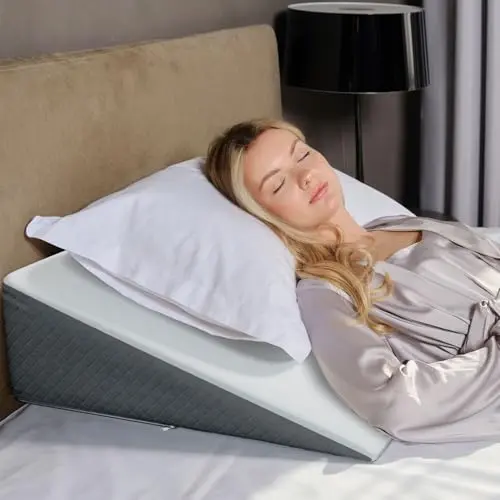
Bed Wedge – Low-Profile Elevation with Jacquard Cover
A 7.5-inch wedge that lifts your upper torso at a gentle angle, with a 1.5-inch memory foam top over a dense foam core. The removable jacquard cover machine-washes and looks like bedding rather than hospital equipment.
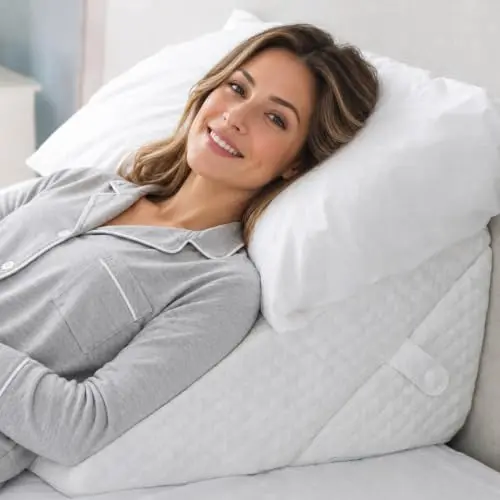
Wedge Pillow – 12-Inch and 9-Inch Adjustable Elevation
A wedge that runs steep at 12 inches or flatter at 9, depending on how you configure it. A supportive foam base sits under a memory foam top, and the shape elevates the whole upper torso rather than just the head.
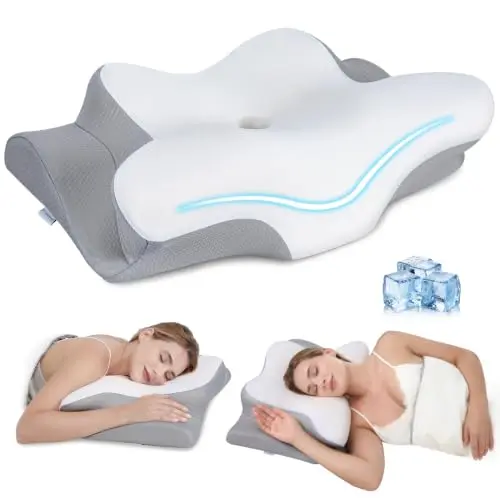
Cervical Neck Pillow – Dual-Height Contour with Ice Silk Cover
A butterfly-contour memory foam pillow with two heights built into one piece: flip it 180 degrees to switch loft. The ice silk cover is removable and machine washable.
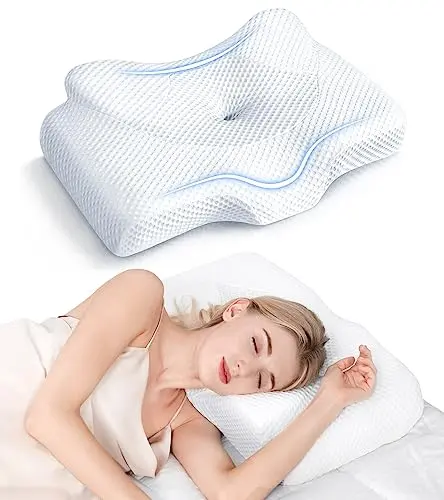
Cervical Pillow – Hollow-Center Neck Support
A contoured cervical pillow built around a hollow center that cradles the head and takes pressure off the neck. Two thicknesses, plus a removable base insert, give you a few height options.

Cervical Neck Pillow – Butterfly Contour with Dual Heights
A butterfly-shaped contour pillow with two heights built in, dressed in a removable nylon-spandex cooling cover. It supports the head, neck, and upper back for side, back, and stomach sleepers.

Ergo Pillow – Queen-Size Dual-Loft Support
A queen-size ergonomic pillow with a lower loft for back and stomach sleeping and a higher one for side sleeping. Slow-rebound memory foam sits under a nine-hole ice silk cover.
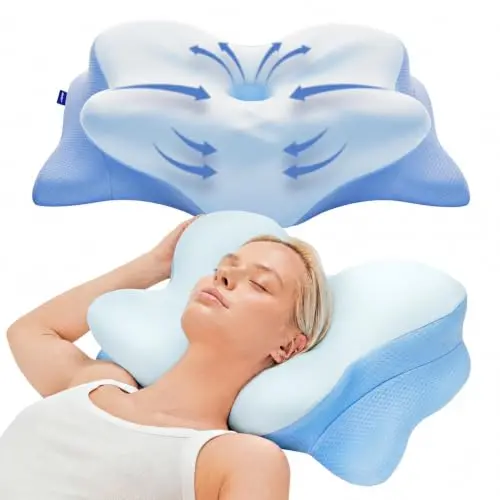
Derila Ergo – Butterfly Contour with Cooling Cover
A butterfly-contour memory foam pillow with a cooling pillowcase included, designed to lift the head and support the neck at an angle that keeps the airway clearer.
How We Evaluated These Apnea Pillows
We didn’t sleep a full month on each of these pillows or run pressure-mapping on a lab bed. What we did: cross-referenced eight apnea pillow models from eight distinct brands across five decision axes – elevation geometry and loft, CPAP and mask compatibility, fill material and firmness, cover breathability and washability, and fit across side, back, and stomach sleeping. We triangulated published specifications, feature sets, and owner feedback where available, then pressure-tested each claim against what the product is actually built to do.
The scoring framework weighted real-world fit for apnea positioning (70%) – how well a pillow opens the airway, holds alignment, or accommodates a mask – against feature differentiation (30%), meaning the things that separate one option from another rather than the specs everyone shares. We have no commercial relationship with any of the brands here; recommendations track fit and differentiation, not brand preference. If you sleep with a CPAP machine, the Elviros CPAP Pillow is the direct answer. If you don’t, the Kolbs Bed Wedge does the elevation job with far less disruption to how you already sleep.
Where published detail was thin, we scored conservatively rather than assuming features that weren’t documented. A pillow with a clear spec sheet and a long track record of owner feedback outranks one with better marketing copy and less to verify. That’s the whole test: does it open your airway, and can you sleep on it for eight hours without fighting it?
How to Choose the Right Apnea Pillow
1. Elevation Pillows vs. Cervical Pillows: Which Helps Sleep Apnea?
Nearly every apnea pillow is one of two things. An elevation pillow, usually a wedge, raises your entire upper torso on an incline so gravity helps keep the airway from collapsing. A cervical contour pillow works differently: it holds the head and neck at a neutral angle and supports the curve of your spine, which can reduce the snoring that comes from a kinked neck position.
Wedges suit people who sleep on their back and want measurable elevation. Contour pillows suit side and stomach sleepers who need the shoulder gap filled. Neither is a treatment for obstructive sleep apnea. If you’ve been diagnosed, the pillow is a comfort accessory next to your CPAP, not a replacement for it.
2. What to Look for in an Apnea Pillow
Start with loft height. Too high and your chin drops toward your chest, which can narrow the airway; too low and a side sleeper’s neck bends sideways. The right loft keeps your head roughly level with your spine in your usual position.
Fill matters next. Memory foam adapts and holds shape, while a dense foam core resists collapsing under a wedge. Removable, washable covers matter more than they sound, since you’ll wash them often. Look for CertiPUR-US or OEKO-TEX certification if you’re sensitive to foam odor, and check whether the pillow is FSA or HSA eligible if you’re buying it for a diagnosed condition.
3. CPAP Compatibility: Cutouts, Mask Types, and Tubing
If you sleep with a machine, the pillow has a second job: staying out of your mask’s way. Side cutouts give a mask and tubing somewhere to sit, which reduces the mask pressure and air leaks that come from foam pushing your face sideways. Nasal pillows, nasal masks, and full-face masks all interact differently with a cutout, so check that the channel width works for your mask type.
Adjustable firmness is the other half of the equation. Interchangeable foam inserts let you trade support for softness as your setup changes. If you’re on CPAP and want a pillow designed around the hardware, the Elviros CPAP Pillow is the pick here, with cutouts and four height settings built for exactly this.
4. Loft, Firmness, and Sleep Position
Side sleepers generally need more loft than back sleepers, because the pillow has to fill the gap between the mattress and the ear while keeping the neck straight. Stomach sleepers need very little. Dual-height pillows solve this cheaply, since you rotate the pillow and get a second profile.
Firmness is where most returns happen. Medium-firm foam supports the neck without a long break-in, while very soft foam feels nice immediately and flattens faster. Expect an adjustment window of a week or two with any contour pillow. If you want a steep, dialable incline instead of a contour, the Bekweim Wedge Pillow runs steep or reconfigures flatter.
5. What Apnea Pillows Actually Cost
Pricing splits into three rough tiers. Entry-level pillows mean simpler foam and a basic cover. The mid-range tier buys dual-height designs, cooling covers, and certifications. Premium pricing mostly pays for CPAP-specific geometry and multi-part adjustment systems.
Spending more doesn’t guarantee a better night. The shape has to match your sleep position first. If you’d rather test whether contour support works for you with minimal risk, the Missleep Cervical Neck Pillow sits at the accessible end and still carries proper certifications.
Frequently Asked Questions
1. What's the difference between the Elviros CPAP Pillow and the Kolbs Bed Wedge?
They solve different problems. The Elviros CPAP Pillow is built around side cutouts and interchangeable foam inserts. It’s for people sleeping with a machine who need their mask free of foam pressure and their tubing out of the way. The Kolbs Bed Wedge is an elevation pillow: it lifts your whole torso on a gentle incline, which suits back sleepers trying to keep their airway open without a machine. Go with the Elviros if you’re on CPAP; go with the wedge if you’re not, or if you want elevation layered on top of your usual pillow.
2. Missleep vs. Osteo: which cervical contour pillow should you choose?
Both are general contour pillows rather than CPAP hardware, so the decision comes down to shape. The Missleep favors a butterfly contour with two built-in heights and an ice silk cover, which suits sleepers who switch between back and side positions. The Osteo leans on a hollow-center cradle that takes pressure off the back of the skull, plus a removable base insert for a third height option and a 3D mesh pillowcase that vents heat well. If neck stiffness is your main complaint, the Osteo’s hollow center is the more targeted design. If you mainly want height flexibility, the Missleep gives you more range for less.
3. Do apnea pillows actually help with sleep apnea and snoring?
Positioning genuinely matters, but the honest answer is that it depends on the cause. Positional apnea and simple snoring often improve with head and torso elevation or a more neutral neck angle, and that’s exactly what these pillows address. If your airway is obstructed by anatomy rather than posture, a pillow won’t fix it. Treat one as a comfort and positioning tool, not a treatment. If you’ve been diagnosed with sleep apnea, the pillow supports your therapy rather than replacing it, and you should keep using your prescribed equipment.
4. How long does it take to adjust to a new apnea pillow?
Plan on a one to four week adjustment window. Memory foam needs a day or two to fully expand after unboxing, and your neck needs longer to unlearn its old position. Expect some stiffness early on, especially with a pronounced contour. Give any pillow a fair trial, but don’t push through two weeks of morning pain to prove a point. Soreness that gets worse rather than better is your cue to change the loft or the shape.
5. Can you use a wedge pillow together with a CPAP machine?
Yes, and plenty of people do. The catch is that changing your sleeping angle changes how your mask sits, so expect to refit the headgear and recheck for leaks the first few nights. A wedge plus a CPAP-specific pillow is a workable combination: the wedge handles torso elevation while the cutout pillow keeps foam off your face. Watch for tubing drag as you settle into the new angle, and give yourself a few nights before deciding it doesn’t work.
Final Verdict
For most people shopping this category, the Elviros CPAP Pillow is the answer. The cutouts solve the problem nothing else here addresses, keeping a mask and tubing where they belong, and the four height settings mean it works whether you sleep on your side, back, or stomach.
If you’re not on a machine, the Kolbs Bed Wedge is the smarter first buy: a gentle incline that’s genuinely sleepable rather than a ramp you give up on by week two. And if you’d rather test contour support before committing much, the Missleep Cervical Neck Pillow gives you dual heights and real certifications at the accessible end of the market.
Match the pillow to how you sleep, not to how bad your snoring is. The shape you’ll actually keep using is the one that helps.
