
Best Automatic Coffee Makers With Grinder – 2026 Reviews

The difference between a good cup and a forgettable one usually isn’t the beans – it’s how recently they were ground. That’s the entire case for an automatic coffee maker with a grinder built in: whole beans go in, fresh coffee comes out, and you never touch a second appliance or a bag of pre-ground that’s been open since spring.
Two things separate a machine you’ll still like in a year from one you’ll quietly resent. First, the grinder – how it’s built and how many steps you can adjust. Second, cleanup, specifically whatever part touches milk. A machine with a brilliant drink menu and a milk system that takes ten minutes to strip down will stop getting used.
We looked across the market at both camps – drip machines that grind a pot and espresso machines that grind per shot – plus the newer hybrids trying to do both. Some of what follows is fully automatic, some is semi-automatic with assistance, and those differences matter more than the spec sheets suggest.
Best Automatic Coffee Makers with Grinder – 2026 Reviews
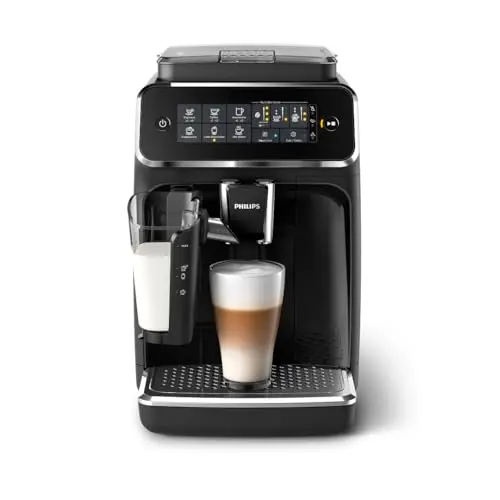
3200 Series LatteGo (EP3241/54) – One-Touch Bean-to-Cup Espresso
A fully automatic bean-to-cup espresso machine with a ceramic grinder, touch display, and the LatteGo milk system. Five coffee varieties, one button each.

Luxe Cafe Premier ES601GM – Espresso, Drip, and Cold Brew in One
A three-in-one machine that pulls espresso, brews a drip carafe, and makes rapid cold brew – all from one built-in burr grinder.
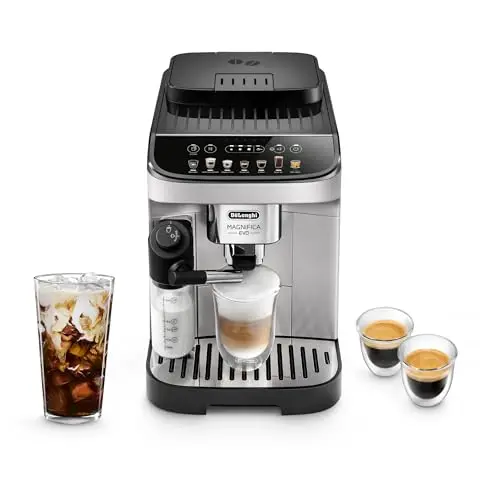
Magnifica Evo (ECAM29084SB) – Seven One-Touch Recipes
A super-automatic espresso machine with a 13-setting conical burr grinder, LatteCrema milk carafe, and seven one-touch drink recipes.
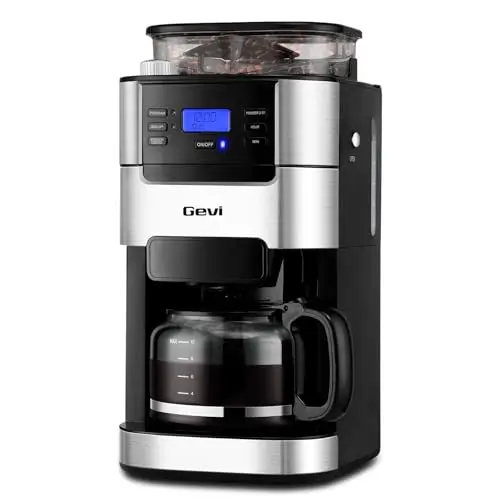
Grind & Brew DCMB0-BK0A1 – Burr-Ground Drip for a Crowd
A programmable drip coffee maker with a built-in burr grinder, 2-to-10-cup flexibility, and a 24-hour timer for fresh-ground pots.
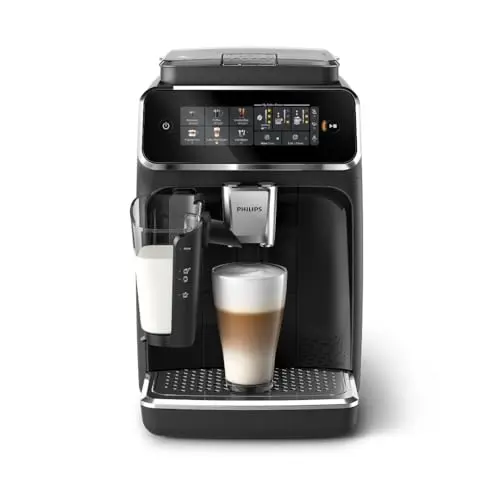
3300 Series LatteGo (EP3341/50) – Six Presets with Iced Coffee
A fully automatic espresso machine with six presets including iced coffee, a ceramic grinder, and the rinse-in-seconds LatteGo milk system.
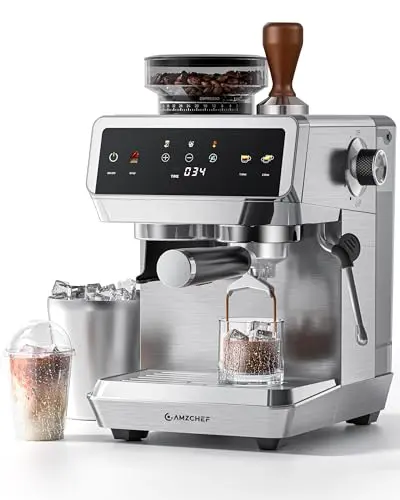
CM1626 Espresso Machine – 44 Grind Settings and Temp Control
A compact semi-automatic espresso machine with a 44-setting grinder, adjustable brew temperature, cold brew mode, and a steam wand.
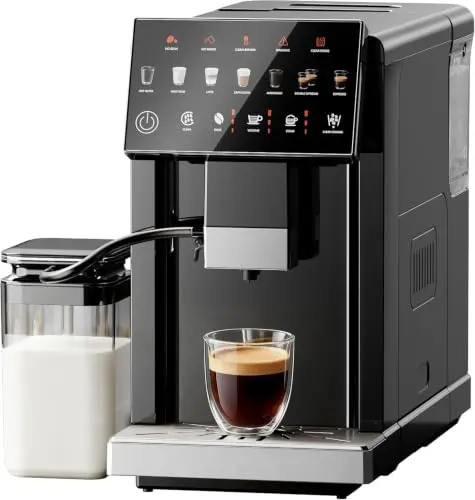
CM004-02 Automatic Espresso Machine – One-Touch Milk Drinks
A fully automatic espresso machine with a 20-bar pump, 15-step burr grinder, built-in milk frothing, and a self-cleaning program.
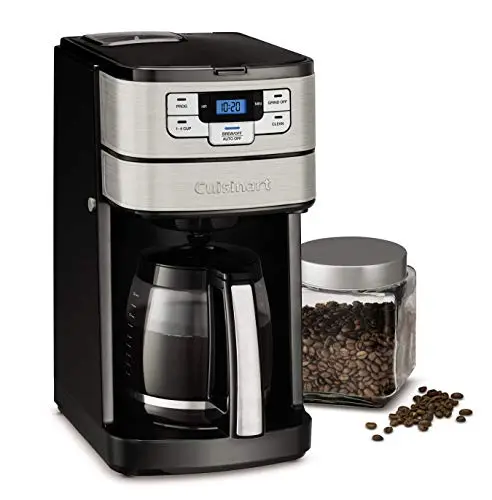
Grind & Brew DGB-400NAS – 12-Cup Fresh-Ground Drip
A 12-cup programmable drip coffee maker that grinds whole beans right before brewing, with a grind-off option for pre-ground.
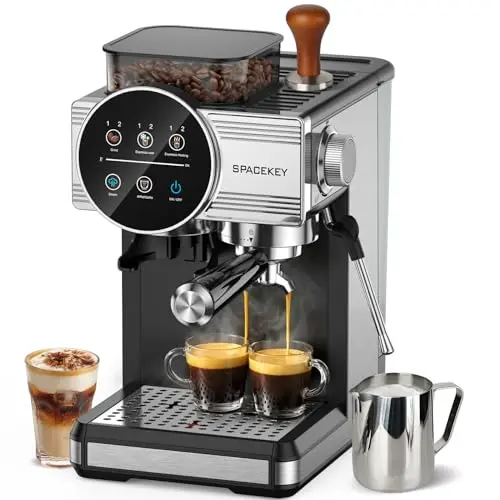
CM5510 Espresso Machine – 20-Bar Extraction with Grinder
A compact semi-automatic espresso machine pairing a 30-setting burr grinder with a 20-bar pump, PID control, and a steam wand.
How We Evaluated These Automatic Coffee Makers with Grinder
This review didn’t involve pulling hundreds of shots or measuring grind consistency in a lab. What it is built on: the published specifications for nine automatic coffee makers with grinders from eight distinct brands, cross-referenced against five decision axes that actually change how a machine feels at 6 a.m. – grinder type and adjustment range, milk-handling design, drink menu breadth, capacity and footprint, and cleaning routine. Price tier was weighed separately, as a lens rather than a ranking factor.
We triangulated manufacturer specs, feature sets, and aggregated owner feedback where available, then mapped each machine against realistic buyer profiles: the drip loyalist who wants fresh grounds without a second appliance, the latte drinker who wants one-touch milk, and the tinkerer who wants grind control. Where feedback conflicted – and in this category it often does – we weighted the pattern over the outlier. The scoring framework weighted real-world fit (70%), meaning how well a machine executes its stated job in a normal kitchen, against feature differentiation (30%), meaning the things one machine does that its rivals don’t. We have no commercial relationship with any brand here; recommendations track fit and differentiation, not brand preference.
If you want the shortest path to a one-touch latte, the Philips 3200 Series LatteGo is the pick; if you want espresso, drip coffee, and cold brew from a single footprint, the Ninja Luxe Cafe Premier earns the nod. Neither is a lab instrument – both are machines you’ll operate half-awake, which is exactly the standard we judged them by.
How to Choose the Right Automatic Coffee Maker with Grinder
1. Burr vs. Blade: What Kind of Grinder Is Inside Your Coffee Maker
Almost every automatic coffee maker with a grinder uses one of two designs, and it’s the single biggest variable in cup quality. A burr grinder crushes beans between two abrasive surfaces and produces particles of consistent size – that consistency is what lets water extract evenly instead of hitting fine dust and coarse chunks at once. A blade grinder spins a propeller and chops, which is cheaper and noticeably less even. Most automatic espresso machines here use conical or ceramic burrs; the drip-style machines split between burr and blade.
The second number that matters is grind settings. A handful of steps is plenty for drip coffee. Espresso benefits from more – the difference between a 13-step and a 44-step machine is how precisely you can chase a bean that’s running fast or slow. If you plan to move between espresso and cold brew, adjustment range matters as much as the count.
2. How Much Automation Do You Actually Want From Your Coffee Maker?
Fully automatic means the machine grinds, doses, tamps, and brews at the press of a button, and often froths milk too. You never see a portafilter. Semi-automatic means the machine grinds and brews but you dose, tamp, and lock in the basket yourself, then steam milk by hand. Semi-automatic usually buys more grind and temperature control for less money; fully automatic buys speed and consistency.
There’s a middle category now, and it’s where the Ninja Luxe Cafe Premier lives: assisted dosing and tamping with real-time adjustments, but a portafilter workflow and a proper frothing system. If you want results without giving up the ritual, that’s the compromise to look at.
3. Milk Systems Compared: LatteGo, LatteCrema, and Steam Wands
Milk is where automatic coffee makers live or die, because a milk system you dread cleaning stops getting used within a month. LatteGo is a two- or three-part assembly with no internal tubes – rinse, click back together, done. LatteCrema uses a carafe that can sit in the fridge between sessions and textures dairy and plant milk alike. Traditional steam wands give the most control over microfoam and demand the most cleanup.
Ask two questions before buying: how many parts come apart, and can they go in the dishwasher? A tube-based system that can’t be rinsed quickly is the most common regret in this category. If milk drinks are the whole point, the Philips 3200 Series LatteGo solves cleanup better than almost anything at its level.
4. Capacity, Format, and Footprint: Drip Coffee Makers vs. Espresso Machines
Decide the format first. A grind-and-brew drip machine makes a carafe, anywhere from two cups to twelve, and suits households where several people drink coffee in the morning. An espresso machine makes one or two drinks at a time and suits anyone whose coffee is a latte or a shot. A few machines now try to do both, and they generally do both competently rather than brilliantly.
Then measure. Automatic espresso machines with a bean hopper and a water tank are deeper than a drip brewer, and the deepest model in this lineup runs close to twenty inches front to back. Under-cabinet clearance matters just as much, because several grind-and-brew drip machines load beans from the top.
5. Philips 3200 LatteGo vs. De'Longhi Magnifica Evo: Which Automatic Coffee Maker Fits Your Morning?
These two are the closest head-to-head in this roundup. The Philips wins on milk-day cleanup – the LatteGo assembly comes apart into a couple of pieces and rinses in seconds – and on the descale-free convenience of its filter. The De’Longhi Magnifica Evo wins on drink breadth and grind precision, with seven recipes, 13 grind settings, and a carafe that stores in the fridge.
Pick the Philips if your daily drink is a cappuccino or latte macchiato and you want the least friction. Pick the De’Longhi if you rotate between espresso, iced coffee, and milk drinks and want to dial the grind per bean. Both are fully automatic; the difference is menu depth versus cleanup speed.
6. What to Expect at Each Price Tier
Entry-level grind-and-brew drip machines get you a built-in grinder, a programmable timer, and a carafe for roughly the cost of a good standalone grinder. Grinders at this tier are often blade-style, so a burr grinder at entry pricing is the standout. The Gevi Grind & Brew is the clearest example of what entry-level can now deliver.
Mid-range is where semi-automatic espresso with a real burr grinder and PID temperature control lives, plus the first fully automatic milk systems. Premium buys super-automatic convenience, wider drink menus, better milk hardware, and longer warranties – not necessarily better bean-to-cup results.
7. Cleaning and Maintenance: The Real Cost of Convenience
Every machine here needs three routines: a rinse of whatever touches milk, a periodic brew group rinse and descaling cycle, and regular dumping of the puck bin or grounds container. Machines with a removable brew group are far easier to keep clean than sealed units, and that single design choice often decides whether a machine survives year three.
Filters change the math. An AquaClean-style filter can push descaling out for thousands of cups, and a charcoal water filter in a drip machine does similar work at a lower price. Budget for replacement filters and cleaning tablets; they’re the difference between a machine that lasts and one that starts tasting off.
Frequently Asked Questions
1. Do automatic coffee makers with a built-in grinder actually make better coffee?
Usually yes, and freshness is the reason. Ground coffee starts losing aromatic compounds within minutes of exposure to air, so a machine that grinds immediately before brewing is working with material a pre-ground bag simply can’t match. That’s the oxidation problem in one sentence.
The caveat is grinder quality. A cheap blade grinder inside an inexpensive machine can produce a more uneven bed than a decent standalone burr grinder feeding a basic drip brewer. If the grinder is the weak link, the freshness advantage is partly cancelled out.
2. What's the difference between the Philips 3200 LatteGo and the De'Longhi Magnifica Evo?
Cleanup speed versus menu depth. The Philips uses a two-part milk assembly with no internal tubes, so the daily rinse takes seconds, and its water filter stretches descale intervals considerably. The Magnifica Evo counters with seven one-touch recipes, 13 grind settings, a LatteCrema carafe that stores in the fridge, and a dedicated iced coffee recipe.
If you drink one kind of milk drink every day, take the easier cleanup. If you rotate drinks and switch beans often, take the wider menu and finer grind control.
3. How does the Ninja Luxe Cafe Premier compare to a grind-and-brew drip machine like the Gevi?
They solve different problems. A grind-and-brew drip machine like the Gevi fills a carafe – two to ten cups – from a burr grinder on a timer, which is ideal for a household pouring mugs on the way out the door. The Ninja Luxe Cafe Premier is built around single drinks: espresso, filter-style coffee, and cold brew, with a hands-free milk frother and assisted tamping.
Choose the drip machine for volume and simplicity. Choose the Ninja for drink variety and milk drinks, and accept the portafilter workflow that comes with it.
4. Do I need a burr grinder or is a blade grinder enough?
For drip coffee, a blade grinder is workable – the paper filter and the brew time smooth over a lot of unevenness. For espresso, it’s a real limitation. Espresso pushes water through a compact puck at pressure, so particle size differences create uneven extraction: sour and bitter in the same shot, with no adjustment that fixes both.
That’s why every automatic espresso machine in this lineup uses a conical burr grinder while the drip-only machines split between burr and blade. If your goal is consistency across bean changes, burrs are worth holding out for.
5. How often do I need to clean the milk system on an automatic coffee maker?
Rinse the parts that touch milk after every use – that’s non-negotiable, and it’s why machines with removable, dishwasher-safe milk assemblies are worth prioritizing. A deeper clean of the milk carafe or frothing unit once a week keeps residue from building up in the steam path.
Run the machine’s built-in rinse or cleaning program when it prompts you rather than when performance drops. Deferred maintenance shows up as weak microfoam and off-flavors long before anything visibly fails.
6. Can I use pre-ground coffee in these machines?
Sometimes, but check before you assume. Several drip-style grind-and-brew machines include a grind-off option or a powder button for pre-ground, which is genuinely useful when the hopper runs dry. Super-automatic espresso machines, by contrast, are designed around the bean hopper and expect whole beans.
If pre-ground is part of your routine, look for a machine that explicitly lists a bypass or grind-off mode in its specifications. Otherwise you’re limited to whatever fits in the hopper.
Final Verdict
For most people, the Philips 3200 Series LatteGo is the automatic coffee maker to buy. It nails the two things that decide long-term happiness in this category: fresh grounds in every cup and a milk system you’ll actually clean. If you want one machine to cover espresso, drip coffee, and cold brew, the Ninja Luxe Cafe Premier does all three and does them well.
Budget-minded drip drinkers should go straight to the Gevi Grind & Brew, which delivers burr-ground freshness and a programmable timer at entry-level money. And if drink variety and grind precision justify a premium, the De’Longhi Magnifica Evo has the widest menu here. Match the format to your morning, then buy once.
