
Best Automatic Pour Over Coffee Makers – 2026 Reviews

A good pour-over can taste like a small luxury, but standing over the kettle with a gooseneck spout every morning gets old fast. That’s where the automatic pour-over category earns its keep: it’s less about replacing the ritual than about removing the parts that make you late.
Automation in pour-over isn’t one thing. Some brewers use a reservoir or drip tank to regulate water delivery; others keep the manual process but make it more forgiving with clear markings, a lid, or a filter cone that’s easier to live with. The two axes that separate a good pick from a fussy one are water delivery control and cleanup.
You’ll see classic glass carafes, single-serve cones, and reusable-filter setups in this guide. We cross-shopped the market to find the models that make the most sense for different morning routines, whether you want one careful cup or a batch for the table.
Best Automatic Pour Over Coffee Makers – 2026 Reviews
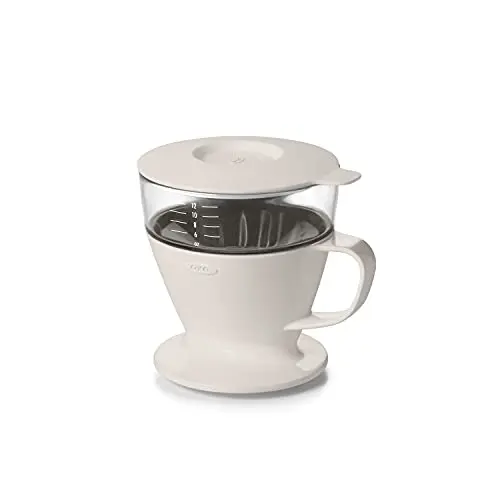
Brew Single Serve Pour-Over with Water Tank – Assisted Brewing for One
The OXO Brew is a single-serve pour-over with a water tank that controls flow for you. It’s designed to make a balanced cup with less hands-on pouring, and the included lid doubles as a drip tray.
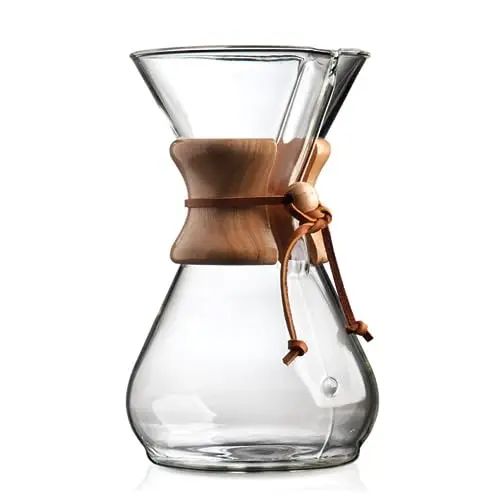
Classic Series 8-Cup – Timeless Paper-Filtered Pour-Over
A classic glass pour-over built around paper filtration and the brand’s signature hourglass shape. The eight-cup model is sized for batch brewing and doubles as a serving carafe.
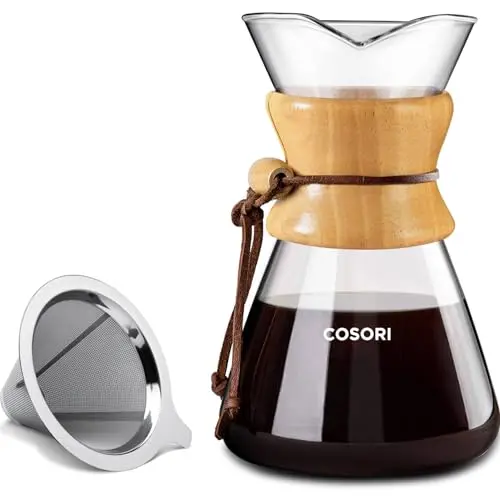
Pour Over Coffee Maker – Double-Filter Brewer for Larger Batches
A reusable-filter pour-over with a double-layer stainless steel cone and a 34-ounce glass decanter. The borosilicate glass can take low stove heat, and the wooden sleeve makes the carafe easier to handle.
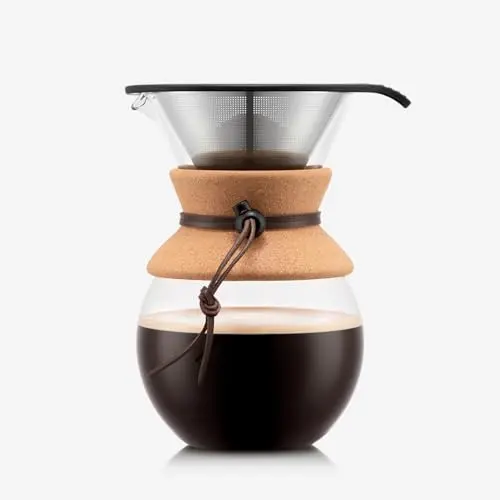
Pour Over Coffee Maker 34oz – Cork-Grip Brewer with Steel Filter
A budget-friendly glass pour-over with a reusable stainless steel mesh filter and a cork grip. It brews up to 34 ounces and comes apart for cleaning.
How We Evaluated These Automatic Pour Over Coffee Makers
We didn’t stand over each brewer with a stopwatch and a refractometer for weeks. What we did: cross-referenced four pour-over coffee makers from four distinct brands across five decision axes – water delivery control, capacity, filtration style, cleanup, and owner feedback where available. We triangulated published specifications, feature sets, and use-case fit against the realities of morning brewing: how much hands-on pouring is required, how forgiving the process is, and how much counter space the setup claims. The central question was how much of the pour-over process each brewer actually automates or assists, not just how it looks on a counter.
The scoring framework weighted real-world fit (70%) – how well each option delivers a consistent cup with the effort it promises – against feature differentiation (30%) – reservoir design, filter type, capacity, and cleanup details that separate one model from another. We audited each product’s published dimensions and included components, then mapped those details to common buyer profiles. We also weighed materials and long-term care against the way each brewer is actually used. We have no commercial relationship with any of the brands featured; recommendations track fit and differentiation, not brand preference. If you want the most assisted single-cup routine, the OXO Brew Single Serve Pour-Over is the natural starting point. If you’re brewing for a table and want the classic paper-filtered profile, the Chemex Classic Series 8-Cup is the better match.
How to Choose the Right Automatic Pour Over Coffee Makers
1. What 'Automatic' Means in a Pour-Over Coffee Maker
In this category, automatic doesn’t always mean a machine with a clock and a carafe warmer. It usually means the brewer takes over some of the water delivery or makes the process more repeatable than a bare cone and kettle. A reservoir, a drip tank, or a controlled valve can all count as assisted brewing because they reduce the amount of standing and pouring you do.
A true manual pour-over gives you the most control over speed and pattern, but it also asks for more attention. The right balance depends on whether you want a ritual or a routine. If you’re chasing a specific extraction profile, manual may be worth it; if you want a dependable cup before work, assistance matters more.
2. Water Delivery and Brew Control
The most important automatic feature is how water reaches the coffee. A reservoir or drip tank can regulate flow so the bed saturates evenly, while a showerhead spreads water across the grounds instead of dumping it in one spot. Even small design choices like measurement markings and a lid that holds heat can make a brewer feel more automatic in daily use.
Look at the flow rate and the filter size together. A fast flow through a thin bed can taste under-extracted; a slow flow can stall and turn bitter. If you want the most assisted single-cup routine, the OXO Brew Single Serve Pour-Over is the pick here because its tank does more of the pacing for you.
3. Paper Filters vs Reusable Filters in a Pour-Over Coffee Maker
Paper filters trap more oils and fine particles, which is why they produce the clean, tea-like clarity many pour-over fans associate with the style. Reusable metal filters let more oils and sediment through, giving you more body and sediment in the cup. Neither is better; they’re different drinking experiences.
Paper is convenient to dump and compost, but it’s a recurring cost and some brewers don’t include filters in the box. Reusable filters need rinsing and occasional deep cleaning, but they eliminate repeat purchases. If reusable-filter brewing is the priority, the Cosori Pour Over Coffee Maker is the stronger larger-batch option.
4. Capacity and Batch Size for a Pour-Over Coffee Maker
Single-serve capacity is usually anywhere from one mug to about 12 ounces, which suits solo drinkers and small kitchens. Batch capacity moves into carafe territory, often around 34 to 40 ounces, and makes more sense for couples, guests, or anyone who wants a second cup without brewing again.
Don’t assume a larger carafe is always better. Bigger glass vessels take up more counter space and can be awkward to clean. If you regularly brew for a table and want the classic paper-filtered profile, the Chemex Classic Series 8-Cup is the natural fit with its 40-ounce carafe.
5. Cleanup, Materials, and Long-Term Care
Glass looks great and doesn’t hold odors, but it can break if you’re rough with it. Borosilicate glass is the standard for heat resistance, and dishwasher-safe parts make daily cleanup much easier. Cork and wood accents add warmth but usually need hand-wiping, so factor that into your routine.
Check what’s actually dishwasher safe: the carafe may be fine while the filter, sleeve, or lid is not. If you want a low-cost paper-free setup and don’t mind a little sediment, the Bodum 34oz Pour Over Coffee Maker is the budget-friendly pick, though its cork grip needs gentler care.
6. How Much Should You Spend on an Automatic Pour-Oven Coffee Maker?
Entry-level pour-over brewers get you into the format without much risk. They usually skip extra features and may use more plastic, but they can still make a good cup if the filter and flow are sensible. Mid-range models add capacity, better materials, or reusable filters that justify the step up.
Premium picks tend to be glass carafes with refined details or larger batch sizes, not necessarily more automation. Spend more when capacity, materials, or a specific filter style matters to your routine; otherwise a simpler brewer is often the smarter buy.
Frequently Asked Questions
1. What's the difference between the OXO Brew Single Serve and the Chemex Classic Series 8-Cup?
The OXO is built for single-cup convenience: its water tank helps pace the brew, and the whole setup is sized for one mug. The Chemex is a manual batch brewer with a paper-filtered profile and a much larger carafe. The OXO suits rushed mornings and small households; the Chemex suits slower weekend brewing and anyone who wants a cleaner, tea-like cup for two or more people. If your priority is one-cup ease, the OXO Brew Single Serve Pour-Over is the better match.
2. Is an automatic pour-over coffee maker better than a manual one?
Not automatically, no. An automatic or assisted brewer is better if you value repeatability and less hands-on pouring. A manual pour-over gives you more control over flow and pattern, which some brewers prefer for dialing in a specific coffee. Think of it as convenience versus control, not quality versus compromise.
3. Bodum vs Cosori: which reusable-filter pour-over is better?
The Bodum is the smaller-budget, paper-free option with a stainless steel mesh filter and a cork grip. The Cosori adds a double-layer steel filter, a 34-ounce decanter, and a wooden sleeve, so it feels more purpose-built for larger batches. If you want the lowest-cost entry to reusable brewing, Bodum makes sense; if you want more capacity and a sturdier-feeling filter setup, the Cosori Pour Over Coffee Maker is the better pick.
4. Do automatic pour-over coffee makers need special filters?
They need the filter shape the brewer was designed for. Cone brewers often take #2 or #4 cone filters, while reusable models use their own stainless steel mesh or perforated metal cones. Check whether filters are included: some brewers ship with a starter pack, while others expect you to buy them separately. Using the wrong size can cause slow draining or grounds in the cup.
5. How do you clean an automatic pour-over coffee maker?
Start by rinsing the filter and carafe after every use so oils don’t build up. Most glass carafes and many plastic components are dishwasher safe, but cork, wood, and some lids need hand-washing. Once a week, give the filter a deeper rinse or soak according to the manufacturer’s instructions. Avoid abrasive scrubbers on borosilicate glass if you want to keep it clear.
Final Verdict
For most buyers, the OXO Brew Single Serve Pour-Over is the answer – it’s the most assisted routine in the lineup and still makes a balanced cup without a lot of fuss. If you’re brewing for a table and want the classic paper-filtered profile, the Chemex Classic Series 8-Cup is the better fit. Budget-minded paper-free brewers should look at the Bodum 34oz Pour Over Coffee Maker, while the Cosori Pour Over Coffee Maker is the stronger reusable-filter choice for larger batches. None of these are electric set-and-forget machines; they’re pour-over brewers that reduce or clarify the work in different ways. Pick the one whose workflow matches your morning.
