
Best Baby Lounger Pillows – 2026 Reviews

A baby lounger pillow looks like a simple soft spot, but the useful ones earn their place by doing three unglamorous jobs well: holding a newborn’s shape without feeling restrictive, breathing against delicate skin, and surviving the laundry cycle. The frustrating ones look plush in photos and then collapse, slide, or turn into a cover-reassembly puzzle.
The category has split into two broad camps. Some loungers are soft, nest-like cushions built for cozy supervised play; others are more structured infant support cushions with firmer fill, lower sides, or safety belts. That distinction matters more than color or pattern, especially once you factor in current safety expectations for infant support cushions.
We compared the options shoppers actually cross-shop, focusing on supervised awake-time use rather than sleep. The goal here is to help you choose the right baby lounger pillow for your routine, whether that means tummy time, diaper changes, travel, or one practical cushion that can handle a little of everything.
Best Baby Lounger Pillows – 2026 Reviews
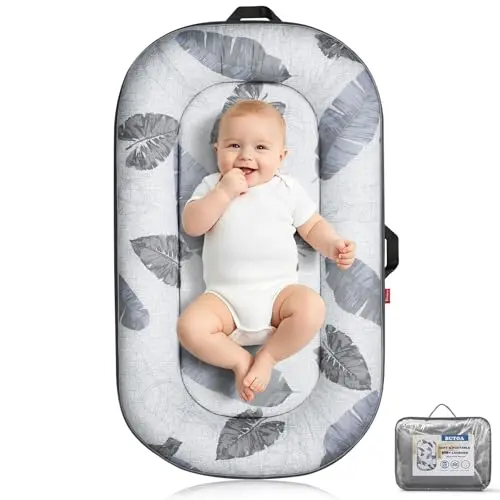
Baby Lounger – Double-Sided Cotton Support
The BUTOA baby lounger is a cotton support cushion for supervised tummy time, floor play, and diaper changes. It has a double-sided cover, two handles for room-to-room carrying, and a firm cotton bumper that gives it more structure than a plush nest.
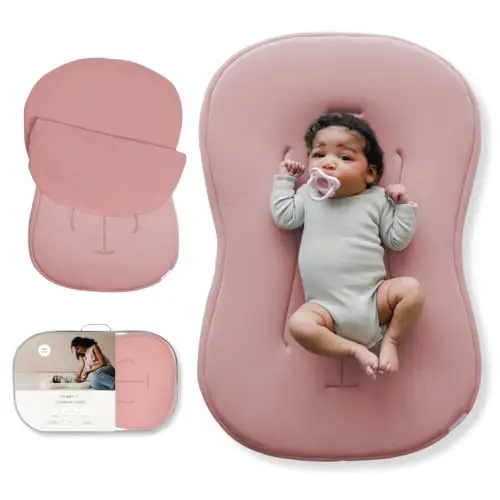
Lounger Curve – CPSC-Compliant Newborn Support
The Snuggle Me Lounger Curve is a premium infant support cushion built around the latest CPSC infant support cushion standard. Its lower sides and padded center are designed for supervised awake-time lounging, tummy time, and play, and it comes with a travel bag.
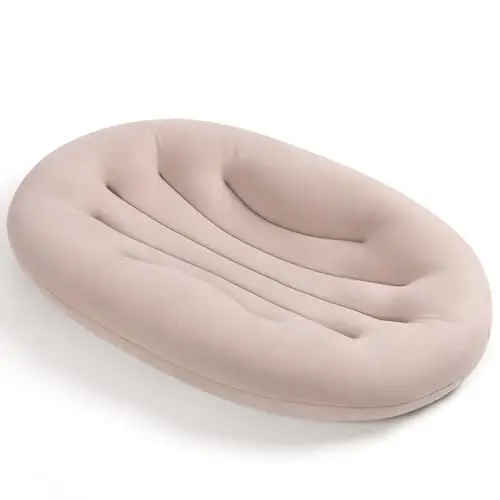
Baby Lounger – Plush Tummy Time Support
The Happle sunny baby lounger is a lightweight support pillow for supervised tummy time, play, and diaper changes. It uses a cotton cover and high-density 3D polyester fill to create a soft, portable spot for awake time.
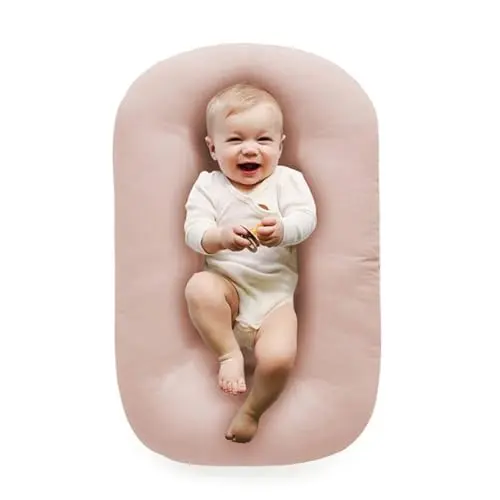
Cotton Newborn Lounger – Extended 0-24 Month Nest
The Vicorise newborn lounger is a cotton-covered support cushion with a roomier footprint for supervised play, tummy time, and everyday floor use. It is lightweight, machine washable, and built around a simple cotton-and-polyester fill setup.

Infant Support Cushion – Breathable Cotton Comfort
The azopesy infant support cushion is a cotton-covered lounger for supervised awake-time play, tummy time, and bonding. It has a breathable fabric cover, a 3D polyester fiber fill, and an extra cover included for easier cleanup.
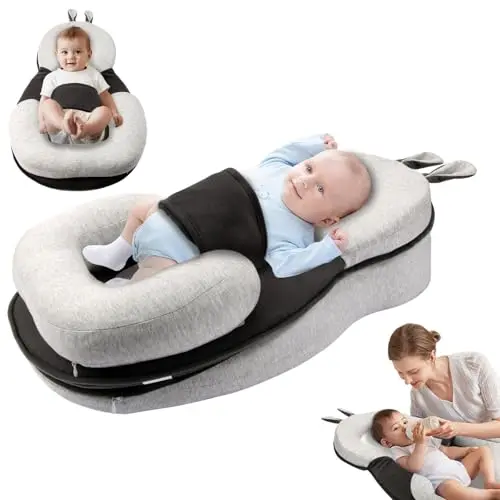
Memory Foam Baby Lounger – Non-Slip Support
The Joehea baby lounger uses a memory foam core, a non-slip base, and a safety belt for supervised positioning. It is lightweight, has a removable washable pad, and is designed for ergonomic support during awake-time play.
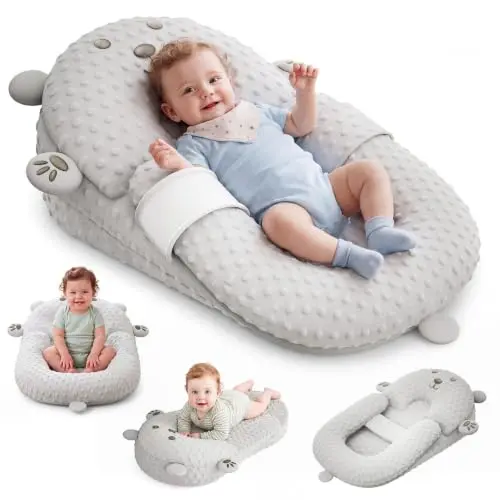
Nursing and Tummy Time Lounger – Multi-Use Support
The WOLIOS baby lounger doubles as a nursing pillow and tummy time mat, with a detachable three-piece washable set and a non-slip dotted base. It uses high-density foam and adjustable swaddle straps for supervised positioning.
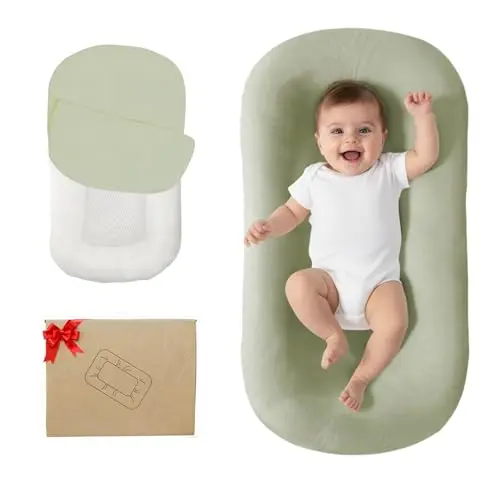
Infant Support Cushion – Extended Space Floor Seat
The Lucakuins infant support cushion is a roomy lounger with an extended footprint for supervised floor play and tummy time. It has a removable zip cover, a cotton-and-polyester build, and a vacuum-packed design for shipping.
How We Evaluated These Baby Lounger Pillows
We didn’t run a full-season newborn trial or lab-test fabric breathability. What we did: cross-referenced 8 baby lounger pillow models from 8 distinct brands across six decision axes – safety certification and supervised-use positioning, support structure, fabric and breathability, washability, portability, and fit for tummy time and floor play. We audited published specifications against each product’s stated features, weighed how each design would work in a real nursery or travel bag, and triangulated aggregated feedback where available.
The scoring framework weighted real-world fit (70%) – how well a lounger supports the jobs parents actually need it for – against feature differentiation (30%) – unique design choices such as double-sided covers, travel bags, or washable three-piece construction. That 70/30 split keeps the ranking practical: a clever detail only moves a product up when it improves supervised play, cleaning, or portability. We have no commercial relationship with the brands featured; recommendations track fit and differentiation, not brand preference. We also noted where a lounger’s listed material or care instructions created a practical tradeoff for busy households. We checked every product against the category’s core use cases rather than its marketing language.
If you want the most balanced supervised-use pick, the BUTOA Baby Lounger is the one we’d start with. If premium safety positioning matters most, the Snuggle Me Lounger Curve is the stronger route. Neither is a sleep product, and neither replaces adult supervision.
How to Choose the Right Baby Lounger Pillow
1. What Makes a Baby Lounger Pillow Safe for Supervised Awake Time
The first thing to understand is that a baby lounger pillow is a supervised awake-time use product, not a bed. It is designed for tummy time, floor play, diaper changes, and short bonding sessions while an adult is right there. Any listing that hints at sleep or overnight use should be a red flag.
Look for clear certification claims and alignment with the current infant support cushion standard. In practice, that means checking for CPC, ASTM, or CPSIA language, reviewing side height and center padding, and confirming the brand tells you plainly what the lounger is not for. Safety is not a decorative feature; it is the baseline.
2. Support, Firmness, and Shape in a Newborn Lounger Pillow
Support comes down to fill and geometry. A cotton fill tends to feel more structured and breathable, while a foam core or memory foam can feel plusher and more contouring. Neither is automatically better; the right choice depends on whether you want a firm floor-play surface or a softer, nest-like feel.
Side height matters too. Lower sides allow more freedom of movement and are easier to supervise, while higher sides can feel cozier but may limit how much a baby can move. If you want a structured cotton-filled middle ground, the BUTOA Baby Lounger is the pick here.
3. Fabrics, Breathability, and Skin Comfort in Baby Lounger Pillows
Newborn skin is sensitive, so the cover matters as much as the fill. Breathable cotton is the safest default for most families, especially in warmer rooms or for babies who run warm. A skin-friendly cover should feel soft without trapping heat, and a removable cover is a practical must for spit-up, leaks, and everyday dust.
If plushness is your priority, the Happle sunny Baby Lounger leans more toward a soft, cozy surface than a firm support cushion. That feel is lovely for short supervised sessions, but it is not the right match for parents who want a rigid, structured lounger.
4. Washability and Travel Practicality for a Portable Baby Lounger
Laundry happens constantly in the newborn stage, so check how the cover comes off and whether the whole lounger can be washed. Vacuum compression is common because it keeps shipping compact, but it means the lounger may need time to fluff back into shape. A travel bag or carry handles are small details that make a real difference if the lounger moves between rooms or homes.
For a budget-friendly travel option, the Vicorise Cotton Newborn Lounger keeps the setup simple with a machine-washable cotton cover and a lightweight build.
5. Common Baby Lounger Pillow Buying Mistakes to Avoid
The biggest mistake is buying a lounger for sleep use. These products are for supervised awake time, and no amount of padding changes that. The second is equating plushness with quality: a very soft lounger can be harder to supervise and may not hold its shape. Check certifications, confirm the wash routine, and give vacuum-packed models time to expand before judging firmness.
Frequently Asked Questions
1. What's the difference between the BUTOA Baby Lounger and the Snuggle Me Lounger Curve?
The BUTOA is the more well-rounded everyday lounger: a double-sided cotton cover, two carry handles, and a firm cotton bumper make it easy to use for tummy time, floor play, and diaper changes. The Snuggle Me Lounger Curve is the safety-forward premium pick, with a CPSC-compliant curve, lower sides, a padded center, and a travel bag. The BUTOA feels more like a structured cotton nest; the Snuggle Me feels softer and more specialized.
2. How does the Happle sunny Baby Lounger compare with the Vicorise Cotton Newborn Lounger?
The Happle sunny is the softer, plusher option, with a skin-friendly cotton surface and a lightweight build that suits short supervised sessions. The Vicorise is the more practical cotton lounger, with an extended floor-area footprint, a 100% cotton cover, and a machine-washable design. Choose Happle for feel, Vicorise for a straightforward cotton setup and a more budget-friendly position.
3. Are baby lounger pillows safe for sleep?
No. A baby lounger pillow is not a sleep surface, and it should not be used in a crib, bassinet, or anywhere a baby is left asleep. The safe role is supervised awake time: tummy time, play, and short bonding sessions with an adult within arm’s reach. If a product’s marketing blurs that line, treat it as a safety warning sign.
4. Do baby lounger pillows work for tummy time?
Yes, within their intended limits. A lounger gives a baby a defined, comfortable spot for supervised tummy time and floor play, and the raised edges can help some babies feel settled. The Happle sunny Baby Lounger is a natural fit if you want a plush, portable surface for those short sessions, while firmer options like the BUTOA suit parents who prefer more structured support.
5. How do you clean a baby lounger pillow?
Start by checking whether the cover is removable and machine washable, then follow the brand’s temperature and drying instructions. Vacuum-packed loungers often need 24 to 48 hours to fully rebound after unpacking, and some covers are easier to reorient after washing than others. For a simple wash routine, the Vicorise Cotton Newborn Lounger is the low-fuss cotton option in this group.
Final Verdict
For most families, the BUTOA Baby Lounger is the right first buy: it covers tummy time, floor play, and diaper changes without overcomplicating the setup, and its double-sided cotton cover makes daily use easier. If you want the strongest safety positioning and a softer foam feel, the Snuggle Me Lounger Curve is the premium route. Budget-focused shoppers can go with the Vicorise Cotton Newborn Lounger, while anyone prioritizing a plush surface should look at the Happle sunny Baby Lounger. None of these is a sleep product; pick the one that fits your supervised awake-time routine and your laundry tolerance.
