
Best Back Support Pillows For Bed – 2026 Reviews

You know the drill. Three regular pillows stacked against the headboard, a hoodie rolled up behind your waist, and a laptop balanced on your knees. Twenty minutes in, your lower back starts filing complaints, and by morning you’re stiff enough that you notice it getting out of bed.
The fix isn’t a single product – it’s picking the right family of pillow for how you actually use your bed. Sit-up backrests with arms and a tall back are built for the upright hours: reading, TV, working, nursing, recovery. Sleep-position lumbar pillows sit low against your waist and work while you’re horizontal. Getting those two confused is the most common mistake in this category, and it’s the axis that matters more than brand or price.
The second axis is height and firmness against your own frame. A backrest that reaches your mid-back on a 5-foot-4 sleeper becomes a lumbar cushion on someone six inches taller, and a pillow that feels supportive for twenty minutes can turn into a slide by hour two. We compared what’s actually on the market across brands, weighed the specs and the recurring owner complaints, and sorted out which option suits which kind of bed use. Here’s what holds up.
Best Back Support Pillows for Bed – 2026 Reviews
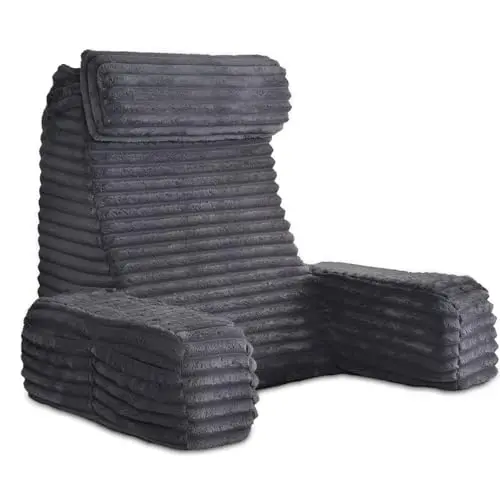
22-Inch XL Back Pillow – Firm Sit-Up Support With Pockets
A two-layer foam backrest built for long sit-up sessions in bed. A high-density base holds the shape while a high-resilience top layer softens the contact, and the 60-degree angle is shaped to support head, neck, shoulders, and lower back together. Oversized pockets on both sides and a carry handle make it easy to live with.
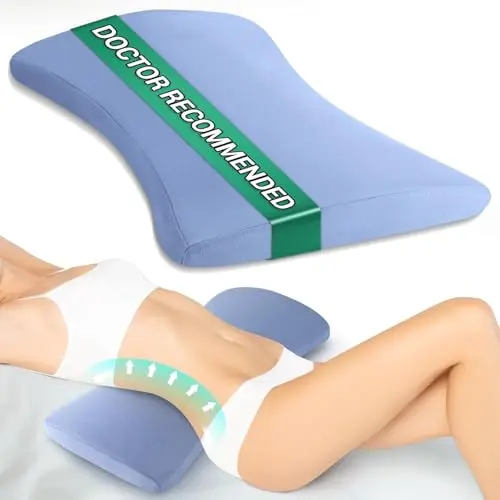
Memory Foam Lumbar Pillow – Overnight Lower Back Support
A memory foam lumbar pillow with an H-shaped profile designed to sit against the lower back during sleep. It doubles as a knee, leg, or foot bolster, and the breathable cover zips off for washing. At 60 x 26 x 5.5 cm it stays put without taking over the bed.
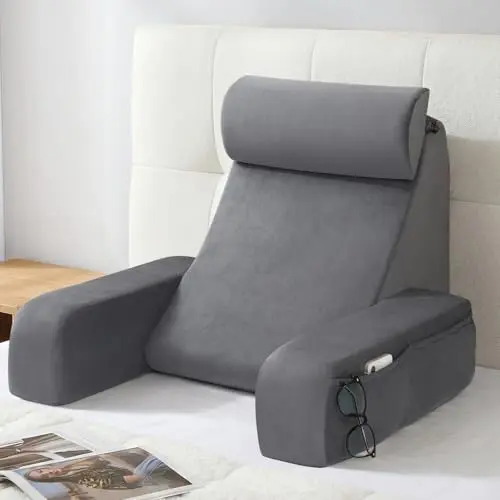
19-Inch Reading Pillow – Steady Fixed-Arm Backrest
A one-piece foam backrest with fixed arms that don’t shift when you lean back. The 45-degree wedge encourages upright posture, the enlarged side pockets hold a phone or remote, and the cover is machine washable. At 19 inches it’s the more compact of the two ENITYA options here.
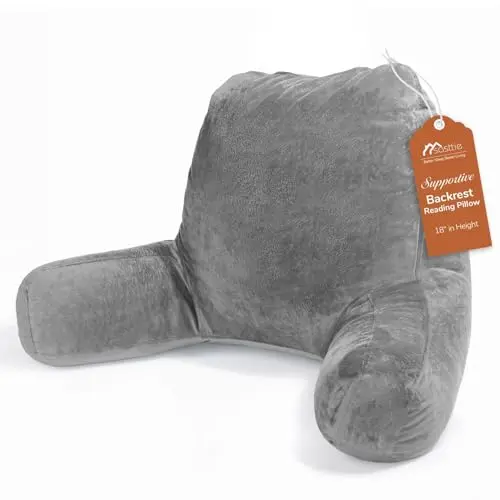
18-Inch Reading Pillow – Adjustable-Fill Bed Backrest
An 18-inch backrest stuffed with adjustable down-alternative fiber you can add or remove to dial in loft. A 200 GSM cover, a wide-opening zip for washing, and a carry handle round it out. It’s the softest sit-up option in this lineup rather than a firm support structure.
How We Evaluated These Back Support Pillows for Bed
We didn’t sleep a full night on each of these pillows or run compression tests on the foams. What we did: cross-referenced 4 back support pillow models from 3 distinct brands across six decision axes – fill and firmness, height and shape against body size, cover and care, positioning in bed, pockets and handles, and how well each design matches a specific way of using a bed. We mapped published specifications, audited feature sets, weighed owner feedback where available, and pressure-tested each option against representative buyer profiles for this category.
The scoring framework weighted real-world fit for bed use (70%) – how well a pillow does its stated job in the position you’ll actually be in – against feature differentiation (30%) – dual-layer foam, adjustable fill, oversized pockets, washable covers, and the other details that separate one model from the next. We have no commercial relationship with any of these brands; rankings track fit and differentiation, not brand preference. If you want support while sitting up, the ENITYA 22-Inch XL is the strongest match, and if you want support while asleep, the vamorry Lumbar Support Pillow is the better answer.
One caveat worth stating plainly: firmness preference varies enormously, and a pillow that fits a 5-foot-4 frame may sit wrong at 6-foot-2. Our read is only as good as the published specs and the patterns in owner feedback.
How to Choose the Right Back Support Pillow for Bed
1. Sitting Up vs. Sleeping: Two Kinds of Back Support Pillow for Bed
Almost every back support pillow sold for bed use falls into one of two families, and picking the wrong one is the most common mistake in this category. Sit-up backrests – the ones with arms and a tall back – are built for the hours you’re upright in bed: reading, watching TV, working on a laptop, nursing, or recovering from surgery. Sleeping lumbar pillows are low-profile wedges or rolls that sit against your lower back while you’re lying down.
They solve different problems. A backrest fixes posture during the day; a lumbar pillow protects the natural curve of your spine overnight. If you spend evenings propped against the headboard, go with the ENITYA 22-Inch XL. If you wake up stiff and want support during sleep itself, the vamorry Lumbar Pillow is the one to look at.
2. Firmness, Fill, and What Actually Holds Your Spine in Bed
Fill determines how a pillow behaves at hour six. High-density memory foam holds shape and won’t pack down, which is why it dominates the sleep-position side of this category. Down-alternative fiber is softer, lighter, and adjustable – you can add or remove loft – but it compresses more over a long evening. Two-layer foam composites, where a firm base sits under a resilient top layer, are the newest approach and the reason one model here feels more like furniture than cushioning.
Firmness is personal, but there’s a rule of thumb worth using: the more upright you sit, the more firmness you need to keep from sliding. Medium-firm covers most people sitting up to read; deliberately firm is better for recovery and multi-hour sessions. Soft and adjustable suits anyone who reads for twenty minutes and then flops sideways.
3. Matching Pillow Height to Your Frame and Bed Setup
Height is the spec people skip and later regret. A tall backrest should reach somewhere between your shoulder blades and the base of your neck when you’re sitting against it – roughly your seat-to-shoulder height minus an inch or two. The 22-inch option is sized for adults in the 5-foot-3 to 5-foot-11 range; the 18- and 19-inch models suit smaller frames or anyone who wants the pillow to disappear behind them when it’s not in use.
Sleeping pillows work on a different scale. A lumbar model around 60 cm long and a few centimeters thick is a low-profile lumbar that stays under your waist rather than levering you forward. Check bed clearance too: a tall backrest eats headboard space, and a wide one can crowd a narrow mattress.
4. Covers, Pockets, and Care: The Details That Decide Daily Use
Nearly every pillow here has a removable, machine-washable cover, but the cores are foam or fiber and shouldn’t go in the machine. A wide-opening zipper makes the difference between a cover you wash monthly and one you quietly avoid. Side pockets sound gimmicky until you’re holding a phone, a remote, and a glass of water at the same time; the larger pockets on the ENITYA models are genuinely useful, and the Sasttie carry handle is the simplest feature that gets used most.
Treat these as spot-clean-and-air items between washes. Foam cores hold odors, and a cover that goes back on damp will undo the effort.
5. What Back Support Pillows for Bed Cost at Each Tier
The category splits into three tiers without much middle ground. Entry-level sit-up backrests use polyester fiber fill and simple covers – the Sasttie Reading Pillow sits here, and it’s the right call if you want a soft, adjustable backrest without committing much. The middle tier buys denser foam, better fabric, and sturdier arms. The premium tier is where dual-layer foam and extra-large footprints live – you’re paying for longevity and long-session comfort rather than new features.
Spending more doesn’t guarantee a better night’s sleep. It buys structure that doesn’t sag, which matters most if you’ll use the pillow daily for an hour or more.
6. ENITYA vs. Sasttie vs. vamorry: Which One Fits Your Bed Routine?
The three brands here split along form factor rather than quality. ENITYA does firm, structured sit-up support in two sizes – 22-inch for taller frames and long sessions, 19-inch for smaller frames and softer density. Sasttie does soft, adjustable backrests that are easier to live with and easier to store. vamorry is the outlier: a genuine sleep-position pillow rather than a chair substitute.
Choosing between the two ENITYA sizes comes down to how long you’ll sit and how tall you are; taller readers and post-surgery recovery push toward the XL. If you want a backrest that folds into a closet, the ENITYA 19-Inch Reading Pillow is the more practical shape.
Frequently Asked Questions
1. What's the difference between the ENITYA 22-inch XL and the Sasttie reading pillow?
They’re built for different kinds of sitters. The ENITYA 22-Inch XL uses a two-layer foam core and a near-upright 60-degree angle, so it holds you in place for long sessions and resists compression. The Sasttie uses adjustable down-alternative fiber in an 18-inch shell, which makes it softer, lighter, and easier to reshape – but it gives noticeably less rigid support. Choose the ENITYA if you want structure, the Sasttie if you want plushness and portability.
2. How does the vamorry lumbar pillow compare with the ENITYA 19-inch for back pain?
One is for lying down, one is for sitting up. The vamorry is a low-profile memory foam lumbar pillow that sits against your lower back while you sleep, and it doubles as a knee or leg bolster. The ENITYA 19-Inch is a foam backrest with fixed arms that supports your whole torso while you’re upright. If stiffness shows up in the morning after sleeping, the vamorry targets the position that causes it; if it shows up mid-afternoon over a book, the ENITYA is the tool.
3. Can you sleep overnight on a back support pillow for bed?
Yes, but only with the right type. Sit-up backrests are too tall and too firm for a full night – they’re designed for hours, not sleep. A low-profile lumbar shape is the one to use overnight; the vamorry Lumbar Pillow is built exactly for that, and feedback suggests people reach for it nightly rather than occasionally. If you need elevation rather than support, try it under your knees instead of behind your back.
4. Are back support pillows for bed supposed to be firm or soft?
Firmness should track your position. Upright sitting needs a firm, high-density core so you don’t gradually slide down, and the ENITYA models lean that direction deliberately – the 22-inch is the firmer of the two. Lying down needs something softer and lower that fills the gap at your waist without levering you forward. The Sasttie occupies the soft end of the sit-up range, which suits short reading sessions better than long ones.
5. Does a back support pillow for bed need a washable cover?
It’s close to essential. Cores in this category are foam or polyester fiber and can’t go in a washing machine, so a removable, zippered cover is what keeps the pillow from becoming a nuisance. Check for a wide opening – narrow zips make covers hard to refit – and plan on washing monthly with air drying, since a damp cover put back over a foam core is a mildew problem waiting to happen.
Final Verdict
For most people shopping this category, the answer depends on which half of your bed time needs help. If it’s the upright half – reading, TV, recovery, nursing – the ENITYA 22-Inch XL is the pick, with the firmest structure and the most complete feature set here. If it’s the sleeping half, go straight to the vamorry Lumbar Pillow; it’s the only option built for the hours you’re horizontal.
Smaller frames and tighter rooms should look at the ENITYA 19-Inch Reading Pillow, which keeps the foam support but drops the bulk and the rigidity. And if you want a soft, adjustable backrest without spending much, the Sasttie Reading Pillow gets you most of the way there – just don’t expect it to hold a firm posture for hours. Pick the form factor first, then the model.
