
Best Backpacking Pillows For Side Sleepers – 2026 Reviews

You wake at 2 a.m. with a dead arm and an ear that feels like it’s been pressed into a brick. Side sleeping in a tent is a negotiation between your shoulder and whatever you brought to put under your head, and most camp pillows lose that negotiation badly.
The category really splits on two things. Loft – the height that’s still there after your body weight settles in – is the single biggest differentiator, and it’s the number most product pages quietly avoid. The second is what’s inside: air chambers are featherweight and tunable but can squirm or bottom out, while foam and fiber give you a stable surface at a genuine weight penalty.
We looked across the major brands selling backpacking pillows and graded them against the side-sleeper problem specifically, not against campers in general. A few excellent ultralight pillows land mid-pack here simply because four inches of air can’t fill a broad shoulder gap. Below are the ones that do, plus the ones worth carrying when weight is your binding constraint.
Best Backpacking Pillows for Side Sleepers – 2026 Reviews
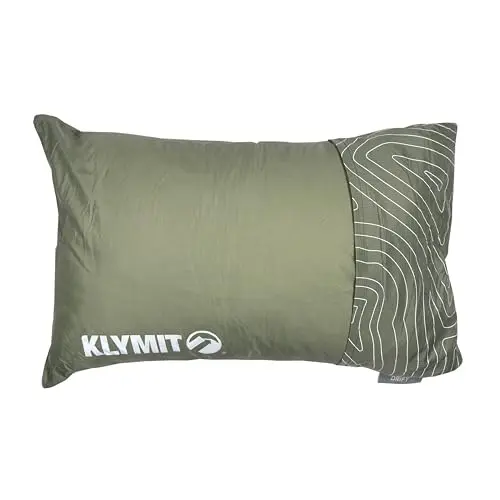
Drift – Shredded Foam Loft for Side Sleepers
Klymit fills the Drift with shredded memory foam and shapes it into an 18 x 12 x 5.5-inch surface, which makes it the tallest foam pillow in this lineup. The 70D polyester ripstop outer shell is water-resistant and zips off for washing, while a jersey cotton inner case keeps the surface soft. It packs down to 11 x 5 x 5 inches with the included compression strap and carries a two-year manufacturer warranty.
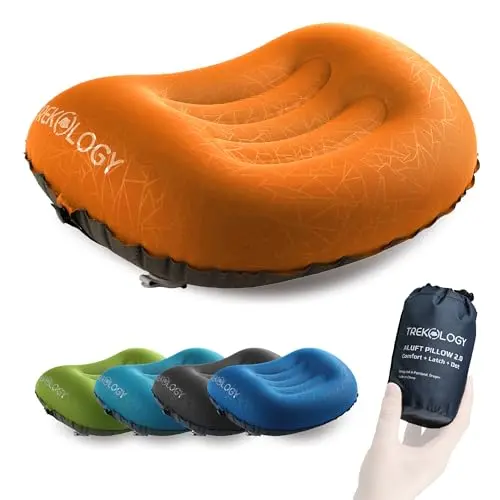
Aluft 2.0 – Ultralight Air Support for Side Sleepers
A 3.9-ounce inflatable that folds to 5 x 2 inches and inflates to 16 x 12 x 4 inches. The one-way valve lets you dial firmness breath by breath, and a quick-release deflate empties it in seconds. Rubber anti-slip dots and a latch strap hold it against a sleeping pad, and the TPU fabric is water-resistant. Hand wash only.
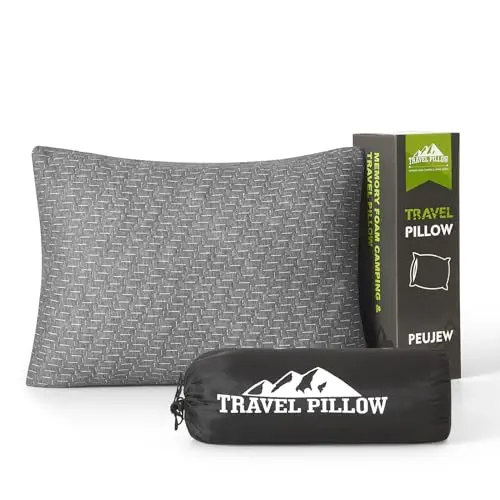
Shredded Memory Foam Camp Pillow – Five Inches of Budget Loft
A 16 x 12 x 5-inch shredded memory foam pillow with a soft microfiber cover that zips off and machine washes. It weighs 1.3 pounds, comes with a travel bag for packing, and the moldable fill can be pushed into shape for neck support. Intended for travel, camping, backpacking, and car use.
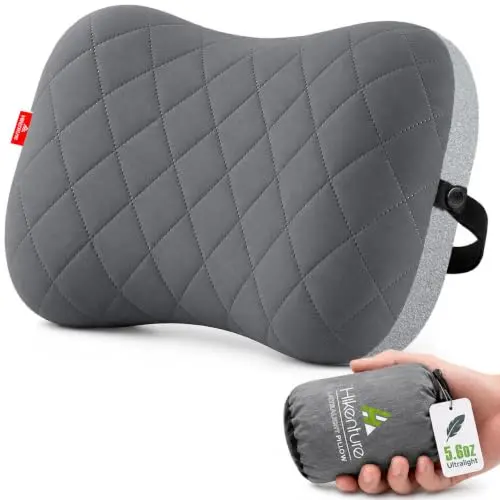
Camping Pillow with Removable Cover – Inflatable Support You Can Wash
A 17.3 x 12.2 x 4.7-inch inflatable built around a separate thickened TPU bladder, with a breathable cotton outer cover that zips off for washing. The one-click valve inflates in a few breaths and deflates in seconds, and a detachable elastic strap anchors it to a pad. It weighs 5.6 ounces and packs to roughly soda-can size.
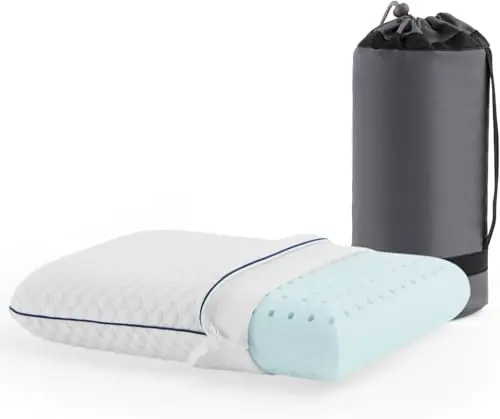
Cooling Gel Camping Pillow – Travel-Size Foam with a Three-Year Warranty
An 18 x 12 x 3.5-inch travel-size pillow made from ventilated gel memory foam at a medium-firm feel. The zippered polyester cover is machine washable and dryer safe, a carry bag is included, and the pillow ships compressed and needs a day or two to reach full height. Backed by a three-year limited warranty.
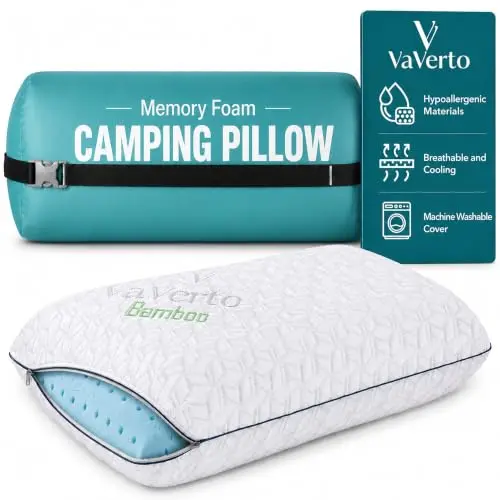
Camping Memory Foam Pillow – Hypoallergenic Foam in a Carry Case
An 18 x 12-inch gel-infused memory foam pillow with a medium-firm feel, ventilation holes through the foam, and a heat-regulating cover. The shell and foam are hypoallergenic, the cover is removable and machine washable, and a snap loop plus carry case make it easy to clip to a pack. The foam itself should not go in a washer or dryer.
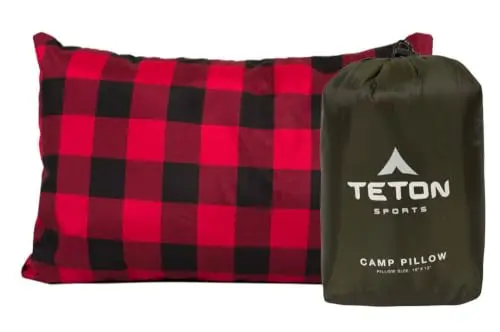
Camp Pillow – The Washable Fiber Classic
An 18 x 12-inch fiber-filled camp pillow that lofts on its own with no inflation required. The pillow and pillowcase can be washed together or separately, a stuff sack is included, and it matches the lining of Teton sleeping bags. It weighs 9.6 ounces and carries a lifetime warranty against manufacturing defects.
How We Evaluated These Backpacking Pillows for Side Sleepers
We did not see these through a full season of field use. What we did: cross-referenced 7 backpacking pillows from 7 distinct brands across 6 decision axes – loft height under compression, fill type, packed weight and volume, firmness and adjustability, cover care and washability, and warranty support. We triangulated published specifications, feature sets, and owner feedback where available. Where a manufacturer publishes a thickness figure, we treated it as an unloaded measurement and read it against how the fill actually behaves under weight. Then we mapped each option against the physical problem side sleepers have: filling the gap between a shoulder and a sleeping pad without your ear taking the load.
Because a pillow that’s excellent for a back sleeper can be mediocre for a side sleeper, we weighted scoring toward real-world fit. 70% of each score reflects how well the pillow solves the side-sleeping problem at its intended weight and packed size, and 30% reflects feature differentiation – valve design, cover construction, straps, fill behavior, and coverage. Pillows that quote big loft and collapse under a head were scored down; pillows that quote less and hold it were scored up. We have no commercial relationship with any brand here, and the ranking tracks fit and differentiation rather than brand preference. If you want maximum loft and will carry the weight, the Klymit Drift is your match; if pack weight is non-negotiable, the Trekology Aluft 2.0 is the better answer.
How to Choose the Right Backpacking Pillows for Side Sleepers
1. Why Loft Matters More for Side Sleepers Than Fill Type
Sleep on your side and your shoulder holds your head several inches off the pad, so a pillow has to fill that gap or your neck bends and your ear takes the pressure. The number that matters isn’t the quoted height – it’s loft under compression, the height that survives your head settling in. A pillow quoted at six inches that squashes to two is worse for side sleepers than a four-inch pillow that holds its shape.
This is where the lineup separates. Air pillows can be pumped firm enough to hold height but feel tippy; shredded memory foam can be pushed into shape and stays put; solid foam holds firm but can’t be re-shaped; fiber feels great until it flattens. If you want the most usable loft without an air chamber, the Klymit Drift is the pick.
2. Inflatable, Memory Foam, or Fiber: Which Pillow Suits Side Sleepers
Each fill trades away something. Inflatable pillows win on weight and packed size – a few ounces and a fist-sized bundle – and an adjustable valve lets you tune firmness night to night. The tradeoff is a narrow comfort window: too soft and you bottom out, too hard and it feels like a balloon. Shredded and solid memory foam delivers a stable, familiar sleeping surface with real height, at roughly three to five times the weight. Fiber-filled pillows are the softest and simplest to wash, but they compress the most under a head.
For side sleepers specifically, foam is usually the better starting point because height under load is the hardest thing to fake. If pack weight dominates your decisions, start with air and accept that you’ll be tuning it.
3. Packed Weight and Volume: The Backpacking Tax on Side Sleeper Comfort
The category runs from roughly four ounces to well over a pound, and almost all of that spread is fill. An air pillow that packs to the size of a soda can costs you almost nothing in base weight; a five-inch foam pillow costs you a real chunk of it. Neither is wrong – it depends on whether you’re thru-hiking and counting grams or basecamping and sleeping well.
A reasonable rule: on shorter trips, most people will happily trade the weight for a better night. Deep into a long thru-hike, the ultralight option earns its place because exhaustion does a lot of the work. Either way, check the packed dimensions, not just the number on the scale – a pillow that won’t fit a pack lid or side pocket is a pillow you’ll resent carrying.
4. Firmness, Straps, and Keeping the Pillow Under Your Head
Side sleepers roll, and a pillow that slides off the pad at 3 a.m. is worse than no pillow. Look for anti-slip dots, a latch or elastic strap, or simply a wide enough footprint to stay put. On an inflatable pad a strap matters more than on a foam pad, because the surface is slicker.
Firmness comes second only to loft. A pillow you can adjust with a valve lets you add air on cold nights when the pad firms up, or bleed it when you want to sink in. Foam pillows can’t be tuned, so match the quoted firmness to what you already sleep on at home – if your bed pillow is soft, a medium-firm camp pillow will feel like a brick for the first hour.
5. Care and Durability: What Actually Wears Out on a Camping Pillow
Air pillows fail at the valve and the seams, not the fabric. A one-way valve that stops sealing turns a pillow into a flat sack, and that’s the most common end-of-life story in this category. Foam pillows don’t puncture, but they absorb sweat and tent condensation, so a removable, machine-washable cover is the feature that decides how many seasons you get out of one.
Read the care instructions before you buy. Some covers machine wash while the bladder or foam is hand wash only, and some inflatables are hand wash across the board. The Hikenture shows the pattern done right: the cover comes off and washes, while the TPU bladder stays out of the machine.
6. What Side Sleepers Get at Each Price Tier
Entry-level pillows are usually basic inflatables or small shredded-foam pillows with thinner covers. They work, and a few are genuinely good values – the Peujew gives you five inches of moldable fill without a premium price. Mid-range money buys better valves, removable washable covers, gel-infused foams, and more consistent construction. At the top of the category you’re paying for real loft, water-resistant shells, and warranties that run past a season or two.
Spend on loft and cover washability first, weight second, and brand name last. A bigger logo doesn’t reliably buy a better night’s sleep in a tent.
Frequently Asked Questions
1. What's the difference between the Klymit Drift and the Trekology Aluft 2.0?
They solve the same problem from opposite ends. The Klymit Drift is 5.5 inches of shredded memory foam that weighs about 19 ounces and packs to a small brick – you’re buying loft and a stable surface and paying for it in pack weight. The Trekology Aluft 2.0 is 3.9 ounces of air in a bundle smaller than a soda can, with a valve you can tune from soft to firm.
Pick the Drift if you sleep on your side with a broad shoulder and you’re not counting grams. Pick the Aluft 2.0 if you’re covering long miles and can make four inches of firm air work.
2. Is a 4-inch inflatable pillow thick enough for side sleepers?
Often, yes – with a caveat. Inflated firm, four inches of air holds height better than four inches of fiber because air doesn’t compact the way fill does. The limit is shoulder width: broader frames need more gap filled, and no amount of air fixes a pillow that’s simply too short. A common fix is to over-inflate slightly and then bleed air until your ear stops feeling pressure.
If you’d rather not tune anything, go with foam. If you want the lightest plausible option, the Trekology Aluft 2.0 is the one we’d point you to, since the one-way valve gives you a real firmness range.
3. How do the Peujew and Vaverto memory foam pillows compare?
Both are compact foam pillows, but they behave differently. The Peujew uses shredded foam you can mold, which is the more forgiving option for side sleepers – you can push fill under your neck and flatten a pocket for your ear. Its cover machine washes, and it’s the lighter of the two.
The Vaverto is a medium-firm gel-infused foam with a hypoallergenic build and a snap loop for clipping to a pack. It’s the better pick if you want a fixed, supportive feel and you’re sensitive to allergens; the Peujew is the better pick if you want to shape the pillow every night.
4. Do side sleepers need a strap to keep a camping pillow in place?
“Need” is strong, but it helps more than most people expect. Inflatable pads are slick, and a pillow with no anchor will migrate when you roll. A detachable elastic strap or a latch strap solves it cheaply; rubber anti-slip dots on the underside are a decent second line of defense. On a foam pad, a wide pillow usually stays put on its own.
5. How much does a backpacking pillow for side sleepers weigh?
Anywhere from about four ounces to well over a pound. Inflatables sit at the bottom of that range; foam pillows sit at the top. The Weekender lands in the middle at just over a pound, which is about what you’d expect for gel memory foam with a real cover and a three-year warranty.
Weigh it against what you’re already carrying. If your base weight is dialed in, a few extra ounces for a pillow you actually sleep on is usually weight well spent.
Final Verdict
For most side sleepers, the Klymit Drift is the answer. It’s the only pillow here that gives you genuine foam loft – five and a half inches of shreddable fill – and it still compresses into a package that fits in a pack lid. The weight is the price of admission, and it’s a fair trade if you sleep on your side rather than counting every gram. If you are counting grams, the Trekology Aluft 2.0 gets you firm, adjustable air support for a fraction of the weight; just accept that four inches is the ceiling. Budget-minded shoppers who still want real loft should look at the Peujew, and hot sleepers who want foam with a long warranty will do well with the Weekender. Match the pillow to your shoulder width and your base weight, and the middle of the night stops being the enemy.
