
Best Battery Powered Coffee Makers – 2026 Reviews

Somewhere around the third morning of a camping trip, instant coffee stops being charming. The same thing happens in a hotel room with a sad pod machine, on a job site at 5 a.m., or in an RV where the inverter complains every time you switch the kettle on. What you actually want is hot coffee, made from real grounds, without hunting for an outlet.
That’s the promise of a battery powered coffee maker, and the category delivers on it unevenly. Two things separate a genuinely useful machine from a shelf ornament. The first is self-heating – if the unit can’t heat its own water, it isn’t cordless, it just moved the job to your thermos. The second is capacity per charge, because a brewer that manages one tiny shot before dying is a novelty, not a coffee maker.
We looked across the market rather than down a single brand’s catalog, from power-tool ecosystems to pocket espresso rigs, and compared how each option handles heat, pressure, pod compatibility, and weight. What follows is a buyer’s guide to the whole category, not a cheerleading section for one label. The right answer depends on whether you want a shot or a mug, and whether you’re carrying it or loading it into a truck.
Best Battery Powered Coffee Makers – 2026 Reviews
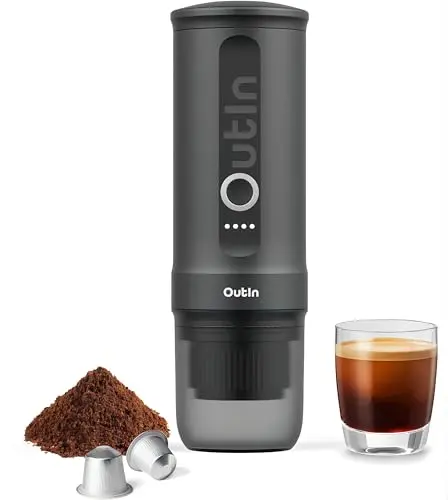
Nano – Self-Heating Espresso Anywhere
The OutIn Nano is the closest thing here to a genuinely packable espresso setup: a 670-gram body, a 20-bar pump, and a heating element that takes room-temperature water to brewing temperature in about 200 seconds without a kettle. It pulls from either ground coffee or Nespresso Original-style capsules and recharges over USB-C from a wall brick, a power bank, or a car charger.
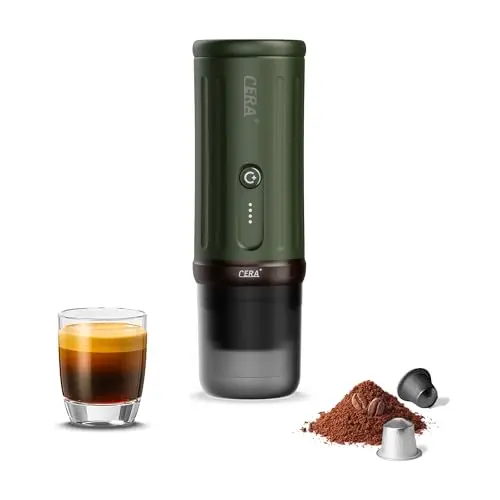
PCM03S – Longest-Running Portable Espresso
The PCM03S takes the pocket espresso formula and stretches the battery: it’s rated for up to eight hot shots per charge from cold water, and it heats that water to brewing temperature in roughly 140 seconds – the quickest heat-up in this lineup. A 20-bar pump builds crema, the body is stainless steel at just over 700 grams, and it accepts either Nespresso-style pods or loose grounds.
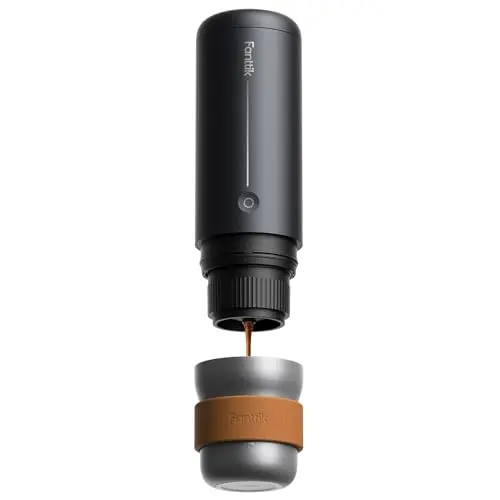
Cafein 11 – Weather-Sealed Espresso on the Go
The Cafein 11 is the outdoorsy one: an IP65 rating against dust and moisture, a pressure-sensitive touch switch sealed into the body, and a heating cycle that reaches brewing temperature in about 135 seconds. It’s rated for roughly eight shots per charge from room-temperature water, supports pass-through charging so it can keep brewing while plugged in, and adds an eight-second pre-soak for more even extraction. It takes Nespresso Original capsules and ground coffee.
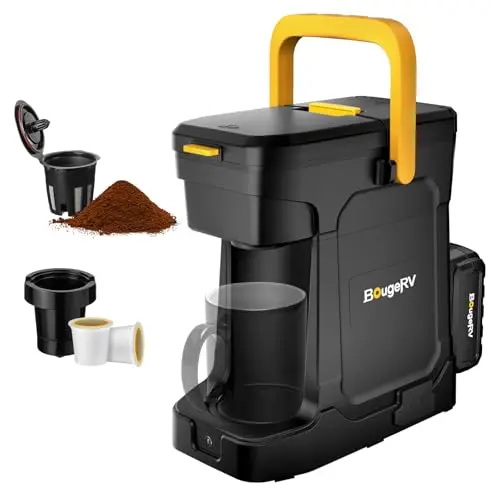
CM01 – Full-Mug Battery Drip Brewer
The CM01 goes the other direction entirely: instead of a shot, it brews a full eight-ounce cup of drip coffee, and its removable 144Wh battery is rated for dozens of cups per charge. It accepts K-Cup pods or ground coffee, runs either cordless or from a wall outlet with the included AC cord, and has a hidden handle plus enough cup clearance for a travel mug.
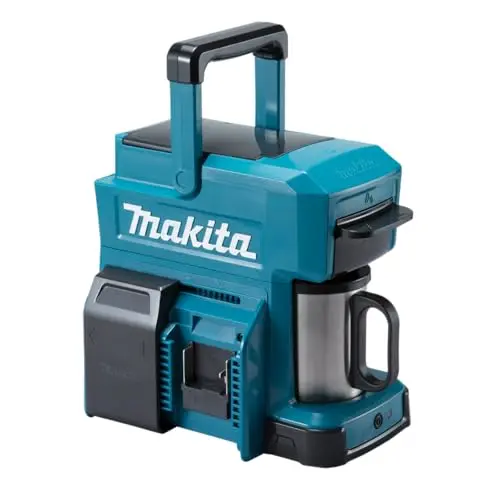
DCM501Z – Cordless Drip for Your Tool Kit
The DCM501Z is a drip brewer built to run on Makita’s 18V LXT or 12V max CXT slide-on batteries – the same packs that power the drills in a lot of garages. It brews a five-ounce cup, uses a permanent filter so there are no paper cones to pack, and accepts either single-serve pods or loose grounds. Battery and charger are sold separately.
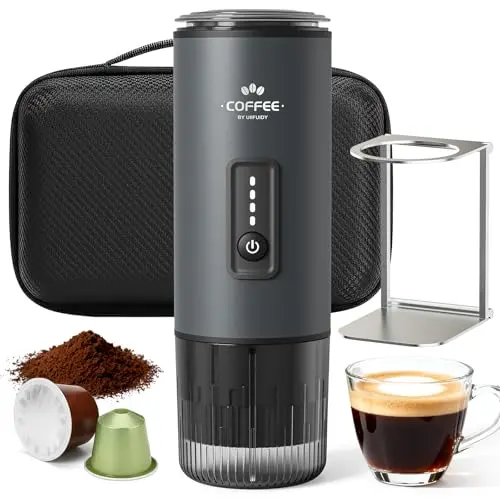
WY-007 – Budget 3-in-1 Espresso Kit
The WY-007 is the most complete kit in this lineup for the money: the brewer, a padded carrying case, and a folding coffee stand all in one box. It runs a 20-bar pump and a self-heating cycle that takes room-temperature water to brewing temperature in about three minutes, and it accepts ground coffee plus Nespresso- and Dolce Gusto-style capsules.
How We Evaluated These Battery Powered Coffee Makers
We didn’t stand at a trailhead at dawn timing brew cycles with a stopwatch. What we did: cross-referenced six battery powered coffee makers from six distinct brands across five decision axes – self-heating capability, capacity per charge, coffee-format flexibility, weight and packability, and cup or mug clearance. Published specifications and included-accessory lists were triangulated against each machine’s stated use case, and we mapped owner feedback where available to surface the failure modes that a spec sheet never mentions.
Two questions drove most of our scoring. Does the machine heat its own water, because that single feature separates a true cordless brewer from one that still needs a kettle. And how many cups a charge realistically delivers, because a brewer that dies after a shot is a novelty no matter how good that shot is.
The scoring framework weighted real-world fit and performance (70%) – how well each unit serves its intended buyer in actual use – against feature differentiation (30%) – pump pressure, pod support, sealing, build materials, and what comes in the box. We have no commercial relationship with any brand here; recommendations track fit and differentiation, not brand preference. If you want real espresso from a pack, the OutIn Nano is your match; if you need a full mug for several people, the BougeRV CM01 serves you better.
One honest limit: we did not run controlled brew-temperature or battery-drain measurements in a lab. This is built on published specs, feature sets, aggregated owner feedback, and judgment about what holds up outside a kitchen.
How to Choose the Right Battery Powered Coffee Maker
1. What Battery Powered Really Means for a Coffee Maker
Almost every machine in this category carries a battery. Far fewer can heat water with it. That distinction is the single most important thing to check before you buy, because a brewer that only pumps – and needs pre-heated water from a kettle or thermos – hasn’t freed you from an outlet. It’s just moved the job somewhere else.
True self-heating machines draw enough wattage to take cold water to brewing temperature internally, which is why they carry larger cells and cost more. The rest of the category splits into brewers that run on a power-tool battery platform you may already own, and models built around a removable battery pack paired with a small drip brewer.
2. Espresso Shots vs. Full Mugs: Decide Before You Shop
The category divides down the middle: portable espresso machines that pull a concentrated 1.7-ounce shot at 20 bar, and drip coffee makers that brew a five- to eight-ounce cup. Neither is better. They serve different habits.
If your morning is one strong shot and you’re moving, an espresso unit is smaller, lighter, and faster. If you want a mug you can hold for twenty minutes, or you’re brewing for more than one person, a drip model is the only thing here that gets you there. Be honest about which person you are – a great espresso machine is a frustrating coffee maker if what you wanted was a mug.
3. How to Read a Battery Powered Coffee Maker's Capacity Claim
Capacity claims here are almost always measured in 1.7-ounce espresso shots from cold water, which is the least favorable case and therefore the most honest one. A machine rated for five to eight shots is doing real work; a machine rated for hundreds of cups is doing it with hot water you supplied yourself.
The second variable is ambient and water temperature. Cold water on a cold morning costs more energy than the spec sheet assumes, so treat any published cup count as a best case. If you need coffee for four people, look for a large removable pack rather than the highest shot count on a pocket unit.
4. Pod Compatibility Is Narrower Than the Listings Suggest
Capsule support is where listings get loose. Several machines here accept Nespresso Original-style pods; at least one explicitly supports only that format; others list Dolce Gusto and Vertuo-compatible pods; and the drip brewers take K-Cup pods. Those formats are not interchangeable, and a pod you already own is worth more than a spec you don’t.
If you want the widest capsule coverage in this lineup, the Uiifuidy WY-007 takes grounds plus Nespresso- and Dolce Gusto-style pods. If you have no pod stash yet, buy for ground coffee compatibility and treat pods as a convenience – every self-heating machine here accepts loose grounds, and a reusable basket means no ongoing cost per cup.
5. Heat-Up Time, Pressure, and What They Change in the Cup
Heat-up times in this lineup run from roughly 135 seconds to a little over three minutes for cold water. That range matters less than it sounds, since you’re grinding or unwrapping pods anyway, but under three minutes is the threshold where it stops feeling like a wait.
20-bar pumps are now standard among the espresso units, and pressure beyond the classic 9-bar espresso benchmark is mostly about crema thickness rather than flavor intensity. Pre-soak is the feature that actually changes the cup – a short wetting phase before full pressure produces more even extraction. Drip brewers live or die on water temperature and contact time instead, so expect six to eight minutes for a full mug.
6. Weight, Cup Clearance, and the Details That Decide Daily Use
Portable espresso machines cluster between roughly 1.5 and 1.8 pounds, which is thermos territory and easy to justify in a daypack. Drip brewers with a real battery pack land nearer six pounds – packable, but a decision rather than an afterthought. For damp or dusty trips, the sealed Fanttik Cafein 11 is the one built for it.
The spec nobody reads until it bites is cup clearance. If you want to brew straight into a tall travel mug, check the height under the spout – one drip model here tops out around three and a half inches, while another handles mugs up to five. Cleaning matters just as much: removable water tanks and dishwasher-friendly filter baskets are worth more over a year than any single feature on the box.
7. What Battery Powered Coffee Makers Cost at Each Tier
Budget-friendly models sit in the entry-level tier and typically bundle a case or stand to offset a smaller battery. Mid-range units are where self-heating performance and shot capacity improve noticeably. The premium tier buys either faster heat-up and more shots per charge, or a much larger removable battery aimed at group brewing.
One cost trap worth flagging: some brewers are sold as tool-only bodies with no battery or charger in the box. That’s legitimate for people already invested in a power-tool platform and a hidden surcharge for everyone else. If you own the packs, the Makita DCM501Z is the one that makes financial sense – otherwise add the pack and charger before comparing it to a self-contained unit.
Frequently Asked Questions
1. Are battery powered coffee makers actually hot enough to brew properly?
Yes, if the machine is self-heating. Those units target roughly 198F (about 92C) before extraction begins, which sits inside the acceptable brewing range for both espresso and drip. Machines that can’t heat will still make coffee – you supply hot water from a kettle or thermos first.
The practical thing to watch is a cold morning. Cold intake water costs more battery, and a unit rated for eight shots in mild conditions may deliver noticeably fewer at freezing. Pre-warming the water yourself is the standard workaround, and it extends shot capacity dramatically – several machines here are rated past a few hundred cups in that mode.
2. What's the difference between the OutIn Nano and the Fanttik Cafein 11?
They’re close in concept and diverge in intent. The OutIn Nano is lighter at 670 grams, heats in about 200 seconds, and takes ground coffee plus Nespresso Original-style capsules – a general-purpose travel machine. The Fanttik Cafein 11 is heavier, heats faster at around 135 seconds, and adds an IP65 rating plus an eight-second pre-soak and pass-through charging.
Read that as indoors-friendly versus outdoors-ready. Go with the OutIn Nano if weight is the priority and your trips are mostly hotels, offices, and campgrounds. Choose the Fanttik if you’ll be somewhere damp or dusty and want the sealed switch and the pre-soak extraction.
3. How does the Makita DCM501Z compare to the BougeRV CM01?
Both brew drip coffee rather than espresso, and that’s where the similarity ends. The Makita is a tool-only body with no battery or charger, sized for five-ounce cups at roughly three per 5.0Ah pack, and built for people already on Makita’s 18V LXT platform. The BougeRV ships with its own removable battery, brews full eight-ounce mugs, and is rated for dozens of cups per charge.
If you own the batteries, the Makita DCM501Z is a clean, compact, long-warranty addition to a kit you already have. If you don’t, the BougeRV CM01 is the self-contained choice and the better fit for RV or group use.
4. How many cups can I realistically brew on one charge?
Treat published numbers as a best-case figure from cold water. In practice, the pocket espresso machines here cluster around five to eight hot shots per charge, and drip models with removable packs go far higher because their batteries are physically larger.
Two multipliers change the math: water temperature, since pre-heated water is nearly free energy-wise, and ambient conditions. A charge that gives you six shots in a warm kitchen may give four in a cold tent. If you routinely brew for more than two people, weight battery capacity more heavily than heat-up time.
5. Do these machines work with ordinary ground coffee?
Every self-heating espresso unit in this lineup accepts loose grounds through a reusable filter basket, and both drip brewers do as well. That’s the format that never locks you into a pod supply chain – and usually the one that produces the better cup, since you control grind and dose.
The catch is grind size. Espresso baskets want a fine, consistent grind; a coarse supermarket grind runs through fast and tastes thin. For drip models, a medium grind is the target. A small hand grinder is the single biggest quality upgrade for any of these machines.
6. Can I take a battery powered coffee maker on a plane?
Generally yes, in carry-on baggage only – lithium batteries aren’t permitted in checked luggage. At least one manufacturer here explicitly states the machine must travel in the cabin and must not be operated during flight.
Capacity limits vary by airline and country, so check your carrier’s watt-hour threshold against the battery in the unit you’re considering. The pocket espresso machines sit comfortably inside typical limits; a large removable pack is the one to verify before you fly.
Final Verdict
For most people, the OutIn Nano is the answer. It’s light enough to actually carry, it heats its own water in about three minutes, and it takes both grounds and capsules – the combination that makes a battery powered coffee maker useful rather than decorative. If you want more shots per charge and a quicker heat-up, the CERA+ PCM03S is the step up, with the caveat that you’re betting on a shorter track record.
Brewing for a group or an RV? The BougeRV CM01 makes real eight-ounce mugs and keeps going for dozens of them. And if you want the full kit – case, stand, and the broadest pod support here – for the least money, the Uiifuidy WY-007 is the sensible entry point. Match the machine to how you actually drink coffee, and the outlet stops being the constraint.
