
Best Bean To Cup Coffee Makers – 2026 Reviews

There’s a specific kind of coffee disappointment: you buy good beans, grind them the night before, and the cup you pour the next morning tastes flat and faintly like cardboard. Freshness is the whole argument for a bean to cup machine. Beans go into the hopper whole, get ground seconds before the water hits them, and you skip both the second appliance and the emergency bag of pre-ground in the pantry.
The catch is that “bean to cup” covers a wide spread of machines. Some are essentially drip brewers with a grinder mounted on top. Others are espresso setups with conical burrs and PID-controlled water temperature, where the machine grinds on demand straight into a portafilter. The two axes that separate the satisfying options from the frustrating ones are grind quality and how much of the process you personally have to babysit.
We looked across the market at both styles – espresso-first machines, drip grind-and-brew units, and hybrids that handle several drink types – and weighed where each one earns its footprint on the counter. What follows is a cross-brand survey built to help you match the machine to how you actually drink coffee, not to sell you the fanciest one.
Best Bean to Cup Coffee Makers – 2026 Reviews
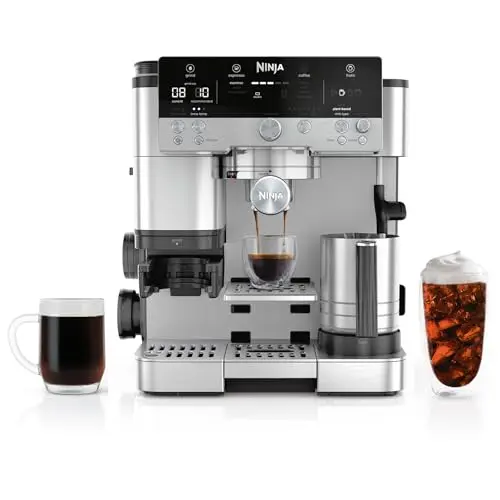
Luxe Cafe Premier ES601 – Espresso, Drip, and Cold Brew in One
The Luxe Cafe Premier is the closest thing here to a genuinely push-button bean to cup experience. A built-in conical burr grinder with 25 settings feeds a machine that pulls double or quad espresso shots, brews drip coffee in classic, rich, or over-ice styles, and makes cold brew or cold-pressed espresso. Barista Assist handles grinding, weight-based dosing, assisted tamping, and real-time temperature and pressure adjustment based on the drink you selected. The dual froth system covers steamed milk, thin or thick froth, and cold foam using a spinning whisk plus automatic steaming – pour the milk, choose a style, and walk away.
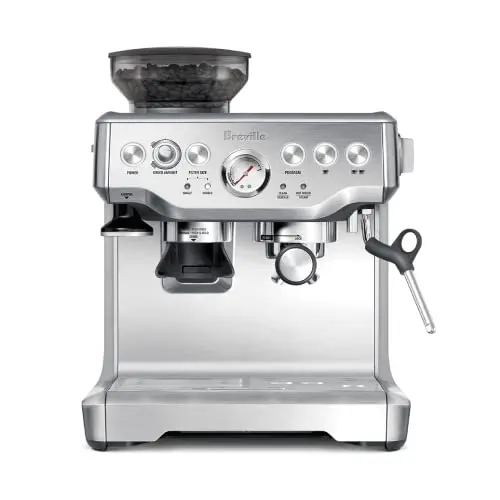
Barista Express BES870XL – Manual Espresso With Built-In Grinding
The Barista Express is the espresso purist’s answer to bean to cup. An integrated conical burr grinder doses freshly ground coffee directly into a 54mm portafilter, and you take it from there. Low-pressure pre-infusion ramps up gradually to draw flavor evenly through the puck, PID temperature regulation holds the water where it needs to be, and the steam wand is built for hand-textured microfoam rather than push-button froth. A grind size dial and adjustable dose give you real control over the shot. It ships with a razor dose trimming tool, single and dual wall baskets, an integrated tamper, a milk jug, and a water filter.
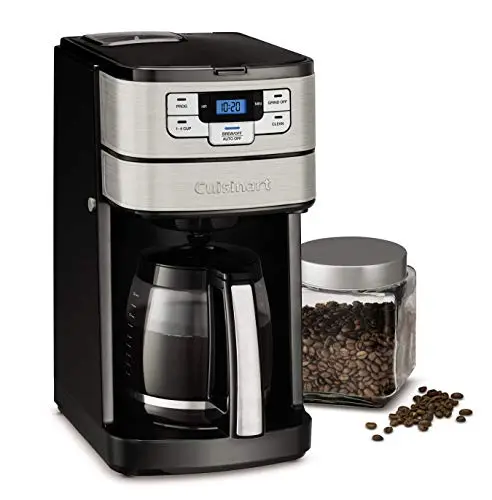
DGB-400NAS – 12-Cup Grind-and-Brew With Grind-Off Flexibility
Cuisinart’s take on bean to cup is a full 12-cup drip brewer with a blade grinder built into the top. Beans grind right before the brew cycle, and a grind-off option lets you switch to pre-ground without changing machines. A permanent gold-tone filter and a built-in charcoal water filter handle the rest. The 1-4 cup setting scales the brew down for quieter mornings, Brew Pause lets you grab a cup mid-cycle, and the unit is programmable with auto shutoff and a self-clean cycle.
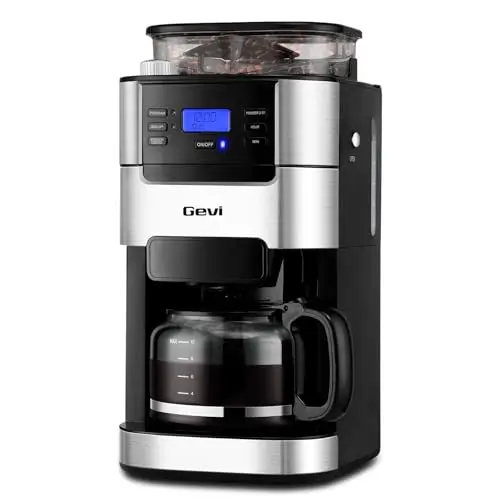
10-Cup Grind & Brew – Burr-Ground Drip on a Programmable Timer
Gevi packs a burr grinder, eight grind settings, and three brew-strength levels into a 10-cup drip machine that undercuts most burr-equipped brewers on price. A pre-brew phase saturates the grounds at temperature before the main cycle, which is meant to pull more aroma out of the bed. The POWDER 2-10 button adjusts the water-to-coffee ratio whether you’re brewing a full carafe or a couple of cups, and a 24-hour programmable timer plus a keep-warm plate mean the pot is ready when you walk in. A reusable filter replaces paper entirely.
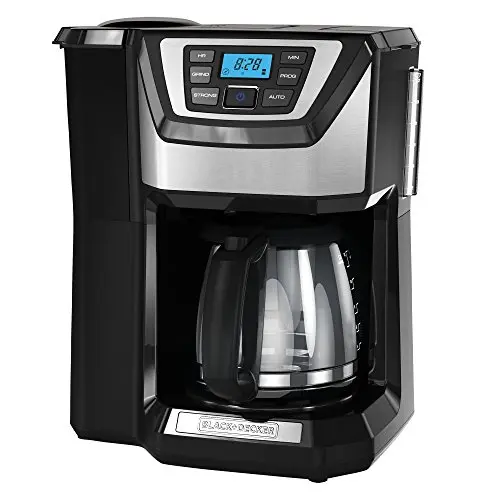
CM5000B – 12-Cup Grind and Brew for Small Budgets
The BLACK+DECKER CM5000B covers the bean to cup basics at the entry end of the market. A built-in grinder takes whole beans right before brewing, a 12-cup carafe handles a full household, and the programmable timer sets the cycle overnight. Sneak-A-Cup pauses the brew so you can pour a cup mid-cycle without a mess, the permanent filter goes in the dishwasher, and the whole thing is about as uncomplicated as a grinder-equipped brewer gets.
How We Evaluated These Bean to Cup Coffee Makers
We didn’t pull shots, weigh grinds, or log brew temperature in a lab. What we did: cross-referenced 5 bean to cup coffee makers from 5 distinct brands across six decision axes – grinder type and adjustability, brew capability, capacity, cleaning and maintenance burden, counter footprint, and how much of the process the machine automates. We triangulated published specifications, feature sets, and long-term owner feedback where available, then mapped each machine against real buyer profiles: the espresso-curious beginner, the full-carafe household, and the person who wants one button before 7am.
Grinder type carried more weight than any other spec. A burr grinder with adjustable settings produces a more even particle size than a blade, and in a bean to cup machine that difference lands directly in the cup – there’s no second grinder to compensate. We also weighed how often each unit needs the grind chamber or brew path broken down for cleaning, because a machine that’s annoying to maintain stops getting used.
The scoring framework weighted real-world performance (70%) – how well each option delivers the beans-in, coffee-out promise on its intended drink style – against feature differentiation (30%) – grind control, drink range, and automation that actually changes the daily routine. We have no commercial relationship with any brand here; recommendations track fit and differentiation, not brand preference. If you want the widest drink range with the least effort, the Luxe Cafe Premier is your match. If you’d rather learn to pull a real shot, the Barista Express serves you better.
How to Choose the Right Bean to Cup Coffee Maker
1. Burr vs. Blade: What Bean to Cup Grinding Really Means
Every machine here grinds, but they don’t grind the same way. Burr grinders crush beans between two abrasive surfaces and produce particles of similar size, which is why they’re the standard for espresso and the better bet for drip. Blade grinders chop, so you get powder and chunks in the same dose – some of the bed over-extracts while the rest under-extracts.
Adjustability matters almost as much as the burr type. A machine with eight or more grind settings lets you move coarser for a long drip brew and finer for espresso. A fixed grind is a fixed cup. If you plan to switch between drink styles, grind range belongs near the top of your checklist.
2. Espresso, Drip, or Both: Matching the Machine to Your Morning
This is the fork in the road. Espresso-first machines do one thing well – concentrated shots and milk drinks – at the cost of a longer, more hands-on morning routine. Drip grind-and-brew machines make a carafe you can pour from for an hour, which is what most households actually want on a weekday.
A hybrid covers both, and that’s where the Luxe Cafe Premier earns its counter space: espresso, drip in multiple styles, and cold brew from a single hopper. The tradeoff is size, weight, and more components to clean.
3. How Much Hands-On Work Should a Bean to Cup Coffee Maker Require?
Bean to cup doesn’t mean hands-off. On the manual end you’re doing dosing, tamping, pulling, and steaming – a five-minute ritual with a real learning curve. On the assisted end, guided dosing and assisted tamping mean the machine sets the parameters and adjusts pressure as it pulls.
Be honest about which one you’ll actually use at 6:45am. If the answer is neither and you want one button, the Barista Express is the wrong buy no matter how good its shots are. If you enjoy the process, the manual route gets you better results for the money.
4. Capacity, Carafe, and Counter Space
Capacity ranges from a single espresso shot to a dozen cups of drip. Match it to what your household drinks in one sitting, not your heaviest Sunday. A 1-4 cup setting keeps a solo brew from tasting thin.
Footprint is the spec people forget. Grinder-equipped brewers run taller than standard drip machines because the hopper sits on top, so measure width, depth, and cabinet clearance before ordering. Nothing kills the morning routine faster than a machine that only fits after you clear a shelf.
5. Cleaning and Maintenance: The Part Nobody Mentions in the Store
A built-in grinder adds a cleaning step a plain drip machine doesn’t have. On most grind-and-brew units the grind chamber needs emptying and rinsing regularly, and some designs require disassembly after every brew. Espresso machines add backflushing and descaling on a schedule.
Weigh that against how often you’ll realistically do it. A self-clean cycle and removable filter components make a machine easier to live with long-term. Descaling powder and cleaning tablets are consumables, so plan for them.
6. What Each Price Tier Gets You in a Bean to Cup Coffee Maker
Entry-level machines get you a built-in grinder, a programmable timer, and a full carafe of decent drip coffee – the CM5000B is the template. Grind adjustment is usually limited, and durability is the variable to watch.
Mid-range is where burr grinders, multiple strength settings, and longer warranties start appearing. Premium buys espresso capability: pre-infusion, precise temperature regulation, assisted tamping, and hands-free frothing. None of those are gimmicks – they show up in the cup – but only if you’ll actually use them.
Frequently Asked Questions
1. What's the difference between the Ninja Luxe Cafe Premier and the Breville Barista Express?
They sit at opposite ends of the automation spectrum. The Luxe Cafe Premier is a 3-in-1 machine with guided dosing, an assisted tamper, and a hands-free frother, plus drip coffee and cold brew alongside espresso. It’s built for someone who wants a good drink without developing technique.
The Barista Express is a manual espresso machine with a built-in burr grinder. You control the dose, the tamp, and the steam wand yourself, and it’s espresso only. Choose the Ninja for range and convenience, the Breville if you want to learn the craft.
2. Is a bean to cup coffee maker actually better than a separate grinder and brewer?
It depends on counter space, freshness, and how much you care about grind quality. An all-in-one grinds seconds before brewing, which is the single biggest freshness win – grounds start staling almost immediately. You also skip a second appliance and the standby bag of pre-ground.
What you give up is flexibility. A standalone burr grinder can be upgraded independently, handles multiple brew methods, and often offers finer grind adjustment than an integrated unit. For drip coffee in a busy household, the all-in-one usually wins on convenience.
3. How does the Cuisinart DGB-400NAS compare to the Gevi 10-Cup Grind & Brew?
The Cuisinart uses a blade grinder; the Gevi uses a burr grinder with eight settings. That’s the biggest functional difference, and it favors the Gevi on grind consistency.
The Cuisinart counters with a grind-off option for pre-ground coffee, a charcoal water filter, Brew Pause, and a longer limited warranty. Pick the Cuisinart if you want that flexibility and an established service network; pick the Gevi 10-Cup Grind and Brew if fresh-ground consistency and a programmable timer at a friendlier price matter more.
4. Do bean to cup coffee makers work with pre-ground coffee?
Some do, some don’t. Machines with a grind-off option or a bypass chute let you load pre-ground coffee when you want – useful if someone gifts you a bag or you’re testing a new roast. Others only accept whole beans in the hopper.
If pre-ground flexibility matters, the Cuisinart DGB-400NAS handles it directly. Most espresso-first machines assume whole beans and skip the bypass entirely.
5. How often should you clean a built-in grinder?
Empty and brush the grind chamber weekly if you brew daily, and more often if you switch between oily dark roasts. Most manufacturers also call for periodic descaling based on water hardness – some machines include a hardness test kit for exactly that reason.
Follow the manual’s schedule rather than improvising. Skipping it is the fastest route to stale-tasting coffee and, eventually, a grinder that jams.
Final Verdict
For most people, the Luxe Cafe Premier is the answer. It’s the only machine here that turns a hopper of beans into espresso, drip coffee, or cold brew with guided dosing and a frother that works while you walk away.
If espresso is the whole point and you want to learn the craft, the Barista Express gets you better shots for the effort – just expect a real learning curve. On a tighter budget, the CM5000B delivers fresh-ground drip with a programmable timer and nothing you don’t need. And if you want a burr grinder without paying premium espresso money, the Gevi 10-Cup Grind and Brew is the quiet overachiever of the group.
Start with how you actually drink coffee, then buy the machine that matches it.
