
Best Bed Bug Mattress Protectors – 2026 Reviews

Few household problems feel as urgent as discovering bed bugs in a mattress. The seams, the piping, the underside – that is where they settle, and a regular fitted protector does not close those spaces. A proper bed bug mattress protector has to do more than keep spills off the top; it needs to seal the entire mattress inside a zippered encasement.
The two details that separate a real barrier from a lookalike are six-sided coverage and a zipper that closes without a gap. After that, the decision turns on fit depth, fabric feel, waterproofing, and how easy the cover is to wash. We looked across the market at zippered encasements from several brands and compared how they handle those tradeoffs.
Some prioritize a soft cotton-terry surface, others a stretch fit for deeper mattresses, and a few keep the price low without giving up the basic six-sided design. The right pick depends on your mattress height, your tolerance for a slightly warmer sleep surface, and whether you want a long warranty. Here is how the strongest options compare.
Best Bed Bug Mattress Protectors – 2026 Reviews
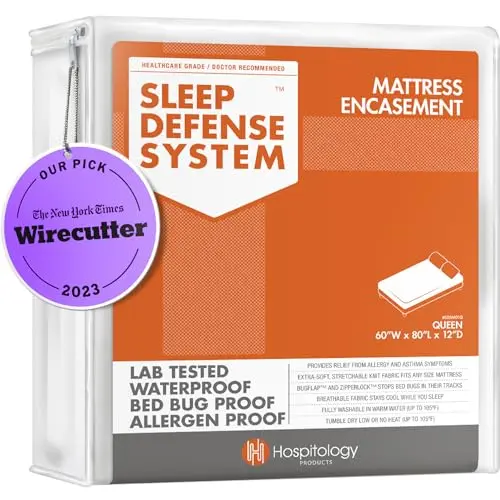
Sleep Defense System – Stretch-Fit Bed Bug Encasement
A six-sided zippered encasement with a stretchable polyester knit face and a breathable waterproof membrane. It is designed to fit queen mattresses from 12 to 18 inches deep and seals with a full zipper.
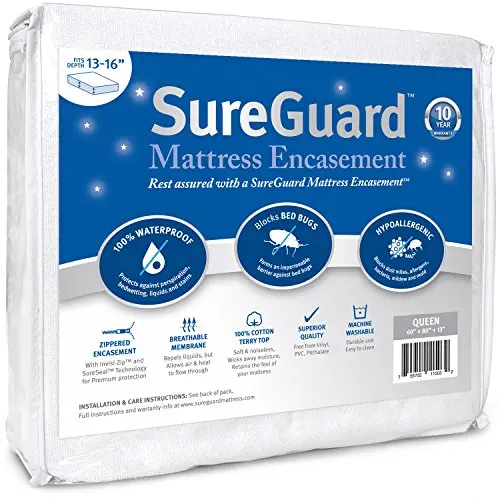
Mattress Encasement – Cotton-Terry Bed Bug Barrier
A premium six-sided encasement with a cotton-terry top, a fine Invisi-Zip zipper, and SureSeal closure. It is built for queen mattresses 13 to 16 inches deep and pairs waterproofing with a soft, noiseless surface.
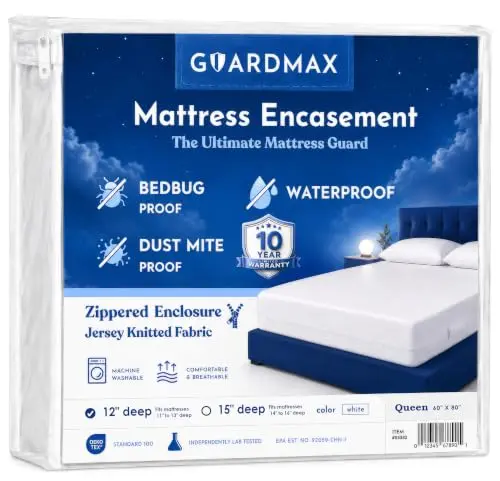
Queen Mattress Protector Zippered – Soft Jersey Knit Encasement
A six-sided zippered encasement made with soft jersey-knit polyester. The zipper runs around three sides and tucks under a stitched guard flap, while a waterproof layer sits beneath the knit.
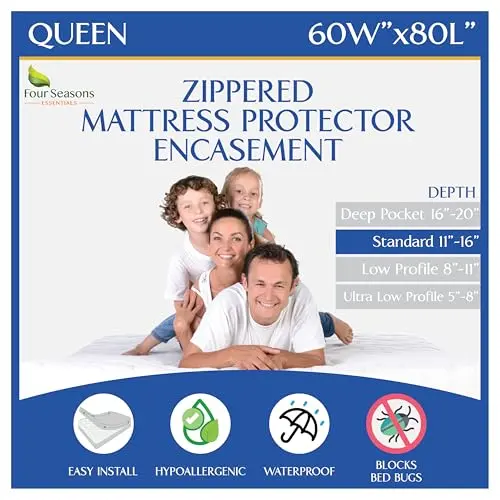
Queen Zippered Mattress Encasement – Six-Sided Bed Bug Protection
A six-sided zippered encasement with a velcro zipper seal, a waterproof polyurethane lining, and stretch fabric. It is designed for queen mattresses 11 to 16 inches deep.
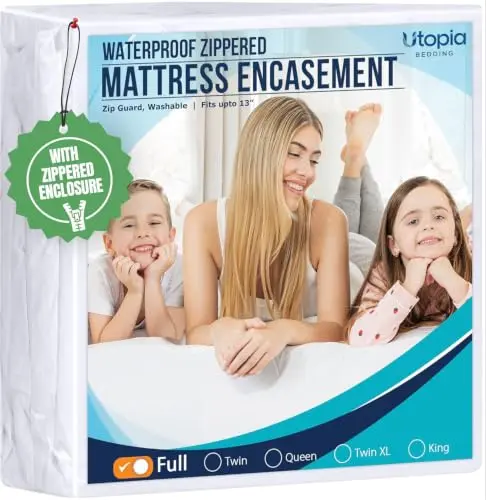
Full Size Zippered Mattress Encasement – Value Six-Sided Protection
A six-sided zippered encasement in full size with a smooth knitted polyester surface, waterproof backing, and a wrap-around zipper. It fits mattresses up to 13 inches deep.
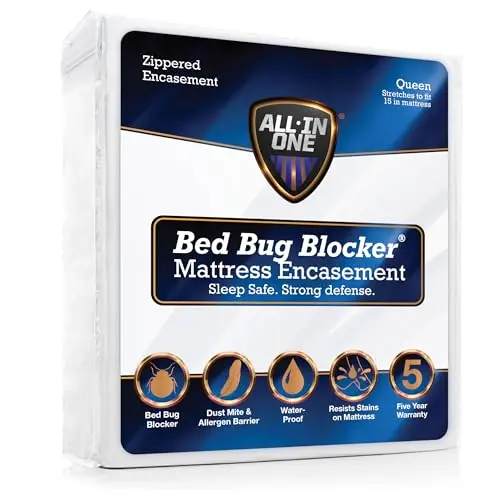
All-in-One Mattress Protector – Triple-Seal Zippered Encasement
A queen-size zippered encasement with a triple-seal closure, an interior barrier flap, and a water- and stain-resistant surface. It is OEKO-TEX Standard 100 certified.
How We Evaluated These Bed Bug Mattress Protectors
We didn’t run lab tests for bed bug penetration or soak-through, nor did we sleep on each encasement for weeks. What we did: cross-referenced six bed bug mattress protector models from six distinct brands across five decision axes – six-sided coverage, zipper and seal design, waterproofing, fit depth and size range, and comfort and noise. We triangulated published specifications, aggregated owner feedback where available, and pressure-tested each design against the realities of installation, washing, and nightly use. We also mapped each cover against the kinds of mattresses people actually own – standard-depth, deep, and pillow-top – because a loose encasement can bunch and a tight one can strain at the zipper.
The scoring framework weighted real-world protection and fit (70%) – how completely each encasement seals the mattress and how well it matches common depths – against feature differentiation (30%) – unique closure systems, fabric feel, certifications, and warranty support. We audited the details that separate a true bed bug encasement from a fitted waterproof pad, including whether the zipper tucks under a guard flap and whether all six sides are covered. Where the data was thin, we kept the assessment shorter rather than filling gaps with guesswork.
We have no commercial relationship with the brands featured; recommendations track fit and differentiation, not brand preference. If you have a deeper queen mattress, the Sleep Defense System is the easiest match; if you want a cotton-terry surface, the SureGuard Mattress Encasement is the stronger pick.
How to Choose the Right Bed Bug Mattress Protectors
1. What Makes a Mattress Protector Bed Bug Proof?
A standard waterproof mattress protector is usually a fitted sheet with a thin membrane; it can keep spills out, but it does not seal the mattress. A true bed bug mattress protector is an encasement that wraps all six sides and closes with a zipper. That distinction matters because bed bugs hide along seams, under labels, and in the piping around the mattress edge.
Look for a full zipper that runs around three sides and a guard flap that covers the pull. The best designs tuck the zipper under fabric or add a seal so there is no open gap at the corner. Without that detail, the cover is more of a waterproof pad than a bed bug barrier.
2. Bed Bug Mattress Protector vs. Standard Waterproof Pad
The difference comes down to six-sided coverage and the closure. A fitted pad protects the top and some of the sides, but the underside and zipper line remain exposed. An encasement turns the whole mattress into a sealed unit, which is why it is the better choice for bed bug protection and dust mite control.
That extra coverage has a tradeoff: encasements take longer to install and wash. If your main concern is spills, a fitted pad may be enough. If you are dealing with an active infestation or want a barrier around the entire mattress, choose a zippered encasement.
3. Zipper Seals, Guard Flaps, and Installation
Zipper quality is the weak point in many encasements. A fine-tooth zipper with a stitched guard is less likely to snag bedding or leave a gap. Some covers add a velcro seal or triple-seal closure for extra security. If you want an extra velcro zipper seal, the Four Seasons Essentials encasement is the pick here.
Installation takes two people on a queen mattress. Stand the mattress on its side, slip the sealed end over one corner, and work the cover down before zipping. A full zipper that opens around three sides is much easier to manage than a short zipper that forces you to wrestle the mattress into place.
4. Waterproofing, Comfort, and Noise
Waterproofing is not the same as breathability. A polyurethane backing blocks liquids, while a jersey knit or cotton-terry top affects how the surface feels. Quiet matters on a bed you share, and the wrong fabric can crinkle every time you move. If quiet jersey knit matters most, the Guardmax Queen Mattress Protector is the softer route.
Hot sleepers should prioritize a breathable fabric and avoid vinyl or thick plastic covers. A waterproof membrane can still breathe if it is laminated to a knit rather than a solid sheet. A mattress pad on top can add comfort, but it does not replace the encasement.
5. Fit Depth and Size: Match the Encasement to Your Mattress
Depth range is where many buyers get burned. Measure your mattress height before ordering, including any topper. A cover listed as queen may fit 12 inches on one model and 18 inches on another, and a loose encasement can bunch under the sheets. If you have a deeper queen, the Sleep Defense System is the easiest match.
Size labels are not universal across brands. A full-size encasement is not the same as a queen, and a deep-pocket pad is not a substitute for a zippered cover. Check the listed mattress dimensions and the depth range on the product page before you commit.
6. Care, Warranty, and Long-Term Value
Most encasements are machine washable, but the care details vary. Some allow a warm wash and low tumble dry; others warn against bleach, ironing, or dry cleaning. Follow the label, and check the zipper and seams after each wash.
Warranty coverage is a useful tiebreaker. A longer guarantee suggests the maker expects the zipper and membrane to hold up, while a short or missing warranty is a reason to look closely at the stitching. For a bed bug mattress protector, the zipper is often the first part to fail, so buy from a brand that stands behind it.
Frequently Asked Questions
1. What's the difference between the Hospitology Sleep Defense System and the SureGuard Mattress Encasement?
The Hospitology is a stretch-fit encasement built for mattresses from 12 to 18 inches deep, with a soft polyester knit and a breathable waterproof membrane. The SureGuard uses a cotton-terry top, a fine Invisi-Zip closure, and a 10-year guarantee. If you want a softer cotton surface and a longer warranty, the SureGuard Mattress Encasement is the stronger fit; if your mattress is deeper or you prefer stretch, go with Hospitology.
2. Are all bed bug mattress protectors actually bed bug proof?
No. Many products sold as mattress protectors are fitted waterproof pads that cover only the top and sides, not the underside. A genuine bed bug encasement needs six-sided coverage, a zippered closure, and a guard flap or seal at the pull. Check the product description for those details before buying.
3. What's the difference between the Guardmax Jersey Knit Encasement and the Four Seasons Essentials Encasement?
The Guardmax leans on a soft jersey-knit surface, a stitched guard flap, and OEKO-TEX certification; it is the quieter, more T-shirt-like option. The Four Seasons Essentials adds a velcro zipper seal and a secondary lining around the zipper seam for extra security. If you want a softer feel, choose the Guardmax Queen Mattress Protector; if you want an extra seal, the Four Seasons Essentials is the pick.
4. Do bed bug mattress protectors make noise or sleep hot?
Noise depends on the fabric. Jersey knit and cotton-terry surfaces tend to feel softer and quieter than vinyl or stiff polyurethane. Heat is similar: a breathable knit with a waterproof membrane usually sleeps cooler than a non-breathable plastic cover. A mattress pad on top can add comfort, but it does not replace the encasement.
5. How do I install a zippered mattress encasement?
Stand the mattress on its side, slip the sealed end over one corner, and work the cover down like a pillowcase. Zip slowly around the three open sides, then tuck the pull under the guard flap. Two people make a queen or king mattress much easier to handle. Wash and dry the encasement according to its care label, and check the zipper and seams after each wash.
Final Verdict
For most buyers, the Sleep Defense System is the answer – it combines a stretch fit, six-sided waterproofing, and a soft knit that works on deeper mattresses without feeling plasticky. If you want a cotton-terry surface and the longest warranty in this group, the SureGuard Mattress Encasement is the premium pick. On a tighter budget or outfitting a full-size bed, the Utopia Bedding Full Size Mattress Encasement gets you the core six-sided protection for a lot less, with the tradeoff of mixed owner feedback on water resistance and long-term durability. And if your mattress is in the 11-to-16-inch range and you want an extra velcro zipper seal, the Four Seasons Essentials encasement is the practical alternative. Match the cover to your mattress depth first; the best bed bug mattress protector is the one that actually seals and fits.
