
Best Bed Sheets For Allergies – 2026 Reviews

If you wake up congested or itchy, your sheets are one of the first places to look. They sit against your skin for hours, collect dust and oils, and need frequent washing. The best bed sheets for allergies aren’t just soft; they’re breathable, easy to launder, and made from materials that don’t trap heat or feel clammy.
The tricky part is that ‘allergy-friendly’ is not a regulated sheet label. You’ll see organic cotton, bamboo viscose, microfiber, and various certifications. The useful filters are airflow, washability, fit, and whether the fabric has a certification like GOTS or OEKO-TEX. Percale cotton and bamboo viscose tend to feel cooler; microfiber can be budget-friendly but may sleep warmer.
We cross-shopped the category to find options that make sense for allergy-conscious sleepers across budgets, from crisp organic cotton to cooling bamboo and affordable microfiber. Here’s how they compare.
Best Bed Sheets for Allergies – 2026 Reviews
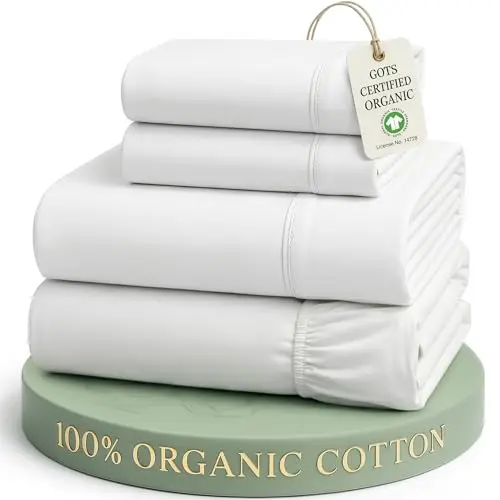
Organic Cotton Percale Sheet Set – Crisp, Breathable Allergy-Friendly Pick
A GOTS-certified organic cotton percale set that prioritizes airflow and a crisp, cool feel. The 160-thread-count weave is deliberately light and breathable, with a deep-pocket fitted sheet and envelope-closure pillowcases. It’s a strong match for allergy-conscious sleepers who wash bedding often and prefer a natural fabric.
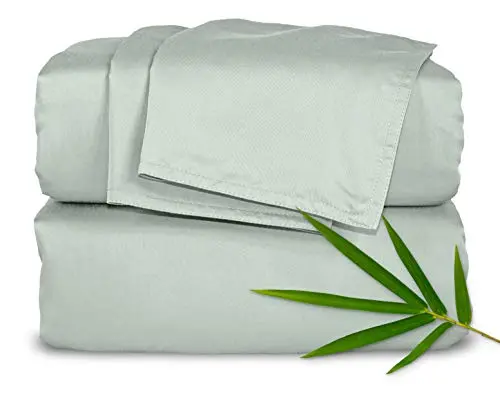
100% Bamboo Viscose Sheet Set – Cooling Comfort for Sensitive Sleepers
A 100% bamboo viscose sateen set with a cool, silky hand feel and OEKO-TEX Standard 100 certification. It includes a fully elasticized fitted sheet with corner straps, envelope pillowcases, and a two-year guarantee. The moisture-wicking fabric is aimed at hot sleepers and sensitive skin.
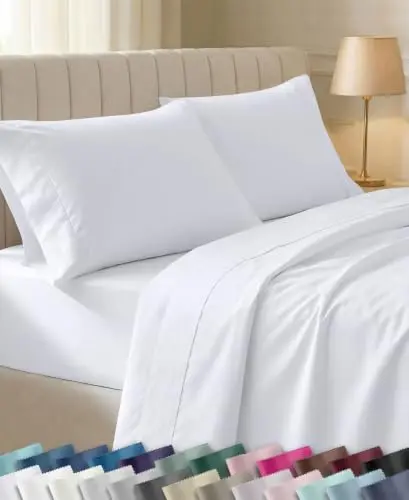
Soft 100% Cotton Sateen Sheet Set – Breathable Everyday Cotton
A 100% long-staple cotton sateen set with a 400-thread-count weave and a Good Housekeeping Seal. The fitted sheet has all-around elastic and fits mattresses up to 16 inches deep, while the flat sheet and pillowcases have a smooth, lightly lustrous finish. It’s a strong middle-ground option for buyers who want cotton without a percale crunch.
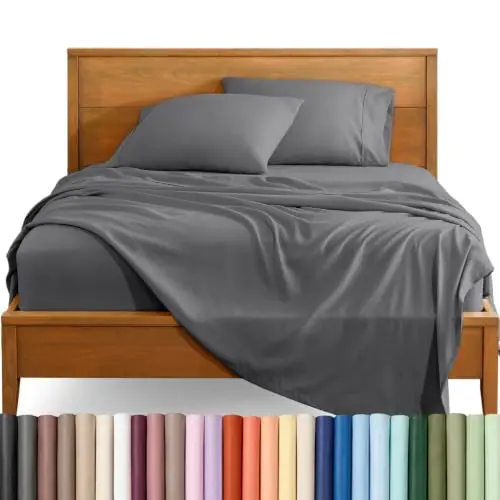
Queen Sheet Set – Hypoallergenic Microfiber Comfort
A double-brushed microfiber set marketed as hypoallergenic and breathable, with all-around elastic and deep pockets that fit mattresses from 6 to 15 inches. The 1800-series labeling refers to the brushed finish rather than a cotton thread count. It’s a soft, budget-friendly option for guest rooms and everyday use.
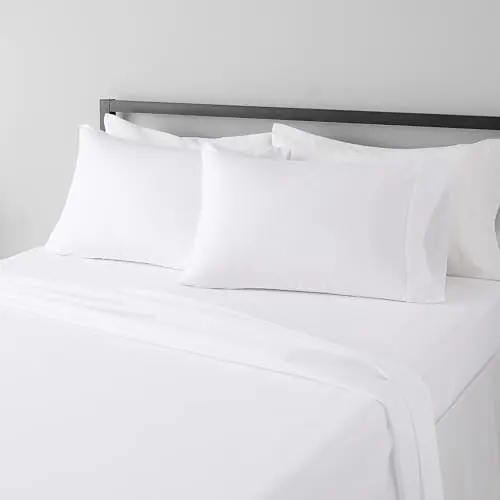
Lightweight Microfiber 4-Piece Set – Budget-Friendly Breathable Comfort
A lightweight brushed microfiber set with a 120 GSM fabric, 14-inch deep pockets, and MADE IN GREEN by OEKO-TEX certification. It’s wrinkle- and shrink-resistant, machine washable, and comes in a wide range of colors. This is the value-focused route for a spare or guest bed.

King 4-Piece Brushed Microfiber Sheet Set – Soft Entry-Level Option
A four-piece double-brushed microfiber set with deep pockets and an Oeko-Tex certification. The king-size version includes a flat sheet, fitted sheet, and two pillowcases, with a soft, wrinkle-resistant finish. It’s aimed at buyers who want hotel-like softness at an entry-level price.
How We Evaluated These Bed Sheets for Allergies
We didn’t run allergy-sensitivity trials or lab dust-mite assays. What we did: cross-referenced six bed sheet sets from six distinct brands across five decision axes – material and breathability, safety certifications, fit and deep pockets, laundering ease, and durability patterns. We triangulated published specifications, feature sets, owner feedback where available, and use-case fit for allergy-conscious sleepers, then mapped each set against realistic bedroom routines.
The scoring framework weighed real-world fit and performance (70%) – how well each set breathes, washes, and stays put – against feature differentiation (30%) – certifications, fabric construction, and thoughtful fit details. We have no commercial relationship with any brand here; recommendations track fit and differentiation, not brand preference. If you want the crispest natural-fiber option, the Lane Linen Organic Cotton Percale Sheet Set is the clearest match; if you sleep hot and want a cooler feel, the Pure Bamboo Sheet Set is the stronger route.
How to Choose the Right Bed Sheets for Allergies
1. What Makes Bed Sheets a Better Fit for Allergies
For allergy-conscious sleepers, the goal isn’t a magic fabric. It’s bedding you can wash often, that breathes well, and that doesn’t hold onto heat or moisture. A sheet set that feels slick but traps warmth can leave you clammy, and one that’s hard to launder tends to stay on the bed longer than it should.
Look for breathable weaves, a secure fit, and certifications that speak to harmful-substance testing. Organic cotton and bamboo viscose are popular for a reason; microfiber can work on a budget, but it’s synthetic and may sleep warmer.
2. Percale vs. Sateen for Allergy-Prone Sleepers
Percale is the crisp, lightweight weave most often associated with cool sleeping. It has more airflow and a drier hand feel, which can be welcome if you overheat or wake up congested. Sateen is smoother and slightly more lustrous, but the tighter, silkier surface can sleep warmer for some people.
If you want the crispest natural-fiber option, the Lane Linen Organic Cotton Percale Sheet Set is the clearer fit. If you prefer a smooth cotton feel and don’t mind a warmer sleep surface, a sateen set can work well.
3. Certifications That Matter for Allergy-Friendly Bed Sheets
GOTS covers organic fiber content and processing standards. OEKO-TEX Standard 100 focuses on harmful-substance testing, while MADE IN GREEN by OEKO-TEX adds safer production and traceability. None of these are allergy cures, but they’re useful filters when you’re comparing synthetic versus natural options.
For a certified cooling option, the Pure Bamboo Sheet Set is the pick. On a budget, the Amazon Basics set carries MADE IN GREEN certification, which is notable at the entry level.
4. Fit, Deep Pockets, and Easy Laundering
Allergy-conscious shoppers tend to wash bedding more often, so easy care matters. Check the care label before buying; some sets specify cold water and low tumble dry, while others are more flexible. A fully elasticized fitted sheet and deep pockets keep the sheet from popping off mid-week, which means less handling and less frustration.
Pocket depths in this lineup range from 14 to 16 inches, with Bare Home covering 6 to 15 inches. Measure your mattress before choosing, especially if you use a topper.
5. Microfiber vs. Cotton vs. Bamboo for Allergies
Microfiber is the budget-friendly route: soft, wrinkle-resistant, and easy to wash. The tradeoff is that it’s synthetic and can trap heat. Cotton is breathable and familiar, with percale feeling cooler and sateen feeling smoother. Bamboo viscose is the cool, silky option, with moisture-wicking behavior that suits hot sleepers.
If you want a smooth cotton sateen at a mid-range price, the California Design Den Soft 100% Cotton Sateen Sheet Set is the better route. If budget is the priority, a microfiber set can be serviceable, but go in with realistic expectations about warmth and longevity.
Frequently Asked Questions
1. Are organic cotton bed sheets better for allergies than microfiber?
They can be a better fit if breathability is your priority. Organic cotton like the Lane Linen Organic Cotton Percale Sheet Set is natural, airy, and easy to launder, and GOTS certification adds a useful processing standard. Microfiber is softer on a tight budget and resists wrinkles, but it’s synthetic and may sleep warmer. Neither fabric is a treatment for allergies; the practical difference is airflow, moisture, and how often you’re willing to wash.
2. What's the difference between Lane Linen Organic Cotton Percale and Pure Bamboo sheets?
The Lane Linen set is a crisp percale made from GOTS-certified organic cotton; it feels dry and breathable and is a strong match for sleepers who run warm or want a natural-fiber sheet. The Pure Bamboo set is bamboo viscose with a silkier, cooler hand feel, moisture-wicking behavior, and OEKO-TEX Standard 100 certification. Choose Lane Linen for a classic crisp cotton feel; choose the Pure Bamboo Sheet Set if you want a cooler, smoother surface and don’t mind a premium price tier.
3. California Design Den vs. Bare Home: which is better for sensitive sleepers?
California Design Den is the better route if you want natural cotton and a smooth sateen weave; its long-staple cotton and all-around elastic make it a comfortable everyday set. Bare Home is a microfiber option marketed as hypoallergenic, with a plush feel and a wide pocket range. For breathability, lean cotton; for a lower-cost, low-maintenance set, microfiber is the practical choice.
4. How often should I wash bed sheets if I have allergies?
A weekly wash is a sensible baseline, and some allergy-conscious sleepers wash even more often. Follow the care label for water temperature and dryer settings, and keep a spare set so you’re not rushed on laundry day. If you use a mattress protector or topper, wash or wipe that on a similar schedule.
Final Verdict
For most allergy-conscious shoppers, the Lane Linen Organic Cotton Percale Sheet Set is the pick. It pairs GOTS-certified organic cotton with a crisp percale weave that breathes, and it’s easy to launder often. If you sleep hot and want a cooler, silkier feel, the Pure Bamboo Sheet Set is the premium alternative, with OEKO-TEX certification and moisture-wicking bamboo viscose. On a tighter budget, the Amazon Basics Lightweight Microfiber Sheet Set gets you a certified, easy-care set for less, though microfiber may sleep warmer. And if you prefer a smooth cotton sateen, the California Design Den Soft 100% Cotton Sateen Sheet Set is the middle-ground route. Start with the fabric that matches your sleep temperature, then check certifications and fit.
