
Best Bedroom Alarm Clocks – 2026 Reviews

A bedroom alarm clock has one job, but it fails in a dozen small ways: the numbers are too dim at 3 a.m., the alarm is too quiet to wake you, or the display turns the whole room into a nightlight. The best bedside clocks get the basics right before adding extras, and that’s where the category splits.
The first thing to sort out is display readability and dimming. A big number is only useful if you can dim it far enough to sleep, and a bright screen is a dealbreaker for light-sensitive sleepers. The second is alarm control: volume, snooze behavior, and whether you want one alarm or two. Backup power and bedside extras like USB charging or a radio come after that.
This guide covers the bedroom alarm clock market across brands, from simple budget clocks to sunrise models with sound machines. We’ll help you match the clock to your sleep style rather than chase the longest feature list.
Best Bedroom Alarm Clocks – 2026 Reviews

DS313 – Large Auto-Set Bedside Display
A large 5-inch LCD clock that sets itself, shows date and temperature, and offers six brightness levels plus auto dim. The single alarm and USB charging port keep the bedside setup simple.
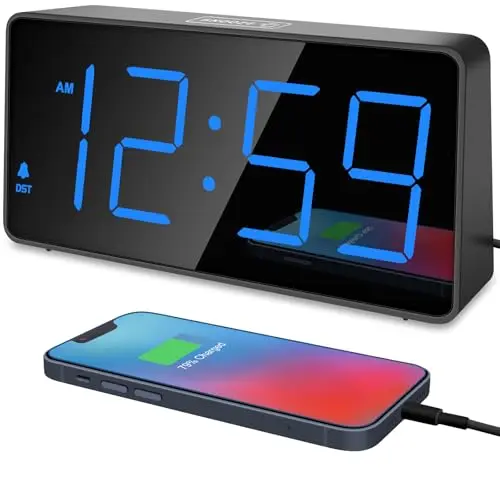
MHP6010 – Large-Display Loud Alarm Clock
A large-number LED clock with five dimming levels, adjustable alarm volume, a USB charger, and battery backup for settings. It’s built for readable bedside time and heavy sleepers.
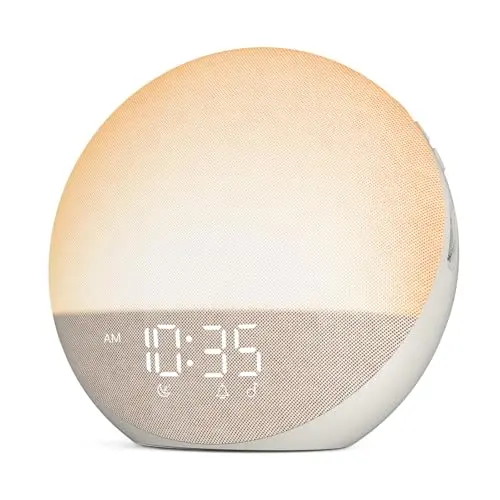
H03 Sunrise Alarm Clock – Gentle Wake with Sound
A sunrise alarm clock with a gradual wake-up light, 25 sleep sounds, Bluetooth audio, and a dimmable night light. It’s the most feature-rich bedside option here.
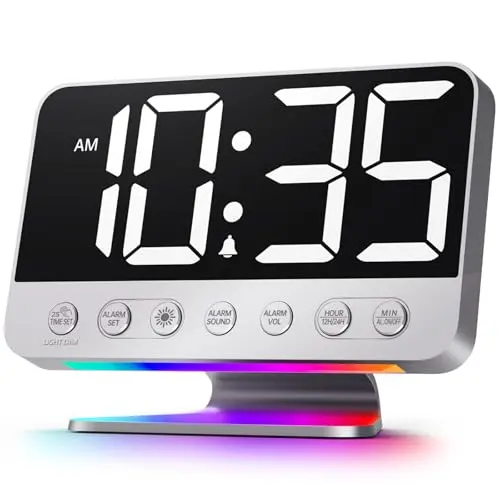
U2 – Loud Alarm with Night Light
A feature-packed bedside clock with 2-inch digits, five brightness levels, an eight-color night light, and an alarm that can reach serious volume. Front buttons keep setup simple.
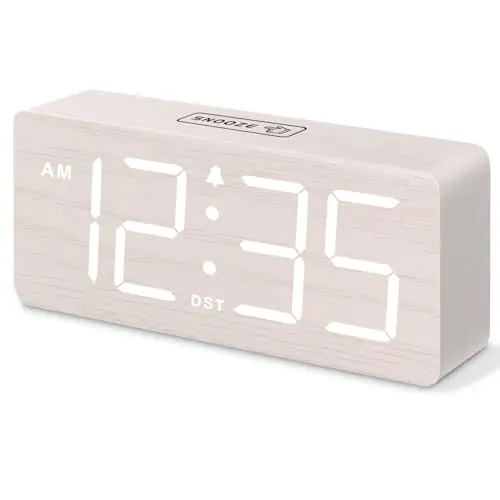
DS2208 – Wooden Bedside Clock with Big Numbers
A wooden-finish digital clock with big red numbers, six dimming levels, adjustable alarm volume, and a battery backup that keeps the alarm active during outages. The display only lights when plugged in.
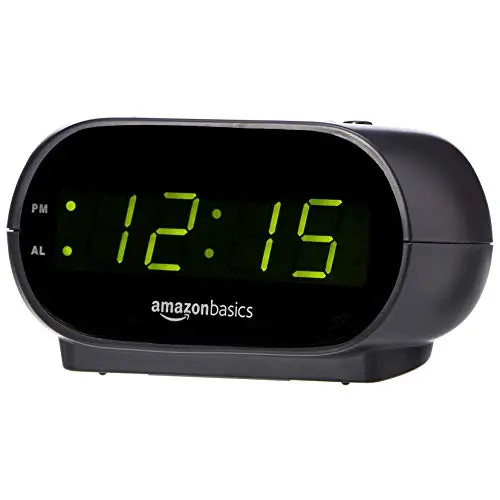
Small Digital Oval Alarm Clock – Compact Bedside Backup
A compact oval clock with a green LED display, built-in nightlight, repeating snooze, and battery backup for settings. It’s a straightforward bedside basic.
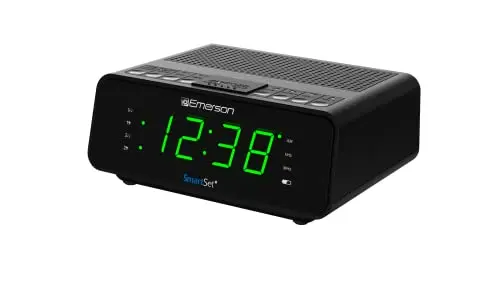
SmartSet CKS1900 – Dual Alarm Radio Clock
A dual-alarm clock radio with AM/FM tuning, 20 presets, auto-set time and date, a sleep timer, and a dimmable jade-green display. It’s the most radio-focused option in the lineup.

Digital Alarm Clock – Simple Keyboard Controls
A simple digital clock with keyboard-style controls, a large snooze button, red LED digits, and battery backup for the alarm. It’s designed for straightforward bedside use.
How We Evaluated These Bedroom Alarm Clocks
We didn’t run lab brightness measurements or overnight sleep trials. What we did: cross-referenced 8 bedroom alarm clock models from 6 distinct brands across 5 decision axes – display readability at night, alarm adjustability, dimming and light control, power backup, and bedside extras like radios or USB charging. We triangulated published specifications, feature sets, owner feedback where available, and use-case fit for different sleepers, from heavy sleepers to seniors who want simple controls. We also audited snooze behavior, setup complexity, and the practical limits of each backup battery, because those details matter more at 2 a.m. than a long feature list. We pressure-tested the feature claims against the actual bedside job each clock is trying to do. We kept the focus on bedside behavior, not spec-sheet bravado.
The scoring framework weighted real-world bedside fit (70%) – how well each clock wakes you up, stays readable, and avoids turning the room into a glow stick – against feature differentiation (30%), including dual alarms, sunrise lighting, sound options, and charging ports. We have no commercial relationship with any brand here; recommendations track fit and differentiation, not brand preference. If you want the most complete everyday pick, the DreamSky DS313 is the one we’d point to first. If loudness is the priority, the Odokee U2 is the stronger match. That’s why a simple clock can score well while a feature-heavy one loses ground if the basics wobble.
How to Choose the Right Bedroom Alarm Clocks
1. Start With Display Readability and Nighttime Dimming
The display is the part of a bedroom alarm clock you live with every night, so start with digit height and full-range dimming. A 2-inch display is easy to read from across the room, but only if you can bring it down to a faint glow after lights-out. Clocks with auto dim are the easiest to live with because they adjust to the room instead of forcing you to fiddle with buttons in the dark.
LCD panels can show more information, like date and temperature, while LED clocks tend to have bolder digits. Neither is automatically better; the question is whether the brightness floor is low enough for your eyes.
2. Alarm Controls Matter More Than You Think
An alarm you can’t adjust is a gamble. Look for adjustable volume, a snooze interval that suits your morning, and wake sounds that ramp gradually instead of jolting you. Dual alarms are worth having if you share a bed or keep different weekday and weekend schedules, and a simple snooze button is easier to hit than a touchscreen at 6 a.m.
If you sleep through phone alarms, the Odokee U2 is the pick because its alarm can go much louder than a basic bedside clock. Light sleepers can usually turn that same clock down, which makes it more flexible than a fixed-volume model.
3. What to Know About Power Backup in Bedroom Alarm Clocks
Battery backup is one of the most misunderstood features in this category. On many clocks, the batteries keep settings and the alarm working during an outage, but they don’t keep the display lit. That’s fine for overnight power blips, but it means you shouldn’t expect a battery-powered clock just because the box says backup.
Check whether the backup uses AA or AAA batteries and whether they’re included. A clock with alarm-only backup will still wake you, but you may need to reset the time after a long outage. If the display staying visible matters to you, look for a model that explicitly says the screen works on battery power.
4. Dual Alarms, Radios, and Bedside Extras
Once the basics are covered, extras start to separate one bedroom alarm clock from another. AM/FM presets appeal to anyone who still likes waking to radio, while a USB charging port can replace a wall adapter and free up nightstand space. A sleep timer is a nice bridge between clock and radio if you like falling asleep to a station.
If a bedside radio is non-negotiable, the Emerson CKS1900 is the natural fit. Just go in expecting radio sound rather than hi-fi audio, and don’t count on it for critical listening.
5. Simple Controls vs. Feature-Heavy Bedroom Alarm Clocks
A clock with too many buttons can be worse than a simple one if you’re setting it half-asleep. Front-facing buttons and clear labels make a bigger difference than a long feature list, and keyboard-style controls are often easier for kids or older family members to learn.
For the best balance of features and easy setup, the DreamSky DS313 is the pick. It shows more information than a basic clock but keeps the setup limited to time zone and alarm time.
6. How Much Should You Spend on a Bedside Clock?
Budget-friendly clocks cover the basics: readable digits, a snooze button, and a simple alarm. Mid-range models add better dimming, adjustable volume, USB charging, and more reliable backup. At the premium end, you’re paying for sunrise lighting, sound machines, Bluetooth, and design details that go beyond waking up.
Spend more only if the extras match your routine. A heavy sleeper may get more value from loudness controls than from a sunrise effect, while a light sleeper may prefer a gentle wake-up light over a louder buzzer.
Frequently Asked Questions
1. What's the difference between the DreamSky DS313 and the Peakeep MHP6010?
The DreamSky DS313 leans toward information and automation: it pairs a 5-inch LCD with auto-set time, date, day, and temperature, plus a USB charging port. The Peakeep MHP6010 is more of a classic bedside LED clock, with 2-inch digits, five alarm volume settings, and a USB charger. If you want auto-set convenience and a bigger info display, the DreamSky DS313 is the better match. If you want adjustable loudness and simpler LED digits, the Peakeep is the stronger choice.
2. How does the Odokee U2 compare with the Sharp digital alarm clock for heavy sleepers?
The Odokee U2 is the more capable heavy-sleeper clock, with an alarm that reaches 110dB, five wake-up sounds, and adjustable volume. The Sharp clock keeps things simple with keyboard-style controls and a large snooze button, but its alarm volume is more modest. For deep sleepers, the Odokee U2 is the better bet. The Sharp still makes sense for a guest room or anyone who wants fewer buttons.
3. Do bedroom alarm clocks need battery backup?
Not every bedroom needs it, but battery backup is worth having if you rely on an alarm for work or school. On most models it preserves alarm settings and keeps the alarm active during a power outage, though the display may stay dark. Check whether the backup uses AAA batteries and whether they’re included before you count on it.
4. Are sunrise alarm clocks worth it for bedrooms?
They’re worth it if you hate being jolted awake or wake before sunrise in winter. A sunrise simulation gradually brightens the room, and models like the Odokee H03 add sleep sounds, a dimmable night light, and Bluetooth audio. The tradeoff is size and cost: a sunrise clock takes more nightstand space than a basic digital clock. If you just need readable numbers, a simpler model is the better value.
5. What should I look for in a bedroom alarm clock for a senior or light sleeper?
Prioritize large digits, simple controls, and low dimming so the clock is easy to read without lighting up the room. An adjustable alarm volume helps light sleepers avoid a harsh wake-up, and a large snooze button is easier to find in the dark. A basic keyboard-style clock can be a better fit than a feature-heavy model with nested menus.
Final Verdict
For most bedrooms, the DreamSky DS313 is the clock we’d buy first. It nails the daily basics – a big auto-set display, useful dimming, date and temperature, and a USB port – without making you learn a manual. If you want a gentler wake-up and a sound machine in one, the Odokee H03 is the premium pick. Heavy sleepers should go straight to the Odokee U2, which can get much louder and adds a night light. And if you just need a small, budget-friendly bedside clock for a guest room, the Amazon Basics oval clock is the budget answer. The right choice comes down to how much control you want over light and sound; everything else is bedside detail.
