
Best Bottle Drying Racks – 2026 Reviews

The counter after a two a.m. feed is its own kind of crime scene: three bottle bodies, a scatter of nipples, a pump flange, and a slow-spreading puddle. A drying rack is supposed to end that. Most of them sort of do – but the gap between a rack that keeps your counter dry and one that quietly turns into a science experiment comes down to a couple of design decisions.
The first is drainage. Some racks catch water in a tray you empty by hand, some drain straight into the sink, and a few just let water pool in the base until something starts to smell. The second is whether the layout fits your bottle mix. A peg rack is great for uniform bottles and close to useless for a flanged pump part, while flexible-blade designs go the other way and swallow shapes that pegs can’t grip.
We compared the major brands in this category, from bare-bones budget stations to tall vertical towers, and the right answer depends more on your kitchen than on your budget. Here’s how they stack up and who each one actually suits.
Best Bottle Drying Racks – 2026 Reviews

Lawn Countertop Drying Rack – Flexible Blades for Awkward Bottle Shapes
The Lawn swaps pegs for a bed of flexible blades, so wide-mouth bottles, slim bottles, and oddly shaped pump parts all find somewhere to stand. The body splits into two pieces for washing, and the lower tray carries an antimicrobial treatment aimed at mold and mildew.
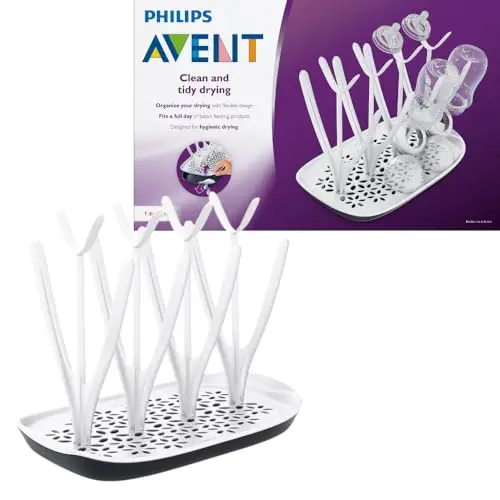
Baby Bottle Drying Rack SCF149/00 – Eight Bottles in a Narrow Strip
A compact countertop rack with a flexible, adjustable layout that fits up to eight bottles plus nipples, pacifiers, and pump parts. The drip tray detaches for emptying, the whole thing comes apart for cleaning, and it’s dishwasher safe.

High Capacity Drying Rack – Sixteen Bottles on Two Spinning Tiers
A two-tier rack built for volume, holding up to sixteen bottles with pegs that fold down when you need flat space. Both levels spin independently so you can load from any angle, and the drip tray works either as a catch basin or flipped to drain into the sink.
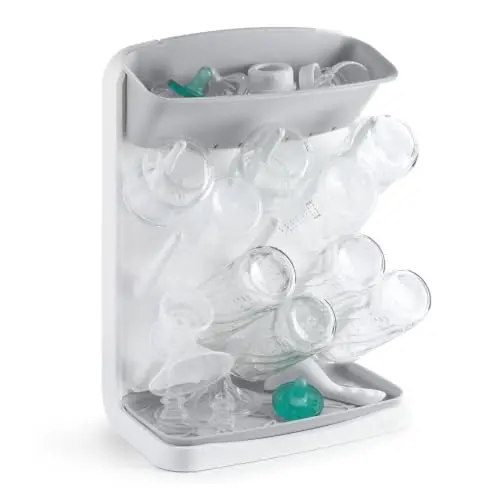
Vertical Drying Rack – Thirteen Pegs That Go Up, Not Out
A tall, slim rack with thirteen pegs for bottles and pump parts, plus a removable top compartment that holds pacifiers, valves, and nipples above the main drying deck. Water drains into a removable bottom tray, and every piece is dishwasher safe.
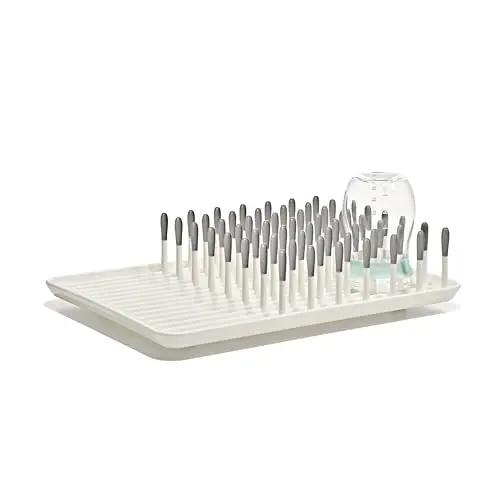
Bottle Drying Rack with Drain Board – Silicone-Tipped Tines and a Built-In Board
A flat rack with an integrated drain board, silicone-tipped tines that hold up to eight bottles upright, and a removable cup for straws and utensils. Raised ribs keep parts out of pooled water and the whole rack is dishwasher safe.
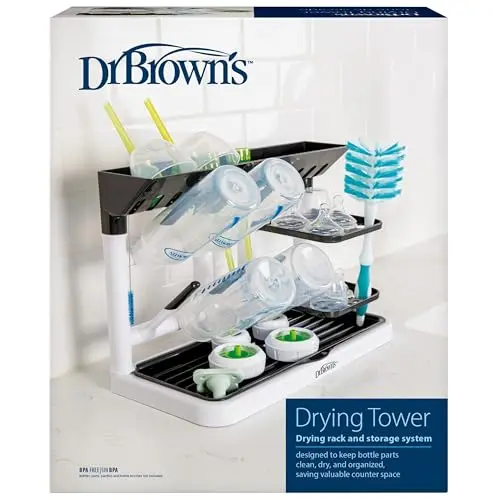
Drying Tower – Stand-Up Storage With Three Trays
A compact tower with six pegs, three drying trays, and a top compartment for collars, lids, and nipples. It arrives fully assembled, and the removable bottom tray catches water for easy emptying.
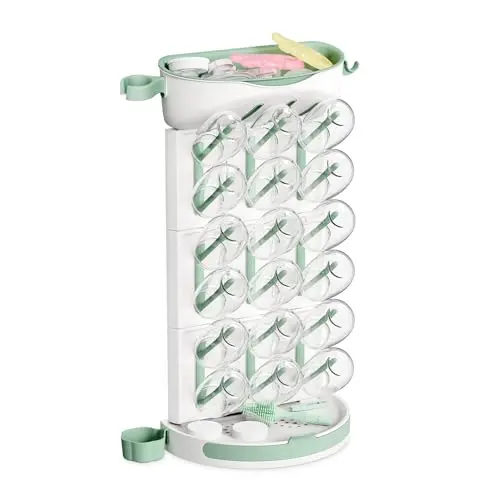
Adjustable Bottle Drying Rack – 18-Bottle Capacity You Can Reconfigure
A tall, ventilated rack with an adjustable peg layout that can be set up for up to eighteen bottles plus a dedicated brush area. It snaps together without tools, breaks down flat for travel, and is built from BPA-free, food-grade plastic.

15-Hook Drying Rack – Vertical Storage With an Included Drain Mat
A vertical rack with fifteen angled pegs holding four to five sets of bottles, plus a top pacifier tray with a drip-through design and a bottom tray that catches water and stores caps and brushes. A separate drying mat is included.
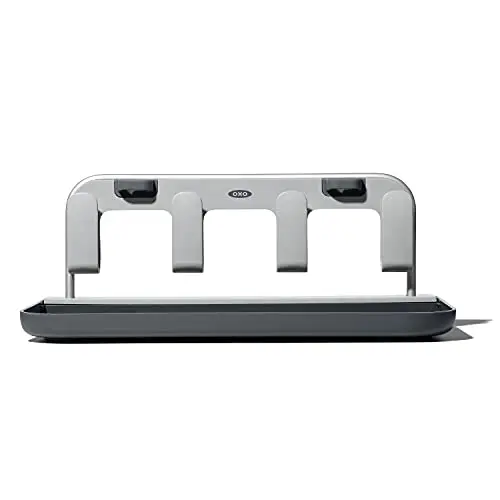
Good Grips Aluminum Frame Drying Rack – Built for Water Bottles and Travel Mugs
A slim aluminum-framed rack built for four water bottles or travel mugs, with a straw holder that keeps up to four straws elevated and raised edges that stop lids rolling off. It snaps into its own base for compact storage.
How We Evaluated These Bottle Drying Racks
We didn’t run a timed air-dry trial on a lab bench, and we didn’t live with these racks through a full year of night feeds. What we did: cross-referenced nine bottle drying racks from nine brands across six decision axes – capacity, counter footprint, drainage and airflow design, cleaning access, material and construction, and how each layout handles pump parts and small accessories. We triangulated published specifications, feature sets, and owner feedback where available, then pressure-tested each design against three representative routines: a one-baby household with a small kitchen, a full pump-and-bottle rotation, and a sink-adjacent station where water goes straight down the drain. Where feedback was thin or contradictory, we leaned on what the published design actually supports rather than guessing.
The scoring framework weighted real-world fit (70%) – how well a rack handles the volumes, shapes, and parts a real feeding routine throws at it – against feature differentiation (30%) – the design choices that genuinely separate one rack from another rather than the marketing around it. We have no commercial relationship with the brands featured here; recommendations track fit and differentiation, not brand preference. If you’re drying a mixed bag of bottle brands and pump components, the Lawn Countertop Drying Rack is your match; if counter space is the binding constraint, the Baby Bottle Drying Rack SCF149/00 earns its keep.
How to Choose the Right Bottle Drying Rack
1. Capacity vs. Counter Footprint: Sizing a Bottle Drying Rack to Your Kitchen
The number on the box is published capacity, and it’s almost always measured with nothing but bottles loaded – no nipples, no valves, no pump flanges. The real-world load is messier, and it’s what you should plan around. A rack that claims sixteen bottle positions will hold noticeably fewer once a day’s worth of pump parts is competing for the same pegs.
Then there’s the shape of your counter run. Flat racks spread wide and low; vertical towers trade width for vertical clearance. Measure the free strip of counter beside your sink and the gap between counter and upper cabinet, and let the smaller of those two numbers pick the layout for you.
If you’re drying a big daily rotation and want the most bottle positions for the footprint, the High Capacity Drying Rack is the one to look at. If your cabinet clearance is tight, a shallow flat design serves you better.
2. Drainage and Airflow Decide How Wet Your Counter Gets
Almost every rack uses one of three drainage approaches. A removable catch tray collects water below the deck and gets emptied by hand – simple, but easy to forget for a day. A reversible tray flips to drain straight into the sink, which is the tidiest setup if the rack sits next to the basin. Raised ribs and a ventilated backboard do a different job: they lift parts out of standing water and keep air moving so everything dries faster.
Airflow matters more than most buyers expect. Parts packed tightly against a solid panel stay damp at the contact points, which is where the smell starts. A design with space between the pegs and a vented back will beat a denser rack with more positions every time.
3. Flat, Grass-Style, or Vertical Tower: Matching the Layout to Your Bottle Mix
Peg racks are the default: roomy, straightforward, and fine for uniform bottle shapes. Grass-style blades bend around whatever you drop in, which makes them the better choice for a cabinet full of mismatched bottle brands and awkward pump parts. Silicone-tipped tines matter if you’re drying glass – hard plastic pegs against glass is a chipping waiting to happen.
If your counter run is the constraint rather than your budget, the Vertical Drying Rack is the pick – thirteen pegs and a small-parts pocket packed into a footprint narrower than most flat racks. If you’d rather spread out, almost any flat design dries just as well and fits under low cabinets.
4. Cleaning, Mold, and the Weekly Deep Clean
Water plus warmth plus a dark corner is a mold recipe, so cleaning access belongs on your shortlist. A two-piece design that splits into deck and tray is dramatically easier to rinse than a single molded shell. Check which components are dishwasher-safe – often it’s the trays and pegs but not the frame – and which are hand-wash only.
Antimicrobial treatments on trays are a genuine help, not a substitute for washing. Plan on a weekly warm-soapy soak of the tray regardless of what the rack claims, and pull the pegs out periodically if the design allows it. That’s where residue hides.
5. What Bottle Drying Racks Cost at Each Price Tier
At the entry-level end you get capacity and basic drainage, usually in plain plastic with fixed pegs. Step up to mid-range and you’re paying for adjustable layouts, silicone or flexible contact points, and components that survive a dishwasher cycle. The top tier buys capacity and configurability – layouts you can rebuild around your own gear, plus more drying positions than most households will ever fill.
Spending more doesn’t buy faster drying. It buys flexibility, better materials at the contact points, and a layout that fits the specific bottles and pump parts you own.
6. Common Pitfalls When Buying a Bottle Drying Rack
The most common mistake is buying for the spec sheet instead of your sink. Two others come up constantly: tall bottle brushes rarely stand up on short pegs, and small parts slip through wide gaps down onto the tray below. Neither is fatal, but both are annoying on a daily basis.
Finally, check the base. A rack that slides when you set a full bottle down will drive you up the wall, so look for non-slip feet or grippers. It’s a small detail that decides whether the rack stays where you put it or wanders across the counter.
Frequently Asked Questions
1. What's the difference between the Boon Lawn and the Munchkin High Capacity Drying Rack?
They solve the same problem in opposite directions. The Lawn uses flexible blades instead of pegs, so odd-shaped bottles and pump parts lean into the rack rather than being forced onto a fixed diameter – it’s the more forgiving design and the easier one to look at. The High Capacity rack goes the other way with pegged, spinning tiers: far more bottle positions, both levels rotating independently, and a drip tray that reverses to drain into the sink.
Choose the Lawn if you’re drying a mixed cabinet of bottle brands and pump components. Choose the Munchkin if volume is the priority and you want the least expensive route to drying a full day at once.
2. Philips Avent SCF149/00 vs. Ubbi Vertical: which saves more counter space?
They save space in different dimensions. The Philips Avent rack is short and wide – eight bottles spread along a narrow strip of counter with nothing stacked above it. The Ubbi Vertical trades width for height: thirteen pegs and a small-parts pocket packed into a footprint closer to a cereal box, but a loaded rack stands tall enough to matter under upper cabinets.
If your counter has room to spread out but your cabinets sit low, go with the Baby Bottle Drying Rack SCF149/00. If you’re working with a narrow slice of counter and open space above it, the Vertical Drying Rack is the better use of it.
3. Do you need a vertical bottle drying rack, or is a flat one fine?
It comes down to which dimension you’re short on. A vertical rack buys counter space by spending height, which works beautifully in a narrow galley kitchen and badly under a low shelf. A flat rack spreads out, dries just as well, and fits under almost anything – but it occupies more of the surface you actually work on.
Measure twice: the length of free counter beside the sink, and the clearance from counter to the underside of your upper cabinets. The smaller of those two numbers should decide the layout.
4. Can bottle drying racks go in the dishwasher?
It varies more than the listings suggest. Some racks, like the Philips Avent and Ubbi designs, list their components as dishwasher safe; others allow the trays and pegs through a cycle while the main frame is hand-wash only. Boon’s two-piece Lawn is designed for a warm soapy water wash rather than a machine cycle.
Check the individual parts, not the product as a whole – a rack can be top-rack safe for trays and not for the frame. And remember that an antimicrobial tray resists growth; it doesn’t replace a weekly wash.
5. How many bottles should a bottle drying rack hold?
A workable rule: count a full day’s bottles, add your pump parts if you’re expressing, and buy for that number rather than the biggest figure on the box. A bottle-only household usually does fine with eight bottle positions; exclusive pumpers tend to need more like twelve to sixteen once flanges, valves, and collection cups are in the mix.
Overbuying costs you counter space and rarely gets used. Underbuying means you’re running the rack twice a day, which is exactly the chore you were trying to simplify.
Final Verdict
For most households, the Lawn Countertop Drying Rack is the answer – the flexible blades hold wide bottles, slim bottles, and pump parts that peg racks can’t grip, and the antimicrobial tray keeps the counter under it from turning into a puddle. If you’re drying a large daily rotation and want to spend as little as possible, the High Capacity Drying Rack holds more bottles than anything else here and spins so you can load it from any angle. And if your counter is the constraint rather than your budget, the Vertical Drying Rack goes up instead of out, with thirteen pegs and a top pocket for the small stuff. Pick the layout that matches your kitchen, not the biggest number on the box.
