
Best Bourbon Drinking Glasses – 2026 Reviews

You’ve got a bottle you actually care about and a kitchen cabinet full of mismatched tumblers that came free with something. It’s a strange mismatch. Bourbon spent years in charred oak developing vanilla, caramel, and a little spice, and then it lands in a thick-walled juice glass where most of that aroma drifts straight past your nose.
The glass doesn’t change the whiskey, but it changes what you can find in it. Two design decisions do most of the work: how the bowl funnels aroma toward your nose, and how much room the glass gives you for ice and swirling. A tapered nosing glass and a wide double old fashioned are built for genuinely different evenings, and picking the wrong one for your habits is the most common way people end up with glassware they never reach for.
We looked across the market at what’s actually available – crystal nosing glasses, heavy bar-style tumblers, Italian-made sets, even a charred oak cup – and sorted them by how you drink rather than by brand name. What follows is a market survey, not a house recommendation: the right pick depends on whether your default pour is neat, over a two-inch sphere, or stirred into an old fashioned.
Best Bourbon Drinking Glasses – 2026 Reviews
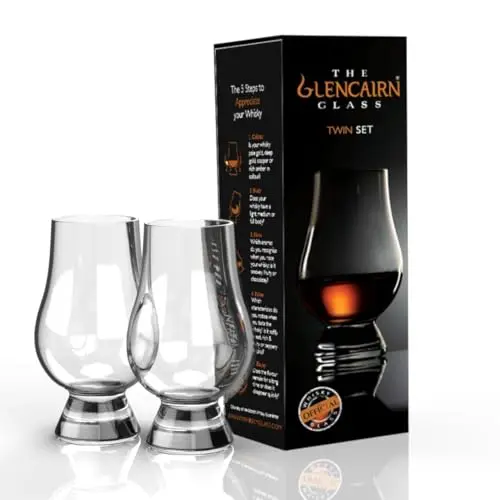
Official Whisky Glass Twin Set – The Nosing Glass Distilleries Actually Use
The shape you’ll recognize from distillery tasting rooms and serious whisky bars. The bowl widens so you can swirl, then tapers into a narrow mouth that gathers aroma instead of letting it drift away. A 200 ml bowl leaves room to work a modest pour, and the solid base sits steady in the hand. This twin set ships in a gift carton with two lead-free crystal glasses.
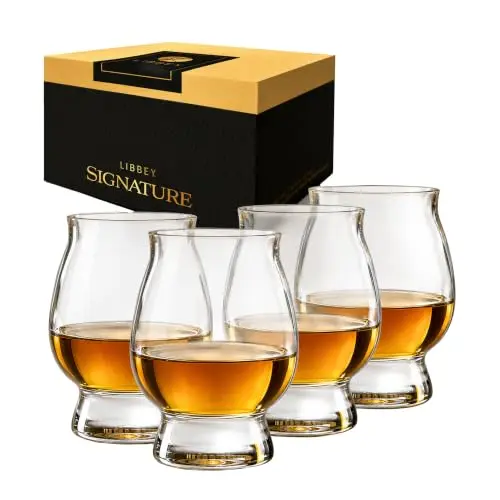
Signature Kentucky Bourbon Trail – A Bourbon-Tuned Tasting Glass
Shaped with input from Kentucky distillers rather than a design studio: a wide bowl that opens up the spirit, a narrow neck that carries aroma to the rim, and a thick stem you grip while swirling. Eight ounces is sized for a real pour, and the laser-cut rim and clear glass put the amber color on display. Four glasses per set, lead- and BPA-free, dishwasher safe.
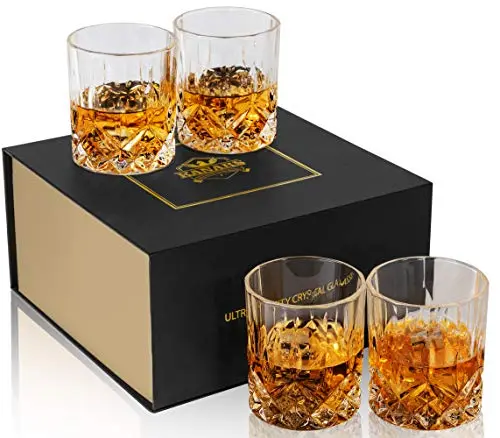
Old Fashioned Whiskey Glasses – Heavyweight Crystal in a Gift Box
A heavy, gift-ready old fashioned glass with faceted crystal detailing that throws light around the room. The base is weighted, the bowl holds ten ounces, and the mouth flares slightly so aroma still reaches you while you sip. Four glasses arrive in a presentation box, so it works as a present without extra wrapping.
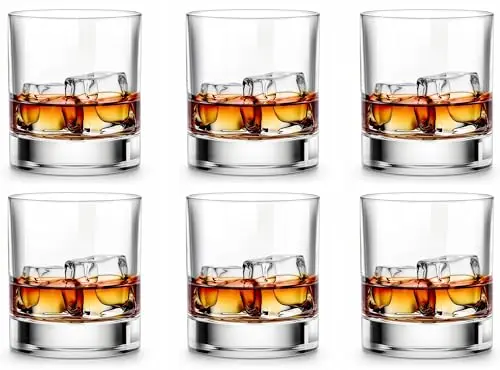
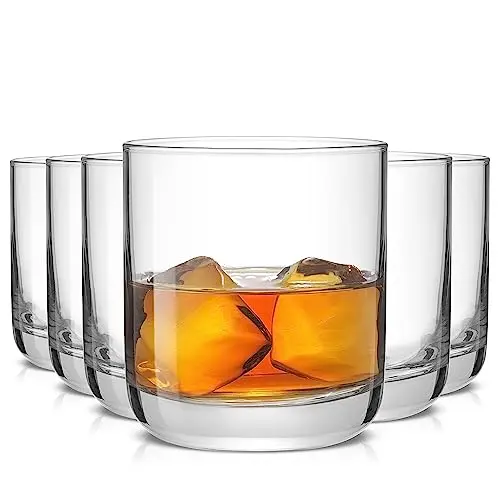
Lowball Whiskey Glasses Set of 6 – Heavy Base, Everyday Value
Six honest lowball glasses with thin lips, weighted bases, and enough capacity for a serious ice cube. Lead-free glass, a glossy finish, and a straightforward shape that works for bourbon, rum, or a stirred cocktail. Dishwasher safe – which matters more once you own six of them.
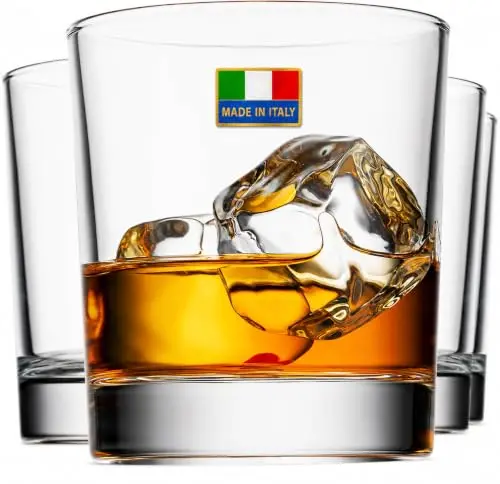
Bourbon Rocks Glasses – Italian-Made Straight-Sided Tumblers
Straight-sided tumblers made in Italy with a solid base and a clean cylindrical profile that takes a two-inch ice ball without crowding it. Fourteen ounces gives real headroom, so they pull double duty as cocktail glasses. Lead-free and dishwasher safe, in a set of four.
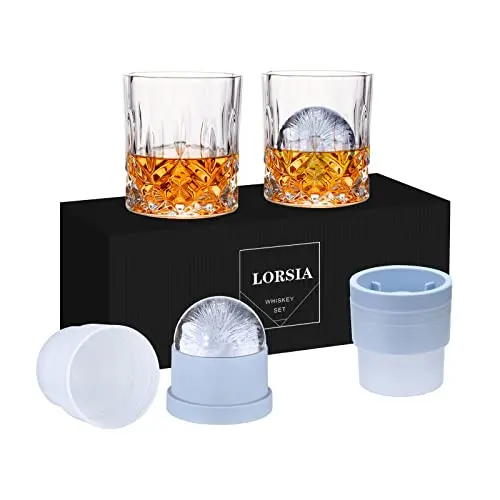
Whiskey Rocks Glass Set – Crystal Tumblers Plus Ice Ball Molds
Two etched crystal tumblers plus two flexible molds that freeze two-inch ice spheres – the setup for a properly slow-melting pour. The glasses have a heavyweight feel and a sculpted pattern that catches light. Both glasses and molds are dishwasher safe, and everything arrives in a gift box.
Faye Crystal Lowballs – Six Sparkling Tumblers
Six crystal lowballs with a weighted bottom and a subtle tapered base that’s distinctive without being fussy. Ten ounces is enough for a neat pour or a modest cube, and the shape sits comfortably in the hand. Packaged in a gift box and backed by a limited one-year warranty.
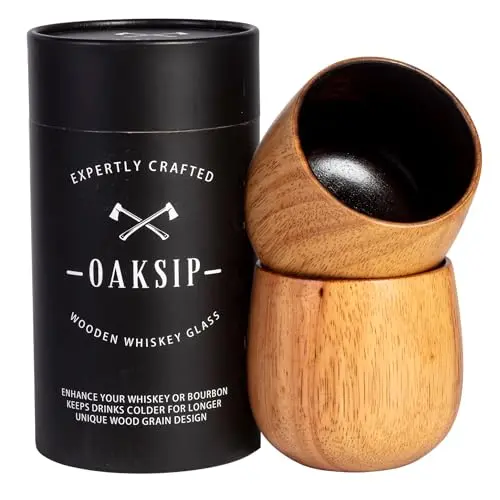
Charred Wooden Bourbon Glass – Barrel-Oak Sipping Cup
A drinking cup carved from charred oak, built to mimic the barrel environment your bourbon aged in. Eleven ounces, sold as a pair, and finished to resist condensation. It layers toast and smoke onto whatever you pour – which is either the entire point or a dealbreaker.
How We Evaluated These Bourbon Drinking Glasses
We didn’t pour flights of barrel-proof bourbon and score these glasses blind in a tasting room. What we did: cross-referenced eight bourbon drinking glass models from eight distinct brands across six decision axes – bowl and rim geometry, material and weight, capacity and ice clearance, care and breakage risk, gift presentation, and per-glass value.
We triangulated published specifications, manufacturer descriptions, and aggregated owner feedback where available, then mapped every glass against four drinking styles: neat sipping, on the rocks, cocktail service, and entertaining a group. A wide-mouthed rocks glass and a tapered nosing glass solve different problems, so each model was scored against the job it was built for rather than against a single ideal. Weight and balance were judged from stated materials and the way owners describe hand feel, not from guesswork.
The scoring framework weighted real-world fit (70%) – how well a glass delivers on its stated purpose, from aroma concentration to grip – against feature differentiation (30%) – the geometry, material, and bundled extras that separate one model from the next. We have no commercial relationship with any of the brands featured; recommendations track fit and differentiation, not brand preference. For neat pours, the Glencairn twin set is the first glass we’d hand you; if you want a wider bowl you can sip from all evening, the Libbey Kentucky Bourbon Trail set is the better match.
How to Choose the Right Bourbon Drinking Glasses
1. Why Bowl Shape Matters More Than Any Other Bourbon Glass Feature
Bourbon’s most interesting compounds – vanillin, the oak lactones, the fruity esters – are volatile. They lift off the surface of the liquid whether or not your glass gives them anywhere to travel. A wide, straight-sided tumbler lets those aromas spread out across the room. A tapered mouth gathers them into a narrower band right where your nose lands.
That’s the entire case for the tulip-shaped nosing glass, and it’s why the shape shows up in distillery tasting rooms. The tradeoff is drinking comfort: a narrow opening sips differently than a wide one, and anything much above 100 proof can hit harder when the ethanol is concentrated near the rim. Higher-proof drinkers often prefer a slightly wider mouth or a splash of water. Neither shape is wrong – they’re simply tuned for different moments.
2. Nosing Glasses vs. Rocks Glasses: Which Bourbon Drinking Glass Matches How You Drink
The honest answer is that most people eventually want one of each, and the second one can wait. If your default pour is neat or with a few drops of water, a nosing glass earns its shelf space immediately. If you take bourbon over a large cube, a double old fashioned with a wide bowl and a heavy base is the more useful object – you need room for ice and a stable footprint to set down.
Bourbon-specific designs split the difference. The Libbey Kentucky Bourbon Trail glass has a wider bowl than a classic nosing glass and a thick stem to hold while you swirl, so it lands closer to a tasting glass than a cocktail tumbler while staying easy to live with daily. If your ritual is pour, nose, sip, repeat, that middle ground is where most people actually end up.
3. Capacity and Ice Clearance: Why Eight Ounces and Fourteen Ounces Feel So Different
Capacity numbers on bourbon drinking glasses are almost never about how much bourbon you’ll pour. A standard neat pour is well under a couple of ounces in a glass that holds eight to fourteen. The number that actually matters is headroom for ice and room to swirl without sloshing over the rim.
An eight-ounce tasting glass handles a neat pour or one modest cube. A ten- to eleven-ounce lowball swallows a two-inch sphere comfortably. A fourteen-ounce straight-sided tumbler, like the Godinger set, takes a large cube plus a generous pour and still leaves space – which is why it doubles as a cocktail glass. If you routinely use big ice, bias toward the wider bowl. If you drink neat, a smaller glass keeps the aroma closer to your nose.
4. Crystal, Standard Glass, and Charred Oak: Material Tradeoffs
Lead-free crystal and standard glass differ less than the marketing suggests for everyday drinking. Crystal is typically a bit denser, rings brighter when you clink it, and feels heavier in the hand – which many people read as quality. Standard glass is perfectly serviceable and more forgiving of knocks. What actually changes the experience is rim thickness: a thin, laser-cut rim feels cleaner on the lip than a rolled one.
Wood is its own category. The Oaksip charred oak cup is essentially a walking barrel. It’s built to layer toast and smoke onto the bourbon rather than deliver a neutral tasting surface – a feature for some palates and a distraction for others. Treat wooden bourbon drinking glasses as a characterful novelty, not the set you reach for on a Tuesday.
5. Care, Breakage, and What Dishwasher-Safe Really Means for Bourbon Drinking Glasses
Almost every listing in this category claims dishwasher safety, and almost every one comes with owner feedback about clouding, water spots, or a chipped rim after a few cycles. The practical rule: top rack, no overcrowding, and a gentle cycle gets most crystal through years of use. Hand washing a nosing glass takes fifteen seconds and removes the risk entirely.
Watch for contradictory care guidance inside the same listing – several glasses in this lineup are described as dishwasher safe in one section and hand wash only in another. When that happens, trust the stricter instruction. Thick-based tumblers survive casual handling; thin-walled crystal and anything with delicate detailing is more fragile than the product photos suggest.
6. What Bourbon Drinking Glasses Cost at Each Price Tier
At the entry tier you’re buying plain lead-free glass in multi-packs, and the value is genuinely good – six decent lowballs for roughly what a single premium tumbler costs. Expect simple shapes, solid bases, and packaging not worth keeping.
The mid tier buys crystal, better rims, and heavier bases, plus presentation: gift boxes, branded cartons, sometimes Italian or American manufacturing. Most of this lineup sits here, and the differences are more tangible in the hand than on paper.
The top of the range is small and specialized – bourbon-specific geometry, wooden or hand-finished pieces, matched gift sets. You’re paying for a specific drinking ritual, not better bourbon. If you already own a decent rocks glass and drink on the rocks most nights, the premium tier is the easiest place to overspend.
Frequently Asked Questions
1. What's the difference between the Glencairn glass and the Libbey Kentucky Bourbon Trail glass?
Both are nosing-forward shapes, but they solve different problems. The Glencairn is tighter: a narrow tulip that concentrates aroma hard, with a small bowl and a 200 ml capacity that suits a neat pour. The Libbey Kentucky Bourbon Trail glass is more relaxed – an eight-ounce bowl, a thick stem to grip while swirling, and a wider mouth that makes sipping and adding a splash easier. If you want maximum aroma concentration for cask-strength bourbon, the Glencairn wins. If you want one glass that handles tasting, a small cube, and daily use, the Libbey is the more livable choice.
2. Do you really need a dedicated glass to drink bourbon?
No, and anyone who tells you otherwise is overselling it. A standard rocks glass delivers bourbon to your mouth just fine. What a dedicated glass buys you is aroma concentration and a better rim – small things that add up when you’re drinking a bottle you paid attention to when you bought it.
The practical split: keep a tumbler for mixing, ice, and casual pours, and one nosing glass for the bottles you actually want to think about. If you’re building that from scratch, the Glencairn twin set is the least expensive route in.
3. Which bourbon drinking glasses work best for whiskey on the rocks?
You want at least ten ounces of capacity and a mouth wide enough to drop in a two-inch sphere without a fight. Heavy bases help too, because a glass holding a big cube gets top-heavy and tippy otherwise. The LUXU lowballs handle a large cube comfortably in an eleven-ounce bowl, and the six-glass set covers a dinner table. If you like a very generous pour with extra ice, the fourteen-ounce Godinger tumblers leave more headroom. Skip narrow nosing glasses here – the ice won’t fit and the aroma work is wasted on a chilled drink.
4. How does the Oaksip wooden bourbon glass compare to a crystal rocks glass?
They’re not really competitors. The Oaksip is a charred oak cup that deliberately adds toast and smoke to the spirit – closer to drinking from a barrel stave than from a neutral vessel. A crystal rocks glass like the KANARS set does the opposite: it stays out of the way and lets the bourbon taste like itself.
Wood also asks more of you. It’s hand wash only, it needs to dry upside down, and it can carry residual aroma between pours. Buy it as a gift or a conversation piece. Buy crystal for the bourbon you drink every week.
5. Can bourbon drinking glasses go in the dishwasher?
Sometimes, but read the fine print. Many sets are listed as dishwasher safe while owner feedback mentions water spots, clouding, or chipped rims after repeated cycles. Top-rack placement and a gentle, low-heat cycle cut the risk considerably.
The safest rule for anything with a thin rim, a stem, or a crystal bowl is hand washing. Thick-based tumblers and multi-pack everyday glasses tolerate the machine better. And if a listing contradicts itself – dishwasher safe in one paragraph, hand wash only in another – follow the stricter instruction.
Final Verdict
For most people, the Glencairn twin set is the right first purchase. It’s the shape distillers use, it costs less per glass than a single premium tumbler, and it makes neat bourbon taste like more than it did in a mug. If you’d rather own one glass that covers tasting and everyday sipping, step up to the Libbey Kentucky Bourbon Trail set – same nosing logic, wider bowl, more forgiving to drink from.
Drinking on the rocks most nights? The LUXU lowball set is the value play: heavy bases, thin lips, enough glasses to fill a table. And if you’re shopping for the bourbon lover who already owns everything, the Oaksip charred oak cup is the one gift here that gets an actual reaction.
