
Best Bug Detector Devices – 2026 Reviews

A hotel room should feel like a pause button, not a place where you’re checking the smoke detector twice. The same goes for a rental car, an Airbnb, or a conference room you’ve never used before. That low-grade ‘is someone watching?’ feeling is exactly why bug detector devices have moved from spy-movie gear into ordinary travel kits.
The trick is that no single detector covers everything. RF scanning catches wireless transmitters, infrared lens finding catches cameras that don’t broadcast, and magnetic sensing catches trackers stuck to a car or bag. The better models combine at least two of those checks and give you enough sensitivity control to narrow a signal instead of just alarming at everything.
Below, we compare the bug detector devices that make the most sense across different buyer profiles: frequent travelers, car owners, privacy-first renters, and anyone who wants a simple pocket tool. The goal is not to turn you into a surveillance technician. It’s to help you pick a device you’ll actually use and understand.
Best Bug Detector Devices – 2026 Reviews
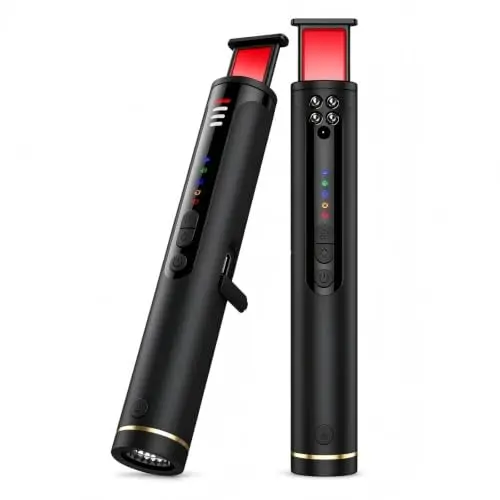
T106 – 16-in-1 Multi-Mode Detector
The T106 is the most configurable detector in this lineup, with RF scanning, infrared lens checks, magnetic field sensing, WiFi analysis, GPS locating, and a vibration alarm mode. Four sensitivity levels help you narrow down a signal instead of just detecting noise.
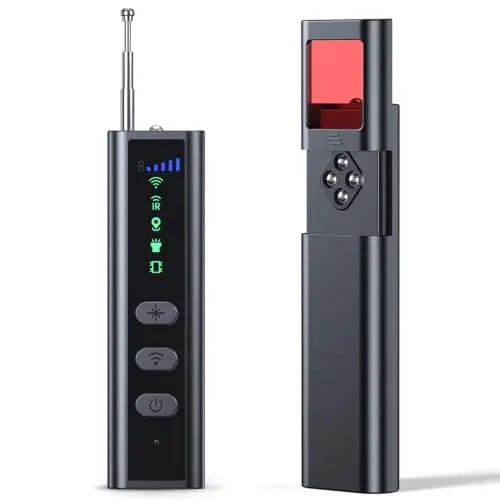
Q-T002 – Display-Guided Travel Finder
A clear screen, guided sensitivity, and three detection modes make the Q-T002 one of the easiest detectors to read on the road. RF scanning, infrared lens checks, and magnetic sensing are all here, plus a flashlight and personal alarm.
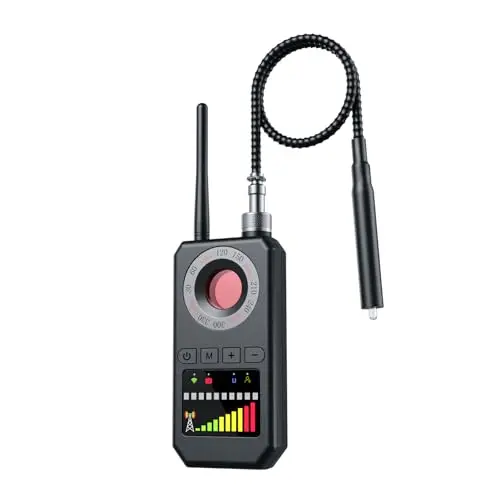
6-in-1 Vehicle Privacy Detector – Magnetic Tracker Sweeps
VigilEye’s detector leans into vehicle sweeps with a flexible probe, magnetic tracker sensing, and a wide RF range. It also covers hidden cameras, WiFi bugs, and Bluetooth spy devices for indoor checks.
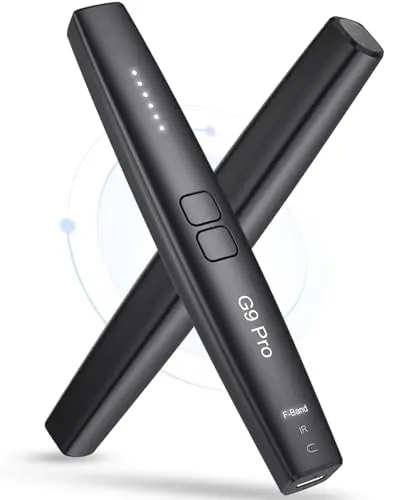
G9 Pro – Long-Runtime Travel Detector
JAXTIN’s G9 Pro pairs a compact body with an AI-assisted detection chip, multimodal alerts, and a long runtime. It’s aimed at travelers who want faster feedback and a premium-feeling kit.

10-in-1 Pen-Style Detector – Discreet Travel Scanner
Nilcozy’s pen-style detector is built for discreet carrying and one-key operation. It focuses on RF scanning for hidden cameras, listening devices, and wireless eavesdropping gear in a pocketable body.

S620 – Pocket Privacy Scanner
The S620 combines an extendable antenna, infrared lens scan, GPS tracker detection, and a door-handle alarm in a pocket-size body. It is a practical multi-check tool for hotel rooms and travel.

G007 Pro – Multi-Alert Privacy Sweeper
The G007 Pro packs six sensitivity levels, a wide RF range, and a triple-alert system into a pocketable frame. It is a budget-friendly option for basic room and travel sweeps.
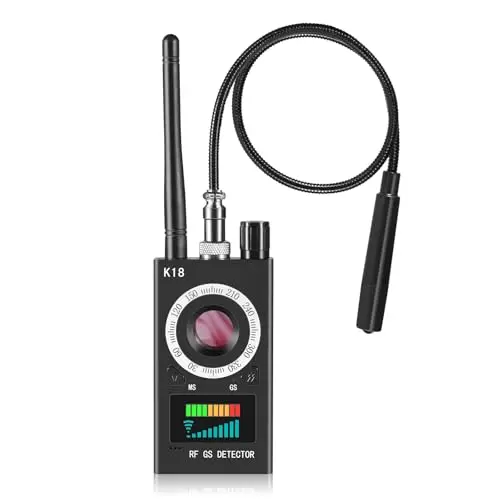
6-in-1 RF Privacy Detector – Long Standby Travel Scanner
WRKLLY’s 6-in-1 detector covers RF signals, hidden cameras, GPS tracker magnetic fields, and infrared lens checks. It is built for Airbnb stays, hotels, offices, and vehicle checks.
How We Evaluated These Bug Detector Devices
We did not run lab battery-drain tests or controlled RF signal measurements. What we did: cross-referenced 8 bug detector devices from 8 distinct brands across 6 decision axes – detection modes, RF range and sensitivity, alert systems, portability and battery, GPS tracker handling, and ease of use. We triangulated published specifications, feature sets, owner feedback where available, and fit against common buyer scenarios: hotel-room sweeps, rental checks, vehicle searches, and everyday travel. That mix matters because a detector that only scans RF solves a different problem than one with infrared lens finding and magnetic sensing. We also mapped how each device handles false-alert management, since ordinary WiFi traffic can make a broad RF scan feel noisier than it is.
The scoring framework weighted real-world performance (70%) – how well each detector supports a deliberate, repeatable sweep – against feature differentiation (30%) – unique technical advantages and use-case specificity. We have no commercial relationship with any of the brands featured; recommendations track fit and differentiation, not brand preference. If you want the broadest mode set, the Ocdonor T106 is the strongest all-rounder; if you prioritize a clear display and travel-friendly guidance, the Qyzue Q-T002 is the better match. No detector in this lineup is a substitute for professional debugging, and no handheld tool can guarantee a space is clean.
How to Choose the Right Bug Detector Devices
1. What Actually Matters in a Bug Detector Device
Start with the threats you actually face. A hidden camera detector is not one tool; it is a stack of checks. RF scanning catches wireless transmitters, infrared lens finding catches cameras that don’t transmit, and magnetic sensing catches trackers stuck to a car or bag. The best bug detector devices combine at least two of those methods, because no single mode covers every scenario.
Ignore mode-count inflation. A model that lists six modes but gives you no sensitivity control is harder to use than a simpler detector with adjustable gain and clear alerts. The practical question is whether you can sweep a room slowly, narrow a signal, and confirm what you found.
2. RF Range, Sensitivity, and False Alerts
Frequency range matters, but range alone doesn’t make a detector accurate. A wide band helps you catch common wireless devices, while step-down sensitivity helps you separate a real threat from background noise. Routers, smart TVs, and building WiFi can all trigger an RF alert. The skill is in the sweep, not just the spec sheet.
Look for multi-alert feedback – sound, vibration, and LED indicators. In a noisy hotel room or a shared office, a silent vibration mode is often more useful than a loud beep. If you plan to scan in public, treat discretion as a feature.
3. Infrared Lens Detection vs RF Scanning
RF scanning is your first pass. It picks up active wireless signals, including some hidden cameras, bugs, and trackers. Infrared lens detection is your second pass. It reveals lenses that may not be transmitting, including pin-hole cameras hidden in smoke detectors, chargers, or fixtures. A detector without infrared coverage can miss a wired camera entirely.
Use both. Sweep the room with RF, then darken the space and run the infrared check across vents, mirrors, picture frames, and anything facing a bed or desk. If a device only offers RF, treat it as a partial tool.
4. Ocdonor T106 vs VigilEye 6-in-1: Which Bug Detector Fits Your Sweep?
The Ocdonor T106 is the more flexible room-sweeping tool, with RF, infrared, magnetic, WiFi, and GPS modes plus four sensitivity levels. The VigilEye 6-in-1 leans toward vehicle checks, using a flexible probe and magnetic sensor to reach under seats, bumpers, and wheel wells. For hotel and rental sweeps, the T106’s broader mode set is easier to justify. For car-focused tracker searches, the VigilEye’s probe is the more purpose-built shape.
Neither is a professional-grade spectrum analyzer. Both are handheld consumer detectors that reward a slow, methodical sweep. Choose based on where you’ll use it most, not on the longest feature list.
5. Portability, Battery, and Travel Setup
Pocket-size detectors get used; bulky ones stay in a drawer. Look for a rechargeable battery, a clear mode display, and a body that slips into a bag or jacket. Standby time matters if the device lives in your travel kit, while fast charging matters if you’re moving between hotels.
Before you rely on any bug detector device, do a practice sweep at home. Learn what your own WiFi and electronics look like on the display. That baseline makes a real anomaly easier to spot. If you want a travel-first pick with guided sensitivity, the Qyzue Q-T002 is the easier one to hand to a first-time user.
6. Budget vs Premium Bug Detector Devices
Budget-friendly detectors usually cover RF scanning and basic infrared lens checking, with simpler alerts. Premium models add wider frequency coverage, magnetic tracker detection, longer runtimes, and more polished controls. The jump is worth it if you travel frequently or need to check vehicles, not if you only want occasional hotel-room reassurance.
Spend on detection methods before you spend on packaging. A mid-range detector with RF, infrared, and magnetic sensing is more useful than a premium-feeling device with one mode and a fancy box.
Frequently Asked Questions
1. What's the difference between the Ocdonor T106 and the JAXTIN G9 Pro?
The G9 Pro is the more travel-polished option: it adds a long runtime, AI-assisted detection, and multi-sensory alerts in a pocketable kit. The T106 is the more flexible sweeper, with RF scanning, infrared lens finding, magnetic sensing, and four sensitivity levels. If you want the broadest mode set for hotel and rental checks, the T106 is the easier all-rounder; if you value runtime and a more polished interface, the G9 Pro makes more sense.
2. How does the Qyzue Q-T002 compare with the CountureMode G007 Pro?
The Q-T002 leans on a clear mode display and guided sensitivity, which makes it easier for a first-time user to follow a sweep. The G007 Pro counters with six sensitivity levels and a triple-alert system at a budget-friendly tier. Neither is a professional spectrum analyzer. The Qyzue is the more approachable travel tool; the CountureMode is the better value if you want more manual control.
3. Do bug detector devices actually find hidden cameras?
They can find wireless hidden cameras, but not every camera transmits. That’s why infrared lens detection matters: it reveals lenses in a dark room even when the camera is wired or offline. A bug detector device that only scans RF can miss a non-transmitting camera entirely. Use RF for active signals and infrared for visual confirmation, and treat any alert as a prompt to inspect the area yourself.
4. Can a bug detector find a GPS tracker on a car?
Yes, if the detector has magnetic field sensing. A GPS tracker is often attached with a magnet, and a detector can flag that magnetic field or its RF transmission. For car-focused sweeps, the VigilEye 6-in-1 has a flexible probe and a high-precision magnetic sensor that reach under seats and bumpers. A general-purpose detector with magnetic mode can also work, but the probe makes tight spots easier. Sweep slowly and check wheel wells, bumpers, and undercarriage gaps.
5. Are bug detector devices legal to use?
Use them only where you have lawful authority to inspect. Scanning your own hotel room, rental, or vehicle is one thing; sweeping someone else’s space or interfering with wireless communications can raise legal issues. A passive detector that listens for signals is generally different from a jammer or interceptor, which you should not use. If you need a professional-grade security assessment, hire a qualified specialist rather than relying on a consumer bug detector device.
Final Verdict
For most buyers, the T106 is the bug detector device to beat. It covers the checks that matter – RF scanning, infrared lens finding, magnetic sensing, and GPS tracker locating – and its four sensitivity levels make a deliberate sweep possible instead of a noisy guess. If you want the easiest travel-first option, the Qyzue Q-T002 gives you a clear display and guided sensitivity without the mode overload. For car-focused tracker searches, the VigilEye 6-in-1 is the purpose-built pick, with a flexible probe that reaches where a handheld body can’t. And if you want a longer runtime and a more polished kit, the JAXTIN G9 Pro is the premium travel choice. Start with the threats you actually face, then buy the detector that matches that sweep.
