
Best Business Travel Backpacks – 2026 Reviews

A business trip has a way of exposing a bad backpack fast. The bag that felt fine on a ten-minute commute suddenly becomes a problem when you are sprinting to a gate, wrestling a laptop out at security, and trying to keep a suit jacket from turning into a crumpled mess.
The best business travel backpacks solve a different set of problems than an everyday commuter pack. They need to fit under a seat or in an overhead bin, protect a laptop without turning every trip into an unpacking ceremony, and keep documents, chargers, and a change of clothes from becoming one tangled pile. A luggage pass-through and a comfortable harness matter more than a long feature list once you are moving through an airport.
This guide surveys the market across brands and price tiers, from budget nylon packs to full-grain leather options, so you can match the bag to your typical trip length, laptop size, and tolerance for weight.
Best Business Travel Backpacks – 2026 Reviews
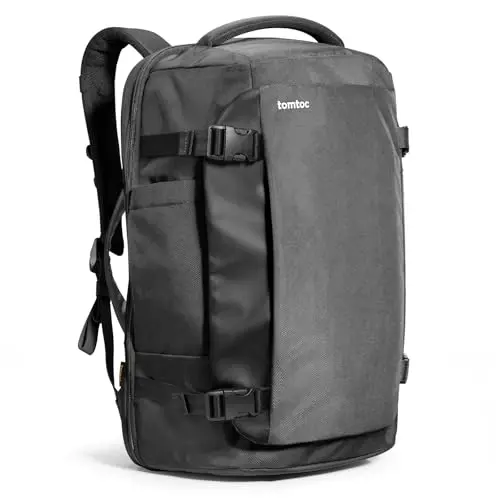
Navigator-T66 – 40L Carry-On Business Travel
A 40L carry-on built for business trips that need one-bag capacity and quick security checks. The clamshell main compartment packs like a suitcase, while the dedicated tech section holds a large laptop and tablet.
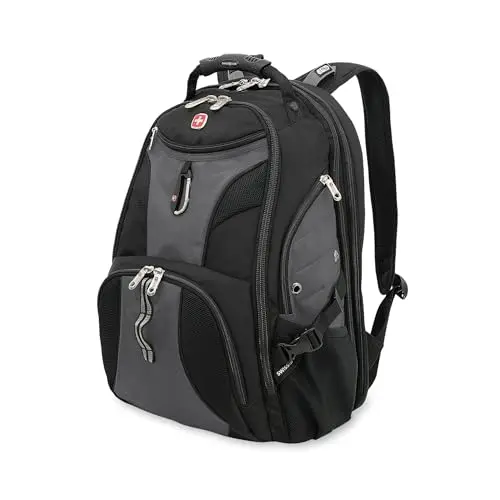
1900 ScanSmart – Lay-Flat TSA Organization
The classic ScanSmart business pack: a lay-flat laptop section, RFID-protected organizer, and trolley strap in a durable 31L package. It is built for travelers who prioritize airport efficiency and structured pockets.

TD-3563Futi – Full-Grain Leather Business Pack
A full-grain leather business backpack with a professional profile, padded laptop and tablet sleeves, and a luggage strap. It is the premium pick for travelers who want a bag that looks at home in a meeting.
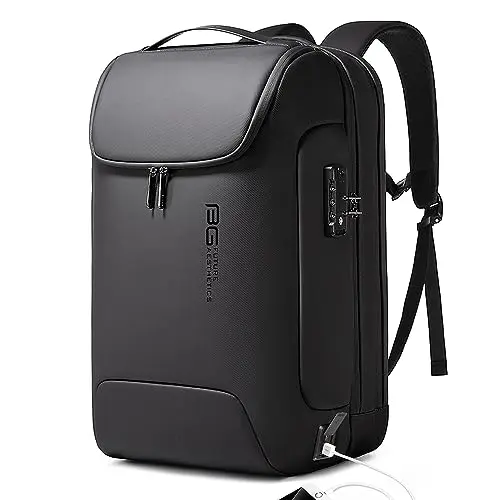
7216 – Lockable Anti-Theft Business Pack
A lockable, water-resistant business pack with a dedicated 17.3-inch laptop compartment, USB 3.0 charging pass-through, and multiple anti-theft pockets. It suits travelers who carry expensive gear and want a visible security layer.

SD1670-01 – Compact RFID Business Pack
A compact business backpack with a 16-inch laptop sleeve, RFID-blocking pocket, USB charging pass-through, and Add-A-Bag strap. It is a lighter choice for short trips and daily office commutes.
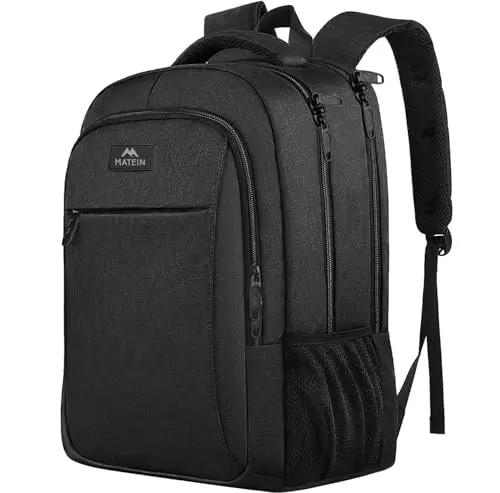
100700BLK – Budget Business Traveler
A budget-friendly business travel backpack with a 15.6-inch laptop compartment, luggage strap, anti-theft back pocket, and a personal-item-friendly shape. It covers the basics without a premium price.

Business Smart Backpack – Waterproof USB Commuter
A water-resistant business backpack with a 180-degree laptop opening, USB charging port, and a roomy main compartment. It is a practical mid-range option for daily work travel.

Sb-122 – Expandable 40L Carry-On
An expandable 40L carry-on backpack with a 17.3-inch laptop compartment, suitcase-style opening, and a private back pocket. It is built for weekend business trips that need extra packing room.
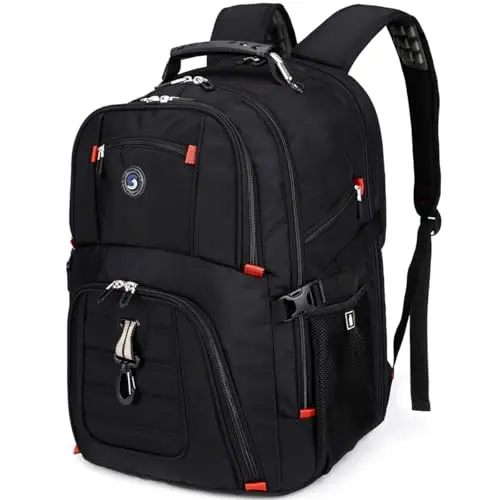
983035 – Extra-Large Carry-On Capacity
An extra-large travel backpack with 50L capacity, a combination lock, and a 17-inch laptop sleeve. It is for business travelers who pack heavy and want carry-on-style access.
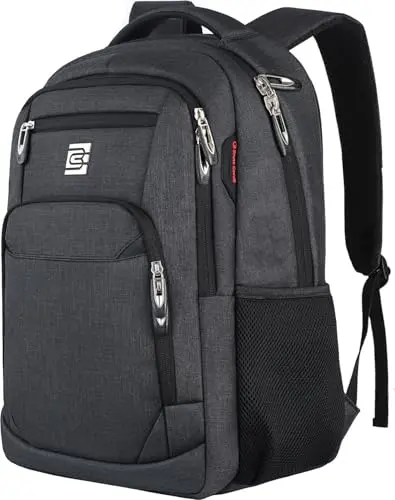
YK-006 – Slim Budget Commuter
A slim, water-resistant laptop backpack with a 15.6-inch compartment, airflow back panel, and luggage strap. It is a low-cost choice for light business commutes.
How We Evaluated These Business Travel Backpacks
We didn’t run these packs through a full season of airport travel or lab-test zipper cycles. What we did: cross-referenced 10 business travel backpack models from 9 distinct brands across six decision axes – carry-on dimensions, laptop and tablet protection, interior organization, harness comfort, security features, and materials and durability. We triangulated published specifications, feature sets, and owner feedback where available, then mapped each option against representative business-travel scenarios: a two-day flight with one bag, a daily commute with a 15-inch laptop, a train trip with a rolling suitcase, and a longer trip where packing volume matters more than a slim profile.
The scoring framework weighted real-world fit (70%) – how well each backpack handles the actual job of business travel – against feature differentiation (30%) – unique security, organization, or comfort advantages. That means a pack with a long feature list did not outrank a simpler bag if the simpler bag was easier to carry through an airport, protect a laptop, and organize a short trip. We have no commercial relationship with any brand here; recommendations track fit and differentiation, not brand preference. We did not physically load each bag for a multi-week trip or measure zipper pull cycles, so the notes here are a research-based buying guide rather than a field test. If you want one bag for a short trip, the tomtoc Navigator-T66 is your match. If airport speed and structured pockets matter more, the SwissGear 1900 ScanSmart serves you better.
How to Choose the Right Business Travel Backpacks
1. What Makes a Business Travel Backpack Worth Carrying
A business travel backpack has to do more than hold a laptop. The category starts with carry-on compatibility, because a bag that is too tall or too deep for the overhead bin defeats the point of traveling with one pack. It also needs a dedicated laptop compartment with enough padding to protect a machine in transit, plus a tablet sleeve or document section for the items you need at a meeting.
The defining features are practical rather than flashy: a luggage pass-through, a structured front organizer, and a harness that spreads weight across the back and shoulders. A business travel backpack should look professional enough for an office visit, but the real test is whether it makes the airport, the hotel, and the commute easier.
2. Carry-On Fit and Laptop Protection Come First
Start with dimensions, not capacity claims. A pack in the 35-40L range can work as a one-bag business traveler if the shape is tall and shallow enough for airline sizers. A 25-30L business travel backpack is easier for daily commutes and overnight trips but gets tight for three or more days of clothing.
Laptop protection is the second filter. Check the maximum device size, the padding on the bottom edge, and whether the compartment opens flat for security. If your laptop is a 17-inch workstation, the SwissGear 1900 ScanSmart is a safer fit than a slim 15.6-inch commuter bag. A lay-flat TSA section is not a gimmick if you fly often; it reduces the chance of leaving a laptop behind in a security bin.
3. Organization, Security, and Airport Speed
The best organization is the kind you can use without thinking. Look for a front admin panel with card slots, pen loops, and a key clip; a document divider for a passport or printed itinerary; and side pockets that fit a water bottle or compact umbrella. A hidden anti-theft pocket is useful for a spare card or phone, especially in crowded transit hubs.
Security features range from basic to serious. An RFID-blocking pocket protects cards and a passport from casual scanning, while a combination lock or TSA lock adds a visible deterrent. If you want a lockable compartment and a large laptop sleeve, the BANGE 7216 is the pick here. Just remember that locks and extra pockets add weight and complexity; not every business traveler needs them.
4. Comfort and Harness Design for Long Transit Days
A business backpack can be perfectly organized and still miserable if the harness is wrong. Look for contoured shoulder straps, a ventilated back panel, and a sternum strap if you carry a heavier load. A luggage pass-through is not just for rolling bags; it also keeps the pack from sliding off a suitcase while you check in.
Weight matters more than capacity once the bag is full. Leather packs can look more professional, but they are usually heavier than nylon. If you want one bag for a short trip and a comfortable carry, the tomtoc Navigator-T66 is the better match. If you mostly commute and want a lighter profile, a compact 25-30L pack will feel easier on your back.
5. Budget, Mid-Range, and Premium Business Travel Backpacks
Price tiers in this category track materials, hardware, and brand history more than raw capacity. Entry-level nylon packs can cover the basics – a laptop sleeve, a luggage strap, and a few organizer pockets – but the zippers and lining are usually the first places to show wear. Mid-range bags tend to add better padding, water-resistant coatings, and more thoughtful compartment layouts.
Premium business travel backpacks move into full-grain leather, metal hardware, and more structured shapes. They can be worth it if you need a bag that looks at home in a client meeting, but they are usually heavier and need more care. The sweet spot for most frequent travelers is a well-organized mid-range pack with a comfortable harness and a proven laptop compartment.
Frequently Asked Questions
1. What separates a business travel backpack from a regular laptop backpack?
A regular laptop backpack is built around a commute; a business travel backpack has to handle a flight, a hotel, and a meeting. The differences that matter are carry-on dimensions, a laptop compartment that opens flat, a luggage pass-through, and enough structured organization for documents, chargers, and a change of clothes. Security features such as RFID pockets or lockable zippers are a bonus, but they should not come at the cost of comfort or a clean profile.
2. tomtoc Navigator-T66 vs. SwissGear 1900 ScanSmart: Which is better for business travel?
Choose the tomtoc Navigator-T66 if you want one bag for a short trip: its 40L clamshell packing and luggage pass-through make it more travel-oriented. Choose the SwissGear 1900 ScanSmart if you want a classic business backpack with a lay-flat TSA section, RFID organizer, and a more structured pocket layout for daily commutes. The tomtoc is better for packing; the SwissGear is better for airport speed and office organization.
3. Is the TIDING TD-3563Futi leather backpack practical for frequent flyers?
Yes, if you want a premium leather business travel backpack and pack relatively light. The 15.6-inch laptop sleeve, luggage strap, and under-seat fit make it practical for short trips. The tradeoff is weight: at 4.4 pounds empty, it is heavier than nylon packs, and the full-grain leather needs more care. It is best for travelers who value a professional look and do not need 40L of capacity.
4. MATEIN 100700BLK vs. Volher YK-006: Which budget business travel backpack should you choose?
The MATEIN 100700BLK is the better budget pick for most business travelers because it has a luggage strap, a hidden anti-theft pocket, and a personal-item-friendly shape. The Volher YK-006 is slimmer and has a clean airflow back panel, but its 25L capacity is tighter for overnight trips. If you mostly commute with a laptop and light layers, the Volher is fine; if you want a budget bag that can handle a short flight, the MATEIN is more versatile.
5. How much capacity do you need in a business travel backpack?
For a one- to two-night business trip, 25-30L is usually enough if you pack a laptop, charger, one change of clothes, and a dopp kit. For three to five days, look at 35-40L and a clamshell or suitcase-style opening. Above 40L, check airline carry-on limits carefully and expect a heavier bag when full. A business travel backpack should fit your typical trip length first, not the longest trip you might take once a year.
Final Verdict
For most business travelers, the tomtoc Navigator-T66 is the best overall business travel backpack. It pairs a 40L carry-on footprint with clamshell packing, a TSA-friendly laptop section, and a luggage pass-through – the combination that makes a short trip feel manageable with one bag. If you prefer a classic structured business pack and want the fastest possible security lane experience, the SwissGear 1900 ScanSmart is the better fit. On a tight budget, the MATEIN 100700BLK covers the essentials with a luggage strap and anti-theft pocket. And if the trip calls for a polished leather bag that can go from airport to meeting, the TIDING TD-3563Futi is the premium choice. Match the bag to your typical trip length and laptop size, and you will get more use out of it than chasing the largest capacity.
