
Best Camping Pillows For Side Sleepers – 2026 Reviews

A side sleeper notices a bad camp pillow fast. The ground is already working against you, and a thin, flat pillow turns every roll onto your shoulder into a wake-up call. The pillow that saves the night usually has enough loft to fill the gap between your neck and shoulder – and enough give that it doesn’t feel like a brick.
That’s the tension in this category. Inflatable pillows pack tiny but can feel bouncy or too firm; foam pillows support better but add bulk. The best camping pillow for side sleepers balances loft height, fill behavior, packability, and cover care rather than winning on any one spec.
We looked across the market at foam, air, and hybrid options to find pillows that make sense for different campers. Some are built for ultralight backpacking, others for car camping comfort, and a few split the difference. The right pick depends on how you sleep and how much weight you’ll carry.
Best Camping Pillows for Side Sleepers – 2026 Reviews
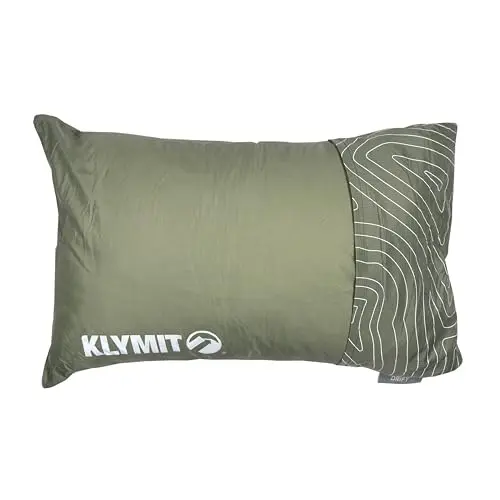
Drift – Shredded Memory Foam for Side Sleepers
The Drift combines shredded memory foam with a jersey cotton inner case and a water-resistant ripstop outer shell. It packs down for camp and aims to keep side-sleeper necks supported without a valve or inflation step.
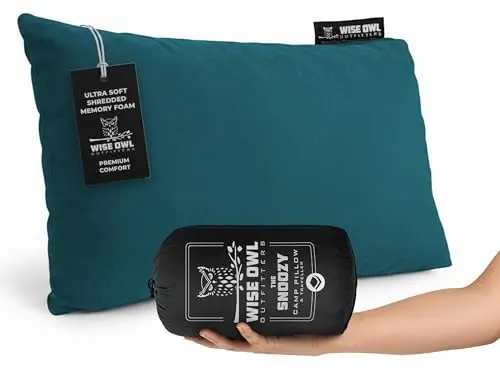
Memory Foam Camping Pillow – Lightweight Side-Sleeper Support
A compact memory-foam pillow with a silky microsuede cover and a waterproof stuff sack. The medium size is built for travel and camp use, with side and back sleepers in mind.
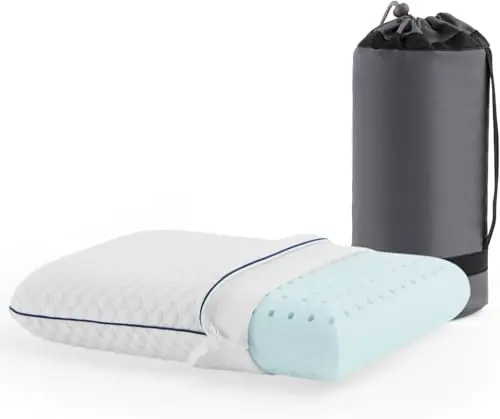
Cooling Gel Camping Pillow – Travel-Size Cooling Support
A travel-size gel memory foam pillow with a ventilated cooling cover and carry bag. Medium-firm support aims at side, back, and stomach sleepers who want a compact pillow.
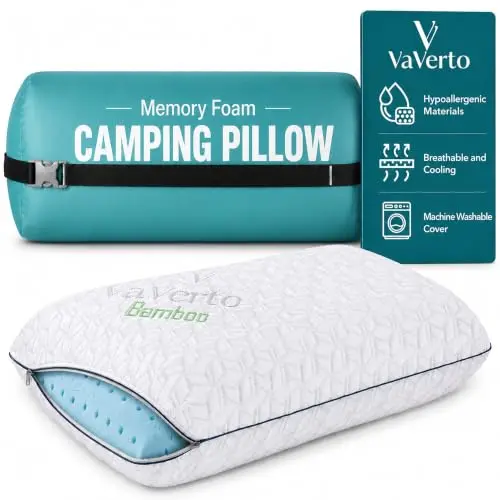
Camping Pillow – Medium-Firm Foam Value
A medium-firm memory foam camp pillow with a gel-infused ventilated core, removable cover, and carry case. It’s aimed at side sleepers who want a simple foam feel.
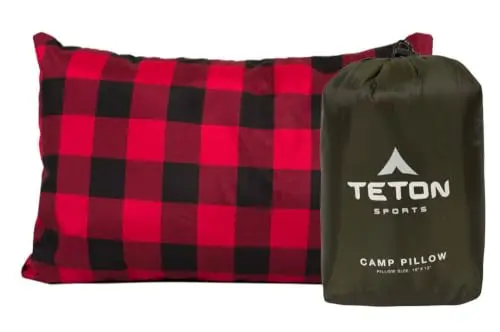
Camp Pillow – Soft Washable Camp Comfort
A soft, washable camp pillow with a polyester cover and cotton fill. It lofts on its own, packs into a stuff sack, and suits casual campers who want a familiar bed-pillow feel.
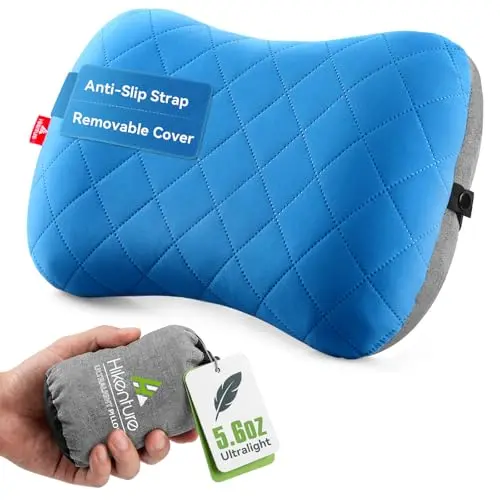
Camping Pillow with Removable Cover – Ergonomic Air Support
An inflatable camp pillow with a removable cotton cover, thickened TPU bladder, and one-click valve. Ergonomic shaping targets neck and lumbar support.
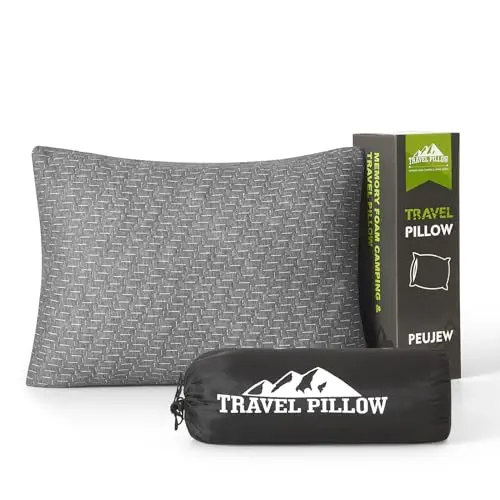
Small Shredded Memory Foam Pillow – Compact Side Support
A small shredded memory foam pillow with a microfiber cover and travel bag. The 16 x 12 size is built for packing light while keeping a foam feel.
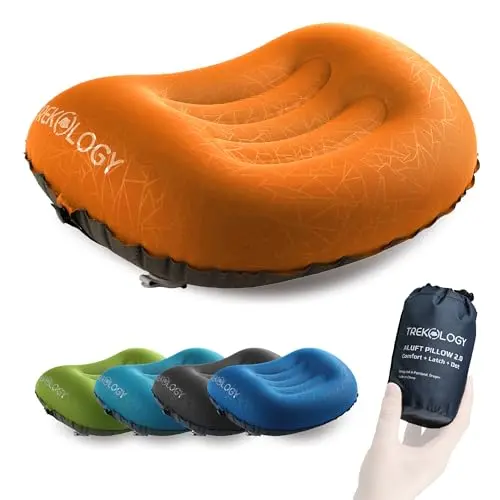
Aluft 2.0 – Ultralight Adjustable Air Pillow
An ultralight inflatable pillow with a TPU shell, adjustable air firmness, and anti-slip dots. It packs to soda-can size for backpacking.
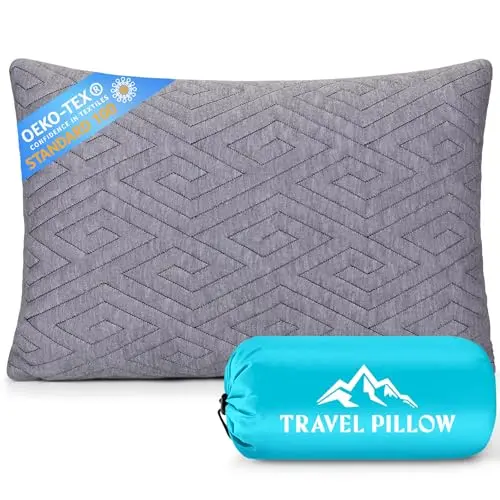
Travel Pillow – Adjustable Shredded Foam Compact
A compact travel pillow filled with shredded memory foam and polyester fiber, with an adjustable zipper fill and a breathable microfiber cover.
How We Evaluated These Camping Pillows for Side Sleepers
We didn’t see these pillows through a full season of camping nights or run lab pressure tests. What we did: cross-referenced 9 camping pillow models from 9 distinct brands across 5 decision axes – loft height, fill type, firmness, packability, and cover care. We triangulated published specifications, feature sets, and owner feedback where available, then mapped each pillow against side-sleeper needs: shoulder gap support, neck alignment, and how the surface behaves through the night.
The scoring framework weighted real-world fit for side sleepers (70%) – how well each pillow delivers usable height and support without constant readjusting – against feature differentiation (30%) – packability, cover washability, cooling, and inflation or fill advantages. We have no commercial relationship with any of the brands featured; recommendations track fit and differentiation, not brand preference. If you want a taller foam pillow, the Klymit Drift is your match; if you count ounces, the Wise Owl Outfitters memory foam pillow serves you better.
We also weighed how each pillow performed as a system – whether the cover stayed put, whether the fill shifted, and whether the packed size matched the intended use. A pillow that feels fine on a car-camping cot can be wrong for a backpacker, and a pillow that packs to nothing can feel too bouncy after a long day on the trail. We kept those tradeoffs visible instead of pretending one design wins everywhere.
How to Choose the Right Camping Pillows for Side Sleepers
1. Why Loft Height Matters for Side Sleepers
Loft height is the first thing to check because side sleepers need more vertical space between the mattress and the head. If the pillow is too low, the shoulder gap wins and your neck bends. A useful starting range is about 4 to 5.5 inches, but the number on the spec sheet isn’t the whole story: a soft pillow compresses, so it needs more initial height to deliver the same neck alignment as a firmer foam pillow.
2. Memory Foam vs. Inflatable Camping Pillows for Side Sleepers
Memory foam and shredded foam conform to the head and neck, which makes them forgiving for side sleepers who change position. Inflatable pillows pack smaller and offer adjustable firmness, but they can feel bouncy and less stable. If you want a budget-friendly foam pillow, the Vaverto Camping Pillow is the pick; if you prioritize a tiny packed size, an air pillow makes more sense.
3. Packability and Weight for Camping and Backpacking
Packability is where camp pillows separate: a pillow can feel great in a tent and still be wrong for a backpacker. Check the packed size, the weight, and whether the stuff sack is included. A latch strap or anti-slip base matters too, because a pillow that slides off a sleeping pad at 2 a.m. is not comfortable no matter how well it supports.
4. Cover Care, Cooling, and Durability on the Trail
A machine-washable cover is worth prioritizing if you camp often, since tent life is hard on fabric. Cooling gel and ventilated covers can help hot sleepers, but the effect varies by person. Durability is the other long-game factor: check seams, zippers, and valve quality, especially on inflatable models. If night sweats are your main complaint, the Weekender Cooling Gel Camping Pillow is the pick.
5. How Much Should You Spend on a Camping Pillow?
The category splits into budget-friendly, mid-range, and premium tiers. Budget pillows usually use simpler foam or air bladders; mid-range options add better covers, cooling layers, or more refined shaping; premium picks tend to offer more loft, denser foam, or stronger warranties. You don’t need the top tier to sleep well, but the cheapest option may not hold its shape night after night.
Frequently Asked Questions
1. What's the difference between the Klymit Drift and the Wise Owl Outfitters camping pillow?
The Klymit Drift leans taller and plusher with shredded memory foam and a 5.5-inch loft, so it suits side sleepers who want more lift. The Wise Owl is lighter, lower-profile, and easier to pack, with a 4-inch loft and a waterproof stuff sack. If you want maximum foam support, the Klymit Drift is the pick; if you’re counting ounces, the Wise Owl makes more sense.
2. Is the Weekender cooling gel pillow better than the Vaverto memory foam pillow for side sleepers?
The Weekender adds a cooling gel layer and a ventilated cover, which helps if heat is your main sleep problem. The Vaverto is a simpler medium-firm foam pillow with a lower price tier. For hot sleepers, the Weekender is the pick; for a basic supportive foam pillow, the Vaverto is the better value.
3. How thick should a camping pillow be for side sleepers?
Aim for enough loft to fill the shoulder gap without craning your neck. Many side sleepers do well with a pillow around 4 to 5.5 inches thick, but fill firmness changes the effective height. A softer pillow compresses more, so it may need more loft; a firmer foam pillow can feel taller than its listed thickness.
4. Can an inflatable camping pillow work for side sleepers?
Yes, if you choose one with adjustable firmness and enough height. Inflatable pillows pack smaller and let you tune support, but they can feel bouncy and less forgiving than foam. Side sleepers who mostly car camp usually prefer memory foam; backpackers who want to save weight can make an air pillow work.
Final Verdict
For most side sleepers, the Klymit Drift is the answer – it has the loft and shredded foam support to keep your neck aligned without a fussy valve. If you’re packing light, the Wise Owl Outfitters memory foam pillow gets you most of the support in a much smaller package. Budget-conscious campers should look at the Vaverto Camping Pillow, which covers the foam basics without the premium tier. And if overheating is the issue, the Weekender Cooling Gel Camping Pillow is purpose-built for a cooler feel. Start with how much height you need, then pick the pillow that matches your pack size and sleep temperature.
