
Best Carbon Filter Air Purifiers – 2026 Reviews

Smoke drifting in from a kitchen, a litter box in the next room, or that stubborn pet odor in the sofa cushions – those are gas-and-odor problems, and a plain HEPA filter won’t solve them alone. That’s why carbon filter air purifiers have become the go-to for households that want particle capture and odor control in one box. The carbon stage is what handles VOCs, cooking fumes, smoke smells, and pet odors, while the HEPA side deals with dust, pollen, and dander.
The trick is that ‘carbon filter’ can mean very different things. Some units use a thin carbon sheet as a light deodorizer; others use a dedicated activated-carbon layer or pellet-heavy cartridge designed for real odor loads. Coverage claims also vary wildly, and a purifier that’s great for a bedroom may be underwhelming in an open living space. We looked at how each model balances carbon capacity, HEPA performance, noise, sensors, and filter costs so you can pick the right carbon filter air purifier for your home, not just the one with the biggest box claim.
Best Carbon Filter Air Purifiers – 2026 Reviews
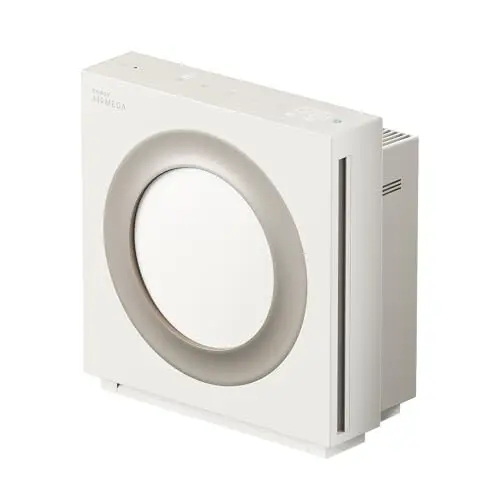
Airmega Mighty2 – Carbon Filtration With Smart Sensing
The Airmega Mighty2 pairs a washable pre-filter with a 2-in-1 HEPA and Active Carbon Max2 filter, so it targets both particles and odor gases instead of treating carbon as an afterthought. The MegaScan laser sensor reads PM1, PM2.5, and PM10, and Smart Mode adjusts fan speed automatically.
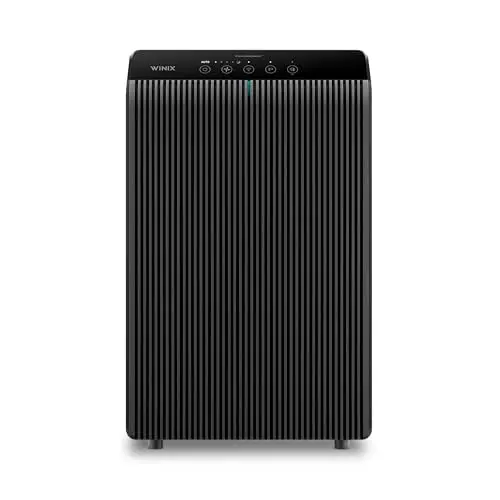
5510 – Large-Room Carbon Filtration
The 5510 is Winix’s app-connected large-room purifier, with a True HEPA filter, an advanced odor-control carbon filter, and a washable fine-mesh pre-filter. Auto Mode uses onboard air-quality sensing, and the light sensor can trigger Sleep Mode when the room darkens.
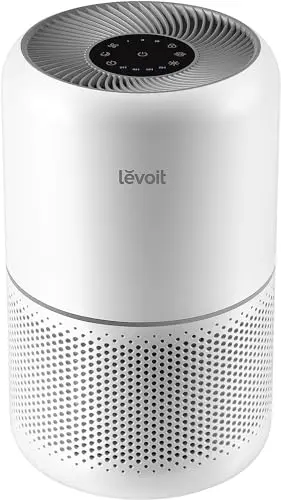
Core 300-P – Quiet Carbon/HEPA Value
The Core 300-P is a compact, AHAM-verified purifier with a 3-in-1 filter that combines a pre-filter, HEPA-grade media, and carbon for household odors. It’s built for bedrooms and offices, with a 24 dB Sleep Mode and a display-off option.
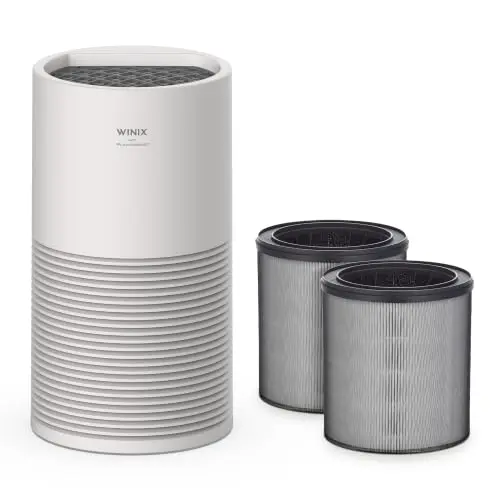
AT40 – Two Years of Filters Included
The AT40 is a Wi-Fi-connected Winix purifier that ships with two 360 all-in-one True HEPA filter sets, covering up to two years of filtration. It adds a real-time air-quality display and app control to the familiar Winix carbon-and-HEPA formula.
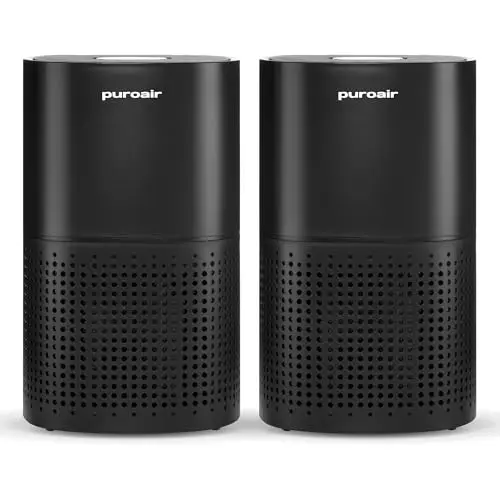
240 2PK – Sensor-Driven Carbon Filtration
The PuroAir 240 two-pack brings a 3-layer pre-filter, HEPA, and activated carbon setup to two rooms at once. PuroIQ sensing supports Auto Mode, and the 360-degree intake helps the compact tower pull air from all sides.
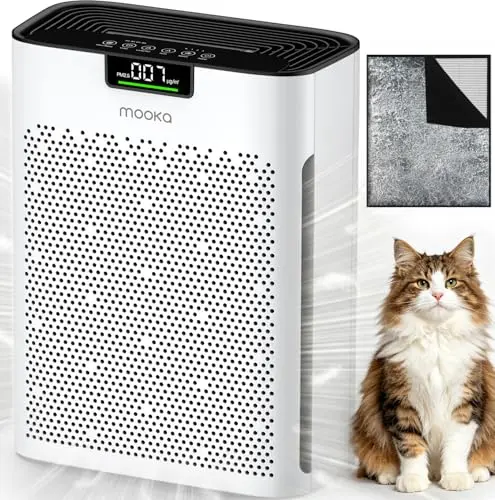
KJ190H – Washable Pre-Filter and AQI Display
The KJ190H is a budget-friendly MOOKA purifier with a washable pre-filter, a 3-stage HEPA and carbon system, and a built-in PM2.5 display. Auto Mode reacts to real-time particulate readings, and the front plus dual-side intakes are designed for pet hair and smoke.
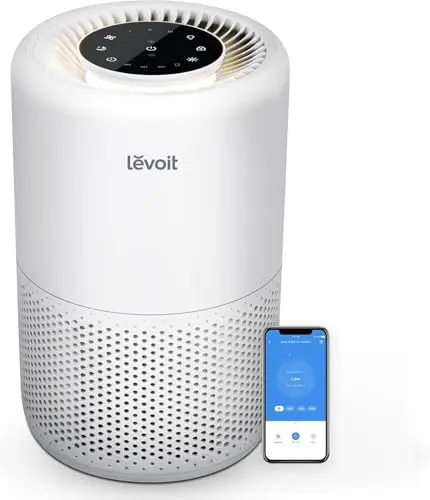
Core 200S-P – Smart Compact Carbon Filtration
The Core 200S-P is a compact smart purifier with a 360-degree intake, a 3-in-1 filter, and app plus Alexa control. It’s sized for bedrooms, dorms, and small offices, with a 27 dB Sleep Mode and display-off option.

B-D02L – Budget Carbon Filtration With Aromatherapy
The B-D02L is a low-cost MOOKA purifier with a true HEPA filter, an activated carbon layer, and a fragrance pad for optional essential oils. It offers four fan speeds, four timer settings, a night light, and a child lock in a compact footprint.
How We Evaluated These Carbon Filter Air Purifiers
We didn’t run controlled lab tests or measure CADR ourselves. What we did: cross-referenced 8 carbon filter air purifier models from 5 distinct brands across 6 decision axes – carbon filter type and capacity, HEPA performance, room coverage, noise and sleep behavior, smart sensors, and filter replacement logistics. We triangulated published specifications, feature sets, owner feedback where available, and use-case fit against representative buyer profiles for bedrooms, living rooms, allergy-sensitive households, and smoke or pet-odor situations.
We paid particular attention to how each carbon stage is implemented. A thin carbon sheet is not the same as a dedicated activated-carbon filter or a pellet-heavy odor layer, and the difference matters if you’re targeting cooking smells, pet odors, wildfire smoke, or VOCs. We also weighed whether the HEPA side is independently verified, how coverage claims translate to realistic air changes, and whether the unit includes washable prefilters, filter-life indicators, or bundled replacement filters that affect long-term ownership.
The scoring framework weighted real-world fit (70%) – how well each purifier delivers on its stated carbon and HEPA claims for the room it’s meant to serve – against feature differentiation (30%) – meaningful advantages like real-time air quality sensors, sleep-mode quietness, and app control. We have no commercial relationship with any brand here; recommendations track fit and differentiation, not brand preference. If you want the strongest all-around large-room package, the Coway Airmega Mighty2 is our top pick. If you want a lower-cost bedroom-focused unit, the Levoit Core 300-P is the value alternative.
How to Choose the Right Carbon Filter Air Purifiers
1. What to Look for in Carbon Filter Air Purifiers
Start with the carbon stage, not just the HEPA label. A carbon filter air purifier can use a thin carbon sheet, a granular carbon layer, or a pellet-heavy cartridge, and those choices affect how well it handles odors, smoke, and VOCs. You also want a true HEPA filter or HEPA-grade media for particles, because carbon alone won’t catch dust, pollen, or pet dander.
Then check the CADR rating, room coverage, and noise specs together. A high coverage claim at one air change per hour is not the same as fast cleaning in a bedroom. Look for AHAM verification where available, a realistic air changes per hour figure, and a sleep mode that won’t keep light sleepers awake.
2. Why Carbon Filtration Matters for Odors, Smoke, and VOCs
Activated carbon is porous and adsorbs gases rather than trapping them mechanically. That makes activated carbon the right tool for cooking fumes, pet odors, wildfire smoke, and many VOCs that a HEPA filter lets pass. The more carbon mass a unit has, the longer it can work before saturating, though airflow and filter design still matter.
Don’t expect carbon to do the job of HEPA, and don’t expect a tiny carbon sheet to handle heavy smoke. If odor control is a priority, look for a dedicated carbon filter, a combined HEPA and active carbon cartridge, or a model that explicitly lists VOC reduction.
3. Match Carbon Filter Air Purifier Coverage to the Room
Coverage numbers are usually based on one air change per hour, which is a slow-clean scenario. For a bedroom, you want more air changes per hour, so a smaller unit with a strong CADR can beat a larger unit with an optimistic room-size claim. Measure your room and compare CADR and air changes per hour rather than the biggest square-footage number on the box.
For open-plan spaces, place the purifier where air actually circulates and consider a unit with a real-time air quality sensor and auto mode. If you want a large-room package with strong carbon filtration and smart sensing, the Coway Airmega Mighty2 is the pick here.
4. HEPA and Carbon Pairing: What Separates the Best Models
The best carbon filter air purifiers treat the carbon stage as part of the filtration design, not an afterthought. A washable pre-filter catches hair and large dust before the HEPA layer, while a carbon pellet layer or dedicated carbon cartridge handles gases. Combined 2-in-1 HEPA and carbon filters save space but mean you replace both stages together.
Cross-brand differences show up in filter access, replacement cost, and sensor quality. Some models give you a filter-life indicator for the carbon stage; others only remind you to change the combined filter. If you want app monitoring and broad coverage with an odor-control carbon filter, the Winix 5510 is the pick.
5. Noise, Sleep Modes, and Smart Sensors
Noise specs matter most at the low end. A unit rated around 20 to 24 dB in sleep mode is a different experience from one that only gets quiet on a low fan setting you’d never use overnight. Look for a display-off option, a light sensor, or a dedicated sleep mode if the purifier will live in a bedroom.
Smart sensors are useful but not magic. A PM2.5 display or color-coded air quality indicator helps you see when smoke or odors spike, while auto mode adjusts fan speed. For a bedroom-first unit with a carbon stage and simple smart controls, the Levoit Core 300-P is the pick.
6. Budget, Mid-Range, and Premium Carbon Filter Air Purifiers
Budget-friendly models usually give you a smaller carbon stage, fewer sensors, and a compact footprint. They can still be excellent bedroom purifiers, but check replacement filter costs before you commit. Mid-range units often add better sensors, larger carbon filters, and more coverage. Premium models bring longer warranties, more detailed air-quality sensing, and bundled filters that offset some of the upfront cost.
Don’t assume the most expensive unit is the best fit. A premium two-pack makes sense if you need multiple rooms, while a single well-matched mid-range purifier can be smarter for one large living space. Match the tier to your odor load and room count, not to the spec sheet alone.
7. Filter Replacement and Long-Term Ownership
Carbon saturates, so replacement cost is part of the real price. Check whether the unit uses a combined HEPA and carbon filter or separate stages, and confirm that replacement filters are easy to find. A washable pre-filter can extend the main filter’s life, but it won’t restore the carbon’s odor-absorbing capacity.
Some models include filter-life indicators, while others rely on a simple reminder. If you’re sensitive to smoke or pet odors, replace the carbon stage when odors return rather than waiting for the indicator. Genuine filters are usually the safer bet for fit and performance.
Frequently Asked Questions
1. What does a carbon filter actually remove from indoor air?
Activated carbon is the gas-and-odor stage. It adsorbs many VOCs, cooking fumes, pet odors, and smoke odors, but it does not replace HEPA filtration for particles like dust, pollen, and dander. A good carbon filter air purifier pairs a HEPA layer with enough activated carbon to matter; a thin carbon sheet is mostly a deodorizer. If smoke, cooking, or chemical smells are your main concern, prioritize models with a dedicated carbon stage or a combined HEPA and active carbon filter.
2. Coway Airmega Mighty2 vs Winix 5510: Which is better for a large room?
The Coway Airmega Mighty2 has the edge in particle sensing and warranty coverage, with a MegaScan sensor that reads PM1, PM2.5, and PM10 and a 3-year warranty. Its Active Carbon Max2 layer is also explicitly rated for VOCs. The Winix 5510 counters with a lower entry point, 1,881 sq ft one-hour coverage, and the Winix Smart App. If you want the more polished all-around package, go with the Coway Airmega Mighty2; if app control and broad coverage matter more than the longest warranty, the Winix 5510 is the better fit.
3. Levoit Core 300-P vs MOOKA KJ190H: Which budget carbon filter air purifier should you choose?
The Levoit Core 300-P is the safer small-room pick if you value AHAM-verified CADR, a 24 dB sleep mode, and simple controls. It has a 3-in-1 filter with a carbon stage and a strong track record for bedroom use. The MOOKA KJ190H gives you more visible feedback with a PM2.5 display, plus a washable pre-filter and aromatherapy pad. For a bedroom where quiet simplicity matters, choose the Levoit Core 300-P; for a pet room where you want real-time air-quality readouts, the KJ190H is the more feature-forward budget pick.
4. Do I need a separate carbon filter if my purifier already has HEPA?
Not always, but check the carbon stage before assuming. Many HEPA purifiers include a thin activated-carbon sheet for light odors, which is fine for everyday dust and pollen. If you’re targeting smoke, pet odors, cooking fumes, or VOCs, a larger carbon filter or a pellet-heavy carbon layer is worth prioritizing. The carbon stage is also the part that saturates first, so replacement cost and availability matter.
5. How often should you replace a carbon filter in an air purifier?
Most manufacturers suggest replacing the combined filter every 3 to 6 months, depending on usage and how much smoke, pet dander, or cooking odor the unit sees. Some models, like the Winix AT40, include two years of filters in the box, while others rely on a filter-life indicator or a simple reminder light. Washable pre-filters can extend the main filter’s life, but they don’t restore saturated activated carbon. If odors return before the indicator triggers, replace the carbon stage early.
Final Verdict
For most buyers, the Coway Airmega Mighty2 is the answer. It has the most complete carbon-plus-HEPA package here, with a VOC-rated Active Carbon Max2 filter, a detailed laser sensor, strong large-room coverage, and the longest warranty. If you want a quieter, lower-cost bedroom pick, the Levoit Core 300-P is the value standout. For a large room where bundled filters matter, the Winix AT40 includes two years of filtration and broad coverage. And if you want a two-pack with sensor-driven auto mode, the PuroAir 240 2PK is the premium convenience choice. Match the carbon stage to your odor load, the coverage to your room, and the noise level to where you’ll sleep, and you’ll end up with the right purifier rather than the most hyped one.
